
Loading, please wait...
LOT 1623
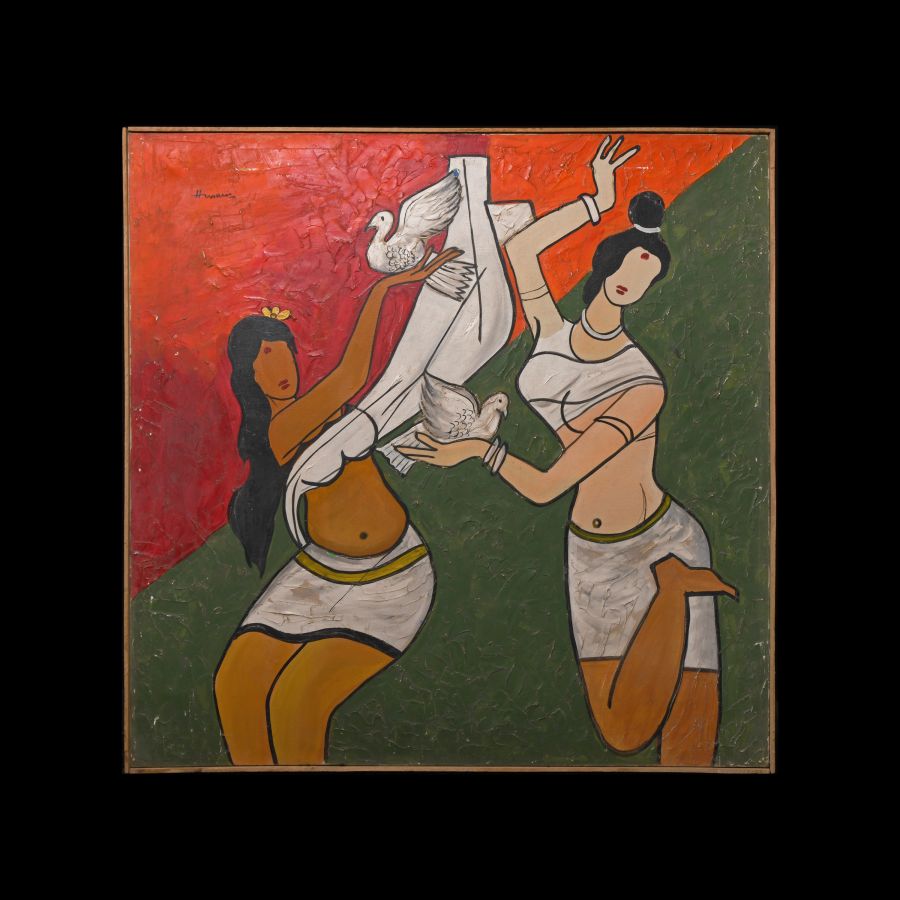
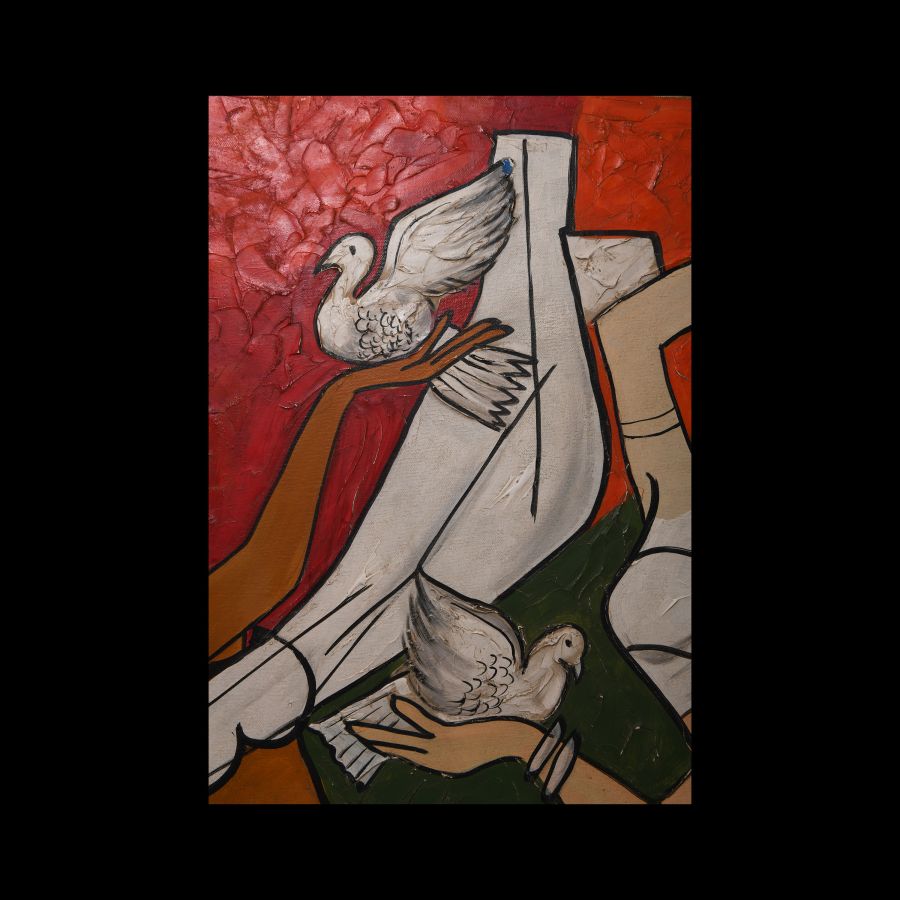
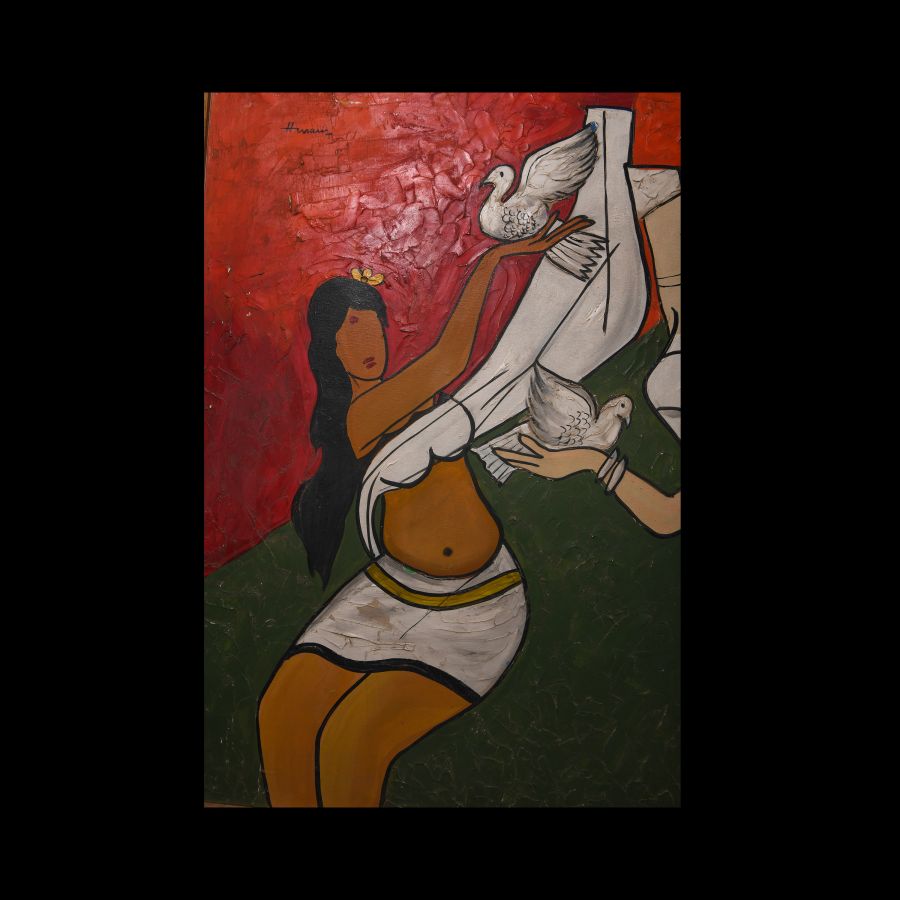
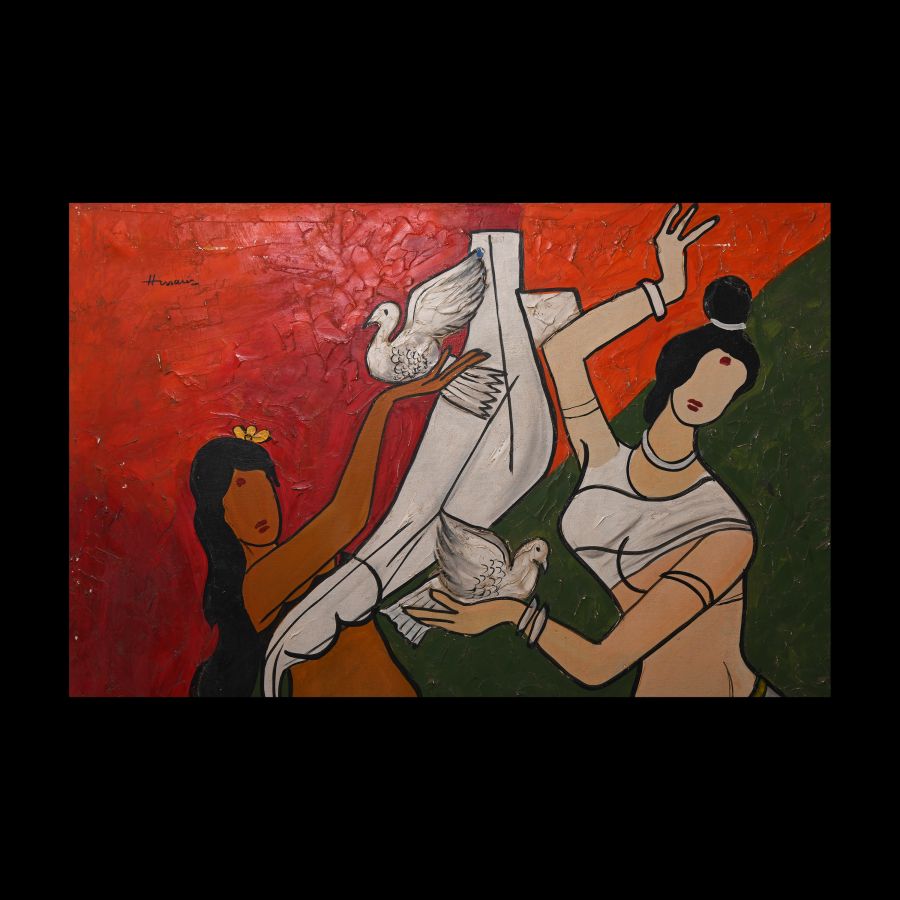
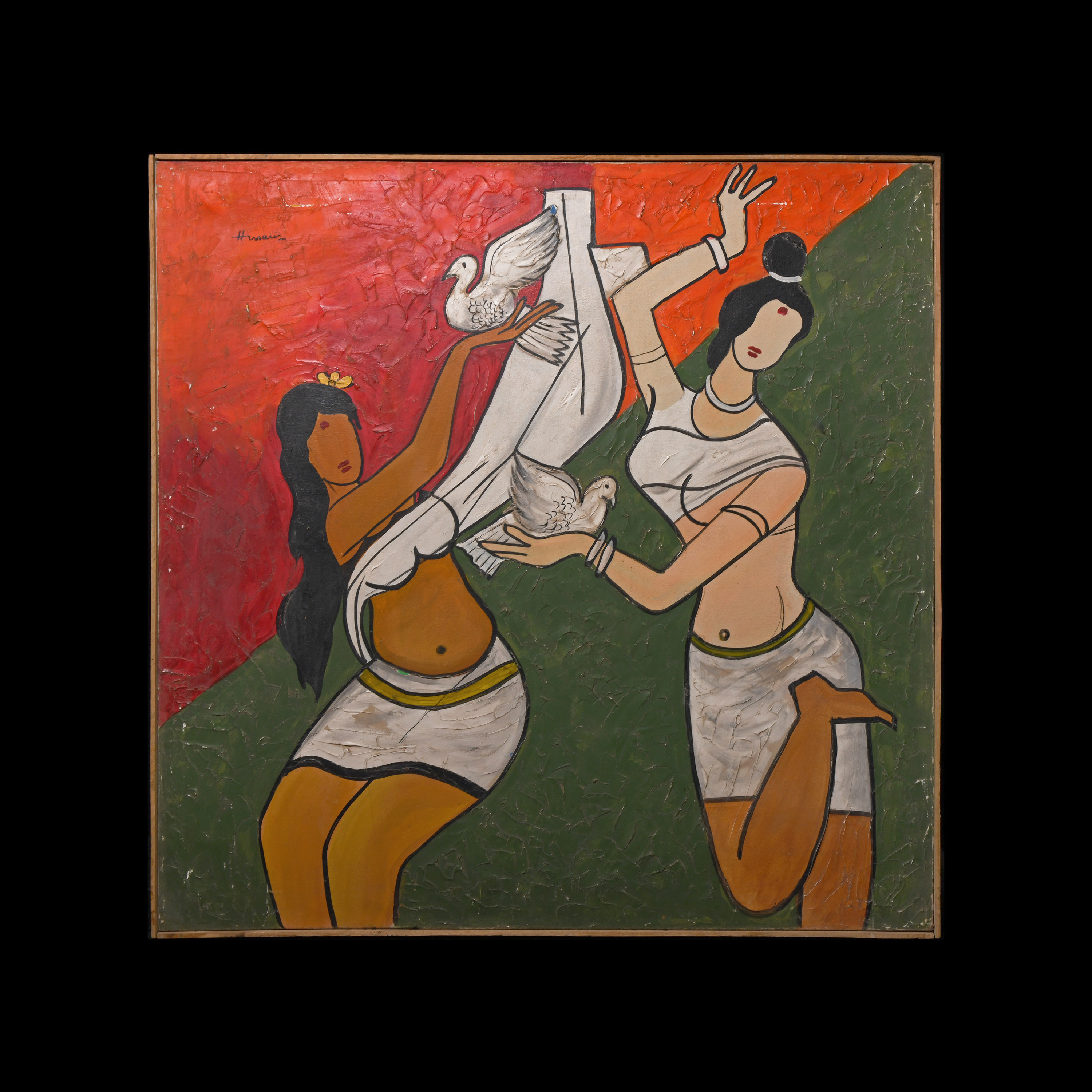
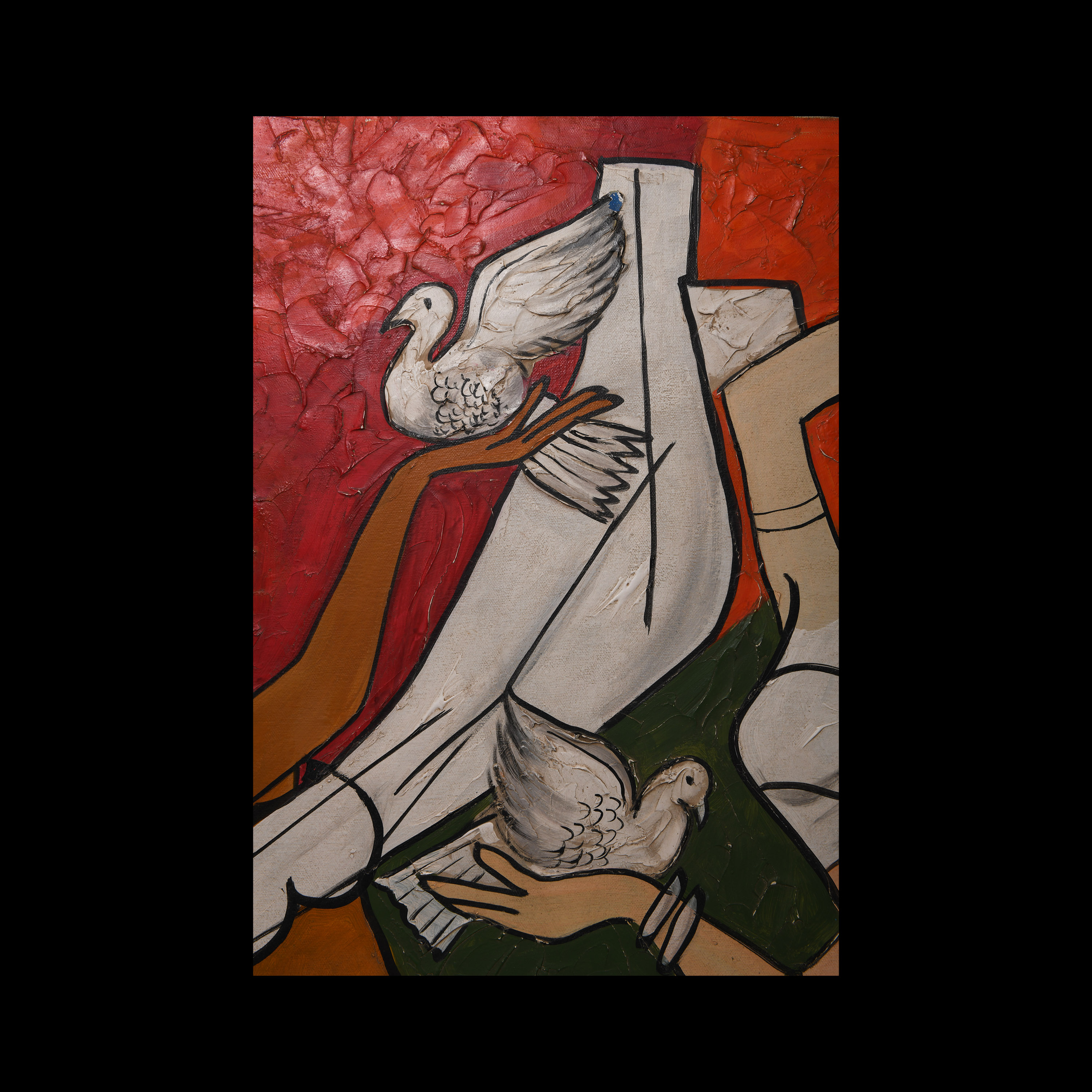
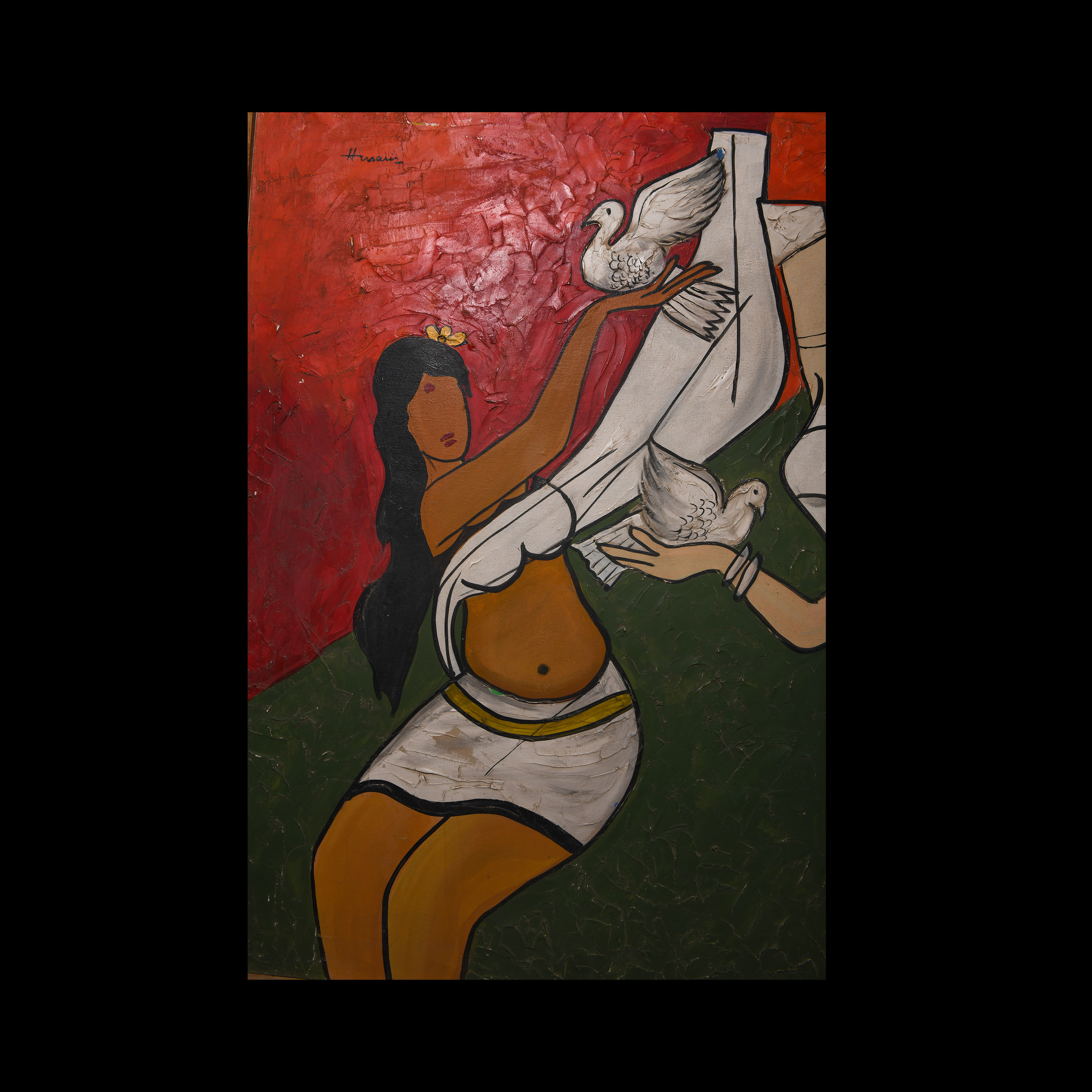
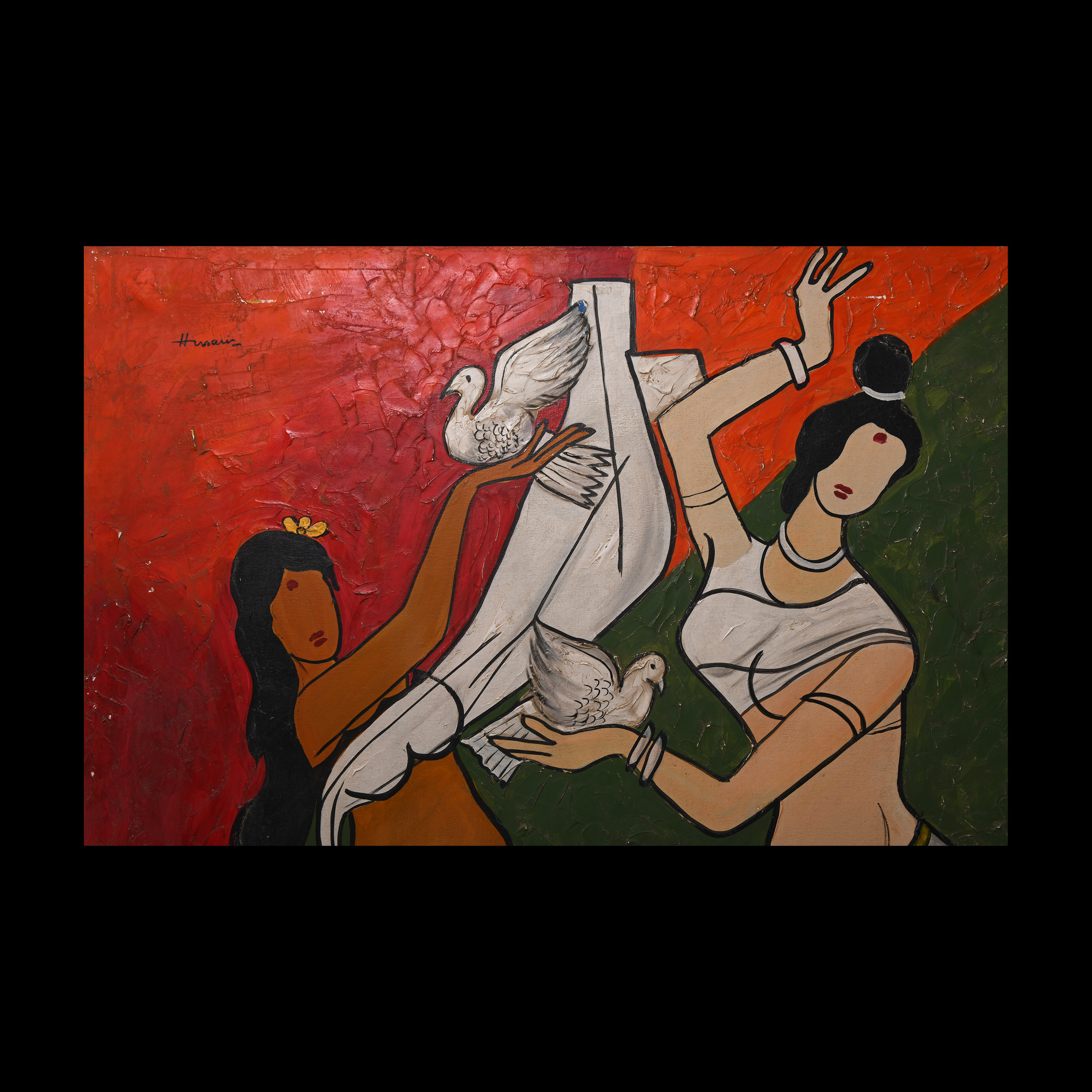
Indian M.F. Husain Painting with Dancers Holding Doves
20TH CENTURY A.D.
36 1/4 x 36 2/3 in. (2.8 kg, 92.5 x 93 cm).
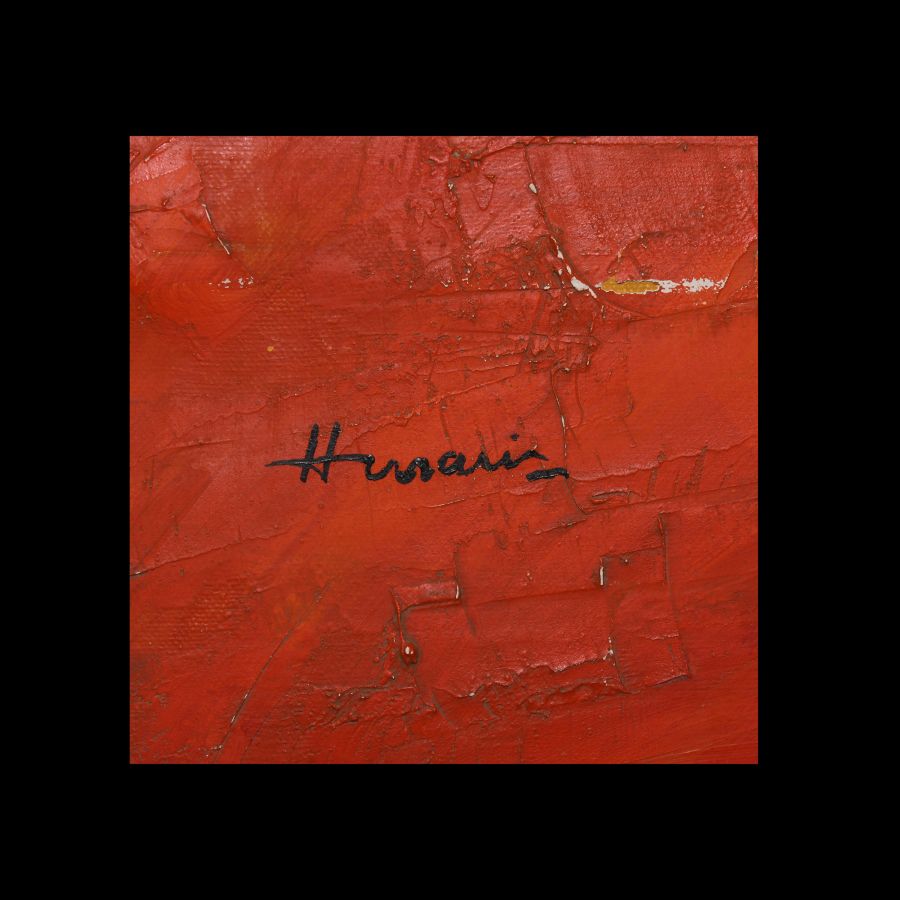
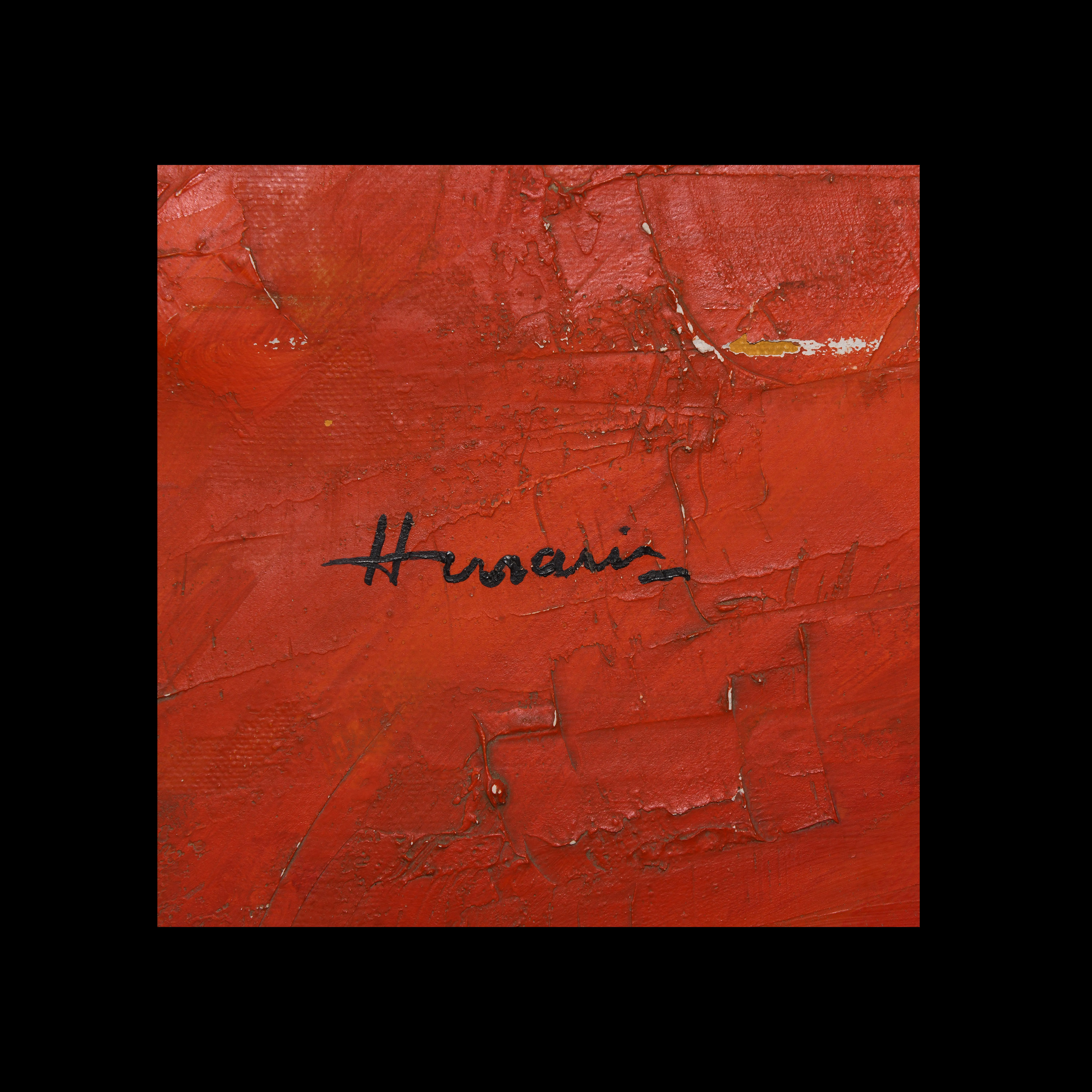
A large and vibrant painting on canvas showing two dancing female figures, each with a dove flying or about to fly from one hand; attributed to M.F. Husain top left; wooden frame.
ProvenancePersonal collection of Harmadar Singh Thind; thence by descent.
From the private family collection of a West London gentleman.
This lot has been checked against the Interpol Database of stolen works of art and is accompanied by search certificate no.11382-189827.
The Indian artist Maqbool Fida Husain (17 September 1915 – 9 June 2011) is best known for his bold, vibrantly coloured paintings in a unique style derived from Cubism. He was one of the most recognised Indian artists of the 20th century and a founder of the Bombay Progressive Artists' Group. His name is associated with Indian modernism from the 1940s onwards and his free-thinking approach to art offended the sensibilities of both Muslims and Hindus alike.
CONDITIONTimeLine Auctions follows a vetting process to ensure the authenticity and legality of all items, reinforcing our commitment to integrity and responsible trading. Each antiquity, antique, and coin lot undergoes thorough examination by a vetting committee of at least ten external specialists, professional trade association members, scientists, and archaeologists: Our Vetting Process
AUCTIONS:
TimeLine is a leading auction house specialising in antiquities, ancient art, collectables, natural history, coins, medals, and books. Our auctions offer museums, collectors, historians, and enthusiasts the opportunity to acquire unique and historically significant pieces.
LOT 1623
Indian M.F. Husain Painting with Dancers Holding Doves
Estimate £6,000 - 8,000€6,960 - 9,280 (for guidance only)$8,100 - 10,800 (for guidance only)
-
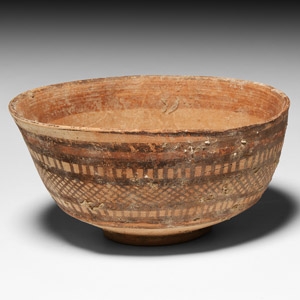
Mehrgarh Bichrome Cup
3rd millennium B.C.Sold for (Inc. bp): £102
A squat ceramic cup with painted frieze below the rim of hatched and geometric panels. 132 grams, 11.3 cm wide
Fine condition.
Acquired 1990s. From the Martin Schoyen collection of artefacts from the Indus Valley culture, 1990s. -
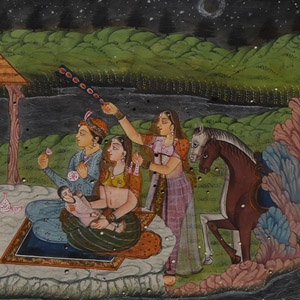
Framed Indian Watercolour Manuscript Leaf
20th century A.D.Estimate: £80 - 100 (+bp*)
Opening Bid: £40
A manuscript leaf showing a vibrant scene in watercolour composed of a couple with a child seated on a rug by a religious figure, being blessed; their attendant fans them whilst their horses stand behind, set in a landscape, panel of text to one side; set in a reveal within a glazed wooden frame. 795 grams, 37.5 x 29.5 cm
Fine condition, some worm holes.
Acquired on the UK art market, 1980s-1990s. The Woodbridge collection of Indo-Persian art. -
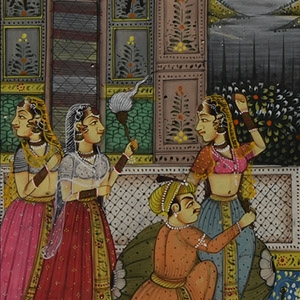
Framed Indian Watercolour Painting
20th century A.D.Estimate: £80 - 100 (+bp*)
Opening Bid: £40
A watercolour painting showing figures in an architectural setting, water and landscape beyond; possibly two female attendants, one holding a torch, the other keeping guard, assisting their mistress who has ventured out at dusk to meet her lover; set in a reveal within a glazed wooden frame. 528 grams, 32.5 x 23.5 cm
Very fine condition.
Acquired on the UK art market, 1980s-1990s. The Woodbridge collection of Indo-Persian art.
