
Loading, please wait...
LOT 1592
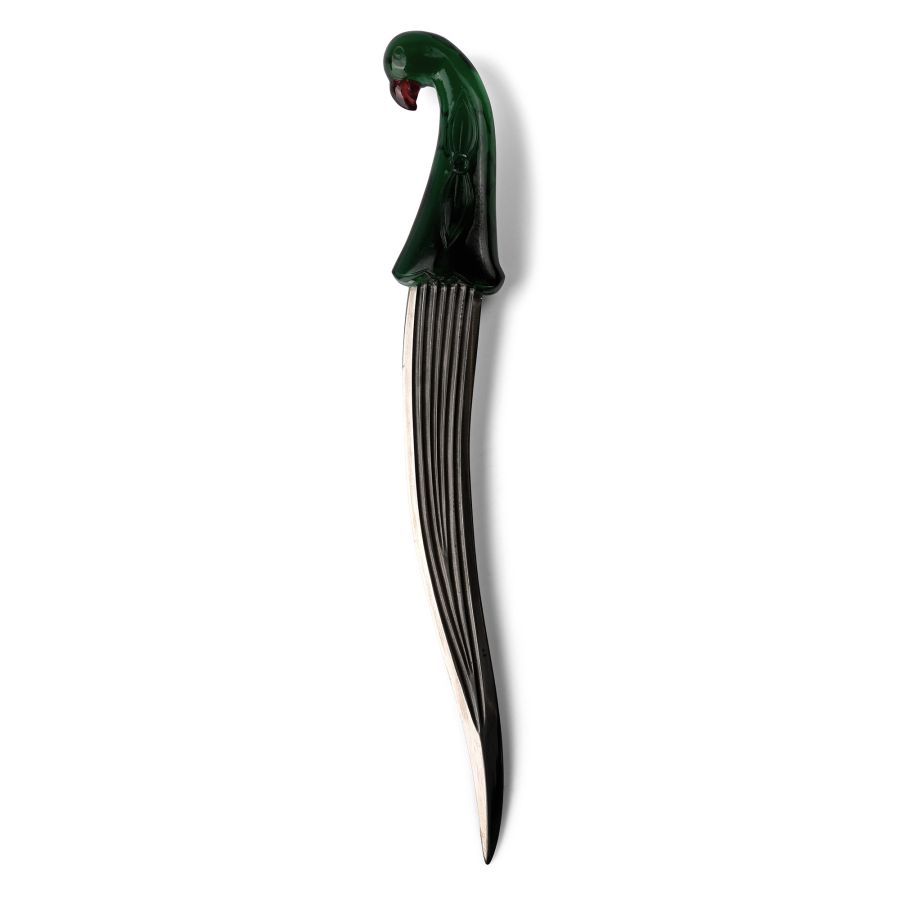
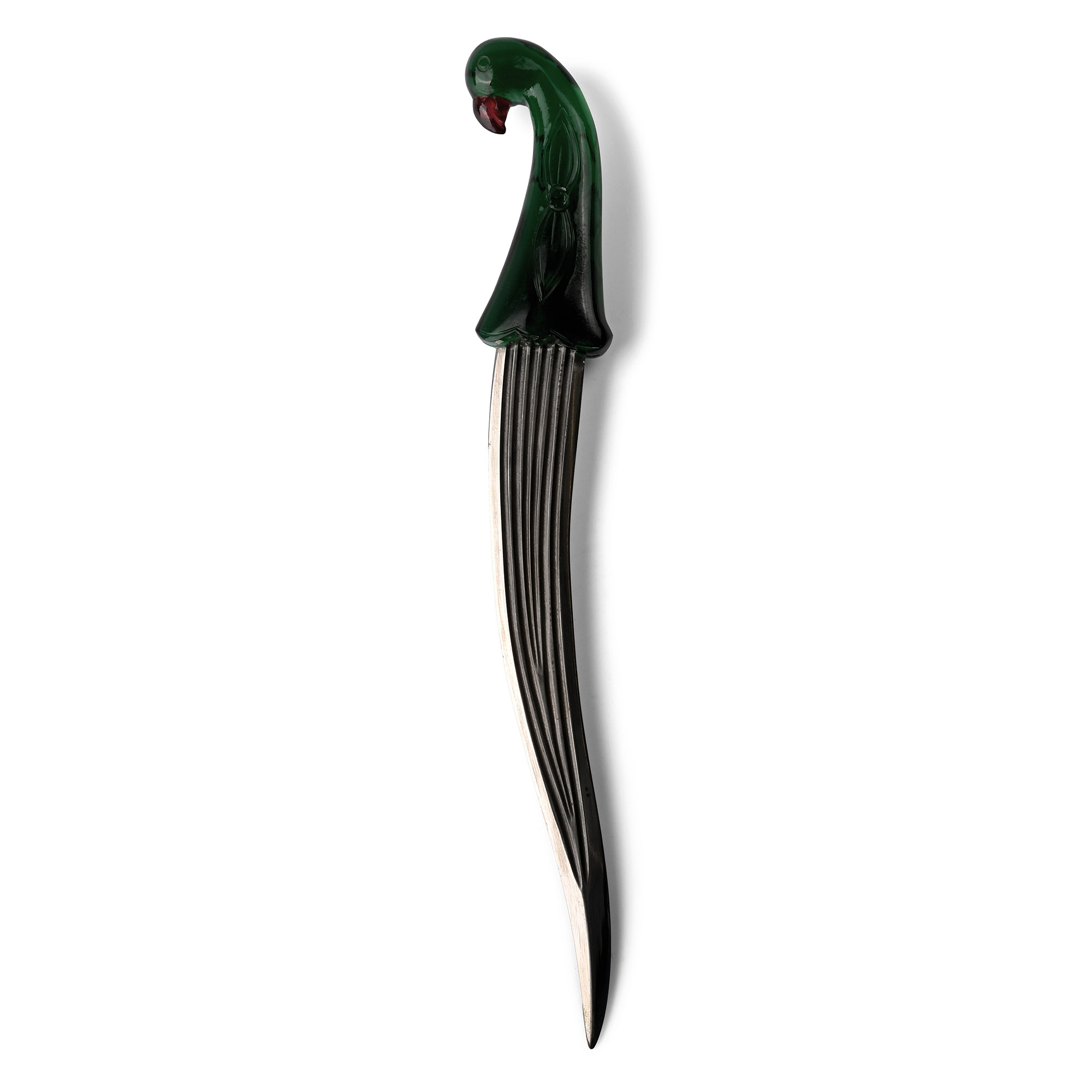
Indian Iron Dagger with Green Glass Hilt
20TH CENTURY A.D.
16 1/2 in. (480 grams, 42 cm).
Comprising a swept two-edged blade with ribbed central panel, bird-head pommel to the grip with incised rosette. [No Reserve]
ProvenancePrivate collection, UK.
CONDITIONTimeLine Auctions follows a vetting process to ensure the authenticity and legality of all items, reinforcing our commitment to integrity and responsible trading. Each antiquity, antique, and coin lot undergoes thorough examination by a vetting committee of at least ten external specialists, professional trade association members, scientists, and archaeologists: Our Vetting Process
AUCTIONS:
TimeLine is a leading auction house specialising in antiquities, ancient art, collectables, natural history, coins, medals, and books. Our auctions offer museums, collectors, historians, and enthusiasts the opportunity to acquire unique and historically significant pieces.
-
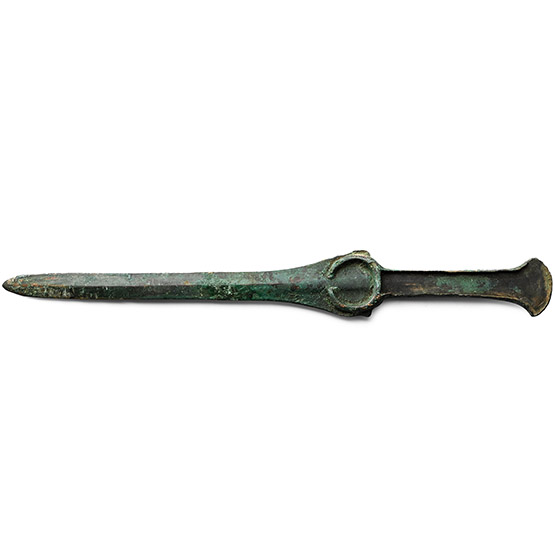
Luristan Bronze Dagger
2nd-1st millennium B.C.Sold for (Inc. bp): £338
Blade with a shallow median rib, crescentic pennannular guard, handle with pommel in the shape of a nail head. 151 grams, 30.5 cm
Ex Abelita family collection, 1980s-2000s.
This is a type of blade rare among Luristan weapons. The simplest type that appeared to J. de Morgan and Godard in the first excavations of Luristan looked like this: a blade always featuring a median groove, a guard decorated with a crescent, and a round hilt with a nail-shaped head. The hilt was usually filled with organic material, such as wood, bone, or ivory. -
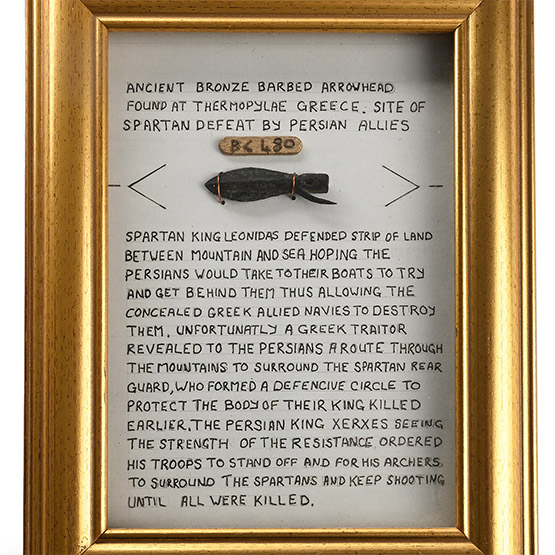
Framed Greek Bronze Barbed Arrowhead
5th-3rd century B.C.Sold for (Inc. bp): £234
Leaf-shaped arrowhead with midrib, conical socket and lateral spur; mounted in a glazed wooden display case with hand-lettered explanatory text concerning the battle of Thermopylae where the item was found. 440 grams total, 22.7 x 17.6 cm
Acquired on the UK art market. From the private collection of an East Anglian, UK, Specialist Collector. -
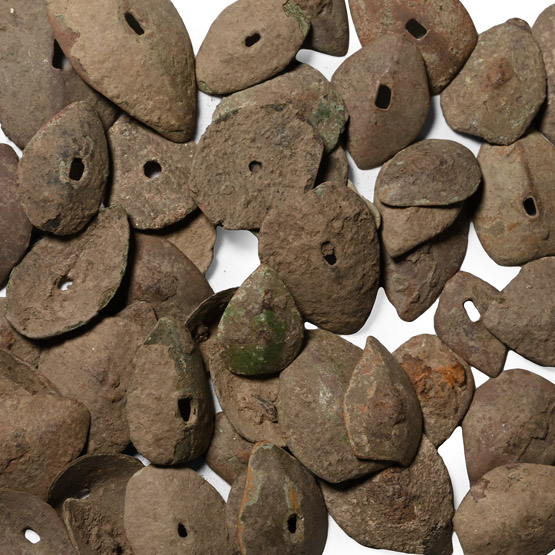
Post Medieval Bronze Scale Armour Collection
Circa 16th-17th century A.D.Sold for (Inc. bp): £85
Mainly teardrop and disc types, with attachment holes. 46 grams, 14-25 mm
Ex London Coin Fair, 1990s. Ex Buckinghamshire, UK, collection.
