
Loading, please wait...
LOT 1588
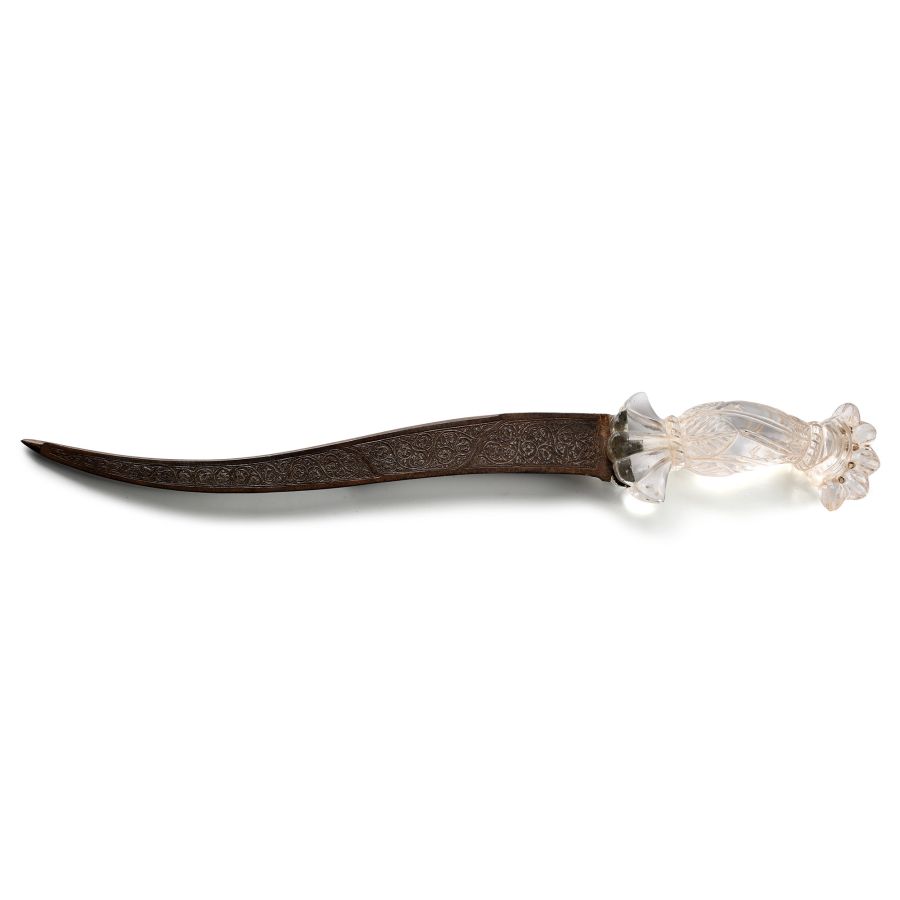
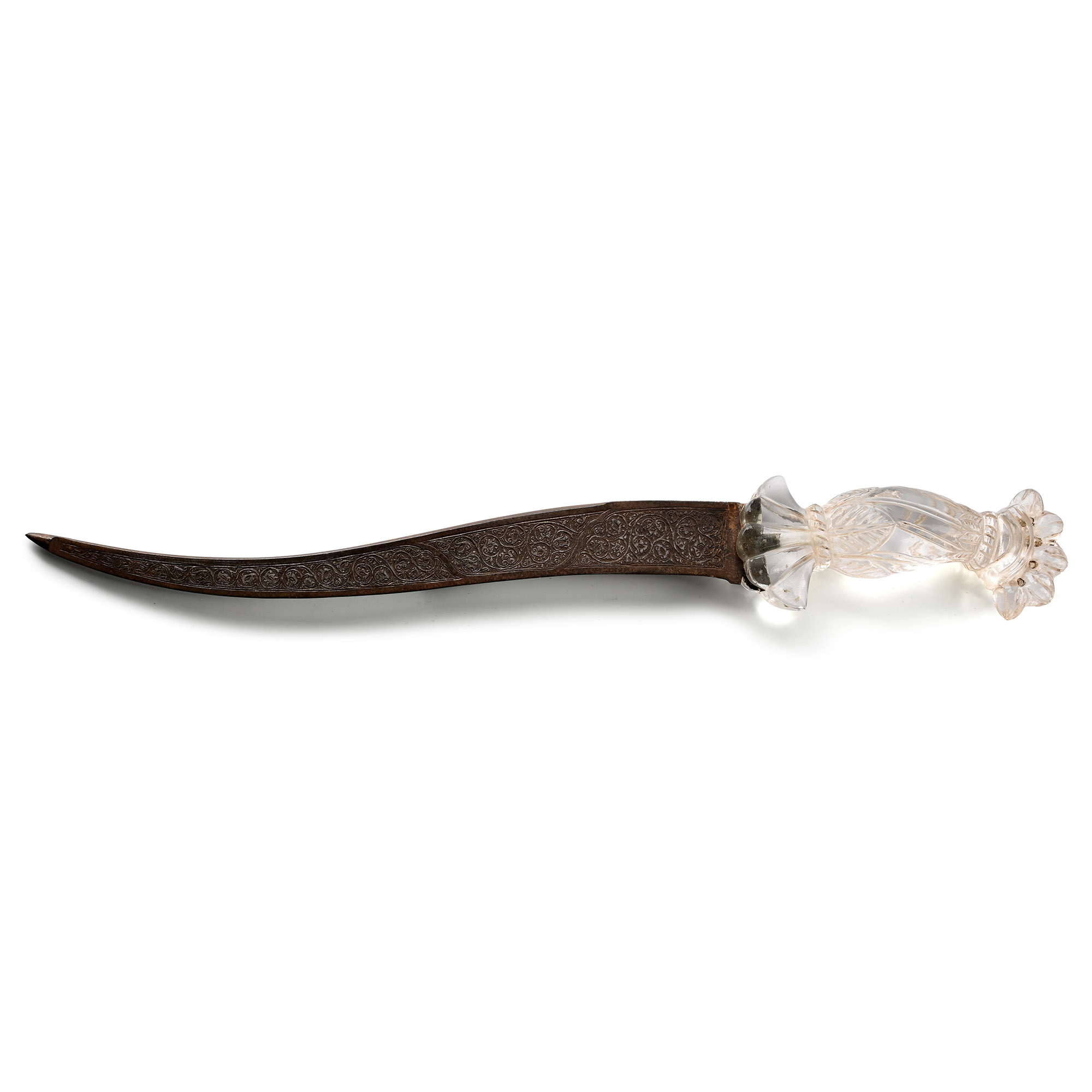
Indian Iron Dagger with Glass Hilt
20TH CENTURY A.D.
17 3/8 in. (376 grams, 44.2 cm).
Comprising a swept curved blade with reinforced tip, reserved scrolled tendrils to each face; hilt with pierced fan to the pommel. [No Reserve]
ProvenancePrivate collection, UK.
CONDITIONTimeLine Auctions follows a vetting process to ensure the authenticity and legality of all items, reinforcing our commitment to integrity and responsible trading. Each antiquity, antique, and coin lot undergoes thorough examination by a vetting committee of at least ten external specialists, professional trade association members, scientists, and archaeologists: Our Vetting Process
AUCTIONS:
TimeLine is a leading auction house specialising in antiquities, ancient art, collectables, natural history, coins, medals, and books. Our auctions offer museums, collectors, historians, and enthusiasts the opportunity to acquire unique and historically significant pieces.
-
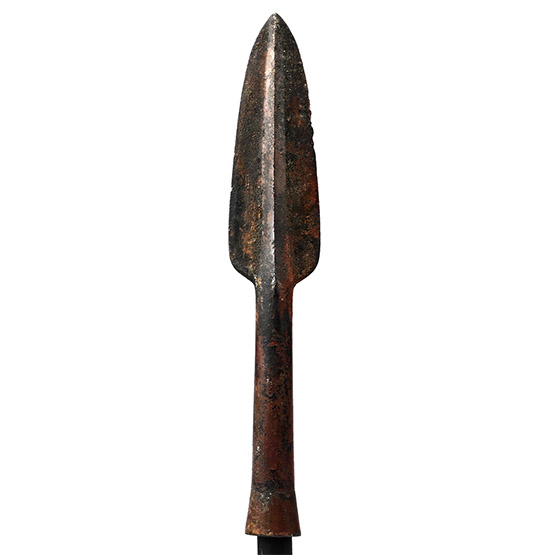
Luristan Bronze Socketted Spearhead
13th-6th century B.C.Sold for (Inc. bp): £169
With a broad leaf-shaped blade, a triangular mid-rib and a tapering tubular socket; accompanied by a display stand. 382 grams total, spearhead: 23.1 cm (31.2 cm including stand)
Ex Abelita family collection, 1980s-2000s.
The spear belongs to the type VIII classified by Khorasani (spearheads with well-projecting midribs and long folded sockets) and more specifically to subtype C (with leaf-shaped blade and short hollow socket). Usually, the willow-leaf blade has an almost straight shoulder base and a wide, flat midrib tapering towards the point. -
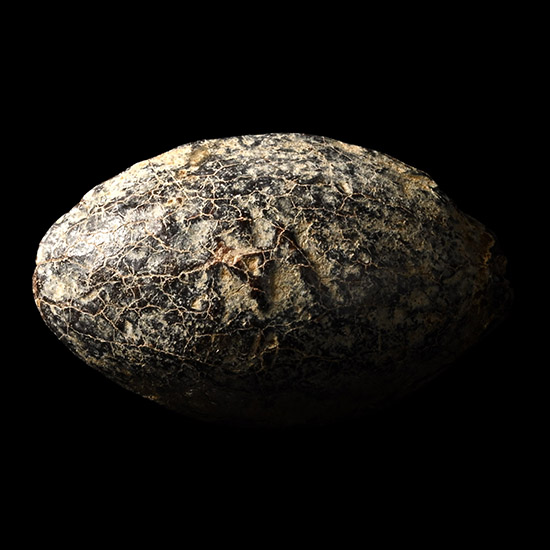
Greek Lead Slingshot
3rd-1st century B.C.Sold for (Inc. bp): £468
Biconical in profile with casting seam and reserved legend 'ΔΑМΑCΕΝΟΥ' = of Damasenos, and 'M' to reverse. 28.5 grams, 28 mm
Acquired on the German art market before 2000. Private collection, Munich, Germany.
The leaden bullets, which were thrown with slings, were called in Greek molivdainai (μολύβδαιναι), and in Latin glandes; the former indicating the material ‘lead’, the latter the shape ‘acorns’. These bullets, were cast in a mould and bore letters or devices, or both, on two sides or only on one side. In form they were more like an almond than an acorn, but many are pointed at both ends. -
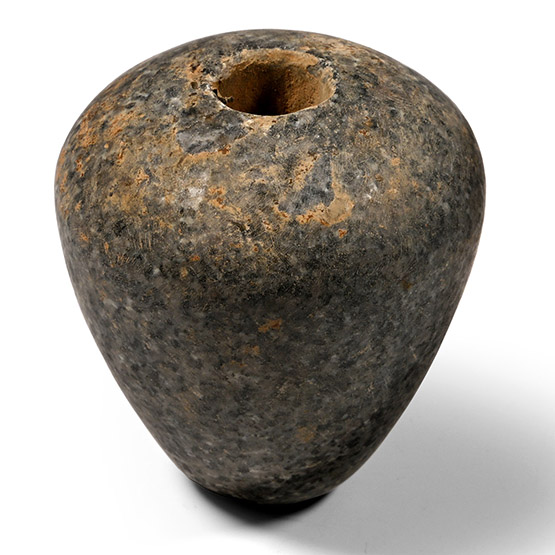
Western Asiatic Stone Macehead
3rd-2nd millennium B.C.Sold for (Inc. bp): £169
Piriform with vertical socket expanding towards the narrower end. 342 grams, 67 mm
Ex London, UK, collection, 1990-2000s.
