
Loading, please wait...
LOT 1563
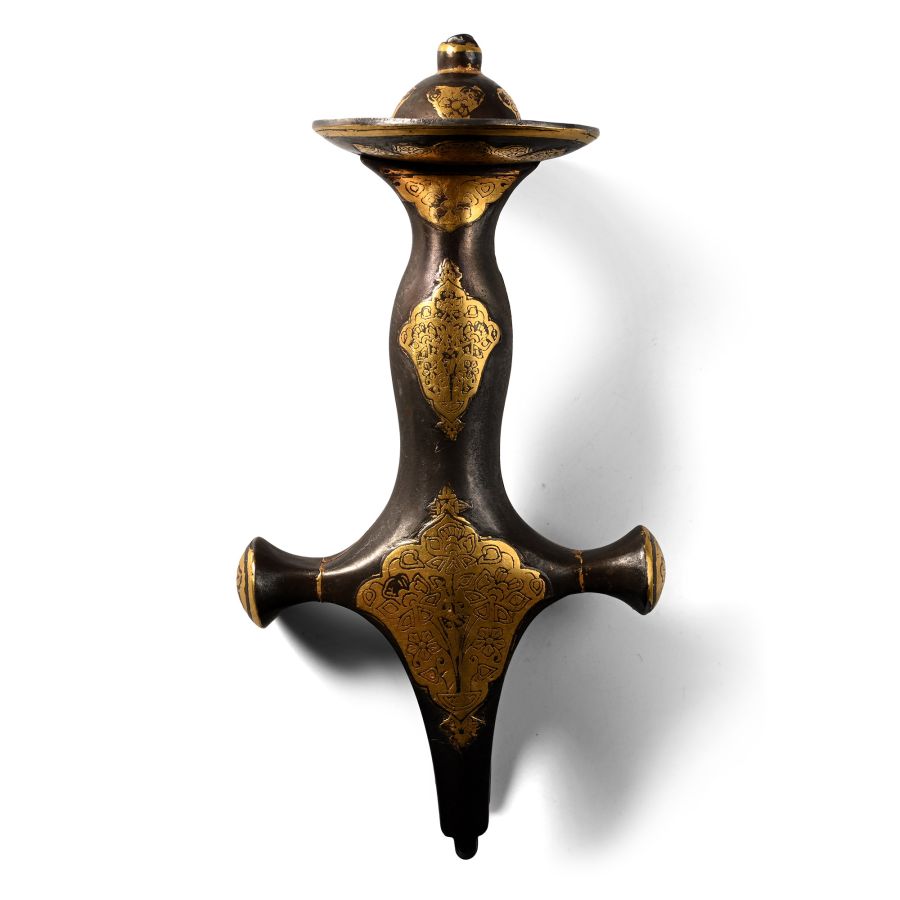
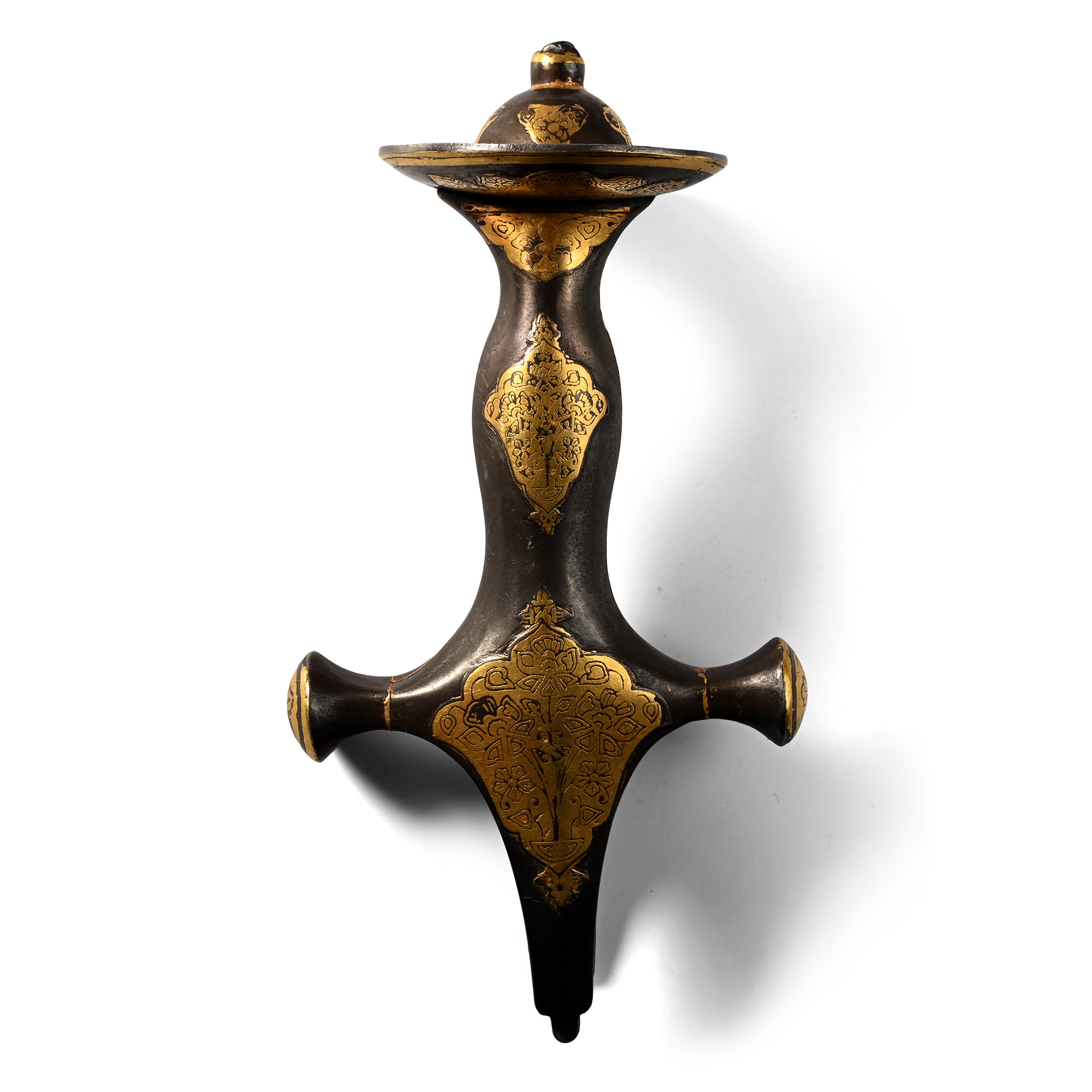
Indian Gilt Bronze Talwar Sword Hilt
LATE 19TH CENTURY A.D.
6 7/8 in. (285 grams, 17.5 cm).
Comprising a lentoid-section bulbous grip with lateral stub quillons and carinated spur to both faces, dished disc pommel with dome and knop; reserved panels of gilt arabesque ornament, rosettes and linear detailing.
ProvenancePrivate collection, UK.
CONDITIONTimeLine Auctions follows a vetting process to ensure the authenticity and legality of all items, reinforcing our commitment to integrity and responsible trading. Each antiquity, antique, and coin lot undergoes thorough examination by a vetting committee of at least ten external specialists, professional trade association members, scientists, and archaeologists: Our Vetting Process
AUCTIONS:
TimeLine is a leading auction house specialising in antiquities, ancient art, collectables, natural history, coins, medals, and books. Our auctions offer museums, collectors, historians, and enthusiasts the opportunity to acquire unique and historically significant pieces.
-
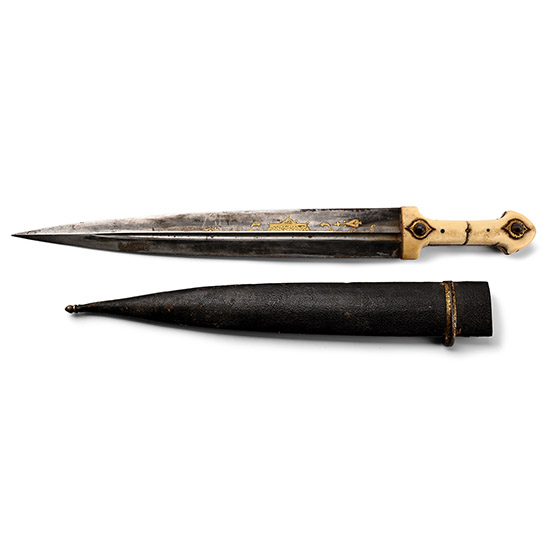
Ottoman Iron Dagger with Bone Hilt
19th century A.D.Sold for (Inc. bp): £572
Broad iron blade with reinforcing corrugations, inlaid brass ornament; bone scales to the hilt with fixing studs; scabbard with wooden core, leather sleeve, bronze frog and chape; fastened with wire stitching; narrow pocket to reverse to accept a smaller companion knife. 683 grams, 58 cm
Private collection, UK. -
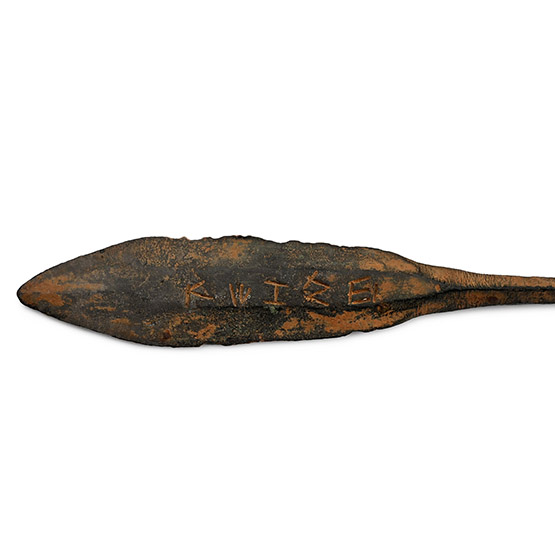
Aramaic Inscribed Bronze Arrowhead for Zscha..., Son of Adnb
1st millennium B.C.Sold for (Inc. bp): £1,105
Comprising a two-edged lentoid-section leaf-shaped blade and lozenge-section tang; each side with a short incised Aramaic inscription; ḥṣ zš bn ʾdnb = arrow of Zscha..., son of Adnb. 14 grams, 94 mm
From the collection of a gentleman, acquired on the London art market in the 1990s. -
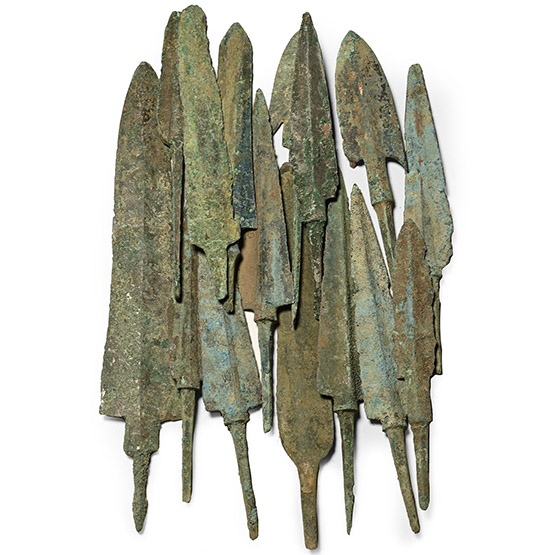
Luristan Bronze Arrowhead Group
13th-6th century B.C.Sold for (Inc. bp): £234
Including barbed, triangular, heater-shaped and other tanged types. 442 grams total, 11.3-19.5 cm
Acquired 1980-2015. Ex Abelita family collection.
