
Loading, please wait...
LOT 2660
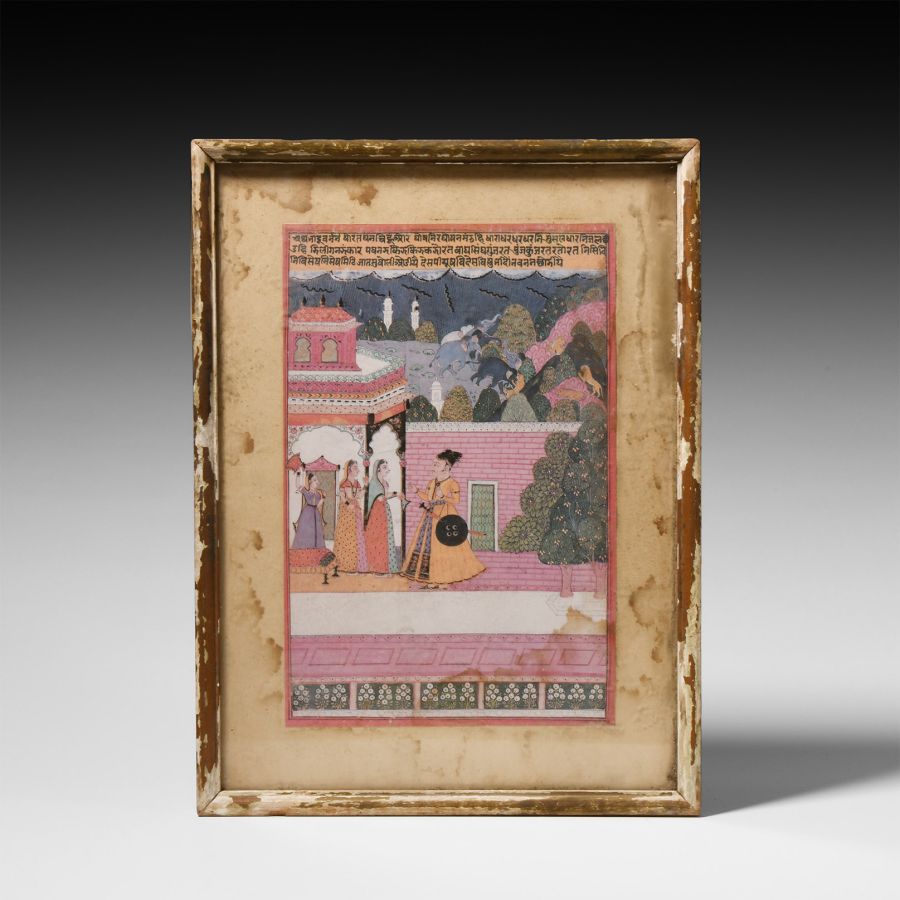
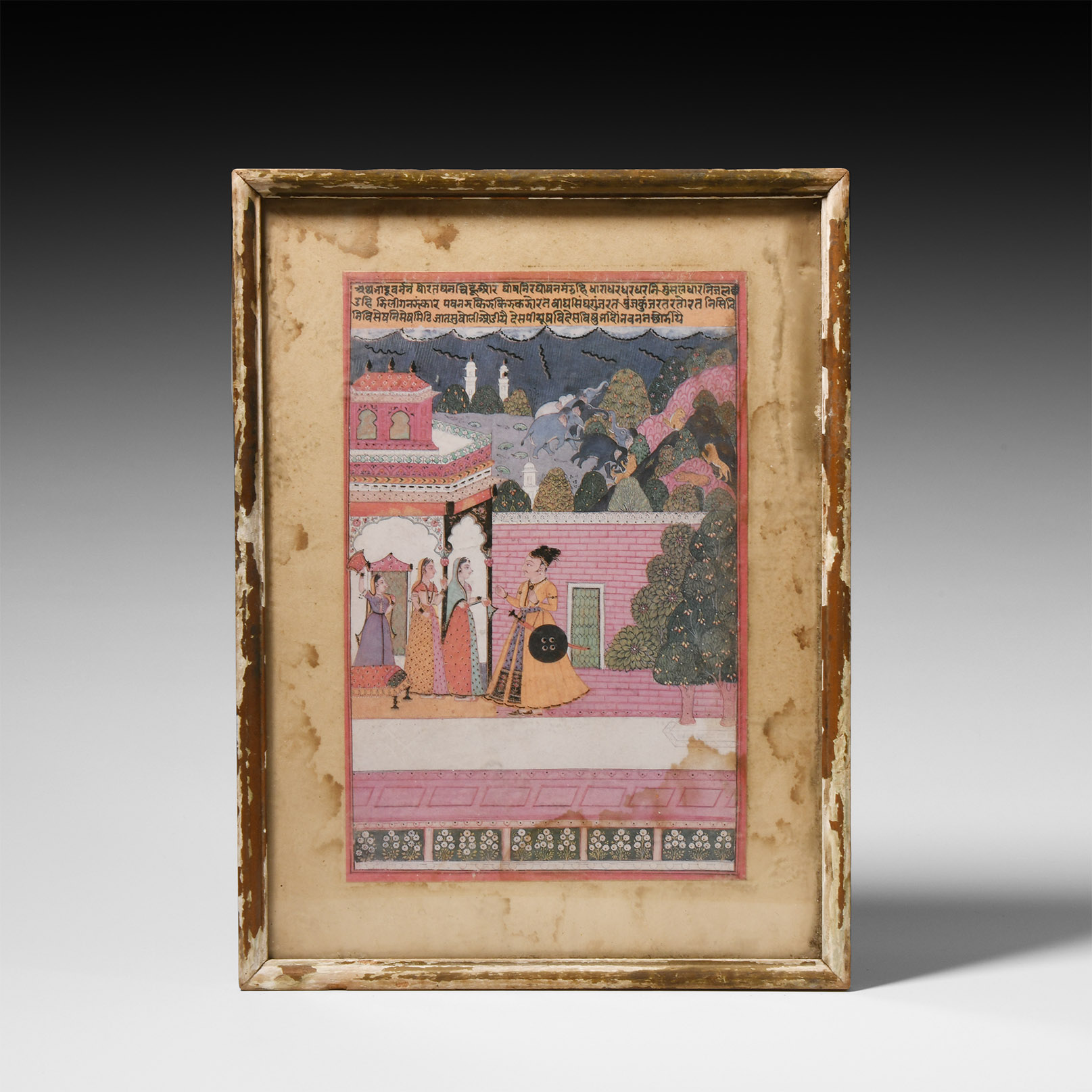
Indian Framed Print with Royal Scene
19TH-20TH CENTURY A.D.
10 5/8 x 8 in. (420 grams, 27 x 20.2 cm).
A framed and glazed print presenting a figural scene set within a walled garden, rain falls and bolts of lightning flash in the background beyond the wall, driving elephants to run for cover amongst the trees where they are predated on by tigers; within the garden, a lady and her attendants beneath a pavilion whilst she meets with her lover or suitor. [No Reserve]
ProvenanceEx property of a Greater Manchester collector.
CONDITIONTimeLine Auctions follows a vetting process to ensure the authenticity and legality of all items, reinforcing our commitment to integrity and responsible trading. Each antiquity, antique, and coin lot undergoes thorough examination by a vetting committee of at least ten external specialists, professional trade association members, scientists, and archaeologists: Our Vetting Process
AUCTIONS:
TimeLine is a leading auction house specialising in antiquities, ancient art, collectables, natural history, coins, medals, and books. Our auctions offer museums, collectors, historians, and enthusiasts the opportunity to acquire unique and historically significant pieces.
-

Chandraketugarh Terracotta Plaque with the Goddess Sri Lakshmi
West Bengal, Shunga Period, 1st century B.C. or laterSold for (Inc. bp): £234
D-shaped plaque fragment with Lakshmi modelled in the half-round. 160 grams, 12.5 cm
Acquired at a London antiques fair in the 1990s. From the private collection of a Devon, UK, lady. -
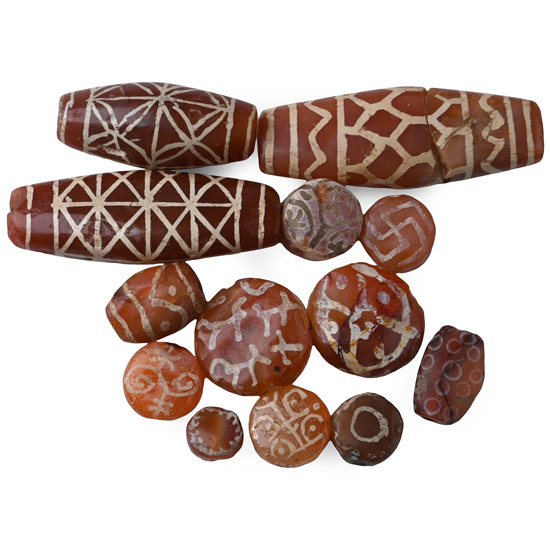
Large Indus Valley Etched Orange Carnelian Necklace Bead Collection
Circa 2nd millennium B.C.Sold for (Inc. bp): £624
Comprising: a barrel-shaped bead with floral decoration, two flattened barrel-shaped beads with geometric motifs, one discoid bead with crux gammata, and other beads with geometric decoration. 61.03 grams total, 9.84-49.06 mm
From the private collection of a European gentleman (1942-2024), formed since the 1970s.
Etched carnelian beads are characteristic of the Indus Valley culture and have been produced since the third millennium B.C. They are a typical product of the Harappa culture, but they are also attested in later millennia and produced elsewhere in Southeast Asia. The oldest specimens come from the Indus Valley and from Mesopotamia. A few specimens were found in the so-called royal cemetery of Ur, where they were identified in the excavation publication as coming from India. -
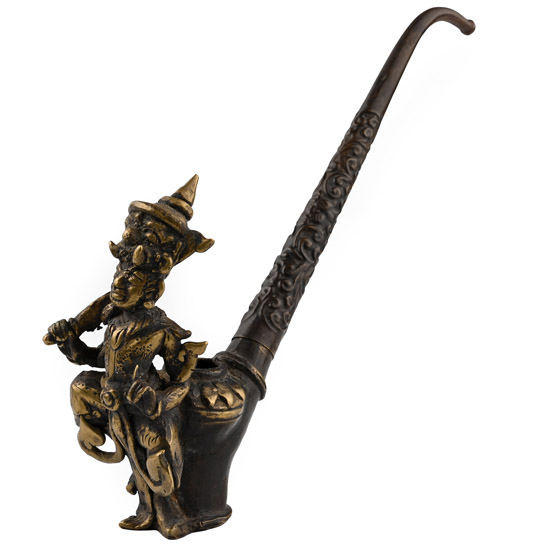
Indian Bronze Figural Opium Pipe
20th century A.D.Sold for (Inc. bp): £65
With separate tapering stem curved at the end and decorated with repoussé scrolls, bowl formed as a deity(?) standing on one leg grasping a leaf-shaped dagger in his right hand, with demonic face above his own with benign expression. 284 grams, 18cm
Fine condition.
Ex property of a Guernsey collector; acquired from Martel Maides, St. Peter Port, Guernsey; formerly acquired in the UK in the early 1990s. From the private collection of John Meredith, acquired since the 1990s; thence by descent.
