
Loading, please wait...
_900x900.jpg "Indian Erotic Sketch Attributed to F.N. Souza")
_200x200.jpg "Indian Erotic Sketch Attributed to F.N. Souza")
_900x900.jpg "Indian Erotic Sketch Attributed to F.N. Souza")
_200x200.jpg "Indian Erotic Sketch Attributed to F.N. Souza")
.jpg "Indian Erotic Sketch Attributed to F.N. Souza")
.jpg "Indian Erotic Sketch Attributed to F.N. Souza")
LOT 2671
Indian Erotic Sketch Attributed to F.N. Souza
DATED 1970 A.D. OR LATER
20 x 15 3/8 in. (92 grams, 51 x 39 cm).
A framed, untitled erotic sketch portraying two nude women; ink on paper; attributed to F.N. Souza, dated 1970.
ProvenancePersonal collection of Harmadar Singh Thind; thence by descent.
Ex private family collection of a West London gentleman.
Francis Newton Souza (1924-2002) was an Indian-American British artist, born in Goa, India. He went on to become one of India's most influential modern artists. Souza was a founding member of the Progressive Artists' Group, which largely disbanded after he moved to London in 1949. His work is executed in a style which exhibits both decadence and primitivism. The world record at auction for the artist's iconic works stands at $4,085,000.
CONDITIONTimeLine Auctions follows a vetting process to ensure the authenticity and legality of all items, reinforcing our commitment to integrity and responsible trading. Each antiquity, antique, and coin lot undergoes thorough examination by a vetting committee of at least ten external specialists, professional trade association members, scientists, and archaeologists: Our Vetting Process
AUCTIONS:
TimeLine is a leading auction house specialising in antiquities, ancient art, collectables, natural history, coins, medals, and books. Our auctions offer museums, collectors, historians, and enthusiasts the opportunity to acquire unique and historically significant pieces.
-
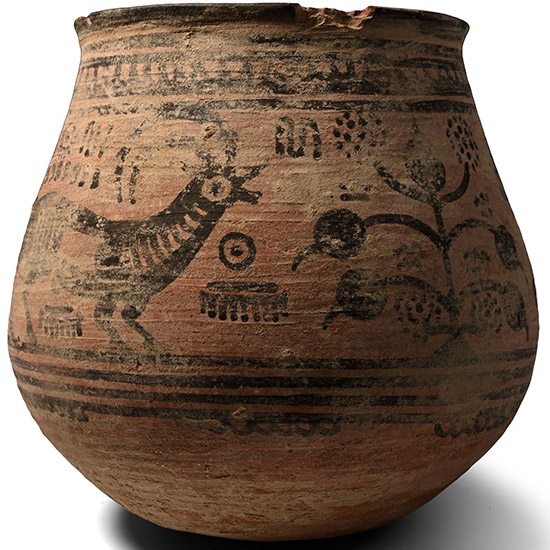
Large Indus Valley Terracotta Vessel with Animals
3rd-2nd millennium B.C.Sold for (Inc. bp): £59
Biconvex in profile with rolled rim, painted panels to the shoulder with fish, bird and frond motifs. 594 grams, 15 cm
From the private collection of the late David Gold, 1990s. David Gold was one of the co founders of the Iconic Lord John brand in Carnaby Street that sparked a style revolution in the swinging sixties dressing The Rolling Stones, The Beatles and The Kinks and were at the heart of 'all things cool'. -
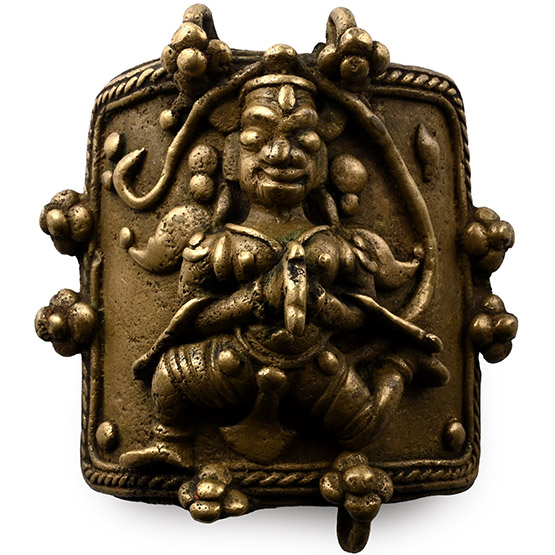
Sacred Copper-alloy Bracelet Plaque with Hindu God
India, 19th century A.D.Sold for (Inc. bp): £85
A rectangular bracelet plaque with seven loops, half-round crouching Hanuman(?) with a par of wings and long tail curved above head, clasped hands. 329 grams, 91 cm
From an important collection of Hindu art formed by Jeffrey Romer, 1990s. Ex central London, UK, gallery. -
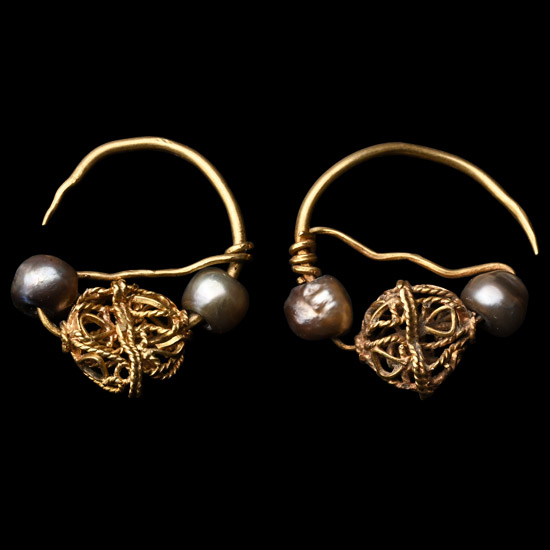
Moghul Indian Gold and Pearl Earrings
Circa 14th-15th century A.D.Sold for (Inc. bp): £156
Matched pair, each a crescentic hoop with an openwork filigree sphere and two pearls. 2.71 grams total, 18-19.1 mm
From the private collection of a European gentleman (1942-2024), formed since the 1970s.
