
Loading, please wait...


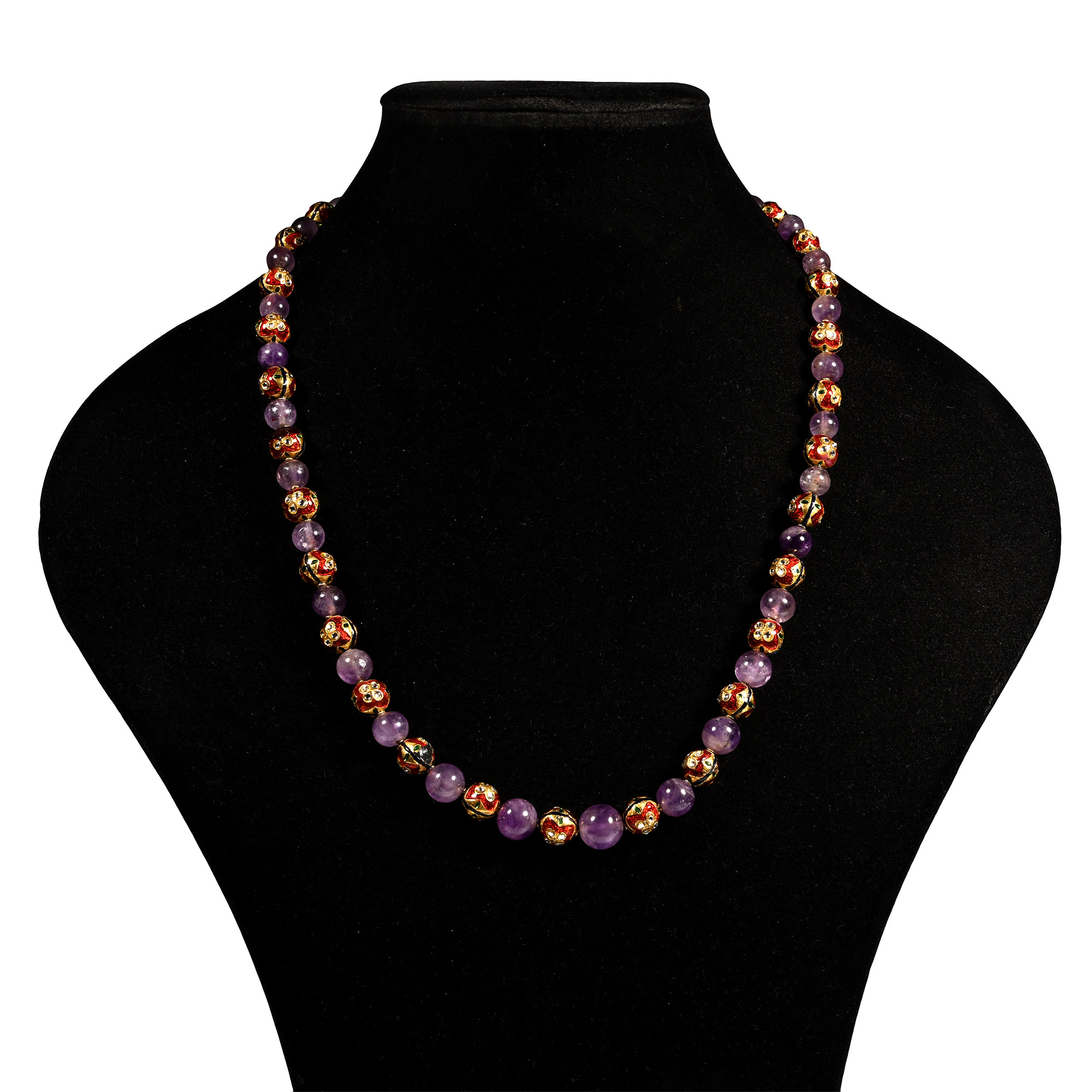
LOT 2085
Indian Amethyst Jaipur Bead Necklace
20TH CENTURY A.D.
24 3/4 in. (80 grams, 63 cm long).
Comprising alternating amethyst spherical beads and gold-coloured beads with enamel detailing. [No Reserve]
Provenancewith a London, UK gallery, 1971-early 2000s.
CONDITIONTimeLine Auctions follows a vetting process to ensure the authenticity and legality of all items, reinforcing our commitment to integrity and responsible trading. Each antiquity, antique, and coin lot undergoes thorough examination by a vetting committee of at least ten external specialists, professional trade association members, scientists, and archaeologists: Our Vetting Process
AUCTIONS:
TimeLine is a leading auction house specialising in antiquities, ancient art, collectables, natural history, coins, medals, and books. Our auctions offer museums, collectors, historians, and enthusiasts the opportunity to acquire unique and historically significant pieces.
-
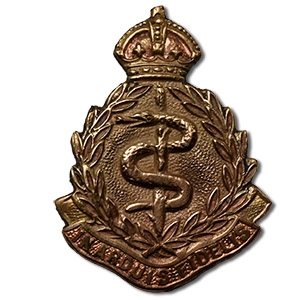
Royal Army Medical Corps Gold Badge
20th century A.D.Sold for (Inc. bp): £47
Plaque with caduceus in a wreath, crown above and scroll beneath with legend 'In Arduis Fidelis' (Royal Army Medical Corps); stamped to reverse '9CT'; pin absent. 2.35 grams, 28 mm
Found Lincolnshire, UK. -
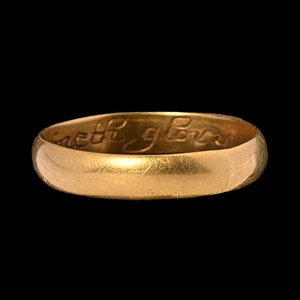
Post Medieval Gold 'Vertue Gaineth Glory' Posy Ring
18th century A.D.Estimate: £800 - 1,000 (+bp*)
Opening Bid: £400
Plain D-section hoop with legend to the inner face in italic script: ''Vertue gaineth glory' preceded by 'x' and a heart with initials 'IC' over 'S'. 3.43 grams, 20.46 mm overall, 18.19 mm internal diameter (approximate size British P, USA 7 1/2, Europe 16.23, Japan 15)
Found during a rally in Herefordshire, UK, in 1992, and recorded with the museum services on site. From the collection of a Caerphilly, UK, gentleman formed since 1990.
The heart enclosing the three letters suggest that 'I' and 'C' were the initials of the owner's forenames, and 'S' that of their surname. -
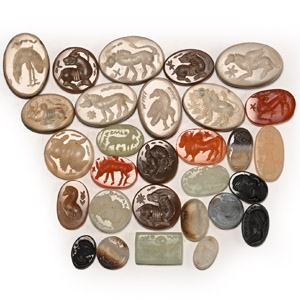
Near Eastern Style Gemstone Collection
20th century A.D.Sold for (Inc. bp): £124
Mainly ellipsoid in plan with intaglio motifs including profile quadruped, profile bust, perching bird and others; after the antique. 54 grams total, 12-25 mm
From a central London ADA dealership, 1980-1990.
