
Loading, please wait...
LOT 0368
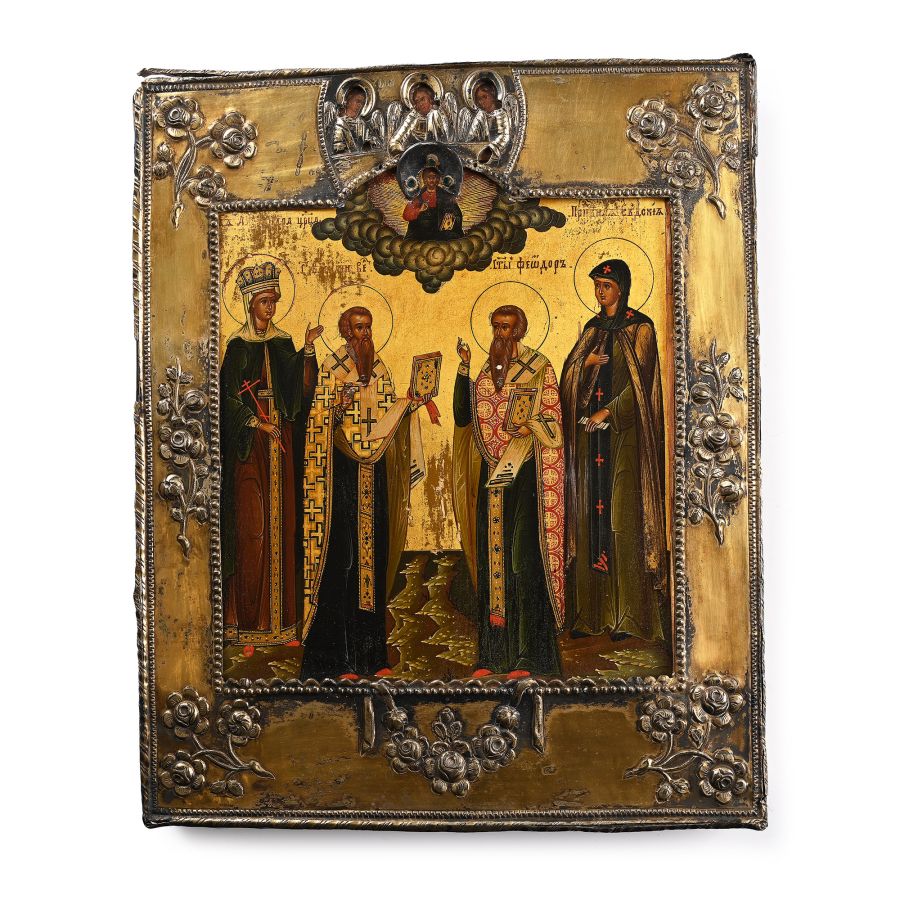
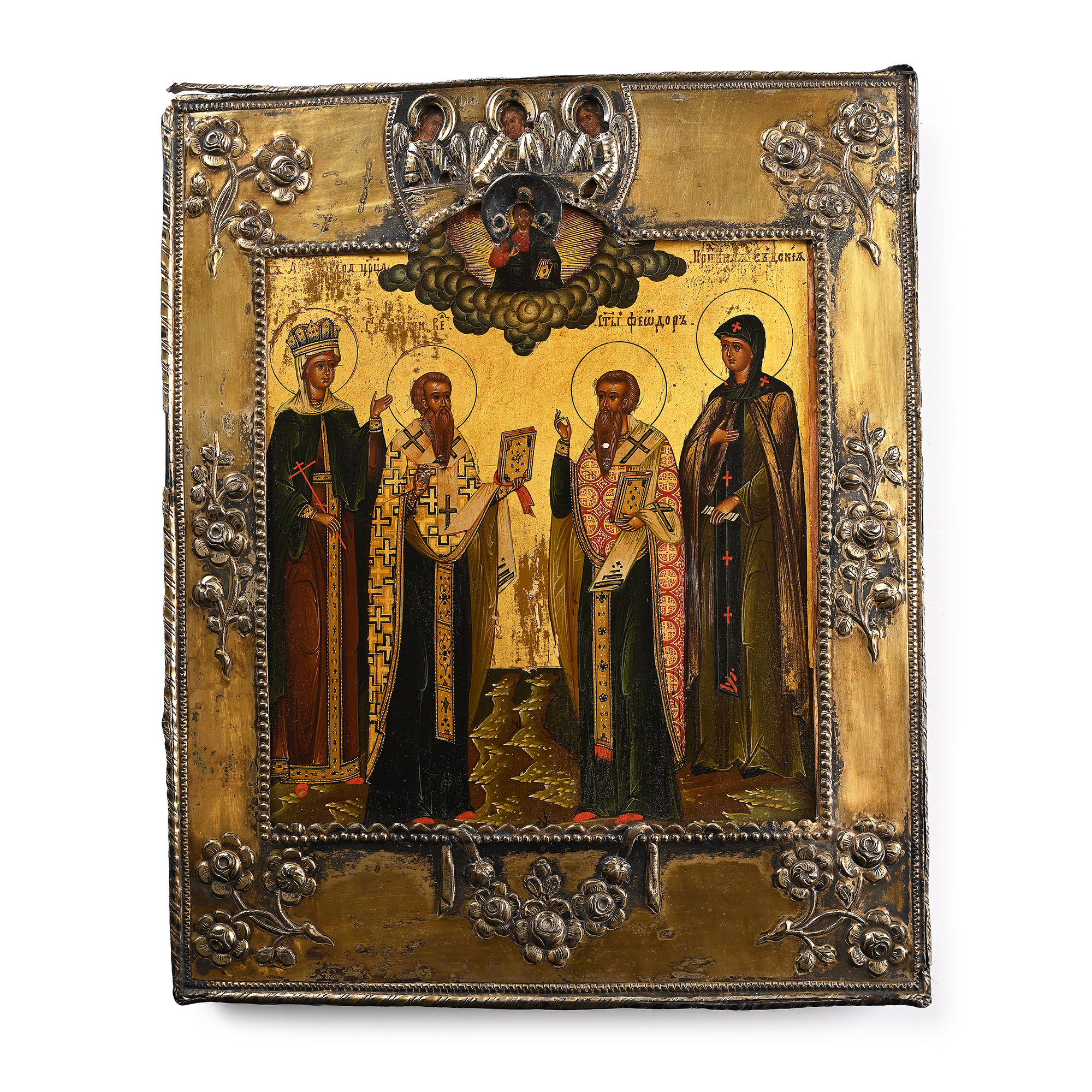
Icon with Saint Alexandra Basil the Great, Feodor and Eudokia
LATER 19TH CENTURY A.D.
12 1/4 x 9 3/4 in. (1.27 kg, 31 x 25 cm).
Tempera on wood panel with silver-gilt basma reveal; gilt field with four nimbate figures standing in three-quarter view; the two outer figures each in floor-length female robe with wimple and open-fronted mantle; inner figures bearded with sumptuous vestments, each holding a codex; above, clouds parted to reveal facing figure with metal nimbus applied to the basma; above this, three nimbate figures in the basma with voids to reveal the painted faces below, repoussé floral motifs to border; Cyrillic legends Vasili (Basil), Aleksandra, Fyodor (Theodore), Ebdokia; mounting bars in recesses to reverse.
ProvenanceAcquired on the European art market.
Private collection, London, UK.
This lot is accompanied by an illustrated lot declaration signed by the Head of the Antiquities Department, Dr Raffaele D'Amato.
TimeLine Auctions follows a vetting process to ensure the authenticity and legality of all items, reinforcing our commitment to integrity and responsible trading. Each antiquity, antique, and coin lot undergoes thorough examination by a vetting committee of at least ten external specialists, professional trade association members, scientists, and archaeologists: Our Vetting Process
AUCTIONS:
TimeLine is a leading auction house specialising in antiquities, ancient art, collectables, natural history, coins, medals, and books. Our auctions offer museums, collectors, historians, and enthusiasts the opportunity to acquire unique and historically significant pieces.
LOT 0368
Icon with Saint Alexandra Basil the Great, Feodor and Eudokia
Estimate £1,200 - 1,700€1,390 - 1,970 (for guidance only)$1,620 - 2,300 (for guidance only)
-
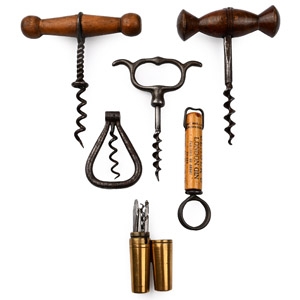
Vintage Bottle Opener Collection
20th century A.D.Sold for (Inc. bp): £13
Including brass screw-thread type, 'Seager's London Gin' advertising type and others. 239 grams total, 6.5-11.5 cm
From the private collection of a Kent, UK, gentleman. This lot is accompanied by an illustrated lot declaration signed by the Head of the Antiquities Department, Dr Raffaele D'Amato. -
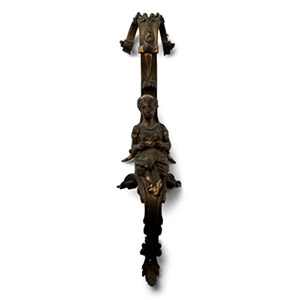
Post Medieval Gilt Bronze Carriage Fitting
19th century A.D.Sold for (Inc. bp): £117
Comprising: a hollow-formed female in peplos garment with parcel-gilt detailing seated on an ornate baroque-style scrolled support with acanthus-leaf detailing. 982 grams, 32 cm
Found Scarlet's Farm, Cambridgeshire, UK, when the moat was cleared. Property of an East Anglia private collector. This lot is accompanied by an illustrated lot declaration signed by the Head of the Antiquities Department, Dr Raffaele D'Amato. -

Anti-Nuclear Bomb Vintage Pin Badge Collection
Circa 1960s A.D. and laterSold for (Inc. bp): £7
Including 'Stop Trident' and other CND campaigns. 30.6 grams total, 25-55 mm
From the private collection of a S.W. London gentleman, acquired in the 1970s. This lot is accompanied by an illustrated lot declaration signed by the Head of the Antiquities Department, Dr Raffaele D'Amato.
