
Loading, please wait...

LOT 3016
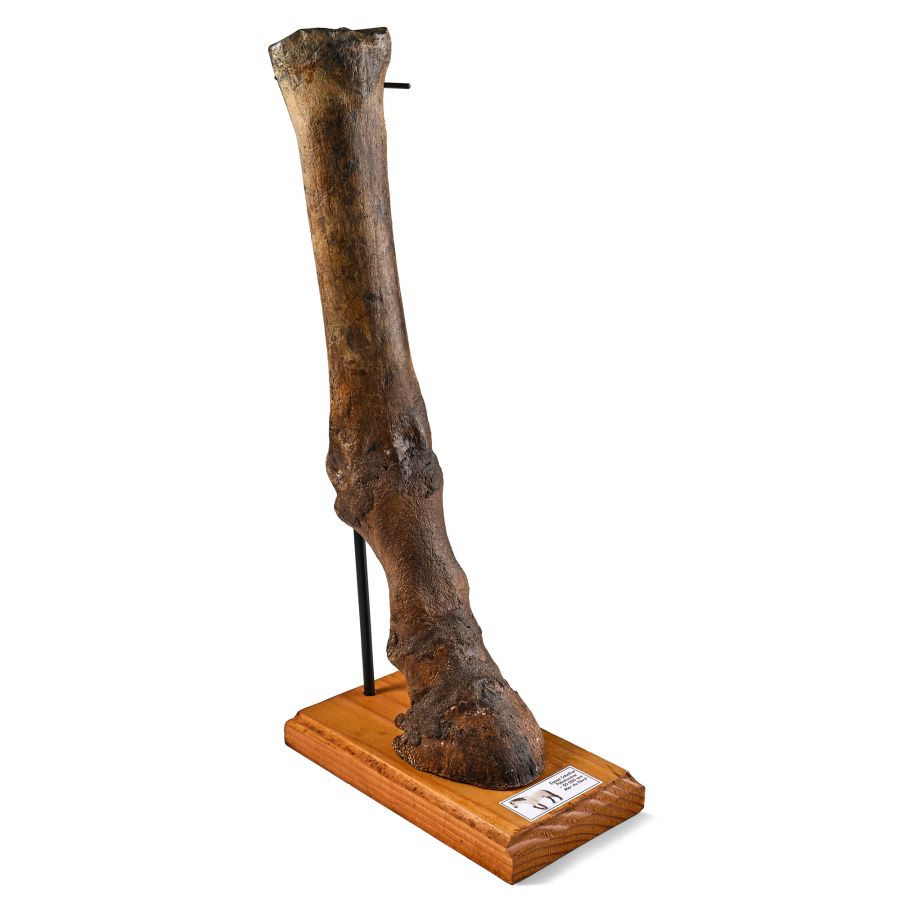
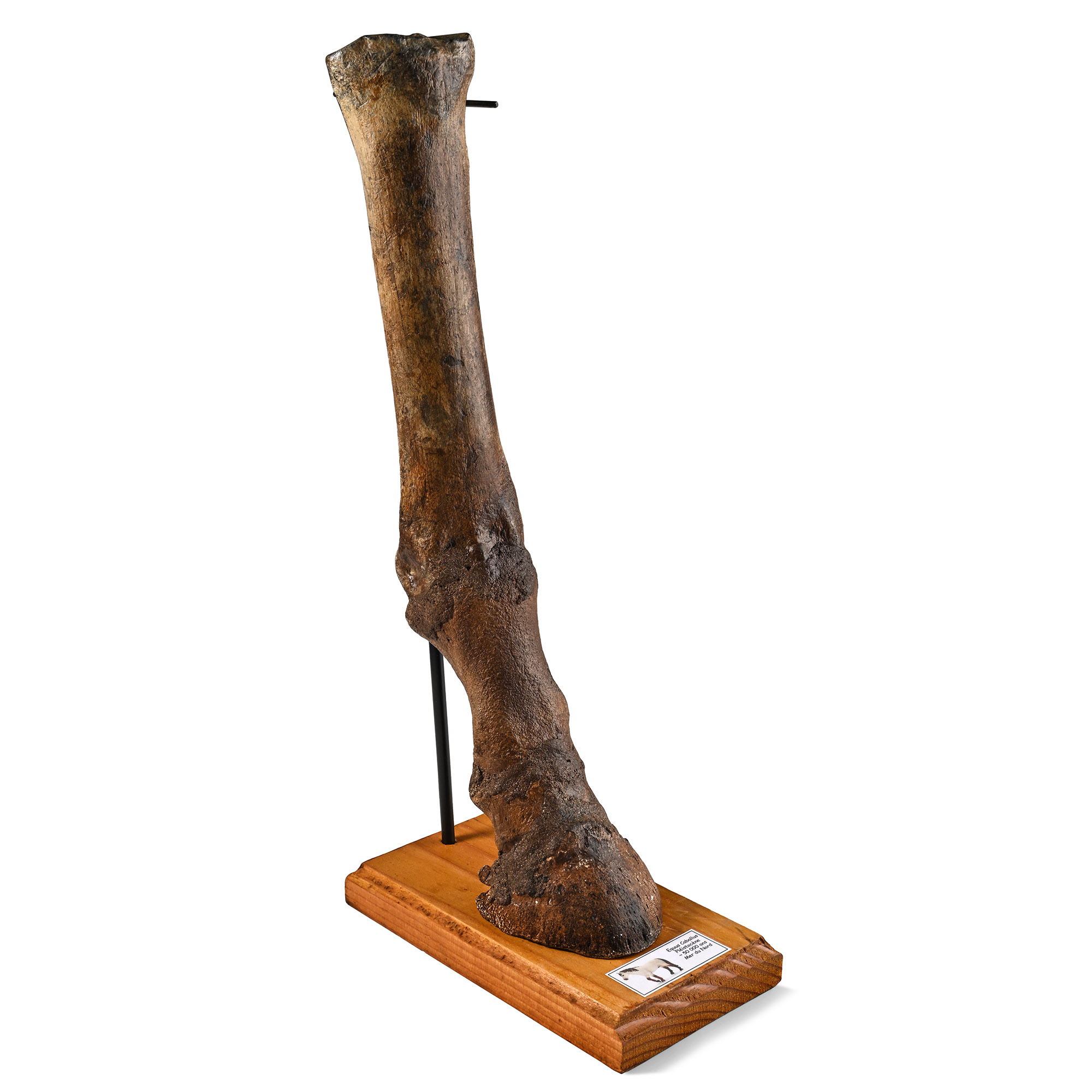
Ice Age Horse Fossil Leg Bone
PLEISTOCENE EPOCH, CIRCA 2.6 MILLION-11,700 YEARS B.P.
15 1/2 in. (1.06 kg total, 39.5 cm high including stand).
Display of the lower leg bones comprising the coffin bone, middle and proximal phalanx and the cannon bone; accompanied by a custom-made display stand with an information sticker.
ProvenanceEx Cambridgeshire, UK, collection.
FootnotesIce Age horses were smaller than their modern relatives and were well-adapted to the harsh cold climate, resembling the modern Przewalski's horses.
CONDITIONTimeLine Auctions follows a vetting process to ensure the authenticity and legality of all items, reinforcing our commitment to integrity and responsible trading. Each antiquity, antique, and coin lot undergoes thorough examination by a vetting committee of at least ten external specialists, professional trade association members, scientists, and archaeologists: Our Vetting Process
AUCTIONS:
TimeLine is a leading auction house specialising in antiquities, ancient art, collectables, natural history, coins, medals, and books. Our auctions offer museums, collectors, historians, and enthusiasts the opportunity to acquire unique and historically significant pieces.
LOT 3016
Ice Age Horse Fossil Leg Bone
Estimate £200 - 300€230 - 350 (for guidance only)$270 - 410 (for guidance only)
-
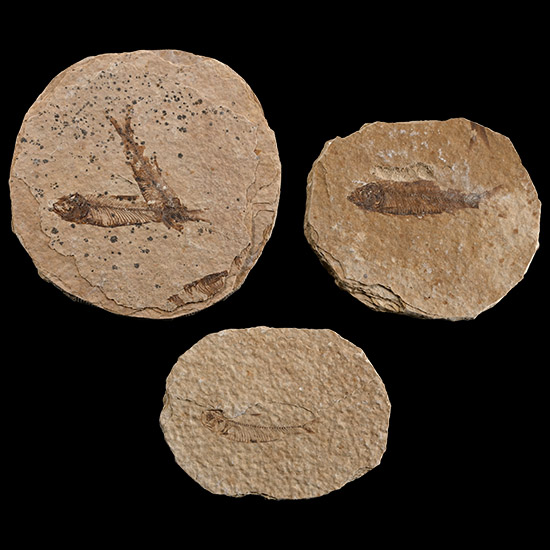
Three North American Knightia Fossil Fish
Eocene Period, 58-36 million years B.P.Estimate: £40 - 60 (+bp*)
Opening Bid: £5
Comprising three oval matrices with Knightia alta specimens, the largest with two overlapping fish. 148 grams total, 71-85 mm
From Green River formation, Wyoming, USA. From a Lincolnshire, UK, collection.
In southwest Wyoming (and parts of Colorado and Utah), in the Green River Formation, are found some of the world's most outstanding specimens of fossil fish. The Green River system was composed of three lakes: Lake Uinta, Lake Gosiute and Fossil Lake. These Eocene lakes lay in a series of intermountain basins formed by geological events that uplifted the Rocky Mountains during the early Tertiary period. The climate was much different from the desert-like climate of this area today. Both the fauna (crocodiles, alligators, boa constrictors and some subtropical fish families) and the flora (such as large palm trees) indicate a climate much like that found along the Gulf Coast today. Large amounts of ash found in the sediments indicate that volcanoes were particularly active at this time. -
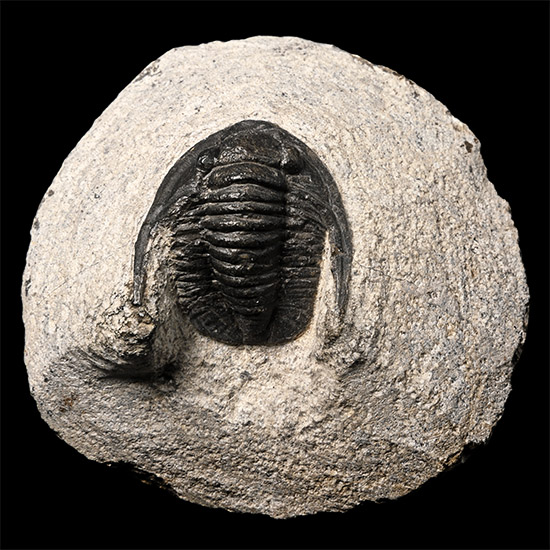
Cornuproetus Fossil Trilobite
Devonian Period, circa 390-360 million years B.P.Estimate: £30 - 40 (+bp*)
Bids: 1 | Current Bid: £5
Showing two elongated genals protruding from its cephalon. 114 grams, 60 mm
From a Cambridgeshire, UK, collection. -
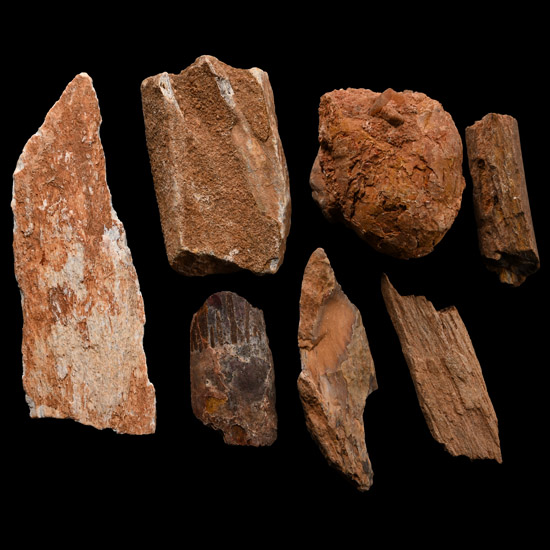
Spinosaurus Dinosaur Fossil Bone Fragment Group
Cretaceous Period, circa 125-113 million years B.P.Estimate: £20 - 30 (+bp*)
Opening Bid: £5
Comprising eight differently sized bone fragments from different bone structures. 133 grams total, 38-90 mm
Acquired on the UK art market. Property of an Essex, UK, gentleman.
The Spinosaurus was both a beachcomber-type scavenger and an active hunter, taking small stranded Plesiosaurs, Pterosaurs, turtles and large fish; adults weighed up to 21 tonnes and grew up to 18 meters long.
