
Loading, please wait...
LOT 0609
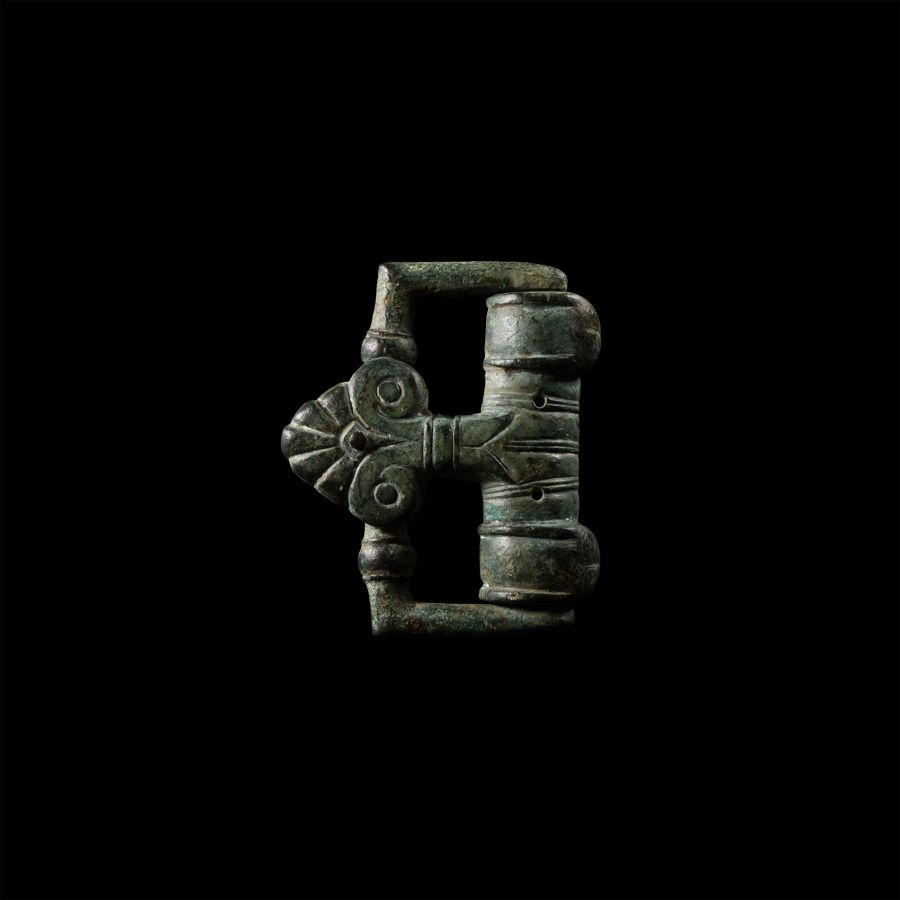
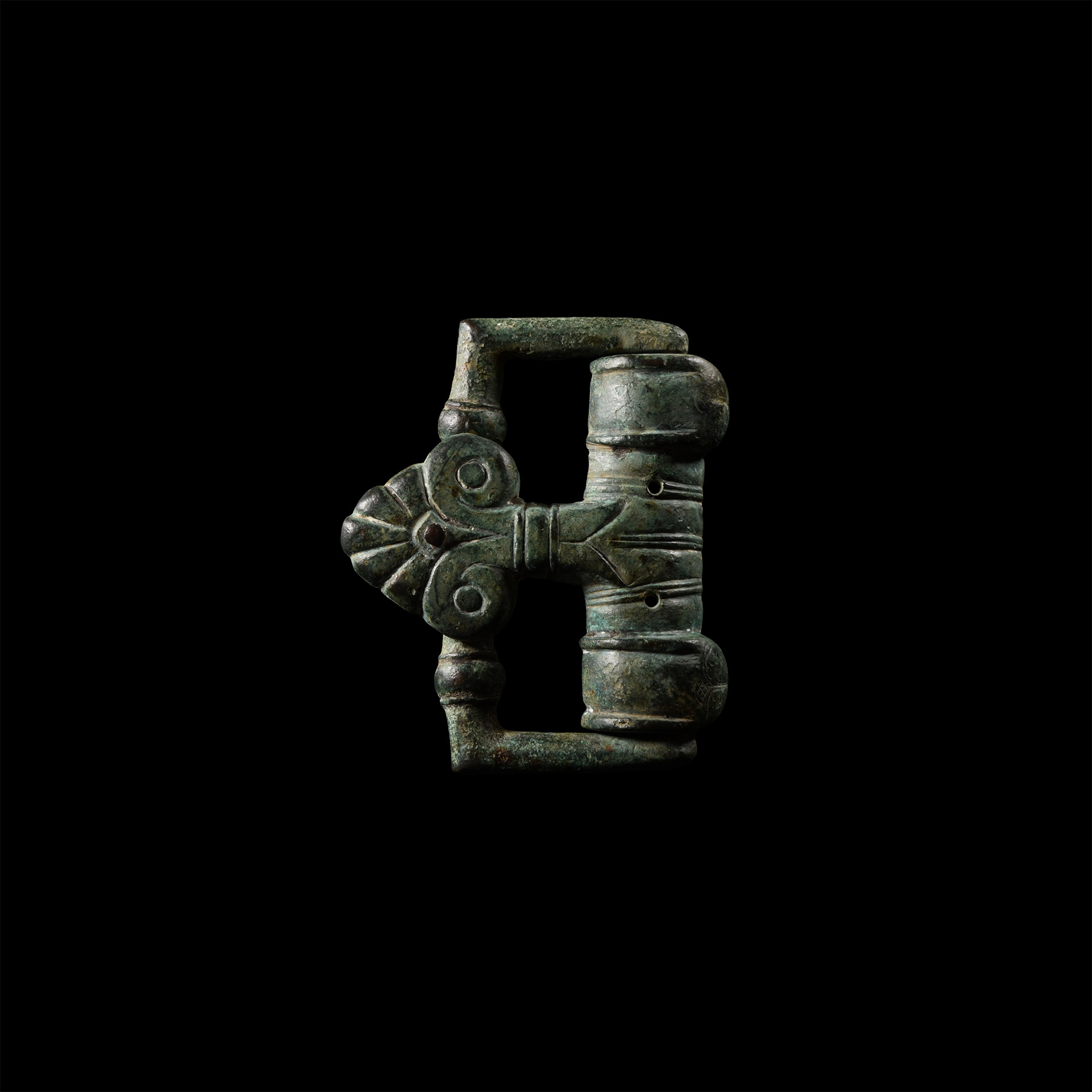
Huge Roman Bronze Buckle-Shaped Fitting
1ST-2ND CENTURY A.D.
4 1/2 in. (471 grams, 11.3 cm).
With rectangular loop and two bulbs flanking the rest for the tongue; robust hinged tongue integral with the hinge, terminating in a palmette; hollow to the underside.
ProvenanceAcquired 1980-2015.
Ex Abelita family collection.
Cf. Appels, A. & Laycock, S., Roman Buckles and Military Fittings, Witham, 2007, item AA12.7, for type.
FootnotesThe buckle is too large and heavy for normal use; it was probably created for an oversized statue of an emperor.
CONDITIONTimeLine Auctions follows a vetting process to ensure the authenticity and legality of all items, reinforcing our commitment to integrity and responsible trading. Each antiquity, antique, and coin lot undergoes thorough examination by a vetting committee of at least ten external specialists, professional trade association members, scientists, and archaeologists: Our Vetting Process
AUCTIONS:
TimeLine is a leading auction house specialising in antiquities, ancient art, collectables, natural history, coins, medals, and books. Our auctions offer museums, collectors, historians, and enthusiasts the opportunity to acquire unique and historically significant pieces.
-
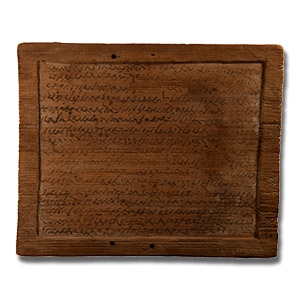
Roman Reused Inked Wooden Wax Tablet Relating to Sheep and Clothing
4th century A.D.Sold for (Inc. bp): £7,150
The shallow recessed panel displaying seventeen lines of hand-inked cursive text; reverse bearing twenty lines of hand-inked cursive text with a shallow rectangular vertical recess which once held wax seals; pierced twice on the upper and lower edges for attachment. 50 grams, 19.5 x 16 cm
From an important London collection since 1975.
Prof. Dr. Phil. Peter Rotenhoefer says: "The tablet is the second tabula of a testament consisting normally of three tablets (a tryptich). It contains in a highly formalistic legal language legacies for various persons (inter alia a Iulia) who receive certain items like e.g. sheep and clothes. 17 lines of cursive script on the first page, 20 lines on the rear." -
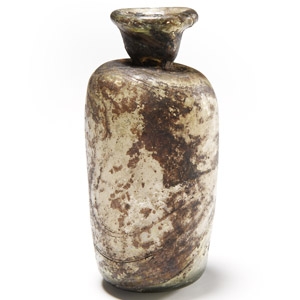
Roman Glass Barrel-Shaped Flask
2nd-3rd century A.D.Estimate: £120 - 170 (+bp*)
Opening Bid: £60
Cylindrical shape with flat bottom, short v-shaped neck with everted rim. 55.4 grams, 98 mm
Acquired 1980-2015. Ex Abelita family collection. -
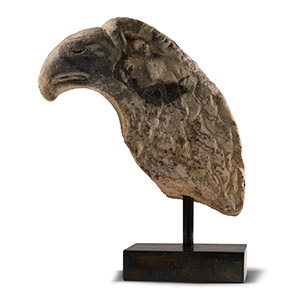
Roman Marble Eagle Head
1st-4th century A.D.Sold for (Inc. bp): £650
Carved facing left, with deep-set hooded eyes and a hooked beak, stylised feather detailing to the head; mounted on a custom-made display base. 1.88 kg total, 23 cm high including stand
Ex Simmons Gallery, London E11, UK. Ex London collection, 1980s-1990s.
In the Greco-Roman world, the eagle was the symbol of Zeus. It is most probable that this eagle flanked a statue of the god. A story is bruited abroad to the effect that Zeus, wanting to determine the centre of the world, let eagles fly of equal speed from west and east. The birds, flying in opposite directions, met at Pytho and that marked the central point of the whole world.
