
Loading, please wait...
_900x900.jpg "Huge Corinthian Black-Figure Lekanis Lid")
_200x200.jpg "Huge Corinthian Black-Figure Lekanis Lid")
.jpg "Huge Corinthian Black-Figure Lekanis Lid")
LOT 0068
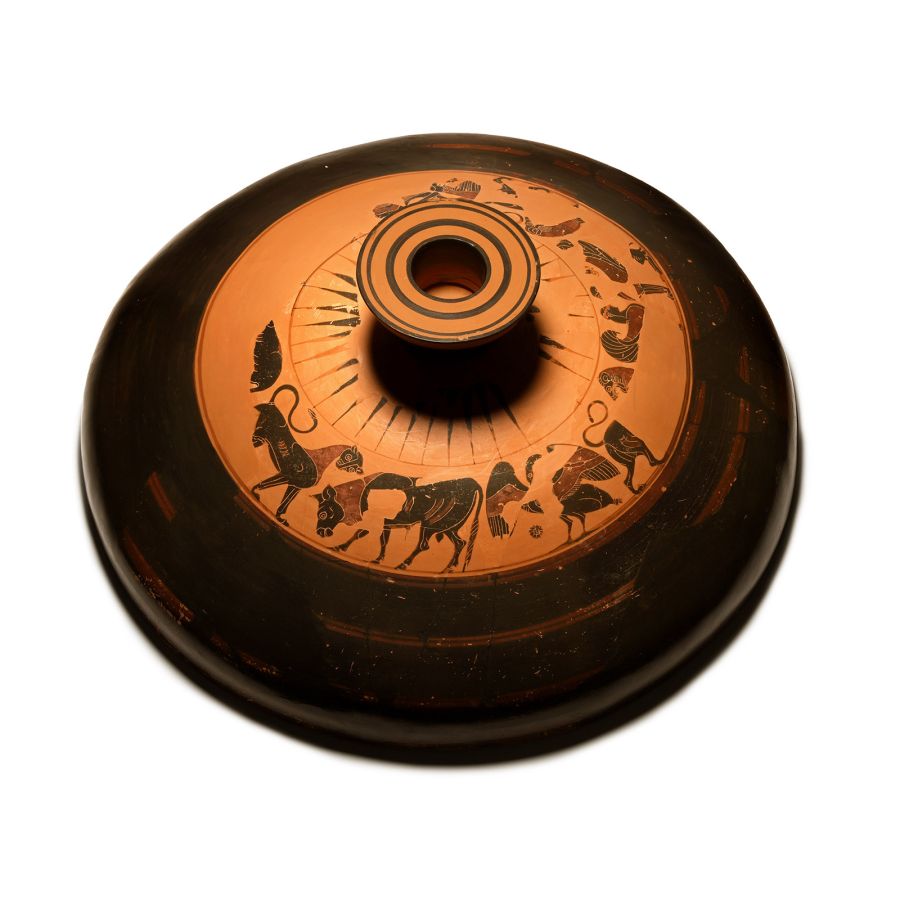
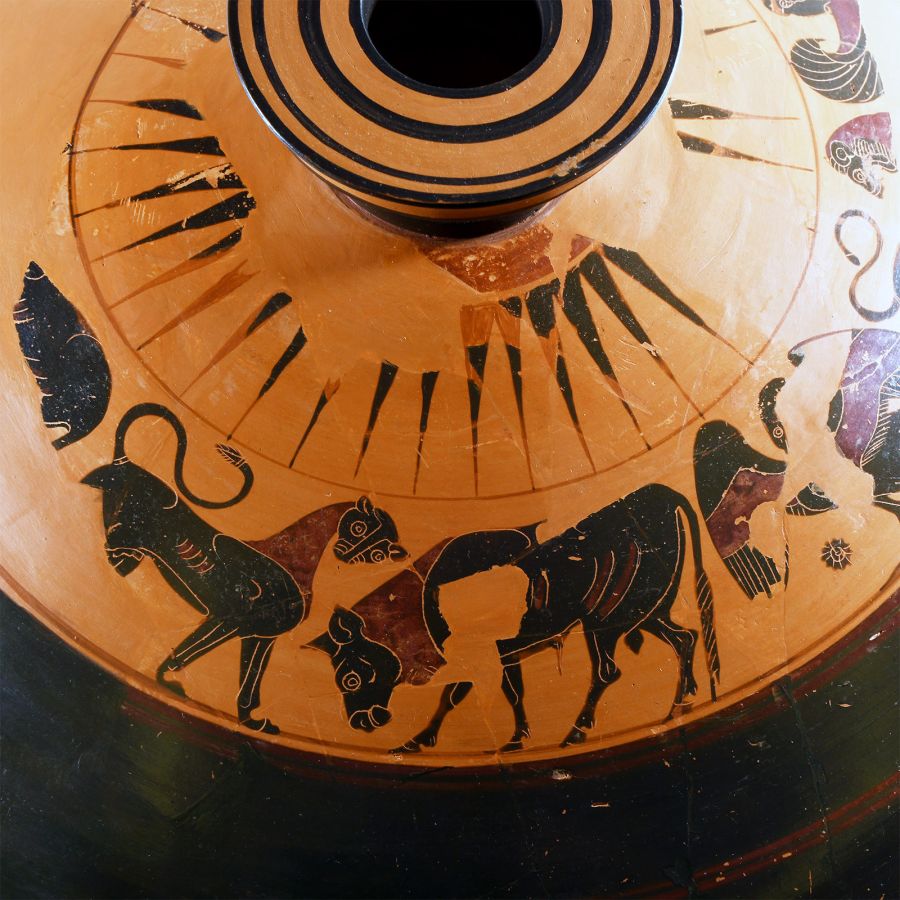
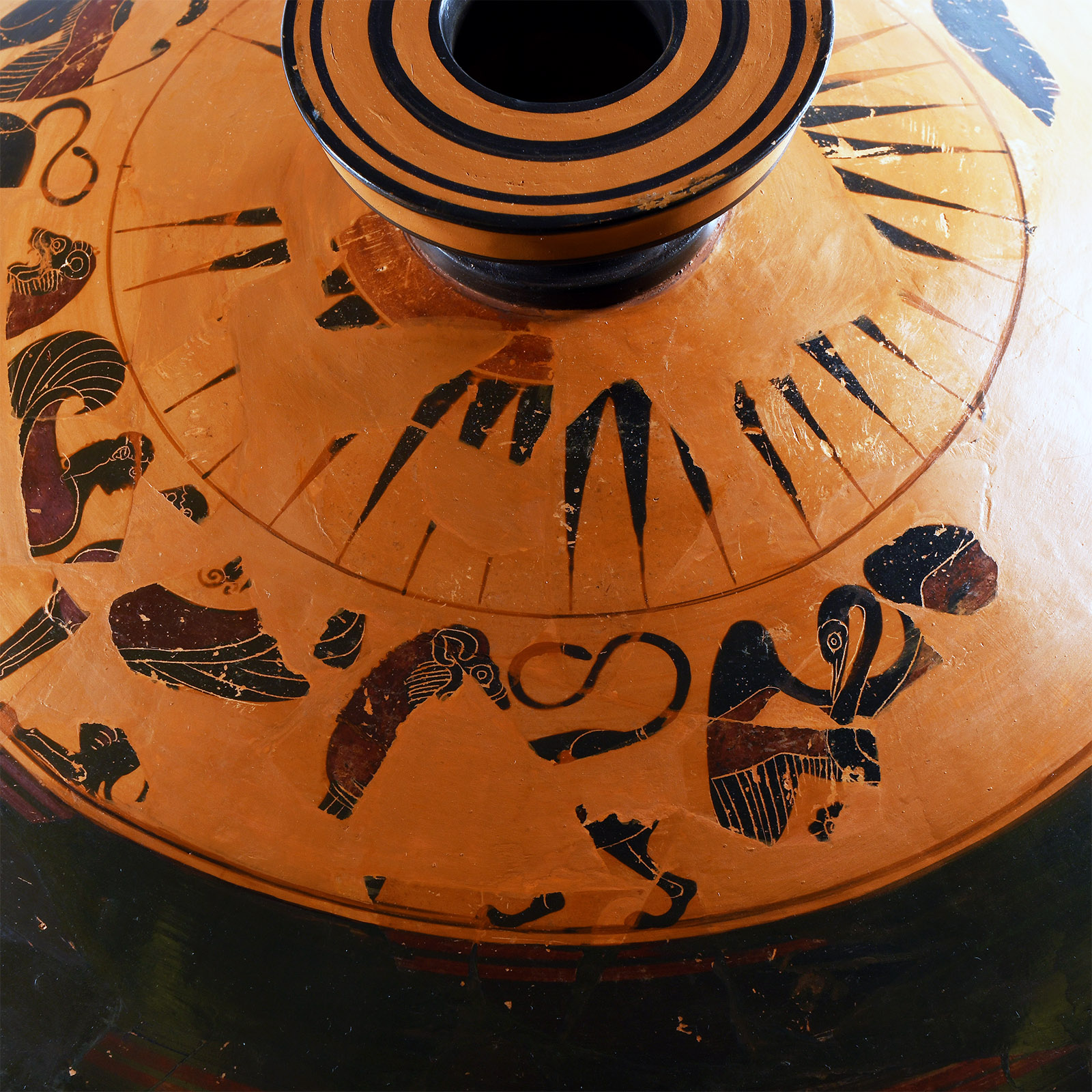
Huge Corinthian Black-Figure Lekanis Lid
6TH CENTURY B.C.
19 1/2 in. (3.7 kg, 49.5 cm wide).
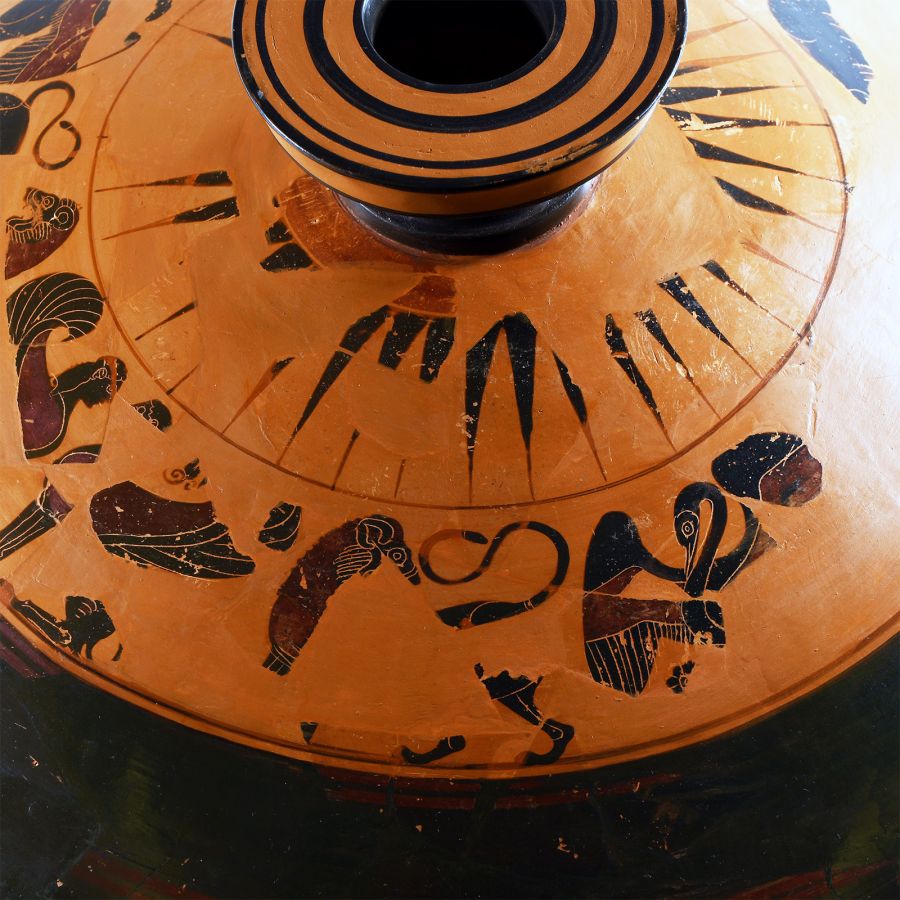
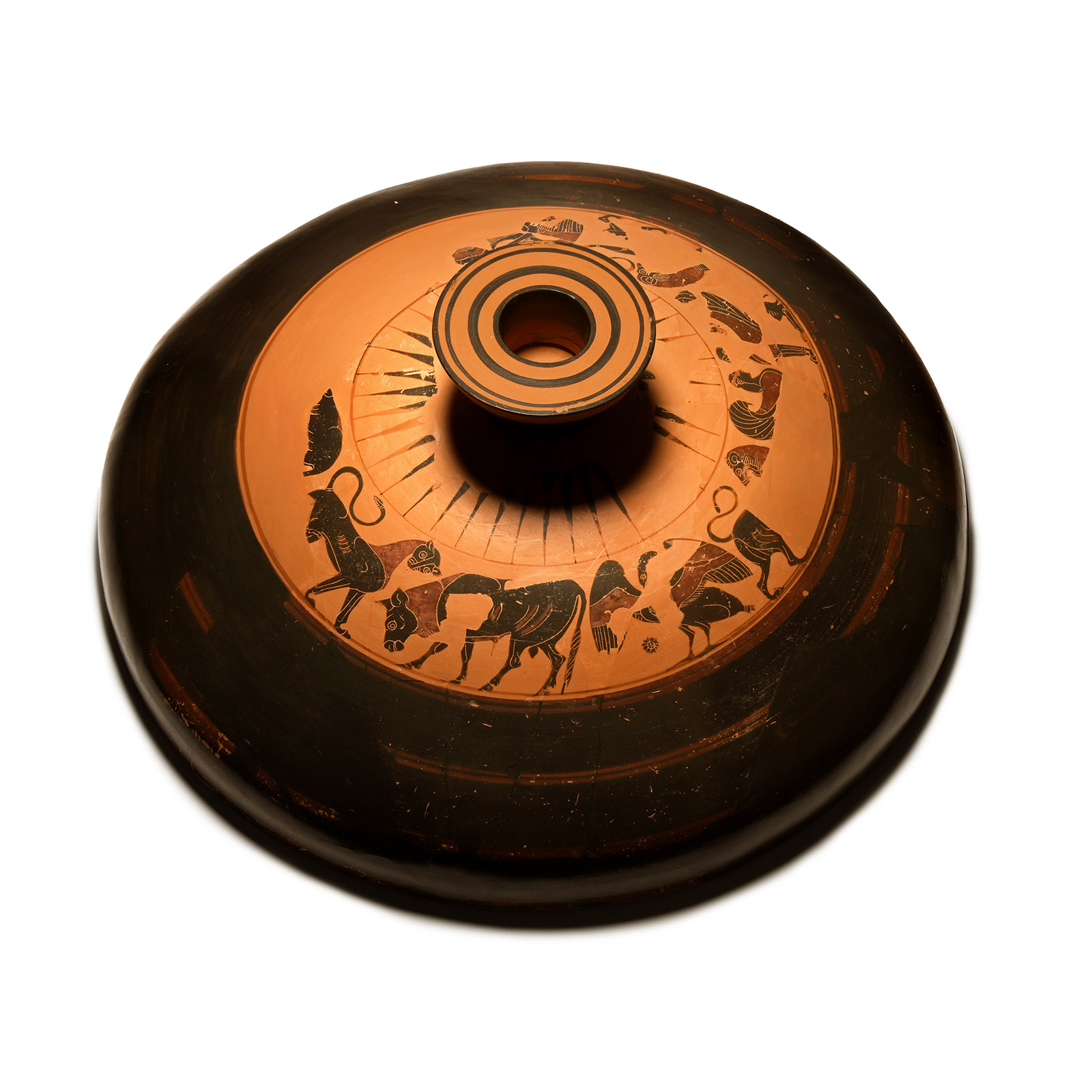
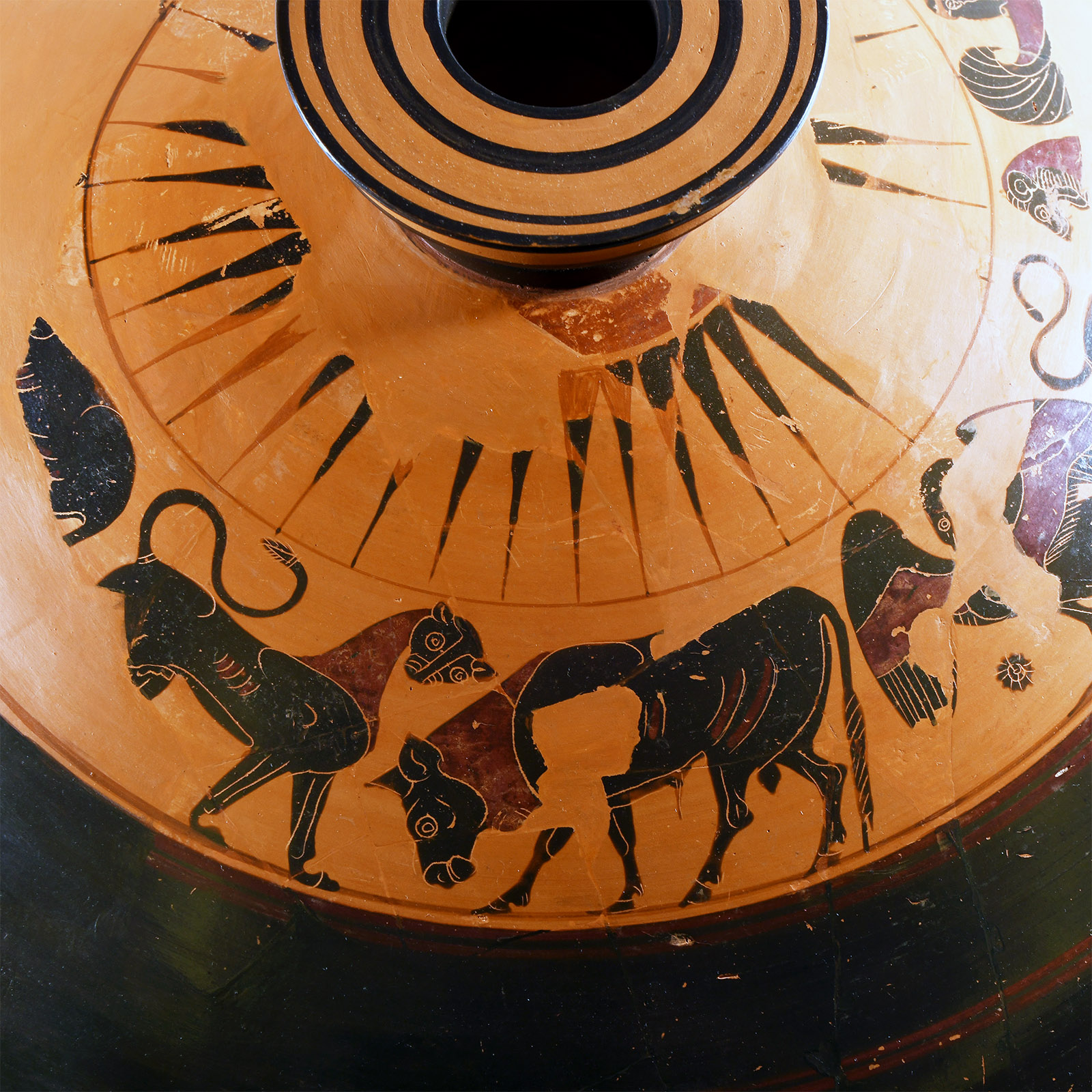
An extremely large Corinthian or Attic lid with concentric bands to the rim and handle; to the tondo, a frieze of painted figures comprising a swan, a regardant lion, two opposed sphinxes, another regardant lion, another swan, a bull, a lioness and part of another bull(?); restored.
ProvenanceAcquired early 1990s.
Ex private American collection; thence by descent.
Private Swiss collection since 1998.
This lot has been checked against the Interpol Database of stolen works of art and is accompanied by search certificate no.11614-199000.
Cf. The Metropolitan Museum, accession numbers 06.1021.23a, b; 74.51.364; 06.1021.23a, b and 27.116, for similar animal figures painted on different vessel types and 1991.11.1, for a comparable lid of this date; cf. The British Museum, museum number 1886,0401.1180, for a very similar lion figure.
CONDITIONTimeLine Auctions follows a vetting process to ensure the authenticity and legality of all items, reinforcing our commitment to integrity and responsible trading. Each antiquity, antique, and coin lot undergoes thorough examination by a vetting committee of at least ten external specialists, professional trade association members, scientists, and archaeologists: Our Vetting Process
AUCTIONS:
TimeLine is a leading auction house specialising in antiquities, ancient art, collectables, natural history, coins, medals, and books. Our auctions offer museums, collectors, historians, and enthusiasts the opportunity to acquire unique and historically significant pieces.
LOT 0068
Huge Corinthian Black-Figure Lekanis Lid
Estimate £6,000 - 8,000€6,960 - 9,280 (for guidance only)$8,100 - 10,800 (for guidance only)
-
.jpg)
Eastern Greek Bronze Standing Bull Statuette
Circa 11th-9th century B.C.Sold for (Inc. bp): £780
With thick ribbed neck, crescent horns and prominent genitals; mounted on a custom-made stand. 141 grams total, 86 mm wide including stand
From the collection of D. Smith, Sussex, UK, 1990s.
Like dozens of similar statuettes depicting animals or human figures, this bronze bull was probably offered by a worshipper during a sacrifice. A large number of statuettes were found in a thick layer of ash from the altar of Zeus at Olympia. In 2021, a similar statuette, with protruding horns, was found in the sanctuary. Bulls and horses were the favourite cultic animals in the Cretan, Achaean and Archaic Greek civilisations. The model of the long and narrow body was borrowed from the Near East. -
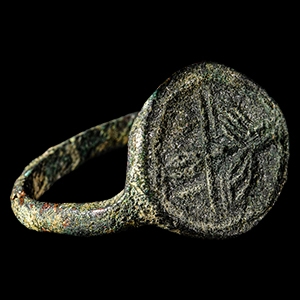
Greek Bronze Signet Ring
Circa 4th-2nd century B.C.Sold for (Inc. bp): £52
With a D-section hoop, large rounded bezel with a geometric motif. 2.89 grams, 23.01 mm overall, 19.79 mm internal diameter (approximate size British O, USA 7, Europe 14.98, Japan 14)
Property of a UK gentleman, acquired 20 November 1981. Property of an East Sussex, UK, gentleman. Accompanied by an old handwritten identification ticket. -
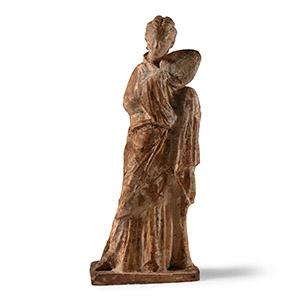
Greek Tanagra Female Figure with Fan
4th-3rd century B.C.Sold for (Inc. bp): £1,690
Modelled robed with a palmette fan; rectangular slot to reverse, hollow underside; with traces of white engobe and polychromy; recomposed from fragments. 189 grams, 16 cm high
Private collection Adry de Carbuccia, Sainte-Maxime, France, acquired prior to 1975. with Eurl Eve, Paris, 11 December 2013, lot 30. Accompanied by a copy of an Art Loss Register certificate number S00085753, dated 26 March 2014. Accompanied by a copy of a French cultural passport no.1537836. Accompanied by a copy of an original thermoluminescence analysis report no.QED1340/FG-0404 from QED Laboratoire. Accompanied by a copy of the relevant Eurl Eve catalogue pages.
