
Loading, please wait...
LOT 0067
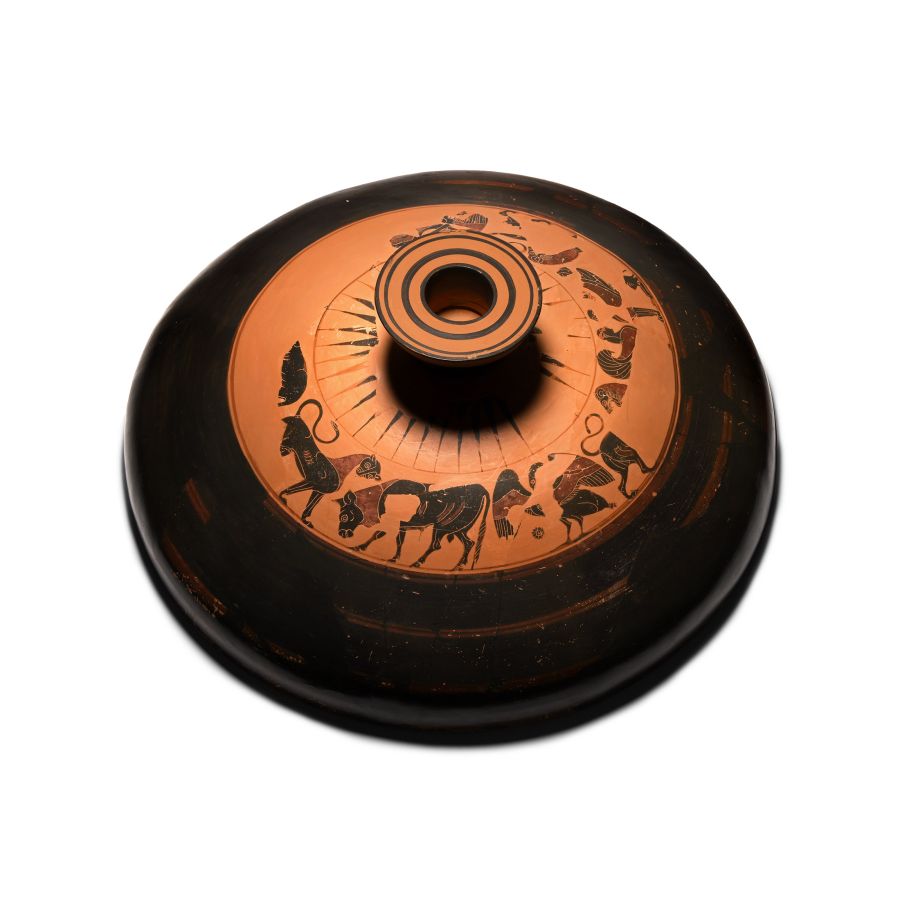
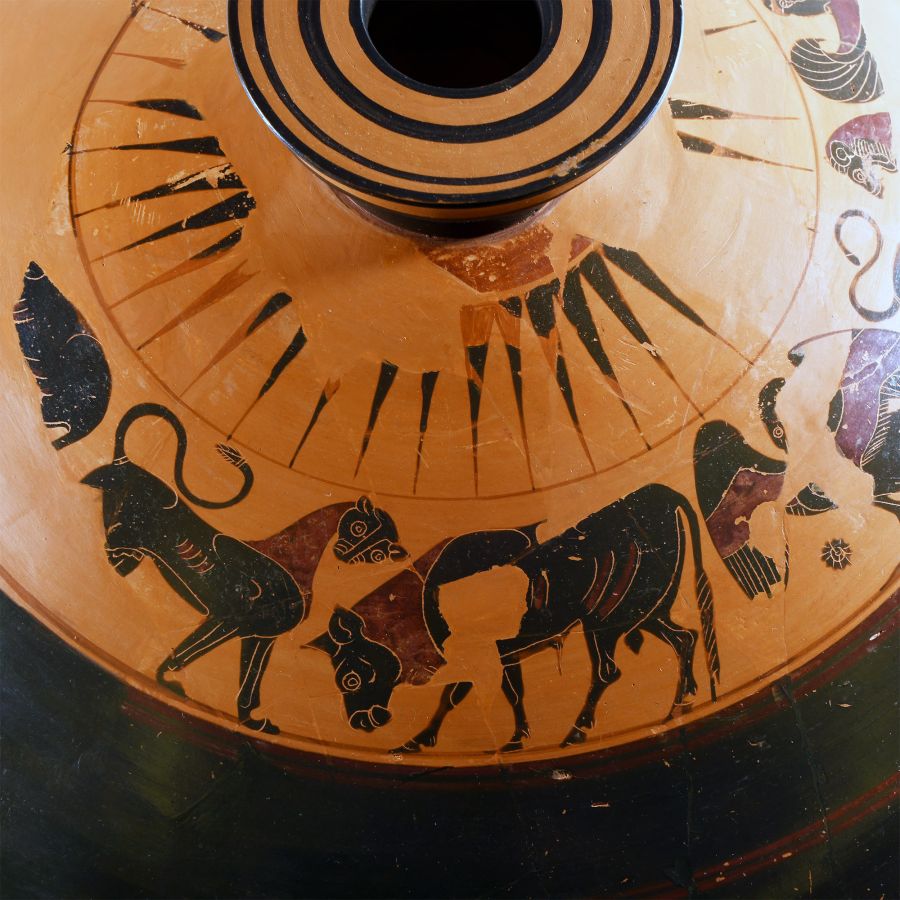
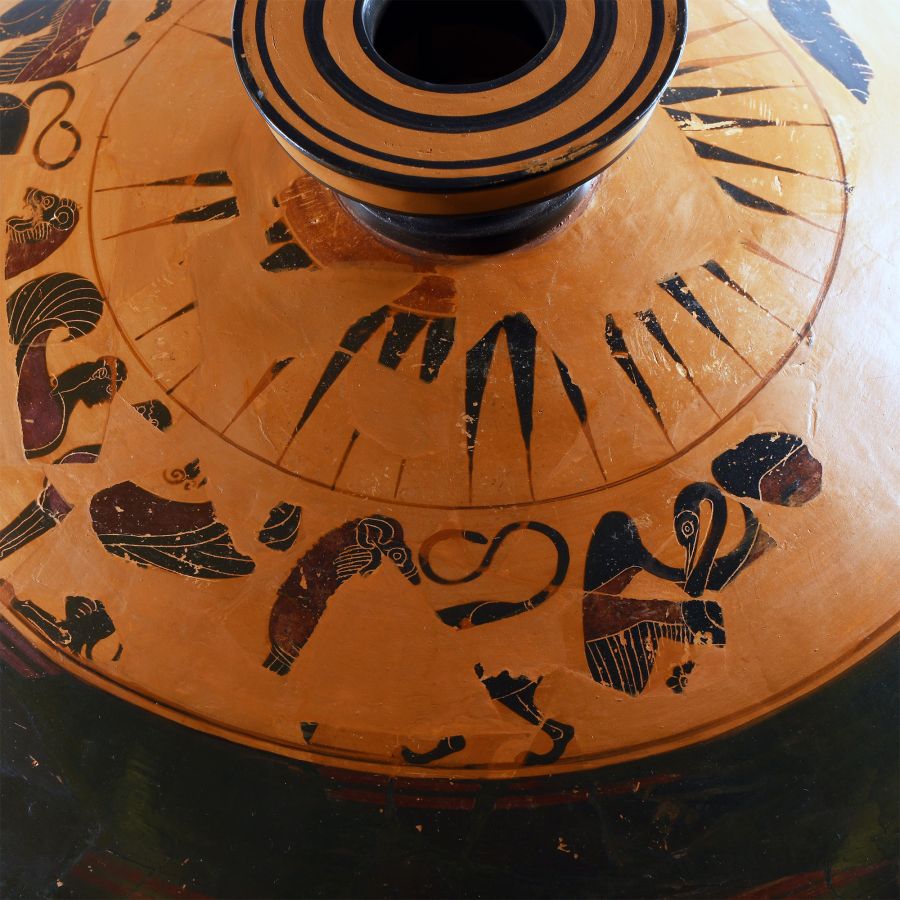
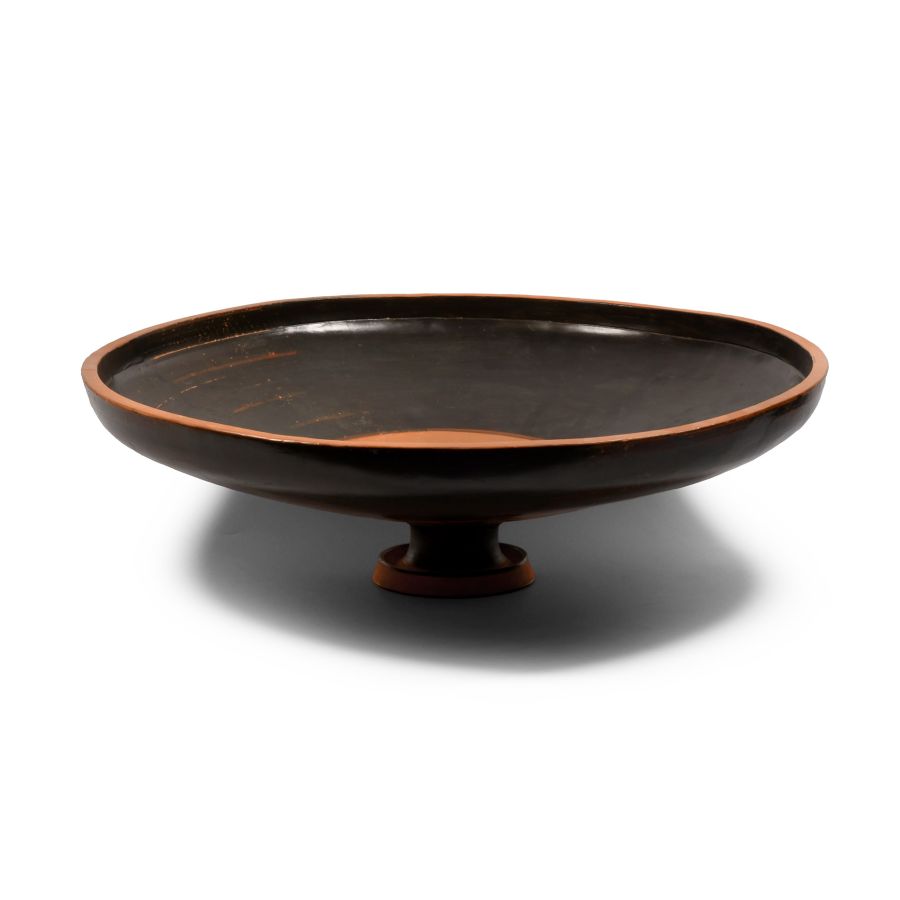
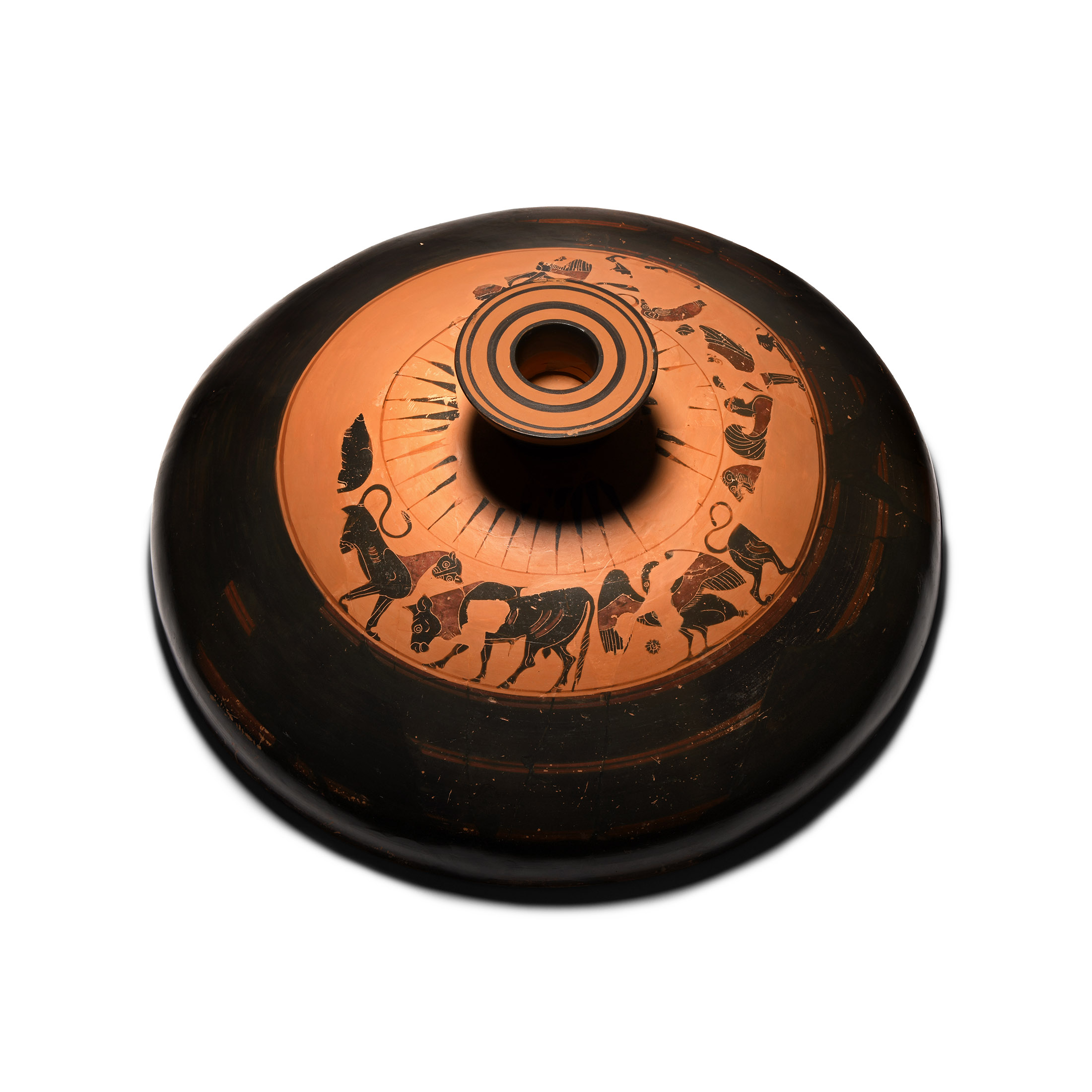
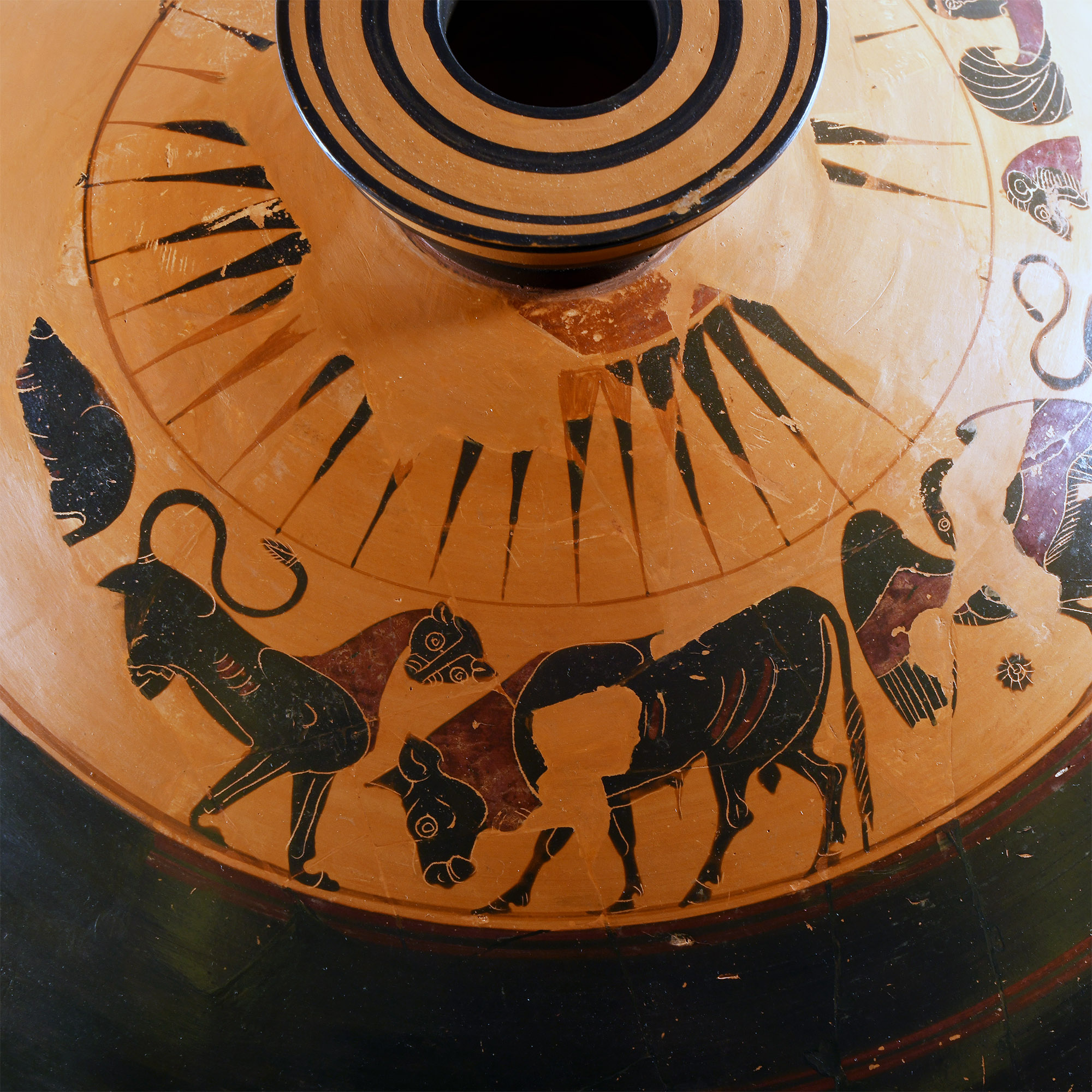
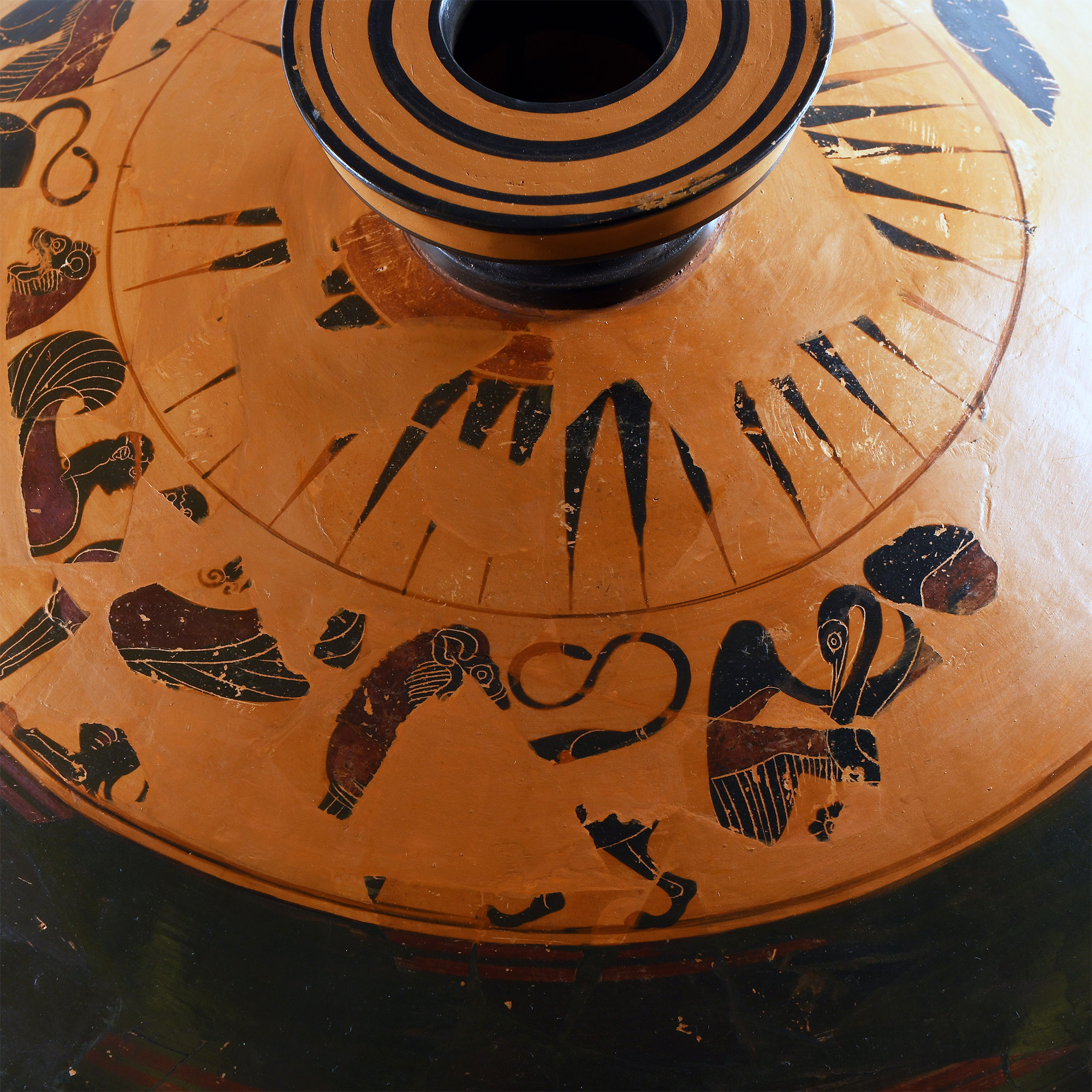
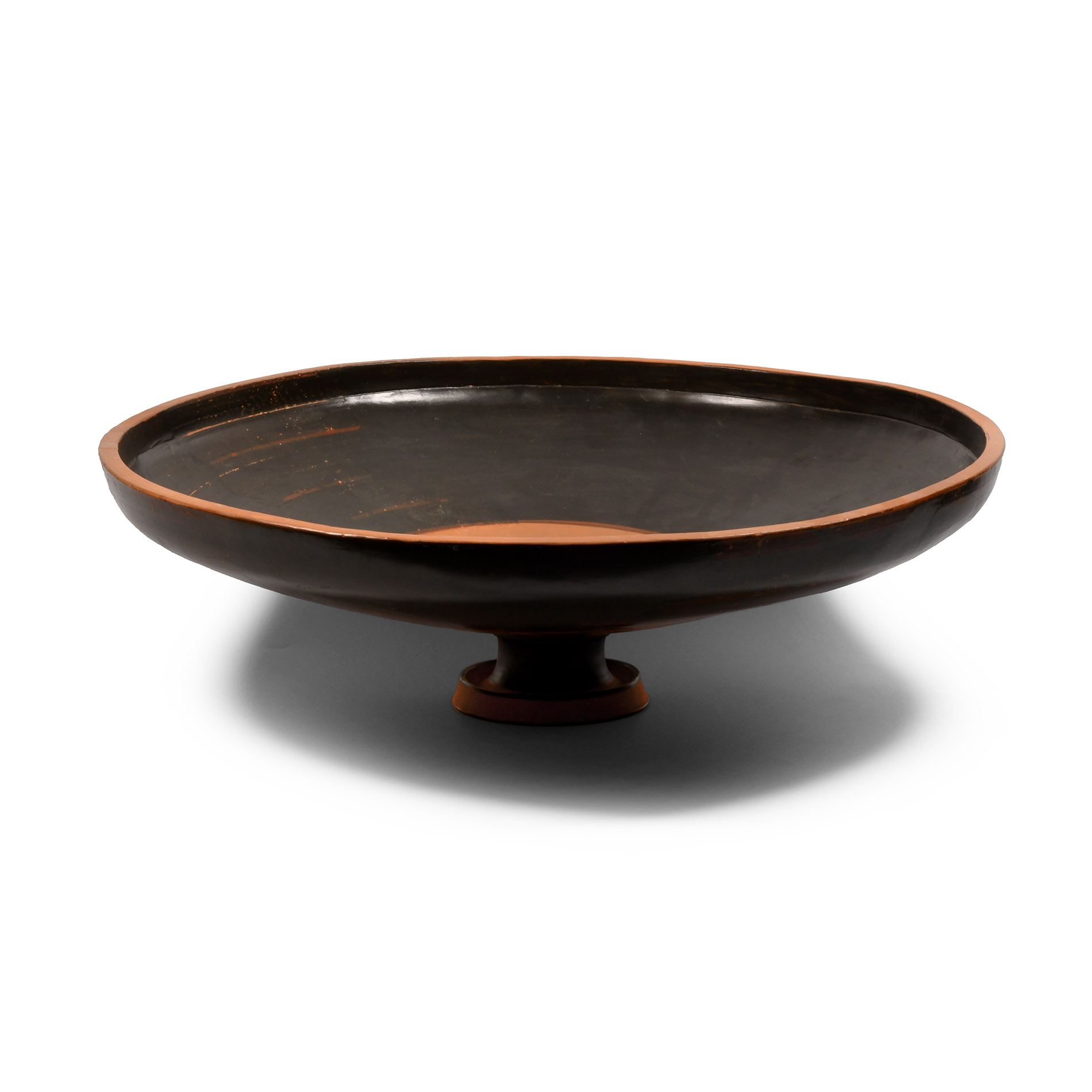
Huge Corinthian Black-Figure Lekanis Lid
6TH CENTURY B.C.
19 1/2 in. (3.7 kg, 49.5 cm wide).
An extremely large Corinthian or Attic black-figure ceramic lekanis lid with concentric bands to the rim and handle; to the tondo, a frieze of painted figures comprising a swan, a regardant lion, two opposed sphinxes, another regardant lion, another swan, a bull, a lioness and part of another bull(?); restored.
ProvenanceAcquired early 1990s.
Ex private American collection; thence by descent.
Private Swiss collection since 1998.
This lot has been checked against the Interpol Database of stolen works of art and is accompanied by search certificate no.11614-199000.
Cf. The Metropolitan Museum, accession numbers 06.1021.23a, b; 74.51.364; 06.1021.23a, b and 27.116, for similar animal figures painted on different vessel types and 1991.11.1, for a comparable lid of this date; cf. The British Museum, museum number 1886,0401.1180, for a very similar lion figure.
CONDITIONTimeLine Auctions follows a vetting process to ensure the authenticity and legality of all items, reinforcing our commitment to integrity and responsible trading. Each antiquity, antique, and coin lot undergoes thorough examination by a vetting committee of at least ten external specialists, professional trade association members, scientists, and archaeologists: Our Vetting Process
AUCTIONS:
TimeLine is a leading auction house specialising in antiquities, ancient art, collectables, natural history, coins, medals, and books. Our auctions offer museums, collectors, historians, and enthusiasts the opportunity to acquire unique and historically significant pieces.
LOT 0067
Huge Corinthian Black-Figure Lekanis Lid
Estimate £10,000 - 14,000€11,600 - 16,240 (for guidance only)$13,500 - 18,900 (for guidance only)
-
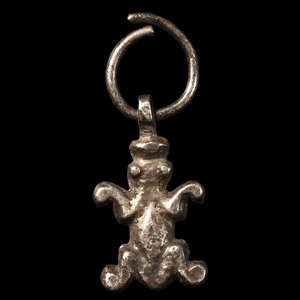
Graeco-Roman Silver Frog Amulet
2nd-1st century B.C.Sold for (Inc. bp): £104
A silver pendant with suspension ring formed as a frog modelled in the half-round with limbs splayed. 3.27 grams, 34 mm
London, UK, art market, 1980s. From the collection of G.M.R.H., London, UK. -
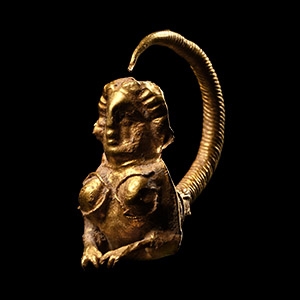
Greek Gold Sphinx Earring
3rd-2nd century B.C.Sold for (Inc. bp): £390
A single gold earring composed of a twisted wire hoop, stylised bust of a sphinx with detailed breast and lion paws. 2.55 grams, 26 mm
Acquired 1980-2015. Ex Abelita family collection.
Earrings with a sphinx represent a variety of the earrings created by the Hellenised goldsmiths of the Black Sea area. These figures usually had an inlaid garnet and are dated between late 3rd and 2nd century B.C. They belong to the category of earrings with a female head, often visible in graves of the Black Sea area and not always of good quality. -
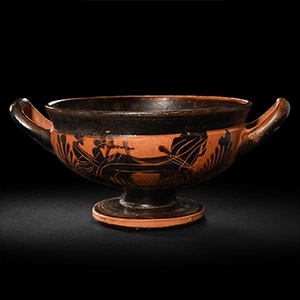
Large Greek Attic Black Figure Kylix with Chariot Scene
5th century B.C.Sold for (Inc. bp): £1,950
A terracotta kylix with broad flat foot, short stem, broad bowl with carination at the shoulder, glared mouth and two square strap handles; frieze of black-painted decoration including two scenes of a chariot yoked to two centaurs, one with sgraffito markings, between palmettes; restored. 566 grams, 25.5 cm wide
Restored.; fine condition, repaired.
Cambridgeshire collection, 1990s-2000s. Ex property of a Sussex gentleman. Accompanied by an academic report by Raffaele D’Amato. This lot has been checked against the Interpol Database of stolen works of art and is accompanied by search certificate number no.11579-198944.
These Attic kylikes were usually presented with a stemmed base, a deep bowl and twin, upturned loop handles, all upon a concave base. The exterior walls were decorated with black-figure technique on red background, here in a style remarkably similar to that of the Haimon Painter, especially in the rendering of facial features, and feet. The imagery on the exterior of these kylikes, used in the symposia, varied a lot. Just as the cup could be a mask (in the so-called typology of the Attic black-figure eye cups) to transform the drinker, to give a “complex painted character”. Daily life scenes, or fantasies like the chariot here pulled by centaurs, were among the various subjects.
