
Loading, please wait...
LOT 2112
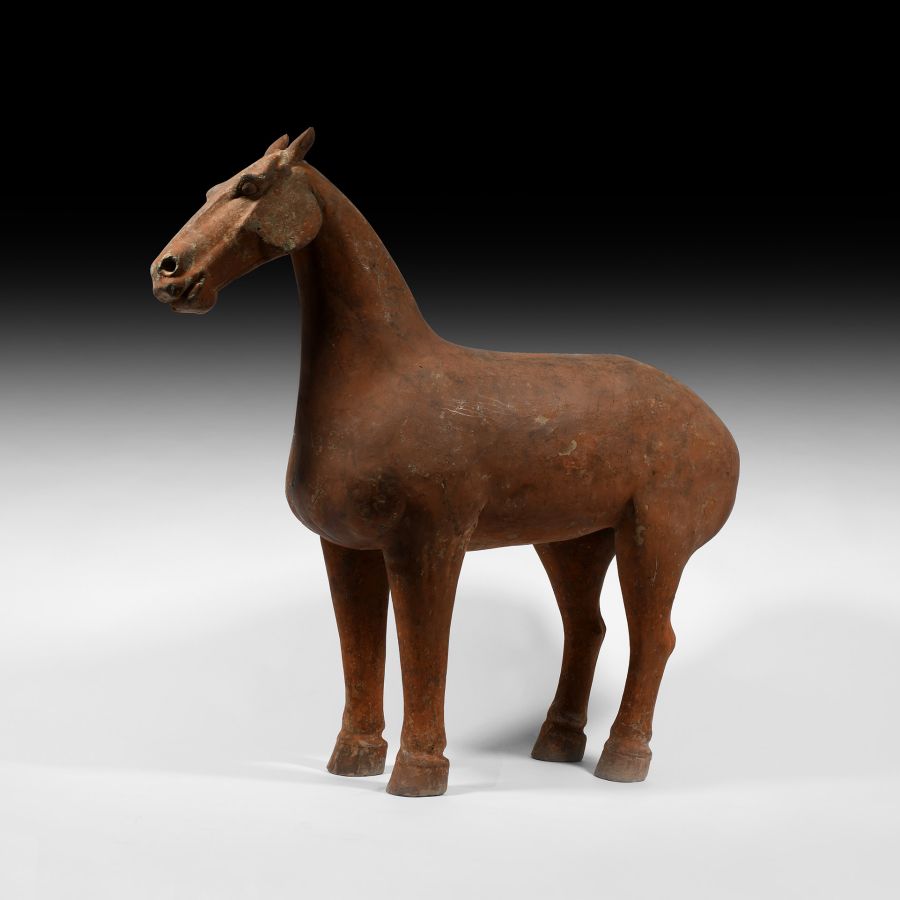
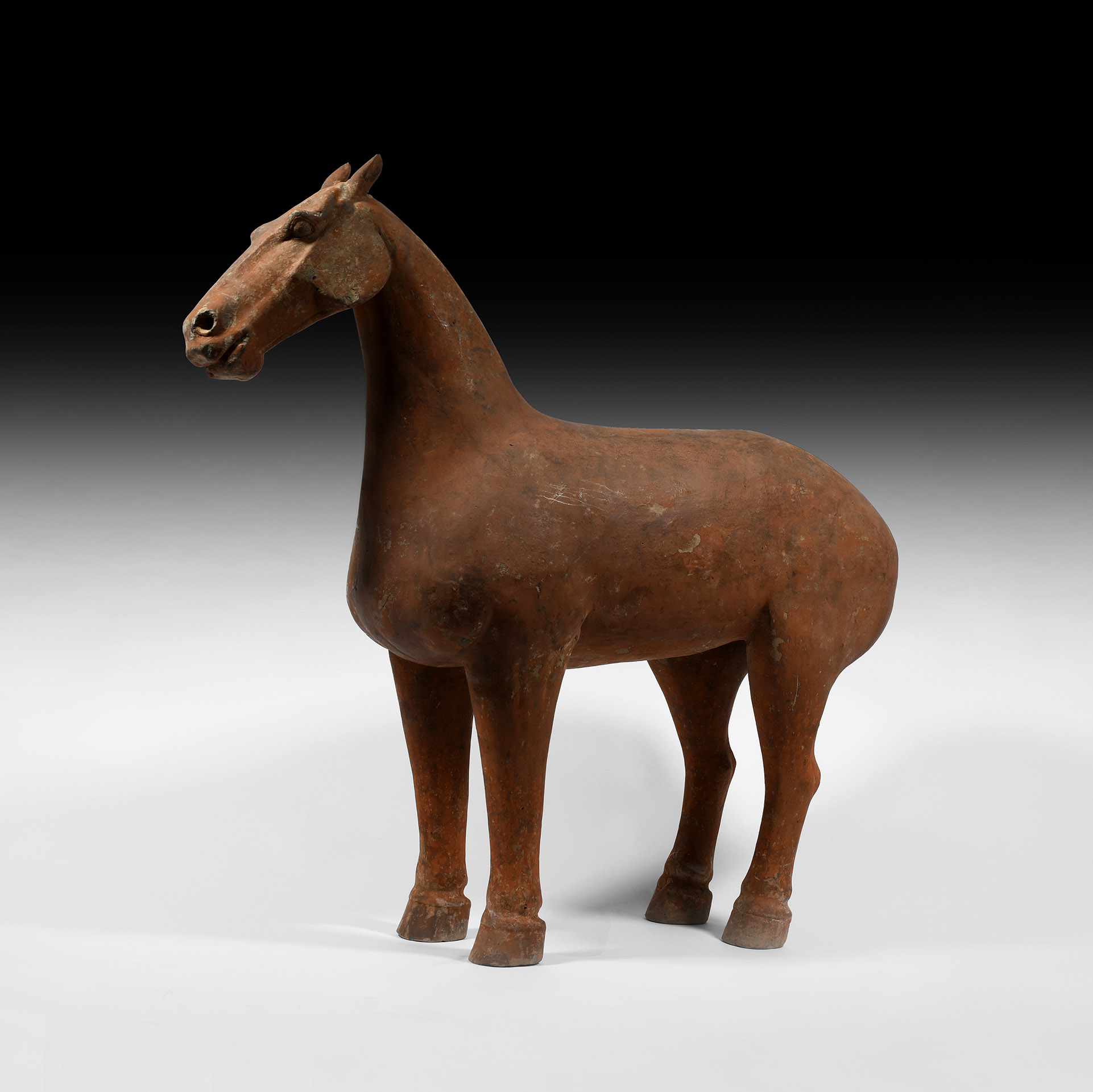
Huge Chinese Han Standing Horse
HAN DYNASTY, 206 B.C.-220 A.D. OR LATER
29 1/8 in. (19.1 kg, 74 cm wide).
Modelled in the round with its head oriented forwards, with semi-naturalistic anatomical and facial detailing; socket to rump for attachment of tail.
ProvenanceAcquired in the 1990s.
From a North Yorkshire private collection, UK.
Cf. Harrist, R.E. Jr., Power and Virtue The Horse in Chinese Art, New York, 1997, pp.54-55, for similar.
CONDITIONTimeLine Auctions follows a vetting process to ensure the authenticity and legality of all items, reinforcing our commitment to integrity and responsible trading. Each antiquity, antique, and coin lot undergoes thorough examination by a vetting committee of at least ten external specialists, professional trade association members, scientists, and archaeologists: Our Vetting Process
AUCTIONS:
TimeLine is a leading auction house specialising in antiquities, ancient art, collectables, natural history, coins, medals, and books. Our auctions offer museums, collectors, historians, and enthusiasts the opportunity to acquire unique and historically significant pieces.
-
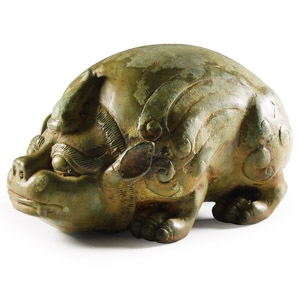
Chinese Han Style Bronze Animal
20th century A.D.Estimate: £200 - 300 (+bp*)
Opening Bid: £100
Formed as a crouching quadruped with stubby legs, large head with long pointed ears, prominent eyebrows and almond-shaped eyes, wide open mouth with fangs; hollow-formed. 569 grams, 12.1 cm
From a Cotswold, UK, collection, 1980-1990s. -
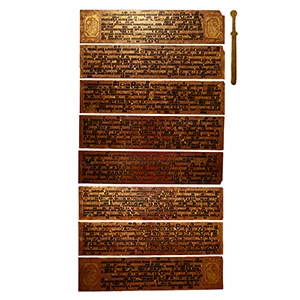
Gilt Burmese Buddhist Kammavaca Manuscript Group
Konbaung Dynasty, 18th-19th century A.D.Sold for (Inc. bp): £520
Written in Pali in Burmese square script on gilded, lacquered and numbered palm leaves; each leaf is double-sided with the exception of one cover leaf which displays interlaced geometric panels populated with female figures, dragonesques and birds to one face; accompanied by an ornately decorated sword-shaped 'pointer', also gilded, possibly not belonging. 1.15 kg total, 29-56.5 cm
London collection since the 1980s. Property of a Canadian family.
Kammavaca is a Pali term describing an assemblage of passages from the Tipitaka (the Theravada Buddhist canon) relating to ordination, the bestowing of robes and other rituals of monastic life. The texts typically contain religious instructions for monks. The piercings in the leaves are functional; each leaf was placed over a skewer (likely bamboo) when read. -
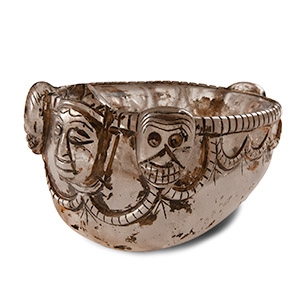
Large Tibetan Rock Crystal Kapala Vessel with Citipati Faces
Late 19th century A.D. or earlierSold for (Inc. bp): £416
A 'skull cup' displaying a crowned head flanked by two monster skulls carved in relief to the front face, a single grinning skull to the rear, notched borders around the vessel rim, swags below; chip to reverse. 1.6 kg, 17 cm
Acquired from an old German collection. Property of RWM Collection.
