
Loading, please wait...
LOT 1276
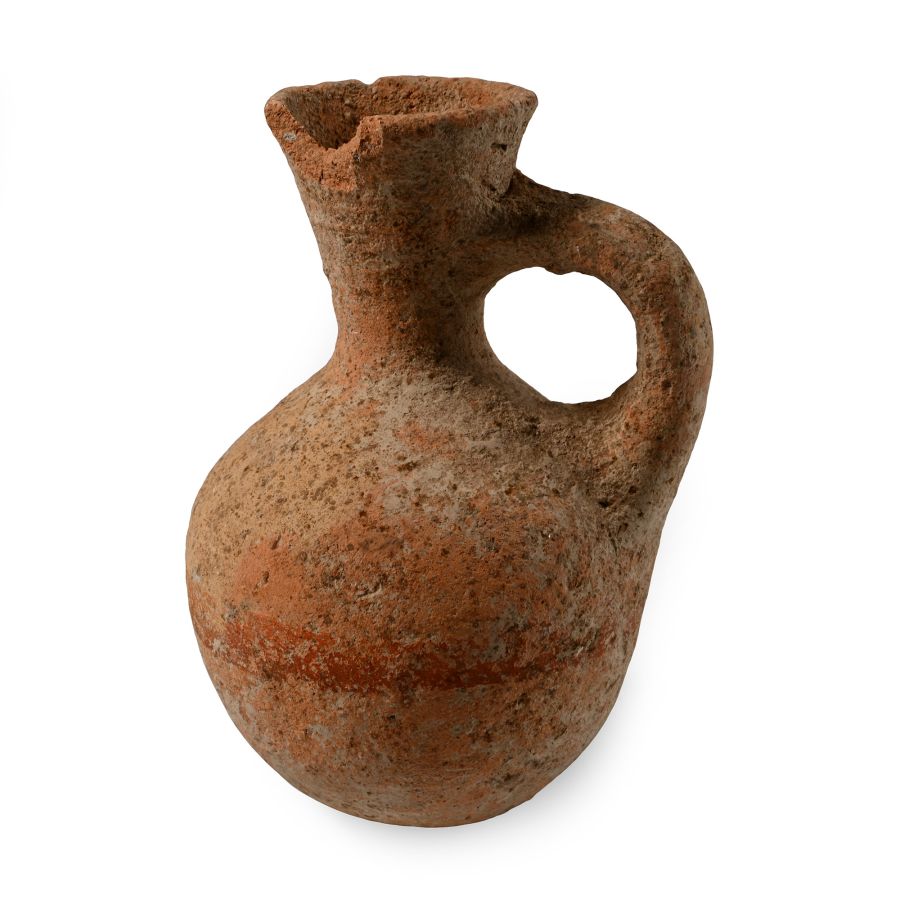
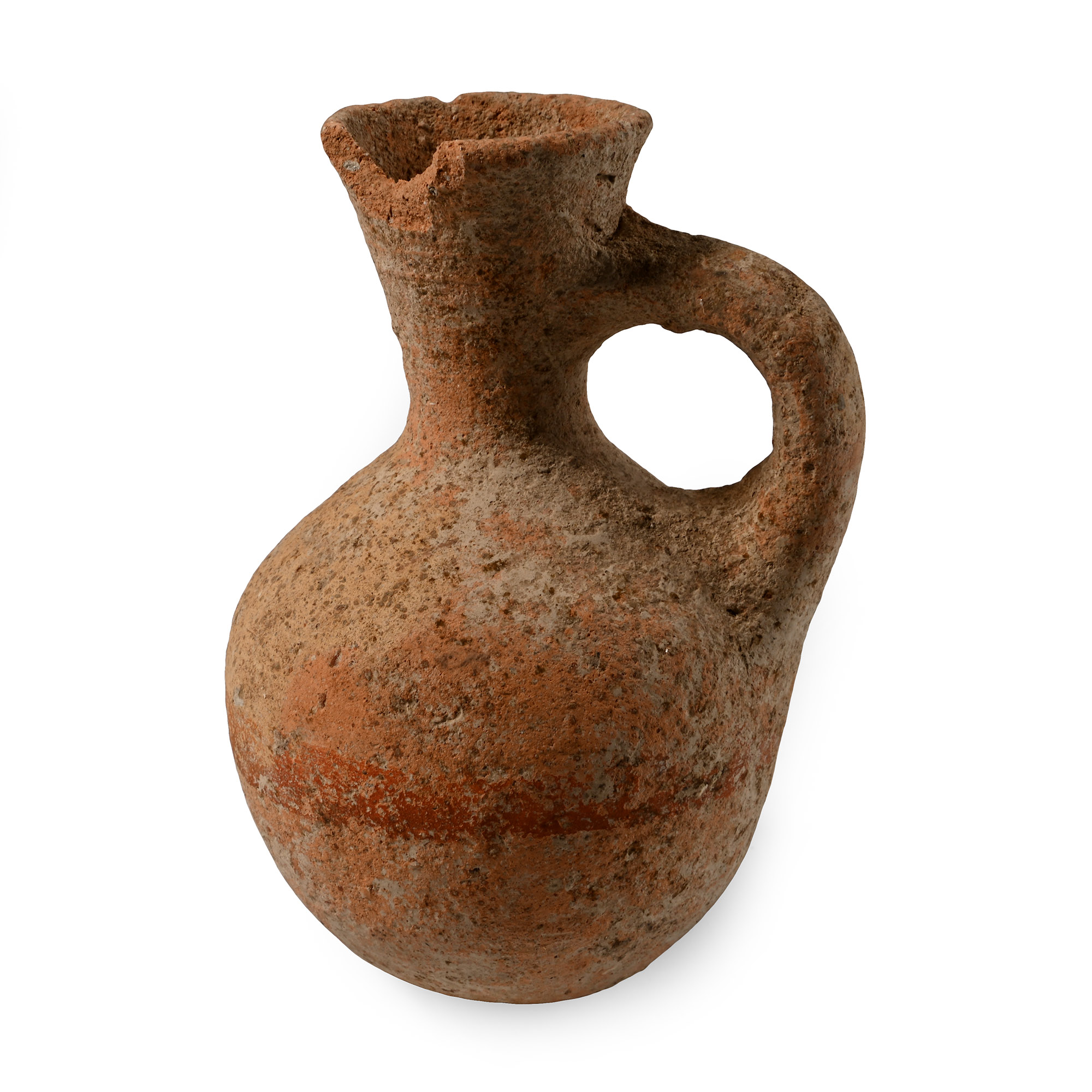
Holy Land Terracotta Juglet
BRONZE AGE, CIRCA 2ND MILLENNIUM B.C.
3 3/4 in. (12.8 grams, 97 mm).
Spherical body with trumpet-shaped neck and strap handle, painted circumferential band on the body. [No Reserve]
ProvenanceFrom the collection of a Cambridge, UK, gentleman, by direct descent from his father, who acquired the items in London in circa 1960.
CONDITIONTimeLine Auctions follows a vetting process to ensure the authenticity and legality of all items, reinforcing our commitment to integrity and responsible trading. Each antiquity, antique, and coin lot undergoes thorough examination by a vetting committee of at least ten external specialists, professional trade association members, scientists, and archaeologists: Our Vetting Process
AUCTIONS:
TimeLine is a leading auction house specialising in antiquities, ancient art, collectables, natural history, coins, medals, and books. Our auctions offer museums, collectors, historians, and enthusiasts the opportunity to acquire unique and historically significant pieces.
-
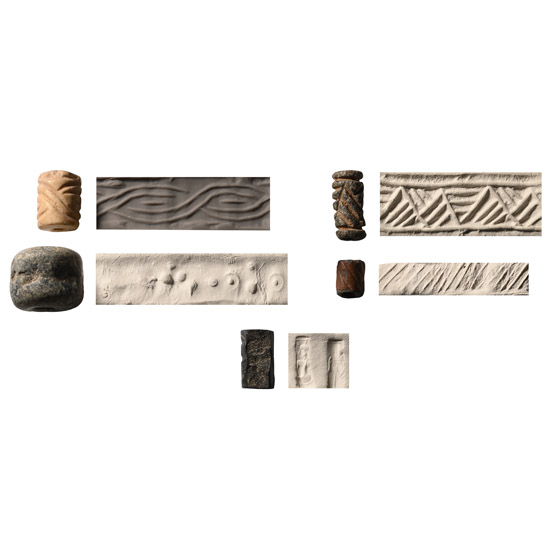
Western Asiatic Stone Cylinder Seal Group
3rd-2nd millennium B.C.Sold for (Inc. bp): £72
Comprising: a speckled grey marble seal with a drilled geometric pattern; a white limestone seal with a wickerwork pattern; a grey serpentine seal with a geometric pattern; a small bronze seal with a linear pattern; a fragmentary hematite seal with a seated deity; supplied with museum-quality impressions. 17.42 grams total, 9-17 mm
From the private collection of a European gentleman (1942-2024), formed since the 1970s. Accompanied by previous typed catalogue slips with collection nos.2, 14, 17, 18, 41. -
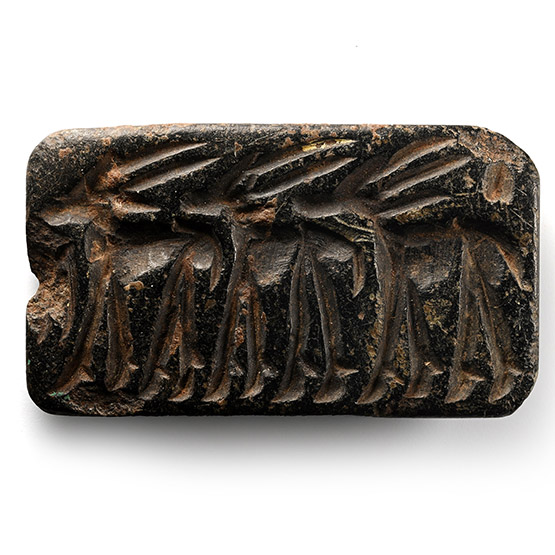
Western Asiatic Steatite Seal with Animals
3300-2900 B.C.Sold for (Inc. bp): £780
Rectangular in plan and triangular in section with a median hole, flat face with incuse frieze of ibexes. 38.9 grams, 61 mm
Acquired in the mid 1980s-1990s. Private collection, Switzerland, thence by descent. Private collection, since the late 1990s.
Some stamp seals from the period of transition between Jemdat Nasr and the Early Dynastic Period of Ur represent animals, and some scholars suggest that they were probably used as pendants or amulets. The animals are somewhat simplified and often reduced to mere lines: a file of animals usually forms the basis of such a pattern. -
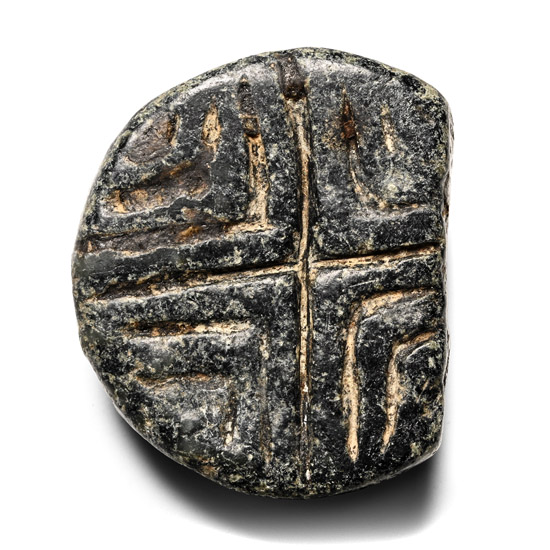
Early West Central Asian Schist Stamp Seal with Cross
Circa 4000-3400 B.C.Sold for (Inc. bp): £39
Domed stamp seal with engraved face; accompanied by an old scholarly note, typed and signed by W.G. Lambert, late Professor of Assyriology, University of Birmingham, 1970-1993, which states: 'Stamp Seal of Black/Green Stone 25 x 22.5 10 mm. This is a hemispheroid with flat face, pierced. The design consists of a simple cross and each vacant quarter so created is filled with two V-shapes. This comes from west central Asia and dates to c. 4000-3400 B.C. One side is broken off, but what remains is in good condition.' 9.5 grams, 25 mm
Acquired in the late 1980s-early 1990s. Ex property of a West London businessman. Academically researched and catalogued by the late Professor Lambert in the early 1990s. Accompanied by a copy of a scholarly report, numbered V-88, typed and signed by Professor Wilfrid George Lambert.
