
Loading, please wait...
LOT 1681
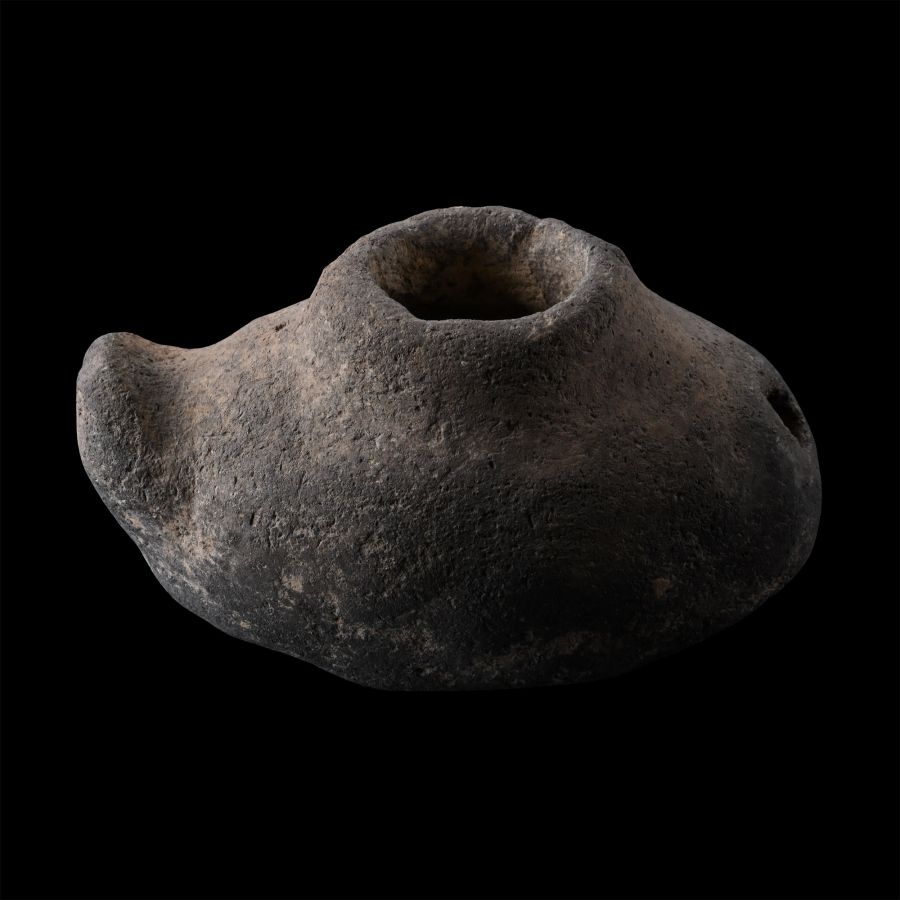
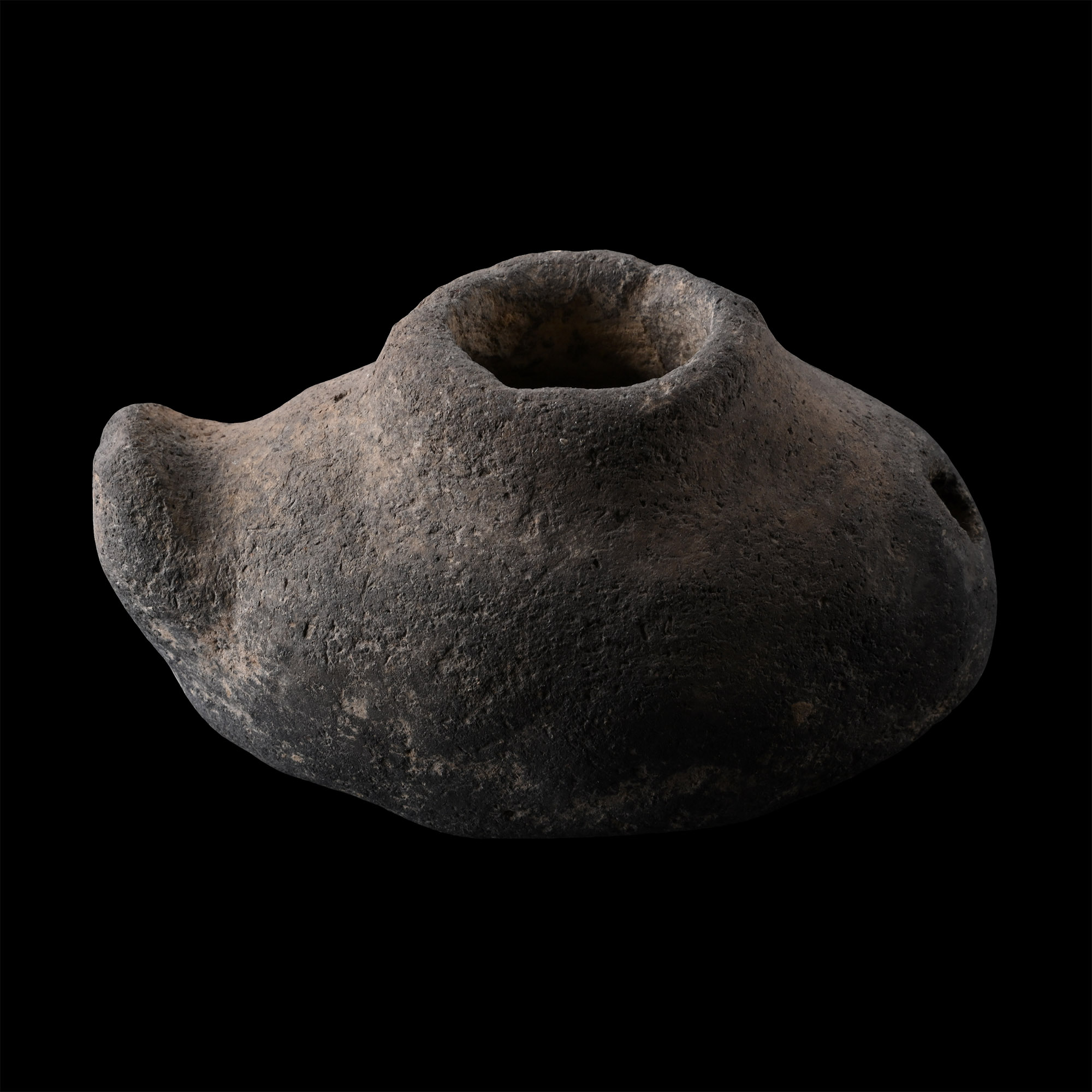
Holy Land Black-Burnished Oil Lamp
LATE 1ST MILLENNIUM B.C.
3 7/8 in. (212 grams, 98.6 mm).
Bulbous body with low rim, a short spout and a small ledge handle at the rear. [No Reserve]
ProvenanceFrom the collection of a Yorkshire, UK gentleman, items collected in the Holy Land in the 1960s.
CONDITIONTimeLine Auctions follows a vetting process to ensure the authenticity and legality of all items, reinforcing our commitment to integrity and responsible trading. Each antiquity, antique, and coin lot undergoes thorough examination by a vetting committee of at least ten external specialists, professional trade association members, scientists, and archaeologists: Our Vetting Process
AUCTIONS:
TimeLine is a leading auction house specialising in antiquities, ancient art, collectables, natural history, coins, medals, and books. Our auctions offer museums, collectors, historians, and enthusiasts the opportunity to acquire unique and historically significant pieces.
-
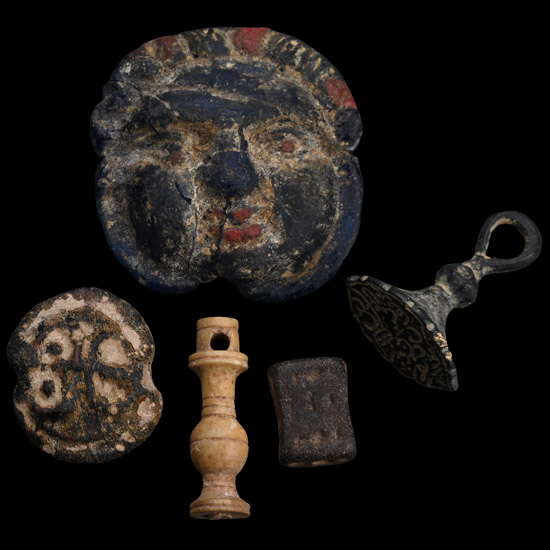
Western Asiatic Bronze and Other Artefact Collection
1st millennium B.C.-17th century A.D.Sold for (Inc. bp): £26
Including a blue glass mask with applied red detailing, a turned bone baluster, cuboid bead with holes to all four sides and other items. 15.7 grams total, 11-31 mm
From the collection of a gentleman, acquired on the London art market in the 1990s. -
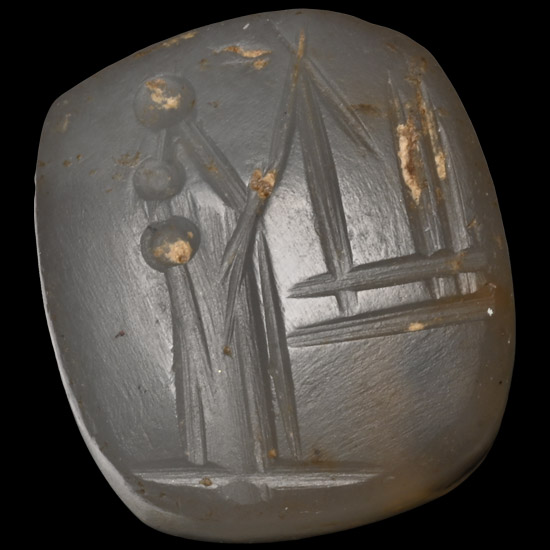
Neo-Babylonian Chalcedony Stamp Seal with God Nabu
Circa 6th-5th century B.C.Estimate: £200 - 300 (+bp*)
Opening Bid: £100
Conical seal with a piercing through the upper end, underside with a carved scene of the god Nabu standing in front of an altar. 7.46 grams, 21.76 mm
Ex H. Norri collection, Milton Keynes, Bedfordshire, UK, collected in the 1980s-1990s. Accompanied by a previous typed catalogue information card. -
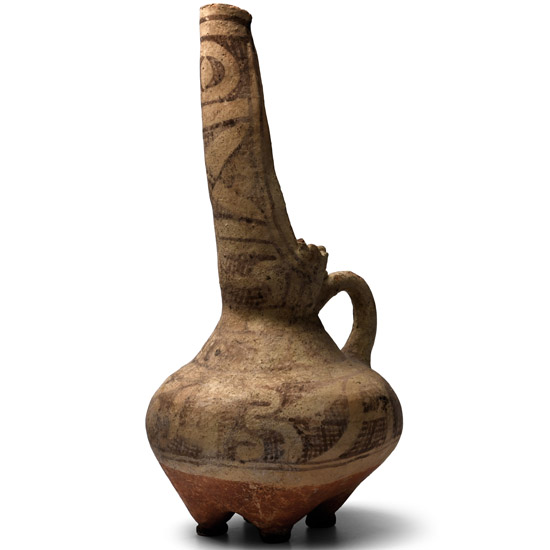
Western Asiatic Painted Terracotta Vessel
9th-8th century B.C.Estimate: £300 - 400 (+bp*)
Opening Bid: £150
Bulbous body with four stub legs, tall neck and internal strainer, tall scooped edge to the rim, loop handle to the rear; body and neck painted with geometric motifs, red paint on the base and legs. 1.16 kg, 32.3 cm
UK collection, 1990s. Acquired on the UK art market, before 2000. Private collection, Mr M.V., a London-based businessman.
Artefacts from Amlash date from the late second millennium B.C. through to the Partho-Sasanian period, with most dated to the 9th and 8th centuries B.C. Zoomorphic drinking or ritual vessels are abundant in Amlash pottery and usually feature depictions of animals common to that region. Such vessels have been recovered across Mesopotamia and Anatolia, and they were known as Bibru. They were produced as ceremonial drinking vessels, dedicated to specific deities, but they might also have served as drinking vessels for the social elite and royal family members.
