
Loading, please wait...


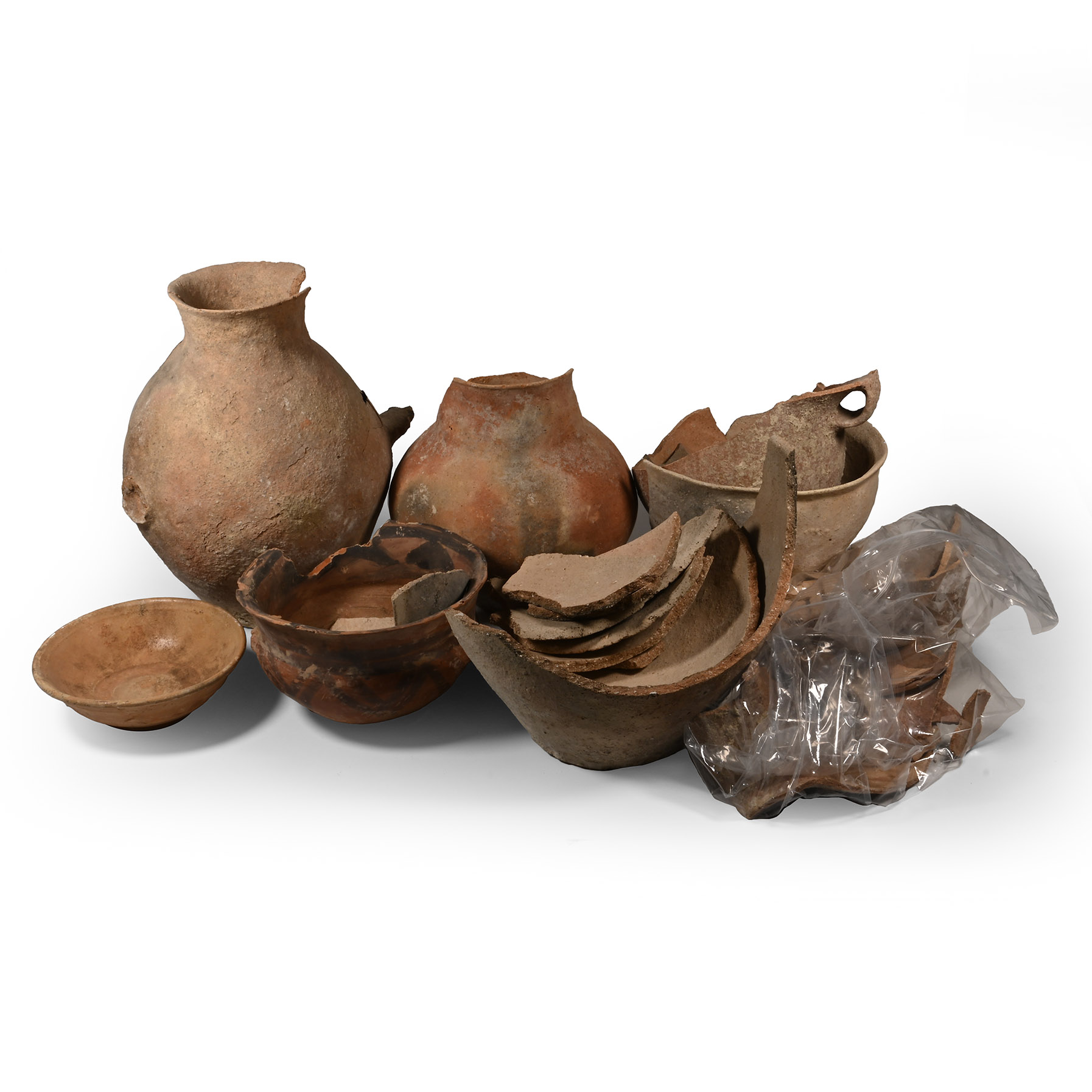
LOT 1285
Holy Land and Other Terracotta Pottery Group
3RD-1ST MILLENNIUM B.C. AND LATER
1 1/2 - 11 5/8 in. (11.45 kg total, 4-29.5 cm).
Including globular jars, bowls, vases, a polychrome glazed base and other items. [42+, No Reserve]
ProvenanceEx London, UK, gallery, 1980-1990s.
This lot has been cleared against the Art Loss Register database, and is accompanied by an illustrated lot declaration signed by the Head of the Antiquities Department, Dr Raffaele D'Amato.
Cf. Amiran, R., Ancient Pottery of the Holy Land, Jerusalem, 1963, photo 52, p.59, for a similar jar from Early Bronze II Period (3100-2800 B.C.).
FootnotesIn Early Bronze Age II Period, the pottery tradition of the previous period, in Holy Land, continues, though with a number of significant changes. The jars can be divided into those with and without necks. Thin walled jars were often done of fine, well-levigated ware.
CONDITIONTimeLine Auctions follows a vetting process to ensure the authenticity and legality of all items, reinforcing our commitment to integrity and responsible trading. Each antiquity, antique, and coin lot undergoes thorough examination by a vetting committee of at least ten external specialists, professional trade association members, scientists, and archaeologists: Our Vetting Process
AUCTIONS:
TimeLine is a leading auction house specialising in antiquities, ancient art, collectables, natural history, coins, medals, and books. Our auctions offer museums, collectors, historians, and enthusiasts the opportunity to acquire unique and historically significant pieces.
-
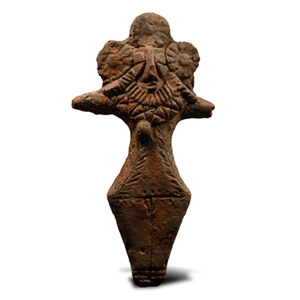
Hittite Terracotta Fertility Idol
12th-8th century B.C.Sold for (Inc. bp): £624
Standing figure with radiating discs framing the face, collar with pendant. 156 grams, 14.6 cm
Ex London, UK, gallery, 1971-early 2000s. London, UK, collection. This lot has been cleared against the Art Loss Register database, and is accompanied by an illustrated lot declaration signed by the Head of the Antiquities Department, Dr Raffaele D'Amato. -
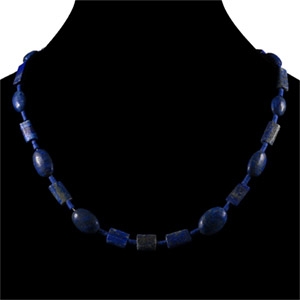
Bactrian Style Lapis Lazuli Bead Necklace String
20th century A.D.Sold for (Inc. bp): £39
Composed of alternating tabular and oval beads interspersed with small tubular beads; restrung. 40.9 grams, 44 cm
Ex London art market. Property of a North London, UK, gentleman. This lot has been cleared against the Art Loss Register database, and is accompanied by an illustrated lot declaration signed by the Head of the Antiquities Department, Dr Raffaele D'Amato. -
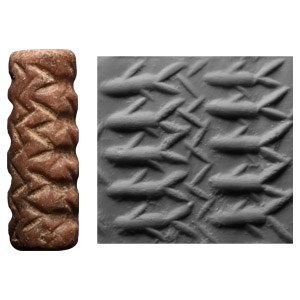
Sumerian Cylinder Seal with Fishes
3rd millennium B.C.Estimate: £300 - 400 (+bp*)
Opening Bid: £150
With frieze of fishes in profile within a field of zigzag lines. 11.5 grams, 37 mm
From the 'S' collection, acquired 1970-1990s. The collection was seen and studied by W.G.Lambert, late Professor of Assyriology at the University of Birmingham, 1970-1993. This lot has been cleared against the Art Loss Register database, and is accompanied by an illustrated lot declaration signed by the Head of the Antiquities Department, Dr Raffaele D'Amato.
