
Loading, please wait...
LOT 1524
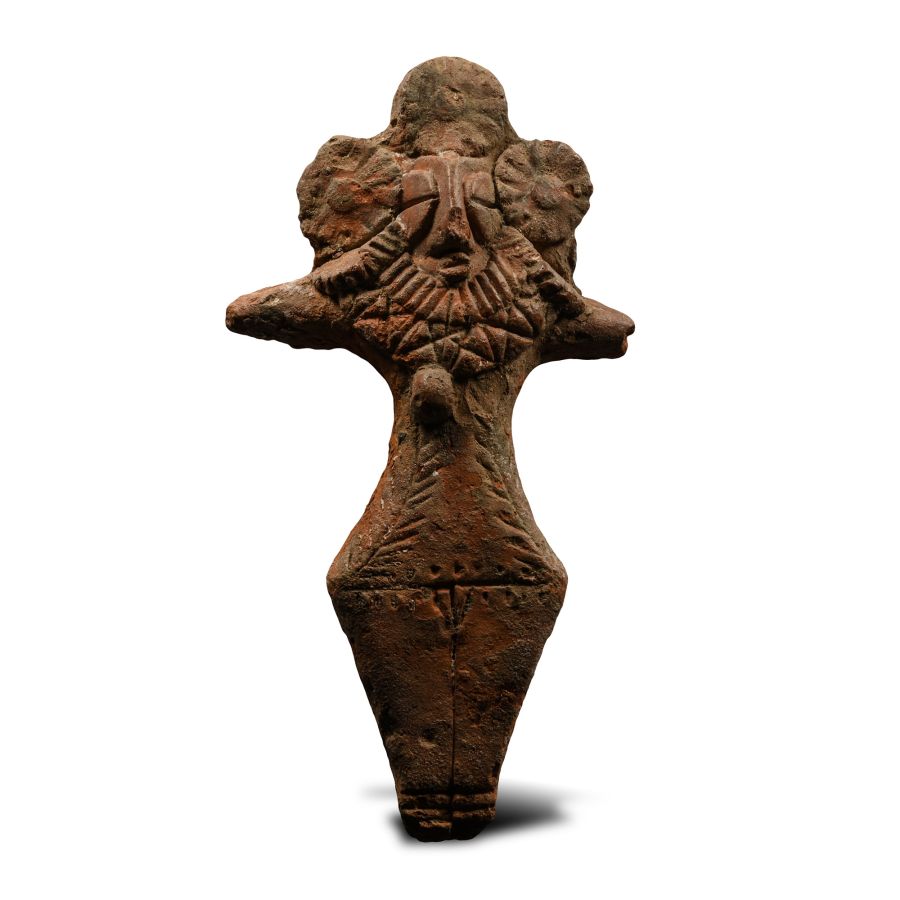
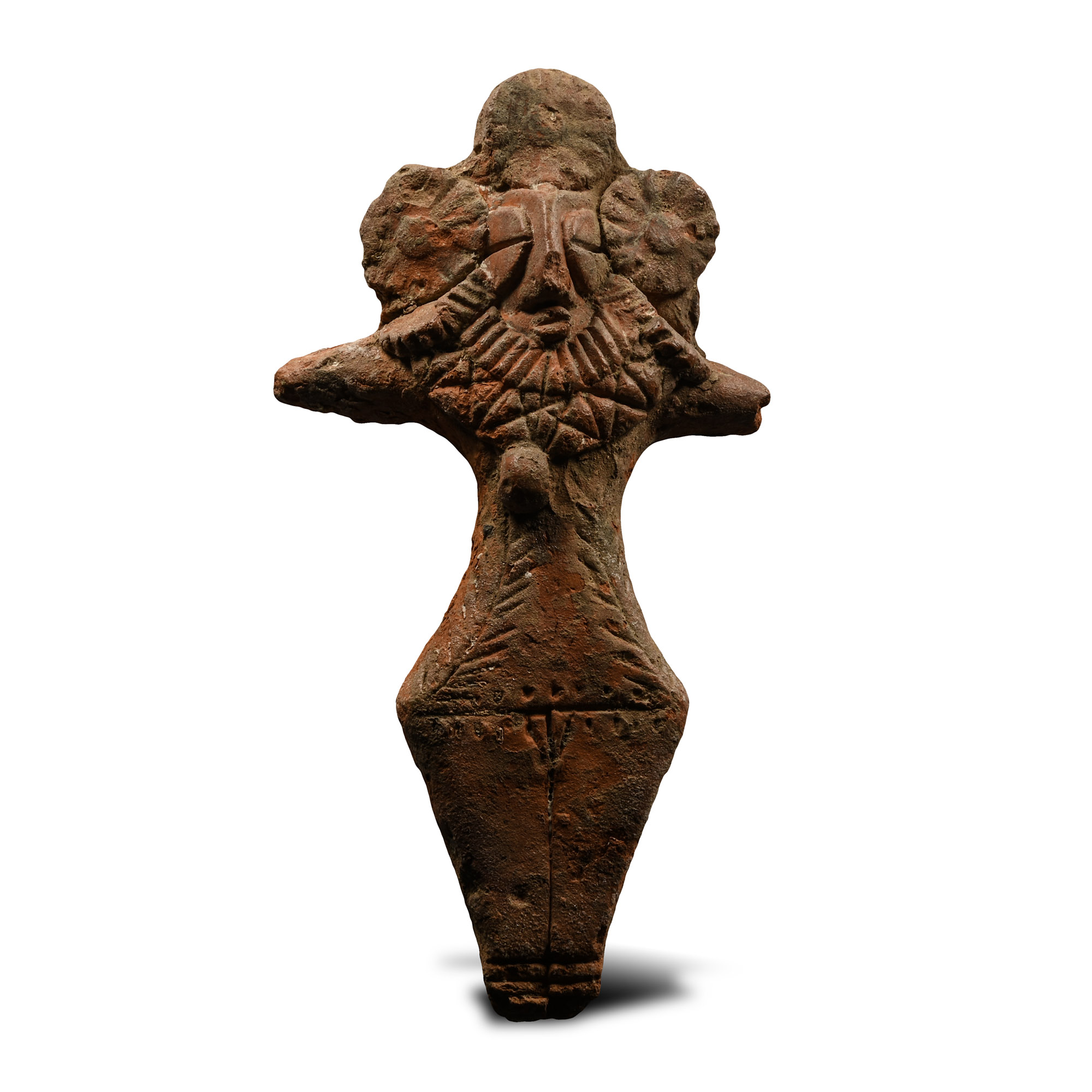
Hittite Terracotta Fertility Idol
12TH-8TH CENTURY B.C.
5 3/4 in. (156 grams, 14.6 cm).
Standing figure with radiating discs framing the face, collar with pendant.
ProvenanceEx London, UK, gallery, 1971-early 2000s.
London, UK, collection.
This lot has been cleared against the Art Loss Register database, and is accompanied by an illustrated lot declaration signed by the Head of the Antiquities Department, Dr Raffaele D'Amato.
TimeLine Auctions follows a vetting process to ensure the authenticity and legality of all items, reinforcing our commitment to integrity and responsible trading. Each antiquity, antique, and coin lot undergoes thorough examination by a vetting committee of at least ten external specialists, professional trade association members, scientists, and archaeologists: Our Vetting Process
AUCTIONS:
TimeLine is a leading auction house specialising in antiquities, ancient art, collectables, natural history, coins, medals, and books. Our auctions offer museums, collectors, historians, and enthusiasts the opportunity to acquire unique and historically significant pieces.
-
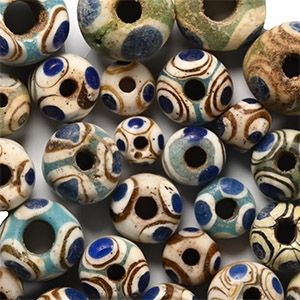
Western Asiatic Mosaic Glass Bead Collection
9th-15th century A.D.Sold for (Inc. bp): £1,170
Mainly annular in form with integral 'eye' detailing in blue glass. 15.4 grams total, 6-11.3 mm
UK private collection, acquired 1979-1983. This lot has been cleared against the Art Loss Register database, and is accompanied by an illustrated lot declaration signed by the Head of the Antiquities Department, Dr Raffaele D'Amato. -
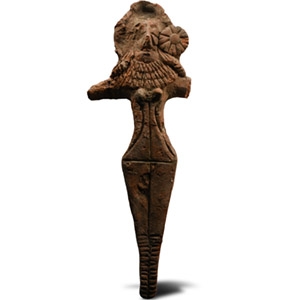
Hittite Terracotta Fertility Idol
12th-8th century B.C.Sold for (Inc. bp): £546
Standing nude female with elaborate hairstyle, earring and collar. 166 grams, 19.3 cm
Ex London, UK, gallery, 1971-early 2000s. London, UK, collection. This lot has been cleared against the Art Loss Register database, and is accompanied by an illustrated lot declaration signed by the Head of the Antiquities Department, Dr Raffaele D'Amato. -
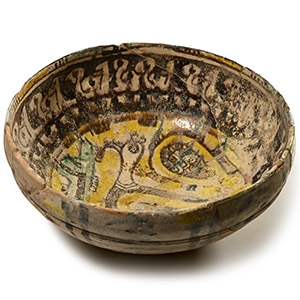
Nishapur Glazed Buffware Bowl
Central Asia, 11th century A.D.Sold for (Inc. bp): £130
With broad mouth, indented ring below the rim to the exterior, low flared foot, vertical painted motifs to the exterior, horizontal band of calligraphic text to interior around tondo with bird motif. 885 grams, 24 cm
Dubai, 2001. Ex central London gallery. This lot has been cleared against the Art Loss Register database, and is accompanied by an illustrated lot declaration signed by the Head of the Antiquities Department, Dr Raffaele D'Amato.
