
Loading, please wait...
LOT 0235
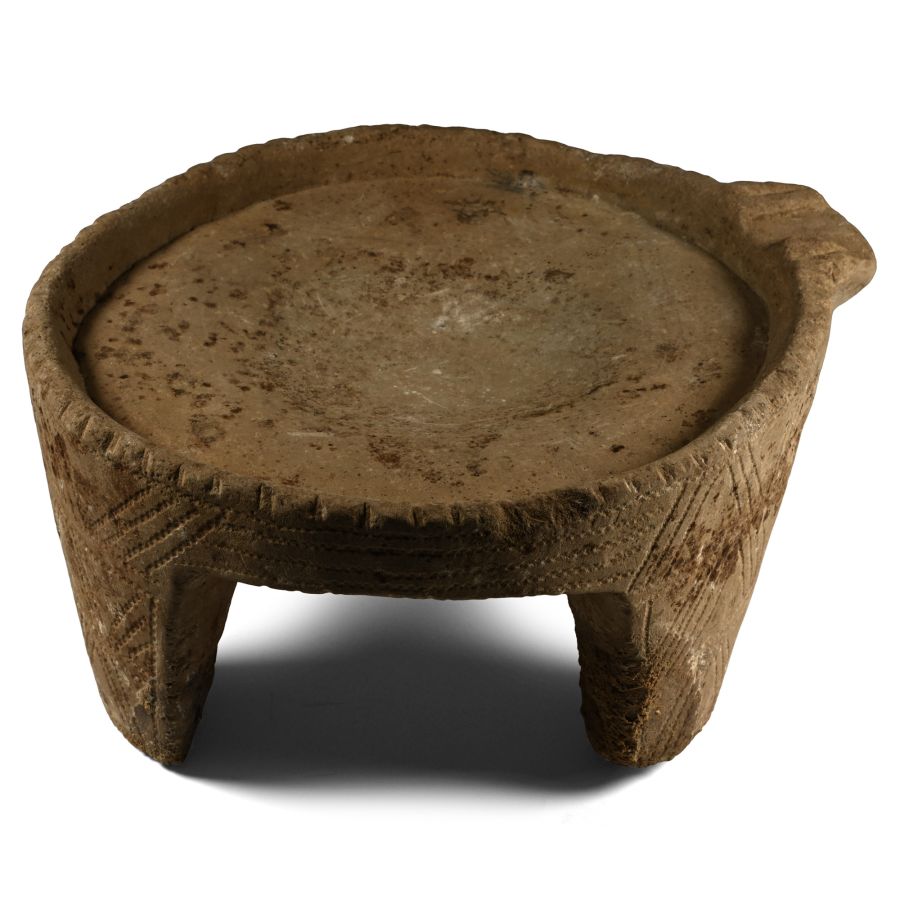
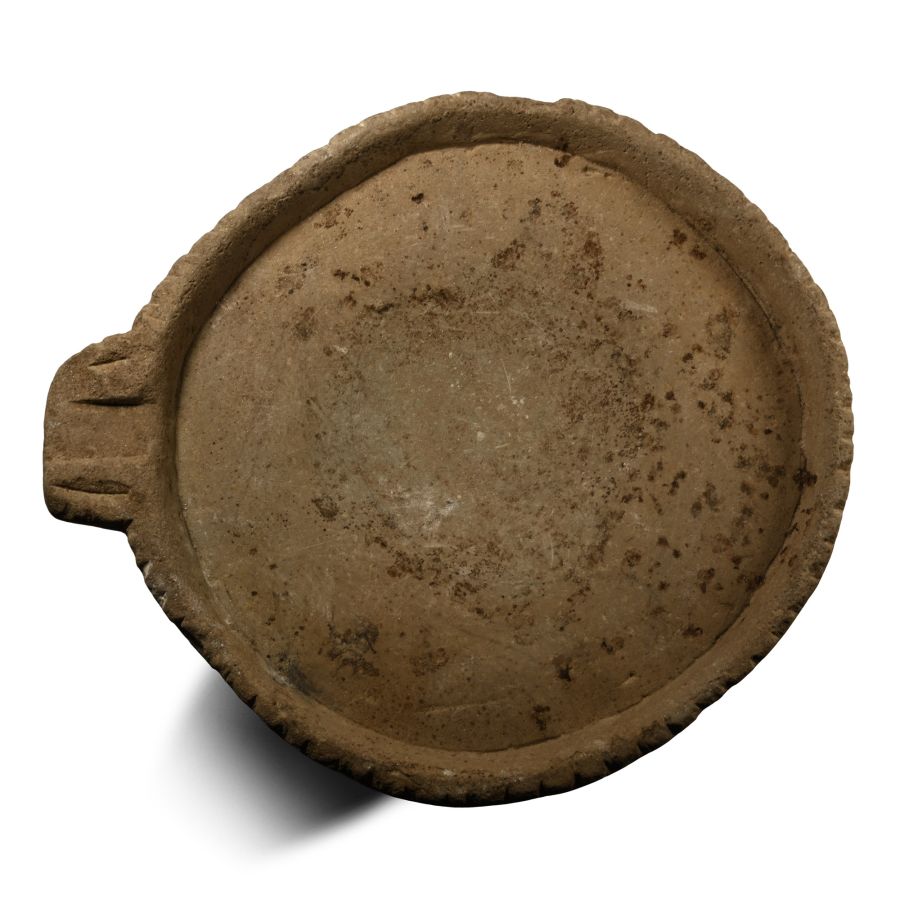
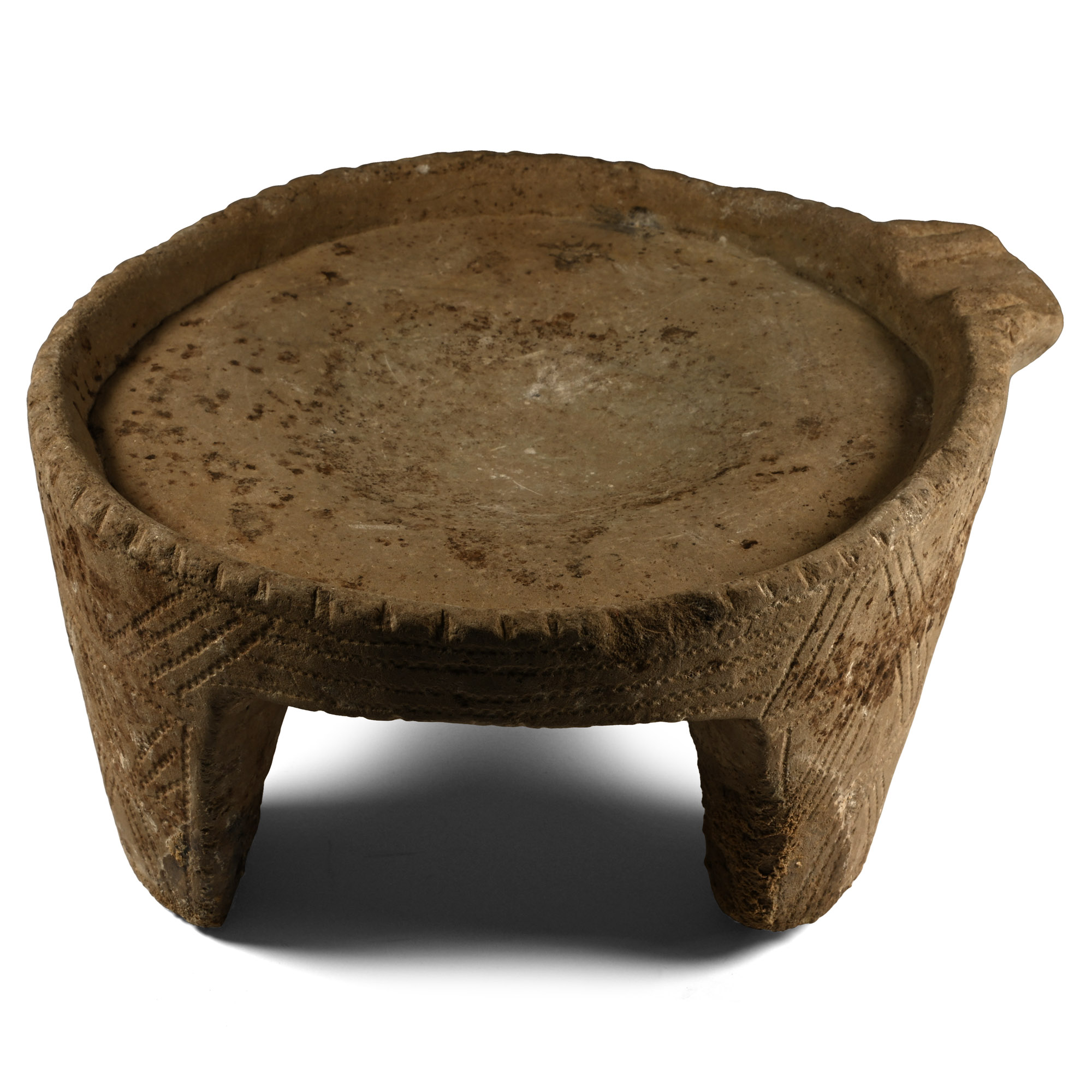
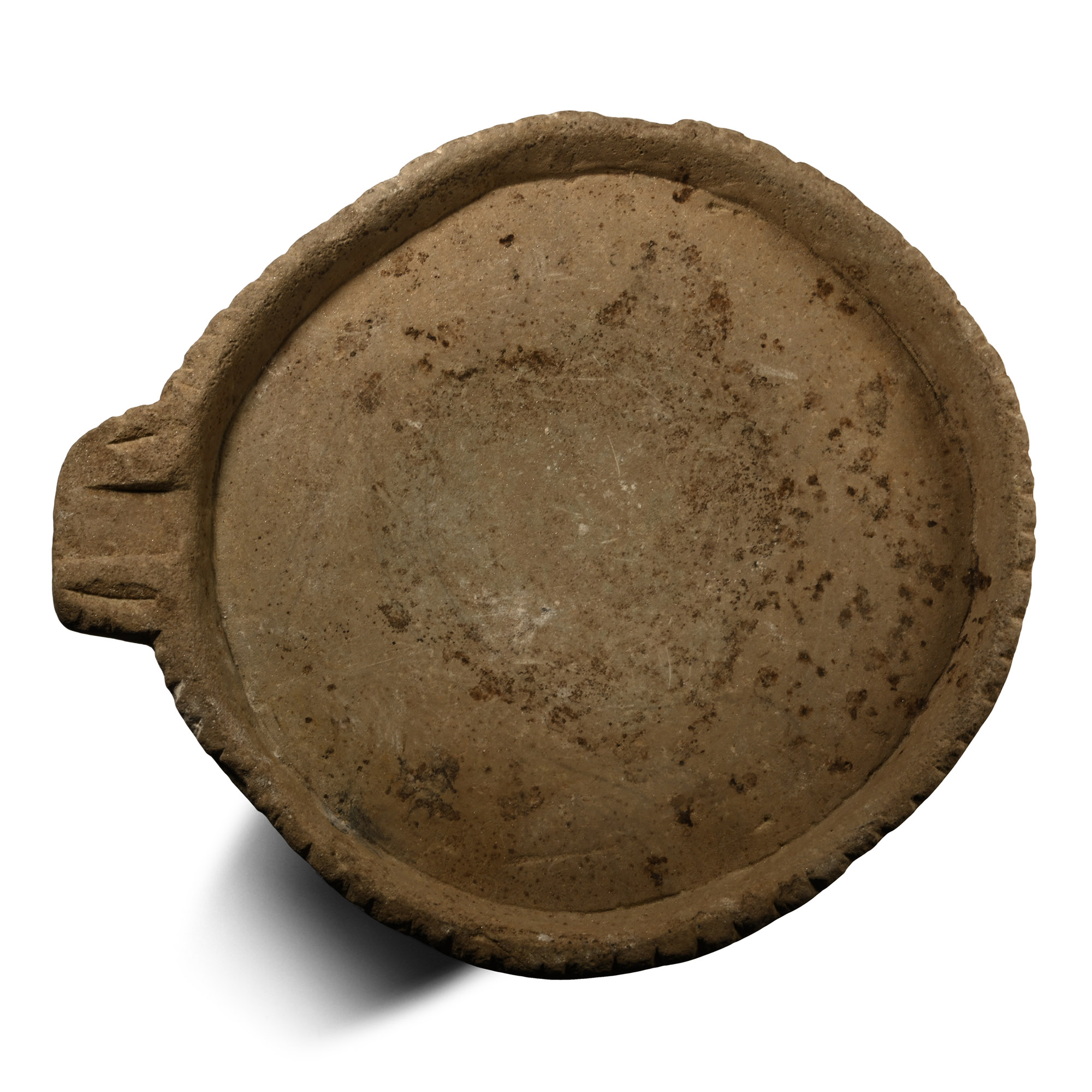
Hittite Limestone Altar
2ND-1ST MILLENNIUM B.C.
10 3/8 in. (3.5 kg, 26.3 cm wide).
Carved from a limestone block with three trapezoidal stub legs, horizontal dished centre with notched edge to the raised rim and U-section pouring lip; panel of geometric linear ornament to the outer face of the body and legs; integral T-shaped reinforcing arms to underside.
ProvenancePrivate collection, Israel.
with Archaeological Centre, Auction 59, no.433.
Accompanied by a copy of the Archaeological Centre online catalogue page.
This lot has been cleared against the Art Loss Register database, and is accompanied by an illustrated lot declaration signed by the Head of the Antiquities Department, Dr Raffaele D'Amato.
TimeLine Auctions follows a vetting process to ensure the authenticity and legality of all items, reinforcing our commitment to integrity and responsible trading. Each antiquity, antique, and coin lot undergoes thorough examination by a vetting committee of at least ten external specialists, professional trade association members, scientists, and archaeologists: Our Vetting Process
AUCTIONS:
TimeLine is a leading auction house specialising in antiquities, ancient art, collectables, natural history, coins, medals, and books. Our auctions offer museums, collectors, historians, and enthusiasts the opportunity to acquire unique and historically significant pieces.
LOT 0235
Hittite Limestone Altar
Estimate £700 - 900€810 - 1,040 (for guidance only)$950 - 1,220 (for guidance only)
-
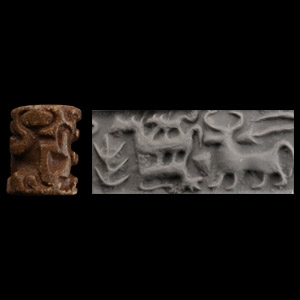
Mesopotamian Stone Cylinder Seal
2nd-1st millennium B.C.Sold for (Inc. bp): £325
With frieze of oxen and other animals in profile, with 'arrow' above; supplied with a museum-quality impression. 36.3 grams, 32 mm
From the collection of the late S, London, UK, 1970-2000. Examined by Professor Wilfrid George Lambert FBA (1926-2011), historian, archaeologist, and specialist in Assyriology and Near Eastern archaeology, in the 1990s. This lot has been cleared against the Art Loss Register database, and is accompanied by an illustrated lot declaration signed by the Head of the Antiquities Department, Dr Raffaele D'Amato. -
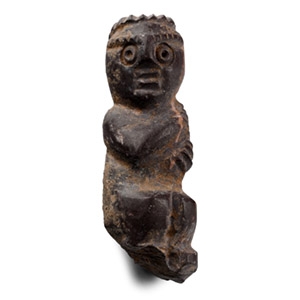
South Mesopotamian Stone Male Figure
2nd millennium B.C. and laterSold for (Inc. bp): £156
Carved in the round with textured hair, holding an object to his left shoulder; in seated pose. 13.12 grams, 43 mm
Ex S collection, London, UK, 1970-1990s. This lot has been cleared against the Art Loss Register database, and is accompanied by an illustrated lot declaration signed by the Head of the Antiquities Department, Dr Raffaele D'Amato. -
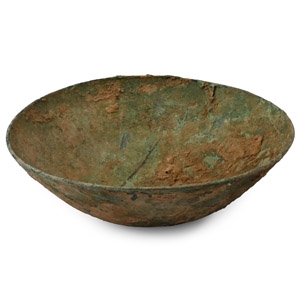
Western Asiatic Bronze Bowl
Late 1st millennium B.C.Sold for (Inc. bp): £65
A heavy wide bowl with gently sloping walls, slightly rounded base. 462 grams, 21 cm
Ex London, UK, collections, 1990s-2000s. This lot has been cleared against the Art Loss Register database, and is accompanied by an illustrated lot declaration signed by the Head of the Antiquities Department, Dr Raffaele D'Amato.
