
Loading, please wait...
LOT 0204
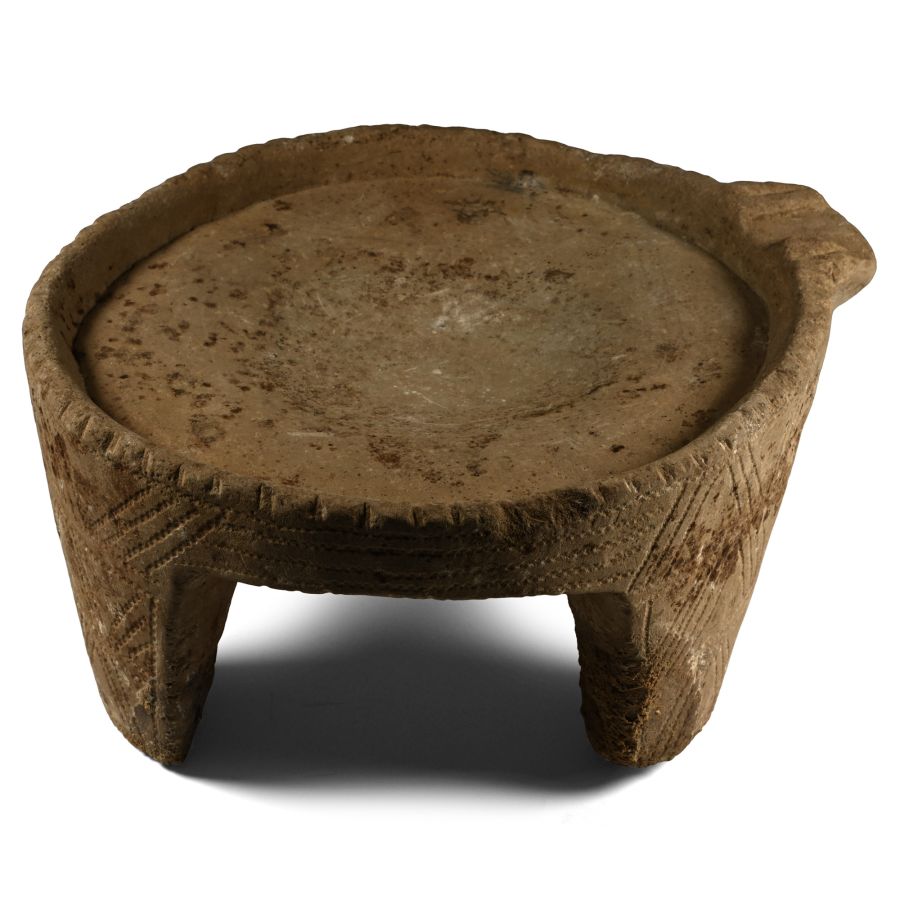
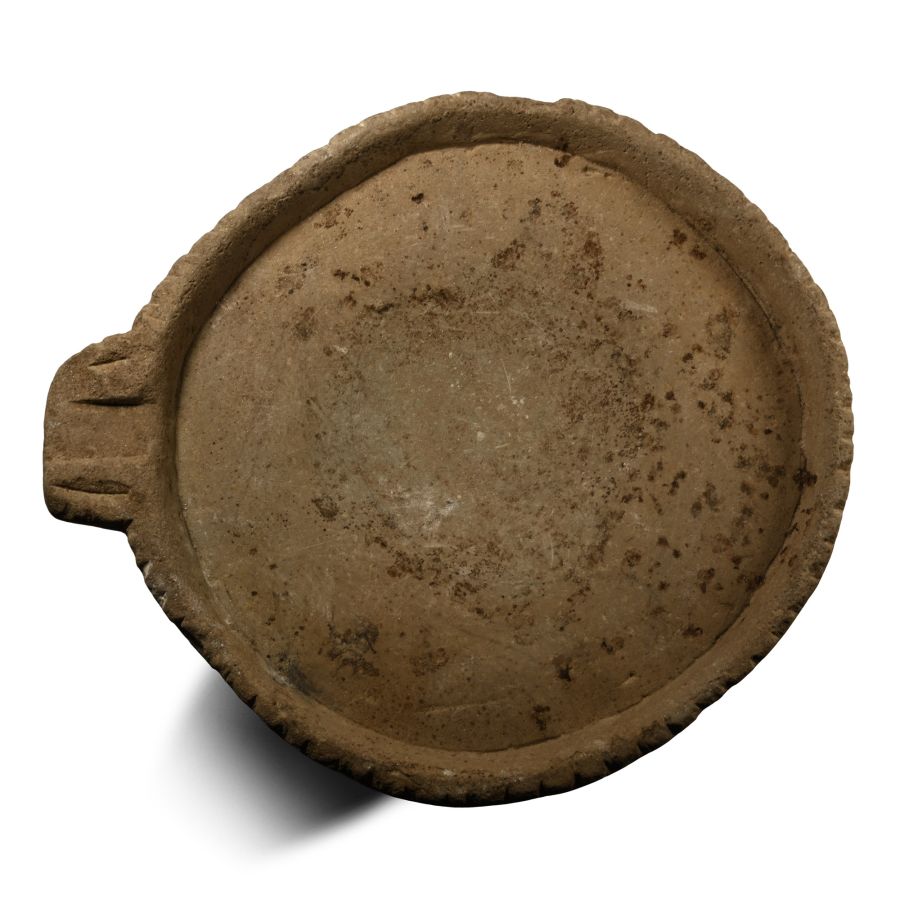
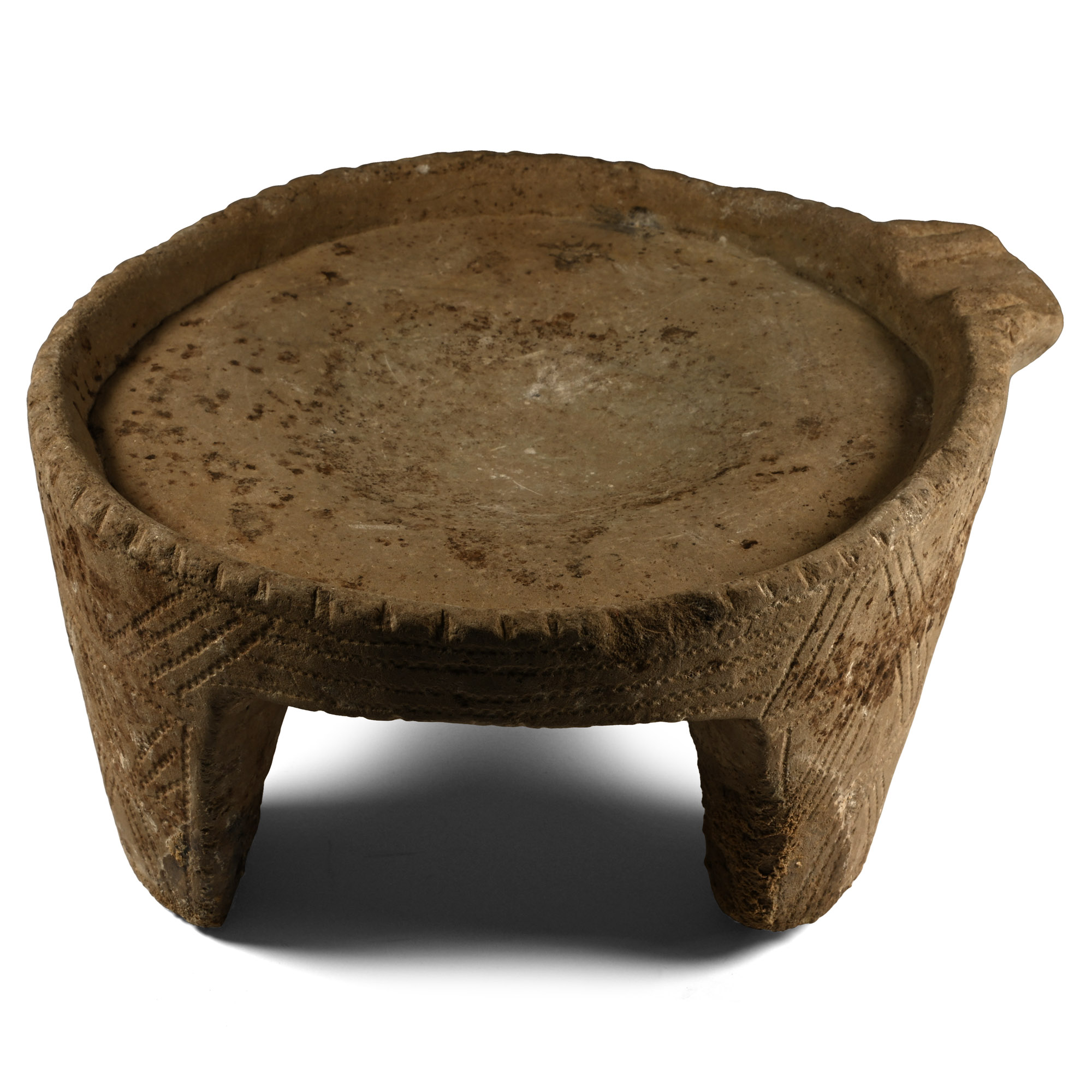
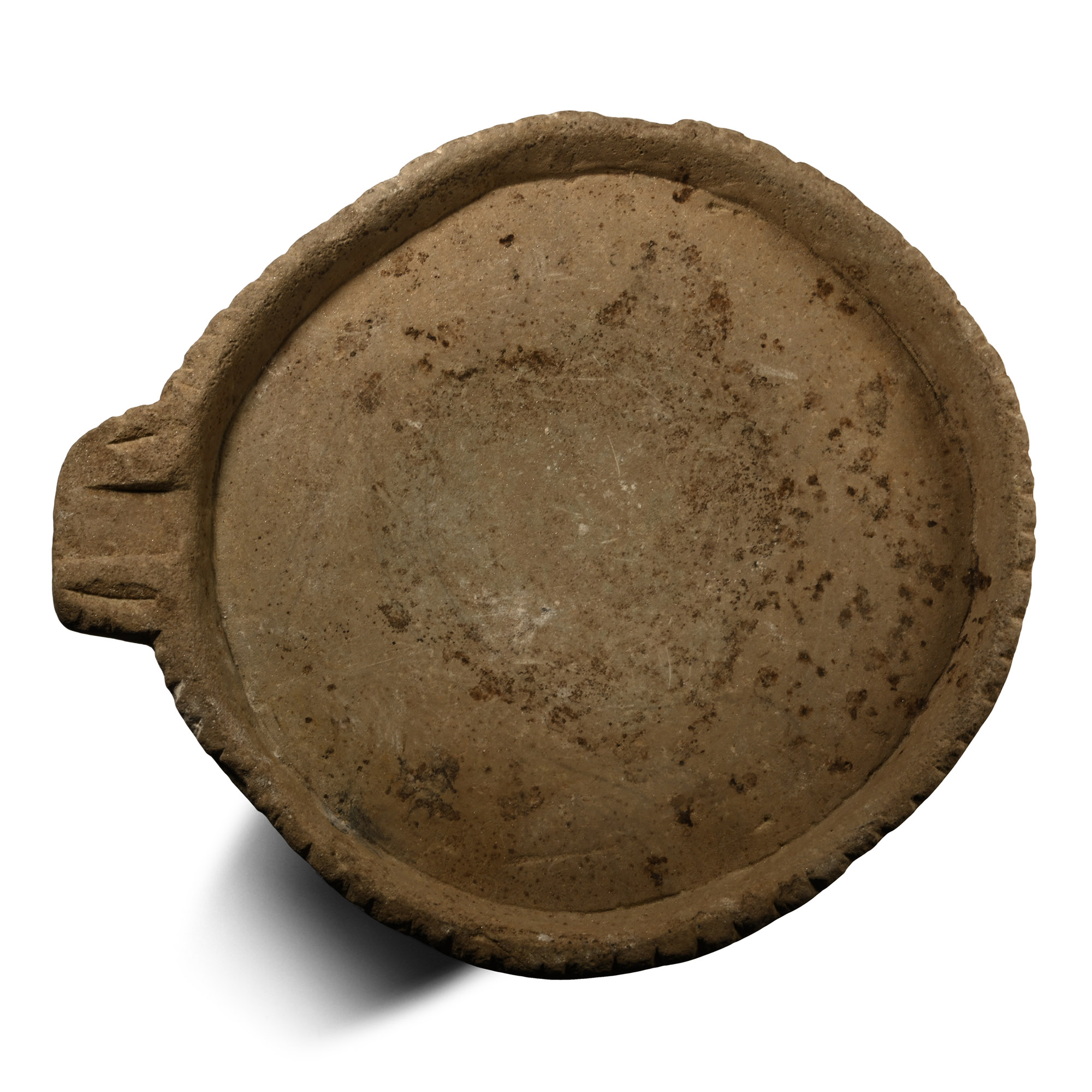
Hittite Limestone Altar
2ND-1ST MILLENNIUM B.C.
10 3/8 in. (3.5 kg, 26.3 cm wide).
Carved from a limestone block with three trapezoidal stub legs, horizontal dished centre with notched edge to the raised rim and U-section pouring lip; panel of geometric linear ornament to the outer face of the body and legs; integral T-shaped reinforcing arms to underside.
ProvenancePrivate collection, Israel.
with Archaeological Centre, Auction 59, no.433.
Accompanied by a copy of the Archaeological Centre online catalogue page.
This lot has been cleared against the Art Loss Register database, and is accompanied by an illustrated lot declaration signed by the Head of the Antiquities Department, Dr Raffaele D'Amato.
TimeLine Auctions follows a vetting process to ensure the authenticity and legality of all items, reinforcing our commitment to integrity and responsible trading. Each antiquity, antique, and coin lot undergoes thorough examination by a vetting committee of at least ten external specialists, professional trade association members, scientists, and archaeologists: Our Vetting Process
AUCTIONS:
TimeLine is a leading auction house specialising in antiquities, ancient art, collectables, natural history, coins, medals, and books. Our auctions offer museums, collectors, historians, and enthusiasts the opportunity to acquire unique and historically significant pieces.
LOT 0204
Hittite Limestone Altar
Estimate £800 - 1,000€930 - 1,160 (for guidance only)$1,080 - 1,350 (for guidance only)
-
Western Asiatic Bronze Zoomorphic Pin
1st millennium B.C.Sold for (Inc. bp): £338
With head formed as a crouching dog with head resting on the forelegs; looped tail. 22.5 grams, 15.5 cm
Acquired on the UK art market 1979-1983. This lot has been cleared against the Art Loss Register database, and is accompanied by an illustrated lot declaration signed by the Head of the Antiquities Department, Dr Raffaele D'Amato. -
.jpg)
South Arabian Alabaster Head of a Man
3rd-1st century B.C.Sold for (Inc. bp): £1,040
Tongue-shaped carved bust reserved on an unworked block; bas-relief facial detailing with long vertical D-section nose, slit mouth and two shallow lentoid eyes; mounted on a custom-made stand. 2.42 kg total, 22.5 cm including stand
with Arte Primitivo, New York. American private collection, New York, before 2000. This lot has been cleared against the Art Loss Register database, and is accompanied by an illustrated lot declaration signed by the Head of the Antiquities Department, Dr Raffaele D'Amato. -
Western Asiatic Terracotta Flask with Incised Decoration
1st millennium B.C.Sold for (Inc. bp): £72
With an almost square base, sloping walls and circular mouth; incised encircling lines on the neck and herringbone-pattern on the walls. 38 grams, 73 mm
with Dorotheum Auction, Vienna, 13 December 2000, no.61. This lot has been cleared against the Art Loss Register database, and is accompanied by an illustrated lot declaration signed by the Head of the Antiquities Department, Dr Raffaele D'Amato.
Various materials were used in Antiquity to manufacture containers for expensive perfume extracts. Clay was one of the most common materials before glass containers were invented. The clay containers were easy to make and blocked sunlight, protecting the perfume.
