
Loading, please wait...
LOT 0777
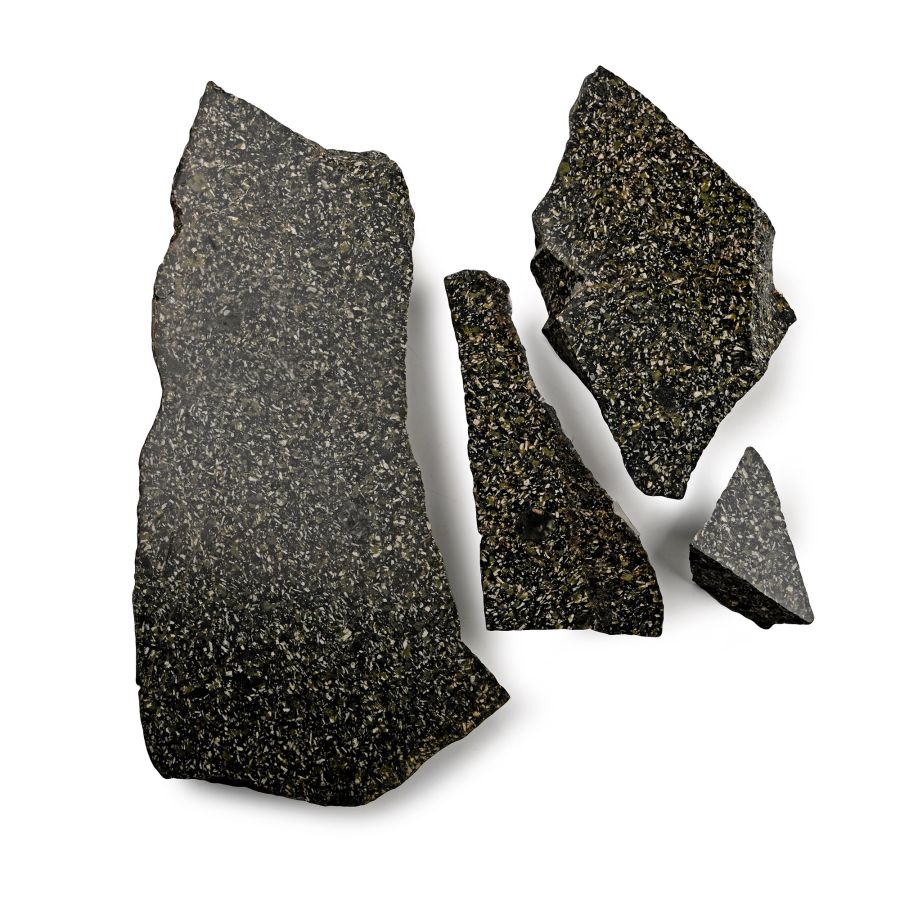
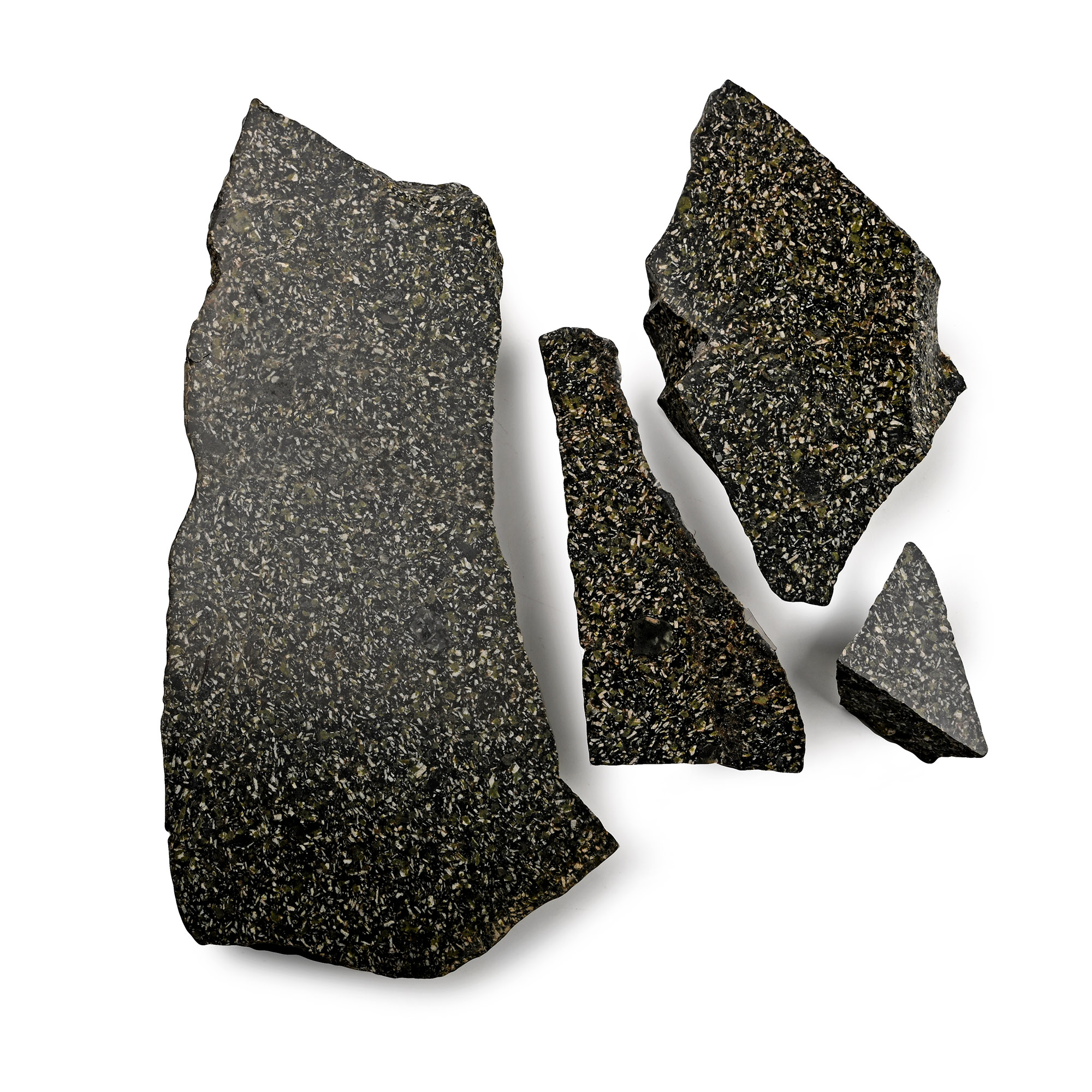
Historic Spartan Basalt Cut and Polished Dark Green Porphyry Fragment Group
2 3/4 - 12 in. (2.1 kg total, 7 - 30.5 cm).
Mined in Greece, four irregular fragments cut and polished on one side, probably recycled material mined in ancient Roman times. [4]
ProvenanceAcquired on the UK art market since the 1990s.
From the private collection of a Somerset gentleman.
Also known as Lapis Lacedaemonius and Porfido Verde Antico, a type of green porphyry quarried in Greece. Spartan basalt is a form of andesite or volcanic rock known today only from a single source in the village of Krokees on the Peloponnese in Greece. In addition, ancient sources mention a quarry of Lapis Lacedaemonius in Taygetus.
CONDITIONTimeLine Auctions follows a vetting process to ensure the authenticity and legality of all items, reinforcing our commitment to integrity and responsible trading. Each antiquity, antique, and coin lot undergoes thorough examination by a vetting committee of at least ten external specialists, professional trade association members, scientists, and archaeologists: Our Vetting Process
AUCTIONS:
TimeLine is a leading auction house specialising in antiquities, ancient art, collectables, natural history, coins, medals, and books. Our auctions offer museums, collectors, historians, and enthusiasts the opportunity to acquire unique and historically significant pieces.
LOT 0777
Historic Spartan Basalt Cut and Polished Dark Green Porphyry Fragment Group
Sold for (Inc. bp): £585
-
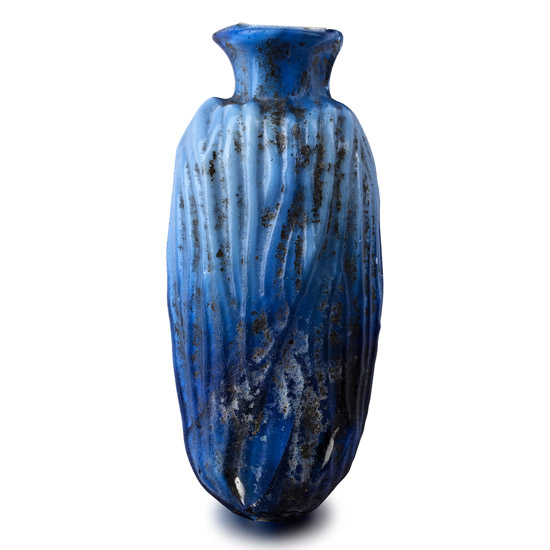
Large Roman Deep Blue Glass Date Flask
1st century A.D.Estimate: £2,000 - 3,000 (‡+bp*)
Opening Bid: £1,111
Mould-blown with elliptical body, short neck and thick everted rim, with modelled wrinkles imitating the texture of a dried date. 41.7 grams, 80 mm
Dr Gonik & Me Wirth, Geneva, 1970s. Private collection, Europe. Accompanied by an academic report by Dr Raffaele D'Amato. This lot has been checked against the Interpol Database of stolen works of art and is accompanied by a search certificate number no.12394-226935.
Dates were not only a staple of the Mediterranean diet, used to sweeten food and wine, but also a symbol for the New Year and a fruit often given as a gift on the occasion. -
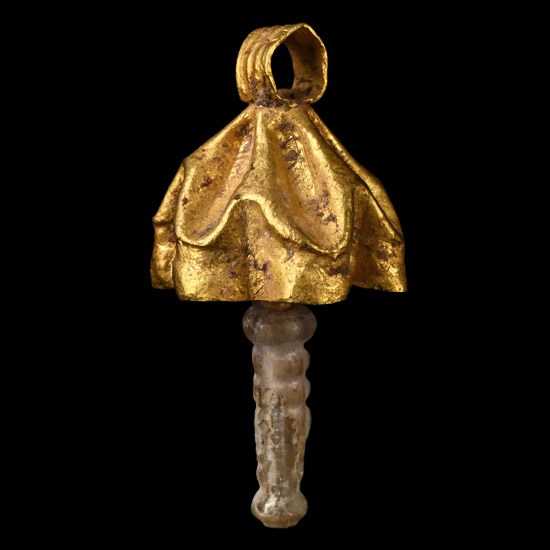
Roman Gold Bell Pendant
1st-4th century A.D.Sold for (Inc. bp): £156
Formed as a six-petalled flower with deeply grooved petals, a hanging loop at the centre with a separate bar attachment and a glass bead. 1.72 grams, 23.4 mm
From the private collection of a European gentleman (1942-2024), formed since the 1970s. -
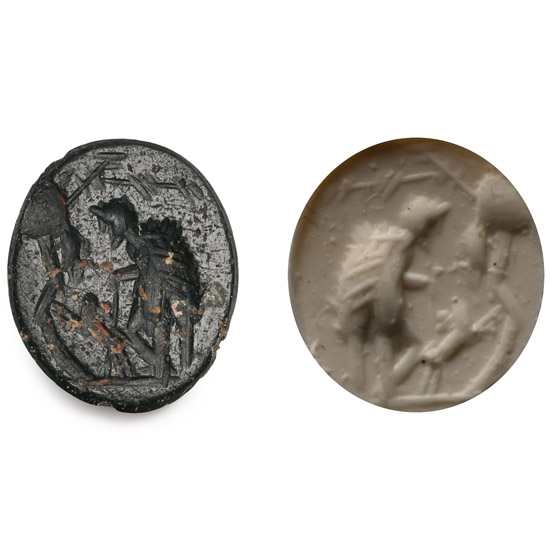
Roman Black Gemstone with Bird
2nd-3rd century A.D.Sold for (Inc. bp): £59
With intaglio bird perching on a branch; supplied with a museum-quality impression. 0.56 grams, 12.46 mm.
From the private collection of a European gentleman (1942-2024), formed since the 1970s.
