
Loading, please wait...
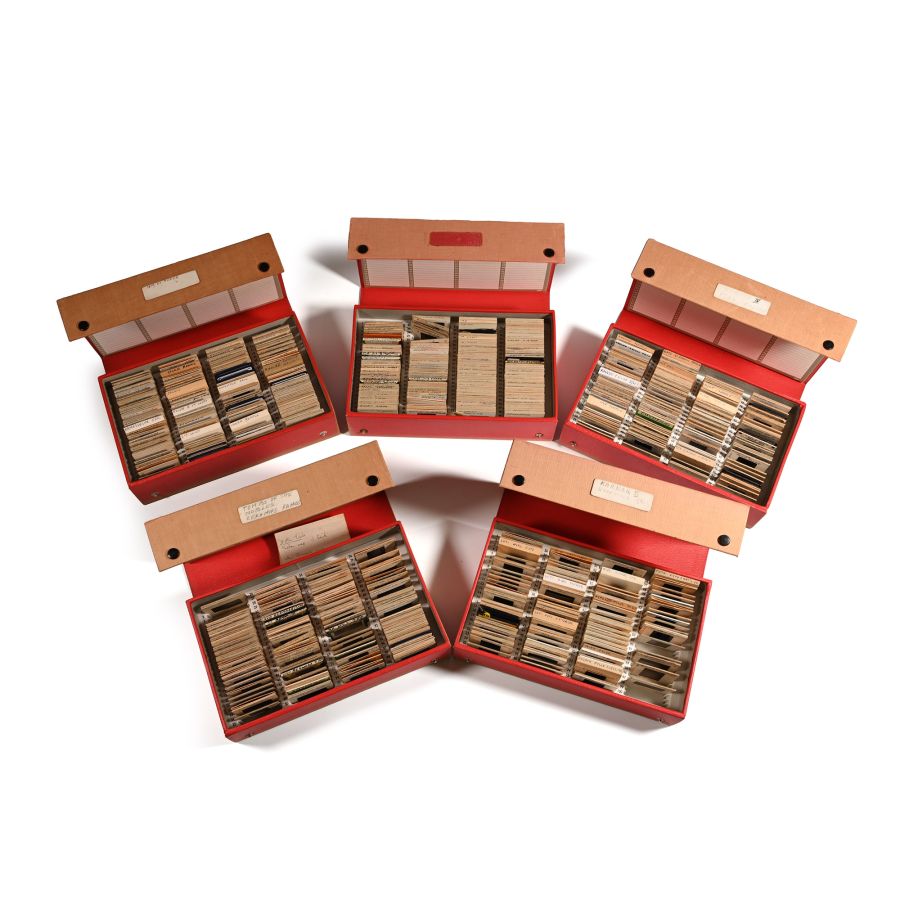
_900x900.jpg "Historic Collection of 794 Slides of Archaeological Sites in Egypt")
_200x200.jpg "Historic Collection of 794 Slides of Archaeological Sites in Egypt")
.jpg "Historic Collection of 794 Slides of Archaeological Sites in Egypt")
LOT 0511
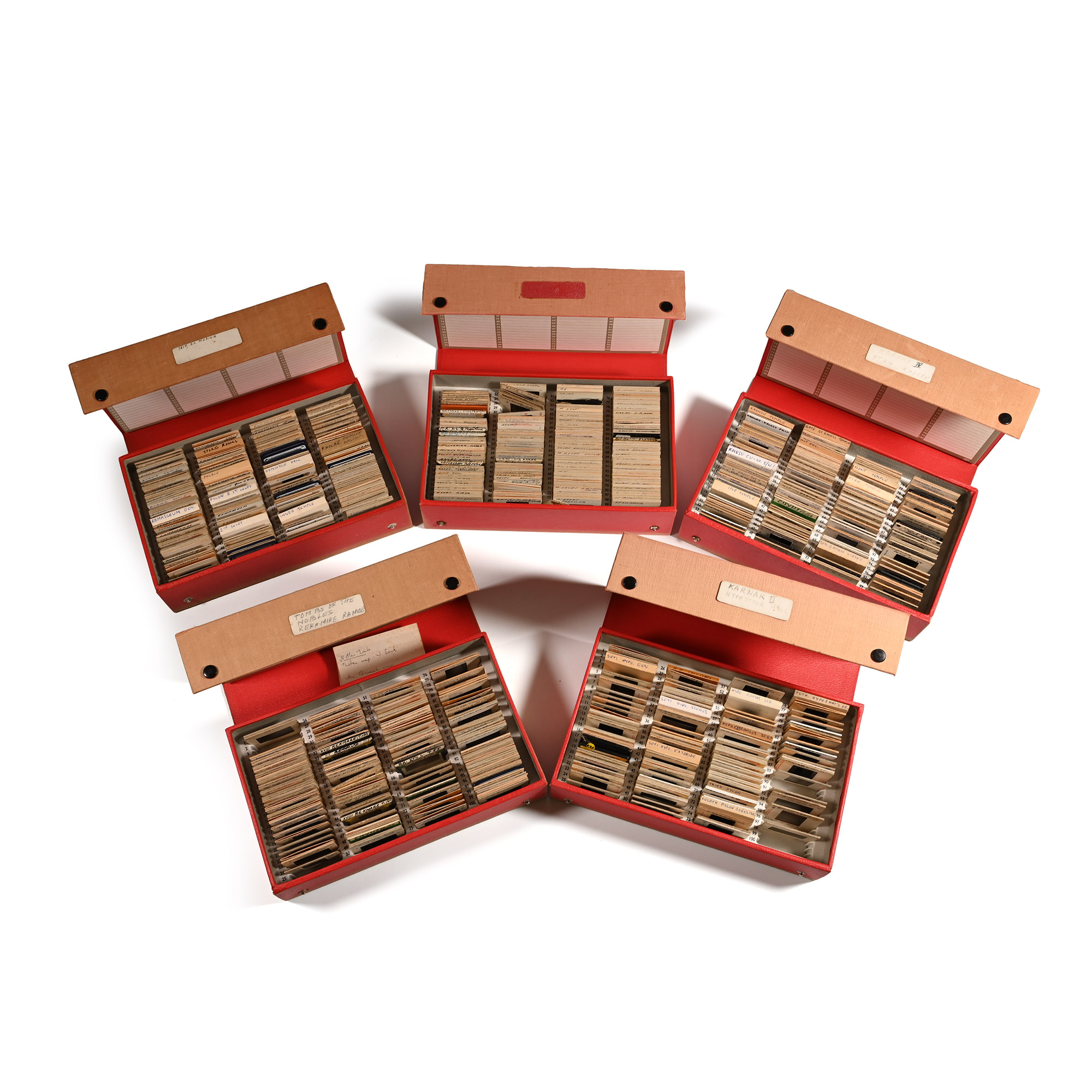
Historic Collection of 794 Slides of Archaeological Sites in Egypt
1960S-1980S A.D.
10 1/2 x 6 1/2 x 2 1/2 in. (4.11 kg total, 26.5 x 16.5 x 6.5 cm each box).
Housed in five linen-covered boxes, covering Karnak, Hypostyle Hall, Ptah Khonsu, Tombs of the Nobles, Rekh Mire Ramuse, Deir el Medina, and general sites etc. [5, No Reserve]
ProvenanceProperty of archaeologist Stephanie Gee, N.W. London, UK, 1960s-1980s.
This lot is accompanied by an illustrated lot declaration signed by the Head of the Antiquities Department, Dr Raffaele D'Amato.
Stephanie Gee was a prominent archaeologist who took part in several expeditions in Egypt. She was a trusted assistant to the British-Australian archaeologist Veronica Seton-Williams, who excavated in Egypt, Britain, and the Near East. Stephanie also took part in the Tell El-Farâ'în expeditions of 1965-1968, and assisted Seton-Williams with preparing the 1966 expedition report. Their collaboration continued and Stephanie helped with the manuscript of Seton-Williams’ book ‘The Road to El-Aguzein’, a narrative account of her life that was first published in 1988.
CONDITIONTimeLine Auctions follows a vetting process to ensure the authenticity and legality of all items, reinforcing our commitment to integrity and responsible trading. Each antiquity, antique, and coin lot undergoes thorough examination by a vetting committee of at least ten external specialists, professional trade association members, scientists, and archaeologists: Our Vetting Process
AUCTIONS:
TimeLine is a leading auction house specialising in antiquities, ancient art, collectables, natural history, coins, medals, and books. Our auctions offer museums, collectors, historians, and enthusiasts the opportunity to acquire unique and historically significant pieces.
LOT 0511
Historic Collection of 794 Slides of Archaeological Sites in Egypt
Sold for (Inc. bp): £780
-
.jpg)
Egyptian Basalt Statue Base For The Priest Hor-sa-aseti
Late Period, 664-332 B.C.Estimate: £4,000 - 6,000 (+bp*)
Opening Bid: £2,000
Fragment of the rectangular base of a statue, preserving an integral pair of feet on the upper surface; lower end of dorsal column inscription at the rear with two hieroglyphs; below, a horizontal band of hieroglyphic text extending onto both short sides including part of an offering formula for the ḥm-nṯr ı͗wnw-smꜤ ḥr-sꜢ-Ꜣstı͗ (the priest [of the] Southern Heliopolis [i.e., Thebes], Hor-sa-aseti); old collectors' labels on the underside; supplied with a custom-made wooden display stand. 1.37 kg, 12.9 cm (4.08 kg total, 25 cm including stand)
Private New York, USA, collection, 1970. Ex Adrian Burns, Columus, Ohio, USA, from an old estate collection. Ex Art for Eternity gallery, New York, USA. Ex Art Primativo, Auction 16, 2001, no.430. Ex private New York, USA, collection. Private collection, London, UK. Accompanied by an academic report by Egyptologist Paul Whelan. This lot has been checked against the Interpol Database of stolen works of art and is accompanied by a search certificate number no.12832-240779. This lot has been cleared against the Art Loss Register database, and is accompanied by an illustrated lot declaration signed by the Head of the Antiquities Department, Dr Raffaele D'Amato. -
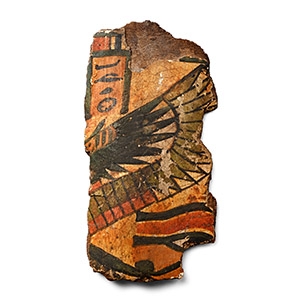
Egyptian Cartonnage Section with Eye and Wing
Third Intermediate Period, circa 1069-860 B.C.Sold for (Inc. bp): £416
Sub-rectangular in plan with irregular and fragmented edge; prepared plaster surface featuring a line-bordered column with four cursive hieroglyphs naming Behedet (bḥdt); a section of finely painted outstretched wing with feather detailing to lower edge in red and blue; below, a wedjat eye in black with red medial band; fabric back to reverse. 48 grams, 17 cm
Formerly from an old collection of a Wiltshire, UK, collector, acquired before 1980. Property of a private collector, West London, UK. This lot is accompanied by an illustrated lot declaration signed by the Head of the Antiquities Department, Dr Raffaele D'Amato.
This fragment most likely originates from the lower chest section of a so-called anthropoid 'yellow coffin' from the Third Intermediate Period. The wing belongs to a protective deity; as Behedet is a name given to several locations (Edfu, Tell el-Balamun, and Lepidotonpolis) associated with Horus, it seems probable that the wing belongs to the falcon form of this god. -
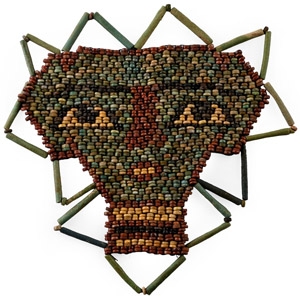
Egyptian Faience Mummy Bead Face Mask
Ptolemaic Period, 332-30 B.C.Sold for (Inc. bp): £234
Restrung; a beadwork panel of annular and tubular glazed composition beads in blues, greens, black, cream and red-brown colours, depicting a mummy face mask with false beard. 40 grams, 14.5 cm
Acquired 1990s. Ex Mariaud des Serres, Paris, France. This lot is accompanied by an illustrated lot declaration signed by the Head of the Antiquities Department, Dr Raffaele D'Amato.
