
Loading, please wait...
LOT 0504
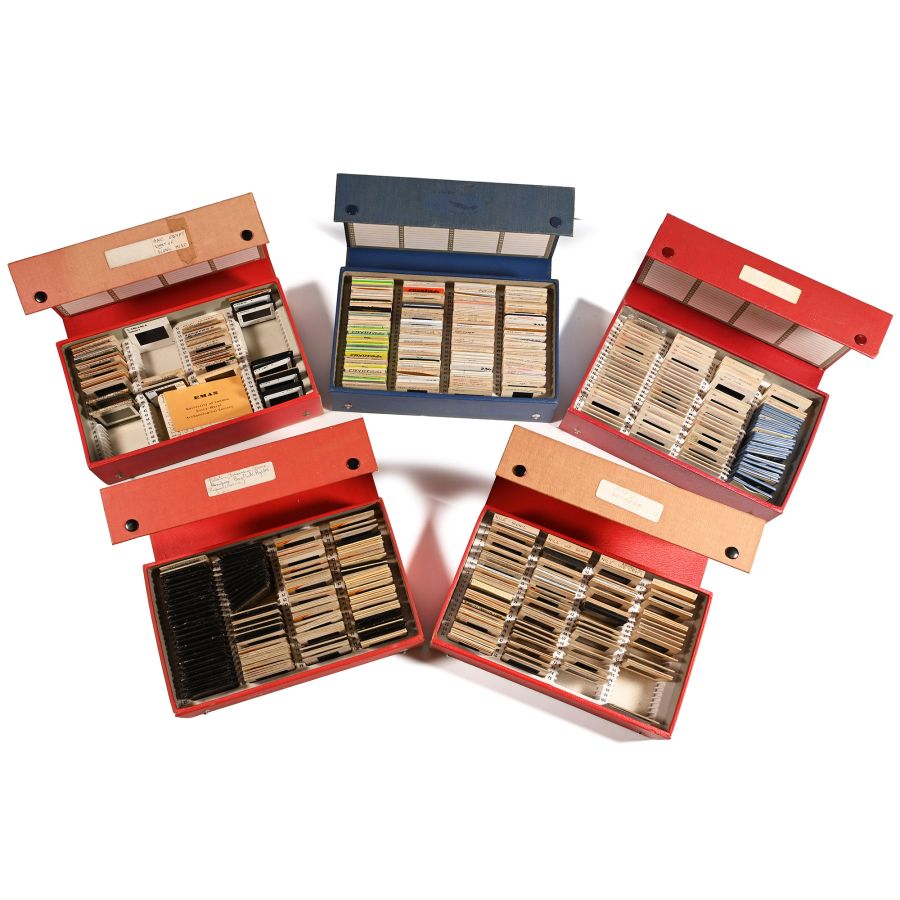
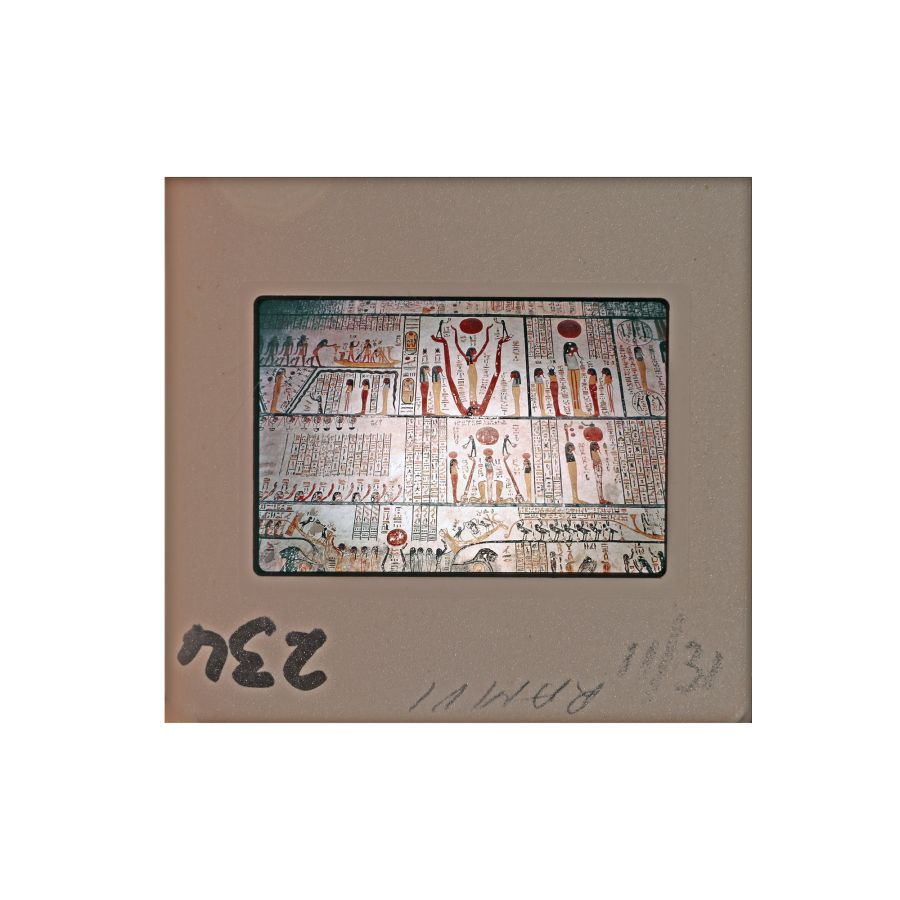
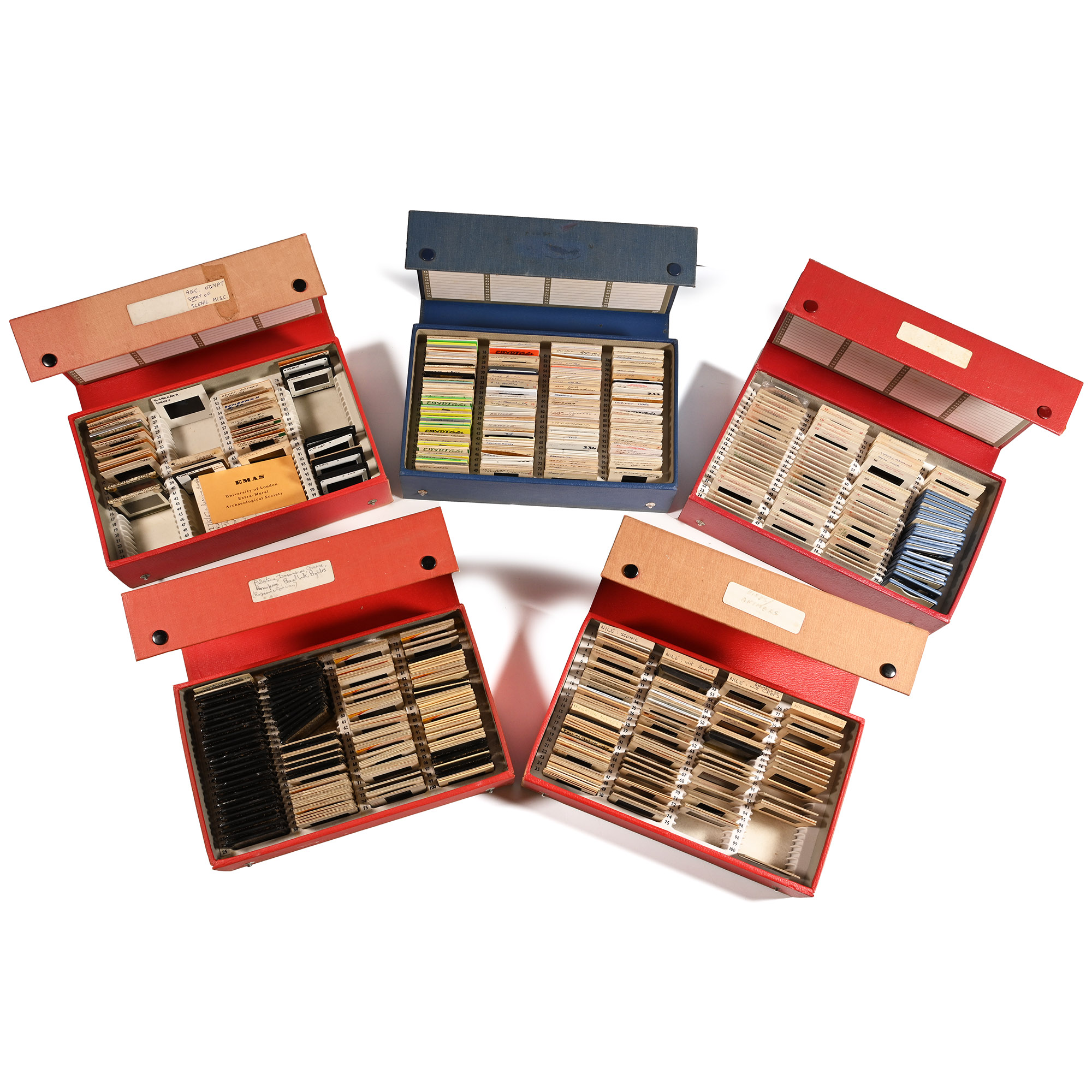
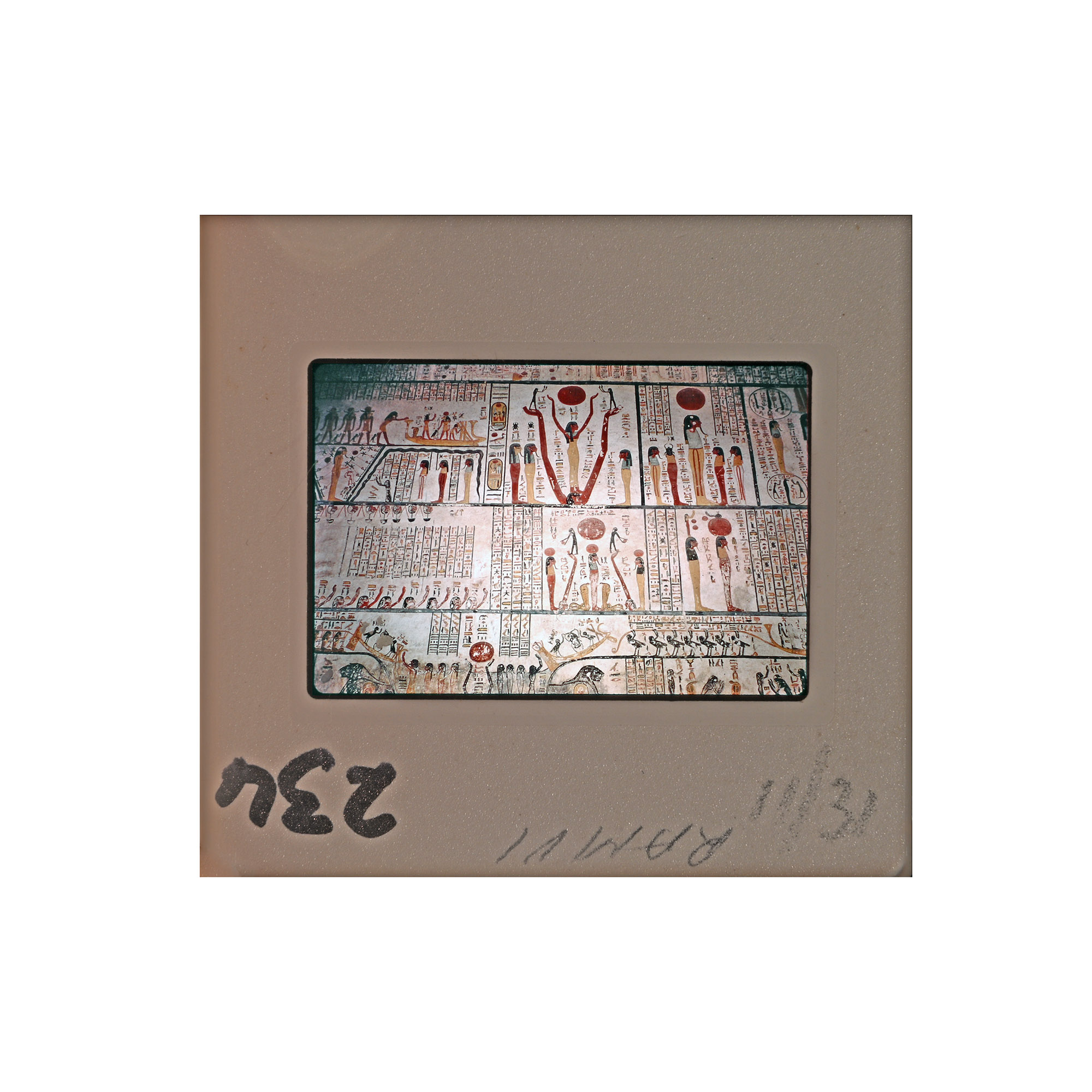
Historic Collection of 591 Slides of Egyptian Archaeological and Other Subjects
1960S-1980S A.D.
10 1/2 x 6 1/2 x 2 1/2 in. (4.32 kg total, 26.5 x 16.5 x 6.5 cm each box).
Housed in five linen-covered boxes, covering ancient Egypt, Aswan, Karnak, Philae, Medinet, Step Pyramids, Nile birds and animals, boats, irrigation, Palestine, Damascus, Greece, Pompeii, Baalbek, Byblos, personal slides etc. [5, No Reserve]
ProvenanceProperty of archaeologist Stephanie Gee, N.W. London, UK, 1960s-1980s.
FootnotesStephanie Gee was a prominent archaeologist who took part in several expeditions in Egypt. She was a trusted assistant to the British-Australian archaeologist Veronica Seton-Williams, who excavated in Egypt, Britain, and the Near East. Stephanie also took part in the Tell El-Farâ'în expeditions of 1965-1968, and assisted Seton-Williams with preparing the 1966 expedition report. Their collaboration continued and Stephanie helped with the manuscript of Seton-Williams’ book ‘The Road to El-Aguzein’, a narrative account of her life that was first published in 1988.
CONDITIONTimeLine Auctions follows a vetting process to ensure the authenticity and legality of all items, reinforcing our commitment to integrity and responsible trading. Each antiquity, antique, and coin lot undergoes thorough examination by a vetting committee of at least ten external specialists, professional trade association members, scientists, and archaeologists: Our Vetting Process
AUCTIONS:
TimeLine is a leading auction house specialising in antiquities, ancient art, collectables, natural history, coins, medals, and books. Our auctions offer museums, collectors, historians, and enthusiasts the opportunity to acquire unique and historically significant pieces.
LOT 0504
Historic Collection of 591 Slides of Egyptian Archaeological and Other Subjects
Sold for (Inc. bp): £910
-
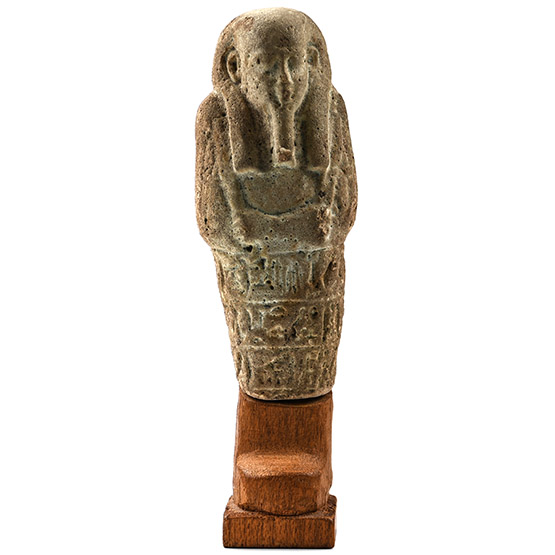
Egyptian Pale Green Glazed Faience Shabti Fragment with Hieroglyphs
Late Period, 664-332 B.C.Sold for (Inc. bp): £364
Head and torso of a mummiform figure, wearing a tripartite wig and divine beard, with arms crossed and hands holding agricultural implements and a cord for a seed bag over the left shoulder, three horizontal bands of hieroglyphic inscriptions to the lower body; mounted on a wooden display stand. 86 grams, 12.5 cm including stand
From a Scottish gentleman’s collection, Glasgow, formed from the early 2000s.
The owner's name is poorly preserved, although the filiation that follows may read: "...born (to) Djed-mut-ies-ankh" (ms ḏd mwt ı͗w s Ꜥnḫ). -
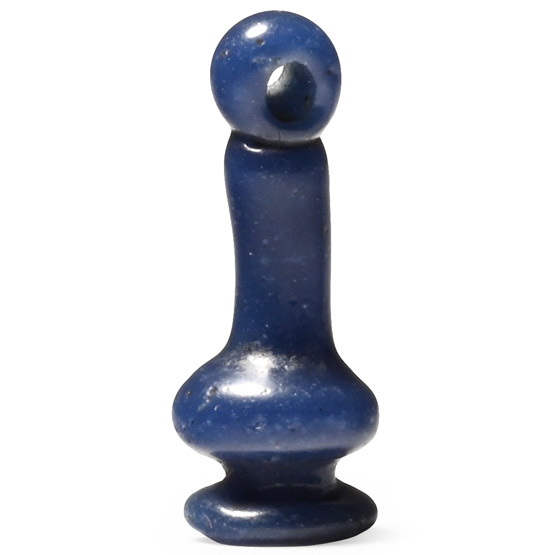
Egyptian Poppy Seed Amulet
New Kingdom, 1550-1070 B.C.Sold for (Inc. bp): £143
A dark blue glass amulet formed as a poppy seed, suspension loop to the top; chipped at the base. 0.20 grams, 12 mm
Ex Constable collection, 1990s. Ex Ancient & Oriental, UK. Ex P. Morris collection. Accompanied by an Ancient & Oriental certificate of authenticity. -
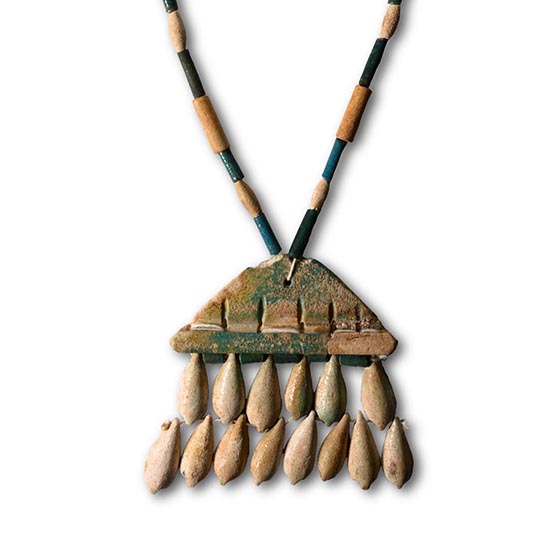
Egyptian Faience Necklace with Pendant
New Kingdom, 1400-1100 B.C.Estimate: £550 - 750 (‡+bp*)
Opening Bid: £300
Restrung group of tubular and fusiform faience beads with D-shaped pendant and two tiers of dangles beneath. 48 grams, 80 cm long
Acquired in the mid 1980s-1990s. Private collection, Switzerland, thence by descent. Private collection, since the late 1990s.
