
Loading, please wait...
LOT 0900
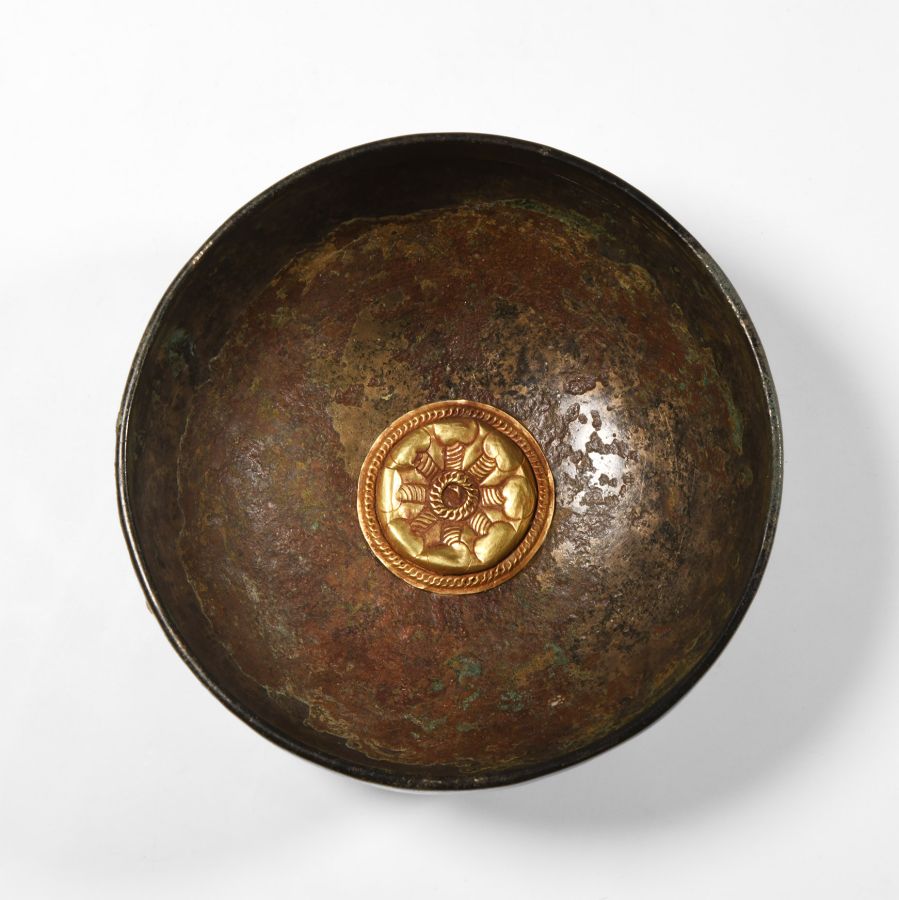
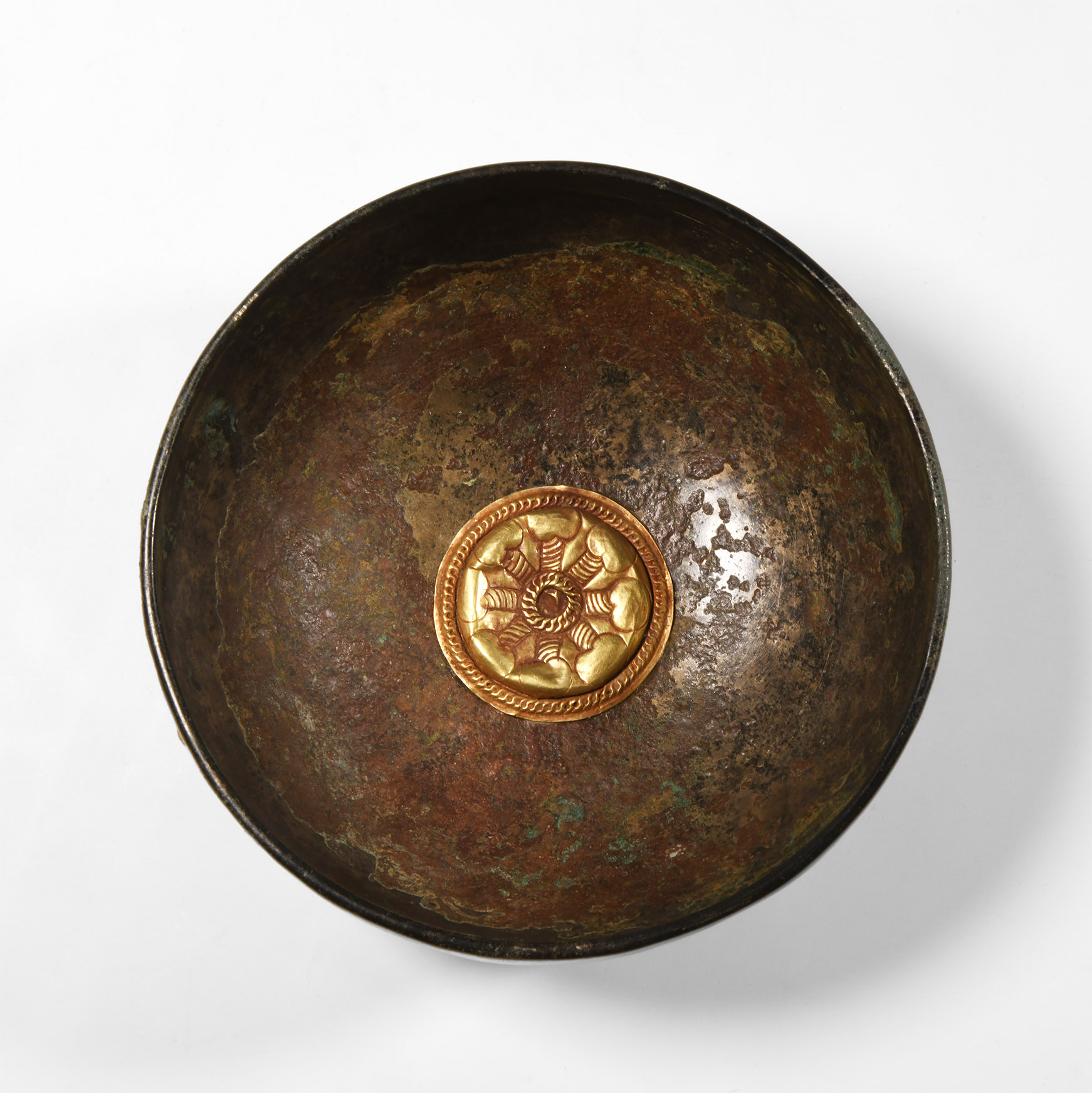
Highly Tinned Elamite Bowl with Central Gold Roundel
2ND-1ST MILLENNIUM B.C.
5 1/2 in. (497 grams, 14 cm wide).
A highly tinned, roughly hemispherical bronze bowl displaying a possibly later central gold roundel to the interior base, decorated with a geometric motif, possibly representing a flower or the sun, border of conjoined S-motifs around.
ProvenanceAcquired before the early 1970s.
Ex London, UK, gallery.
Property of a London gentleman.
TimeLine Auctions follows a vetting process to ensure the authenticity and legality of all items, reinforcing our commitment to integrity and responsible trading. Each antiquity, antique, and coin lot undergoes thorough examination by a vetting committee of at least ten external specialists, professional trade association members, scientists, and archaeologists: Our Vetting Process
AUCTIONS:
TimeLine is a leading auction house specialising in antiquities, ancient art, collectables, natural history, coins, medals, and books. Our auctions offer museums, collectors, historians, and enthusiasts the opportunity to acquire unique and historically significant pieces.
LOT 0900
Highly Tinned Elamite Bowl with Central Gold Roundel
Estimate £500 - 700€580 - 810 (for guidance only)$680 - 950 (for guidance only)
-
Western Asiatic Painted Jar
1st millennium B.C.Sold for (Inc. bp): £59
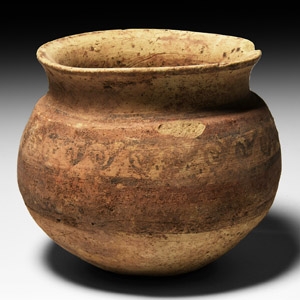
An unglazed ceramic jar with rounded body, carinated shoulder and flared rim; red painted bands below the shoulder and medial white band with running wave pattern. 311 grams, 10.5 cm wide
Acquired 1980-2015. Ex Abelita family collection. -
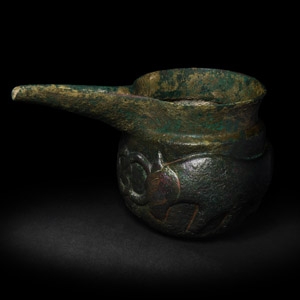
Luristan Spouted Vessel with Attacking Bulls
Late 2nd millennium B.C.Estimate: £1,500 - 2,000 (+bp*)
Opening Bid: £833
A bronze vessel composed of a squat body, stepped shoulder, broad rim and U-section spout, the body displaying a frieze of repoussé fighting bulls, their heads lowered and horns interlocking beneath the spout. 496 grams, 19 cm wide
Fine condition.
Acquired before 1983. Ex London gallery, 1990s. This lot has been checked against the Interpol Database of stolen works of art and is accompanied by search certificate no.11352-191889. -
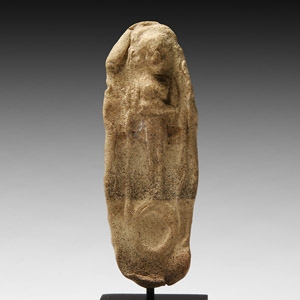
Old Babylonian Terracotta Plaque with Goddess
Mid 2nd millennium B.C.Sold for (Inc. bp): £191
A roughly oblong terracotta plaque showing a female deity standing facing in raised relief; accompanied by a custom-made display stand. 10.8 gams, 69 mm (20.9 grams total, 84 mm including stand)
Fine condition.
Acquired 1979-1999. London collection of the late Mr S.M., thence by descent.
