
Loading, please wait...


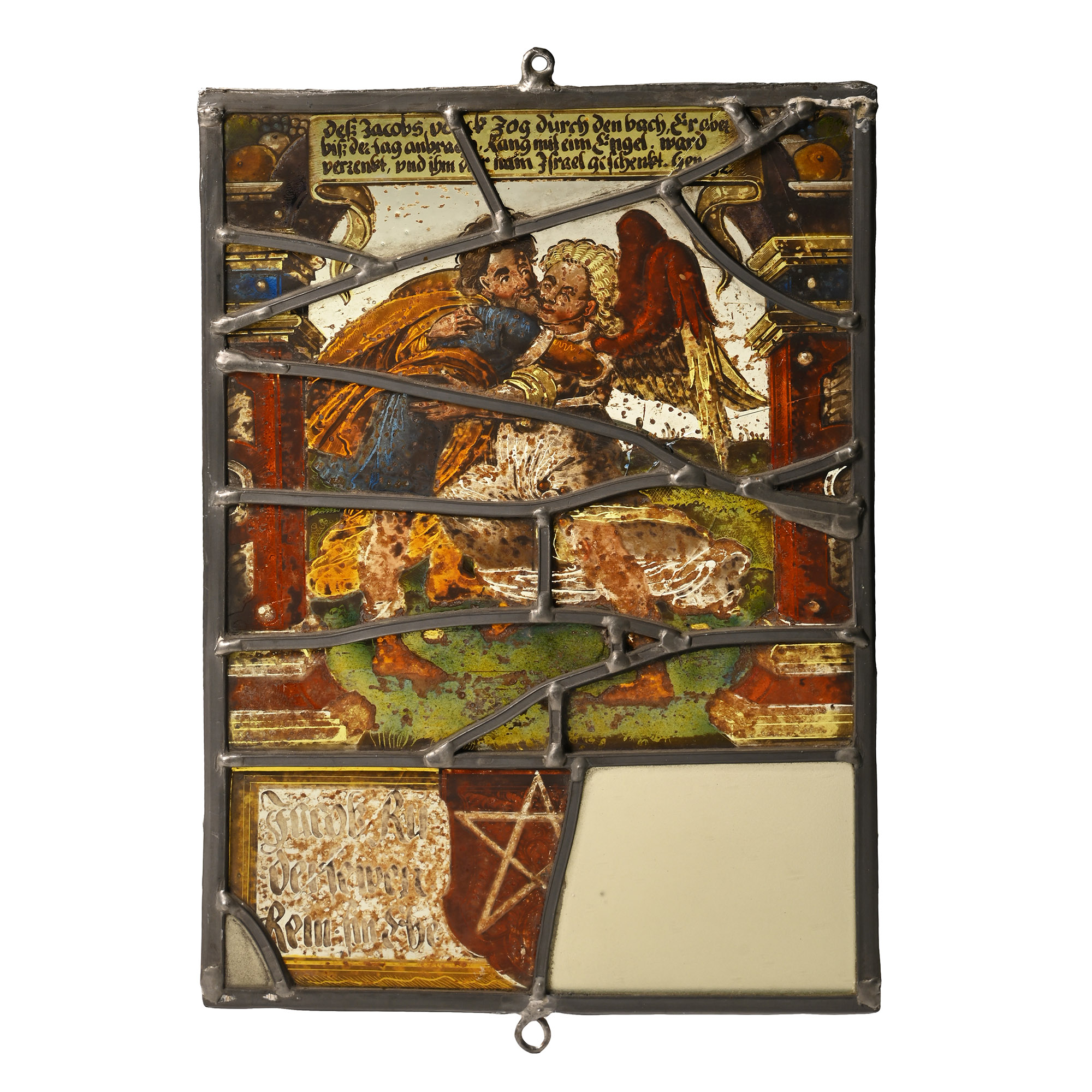
LOT 2011
Heraldic Stained Glass Panel Showing Jacob and the Angel
CIRCA 1600 A.D.
9 5/8 in. (306 grams, 24.5 cm).
Rectangular panel assembled from irregular fragments; polychrome painted scene; painted German text in panel above, heater shield with five-pointed star below and title text. [No Reserve]
Provenancewith Sandford Orcas Manor, South Bedroom.
Private collection.
TimeLine Auctions follows a vetting process to ensure the authenticity and legality of all items, reinforcing our commitment to integrity and responsible trading. Each antiquity, antique, and coin lot undergoes thorough examination by a vetting committee of at least ten external specialists, professional trade association members, scientists, and archaeologists: Our Vetting Process
AUCTIONS:
TimeLine is a leading auction house specialising in antiquities, ancient art, collectables, natural history, coins, medals, and books. Our auctions offer museums, collectors, historians, and enthusiasts the opportunity to acquire unique and historically significant pieces.
LOT 2011
Heraldic Stained Glass Panel Showing Jacob and the Angel
Sold for (Inc. bp): £1,040
-
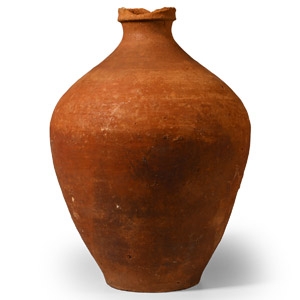
'Nuestra Senora de la Luz' Shipwreck Terracotta Vessel
Sunk 1752 A.D.Sold for (Inc. bp): £104
With flared body and domed shoulder, narrow neck with gussetted rim, old collector's inventory label to underside '7'; rim chipped. 1.08 kg, 24.2 cm
Salvaged by Ruben Collado Amatriain in 1992. Accompanied by original signed declarations in both English and Spanish from Ms Mariana Faine Collado, daughter of Mr Ruben Collado Amatriain. -
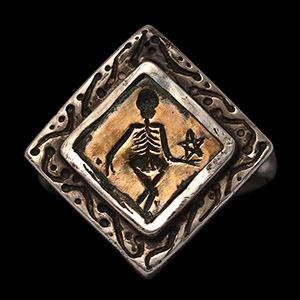
Georgian Silver 'Vive Memor Leti' Memento Mori Ring
18th century A.D.Sold for (Inc. bp): £1,235
With stepped lozengiform bezel, central gilt plaque with skeleton and star, guilloche to the shoulder; inscribed in florid italic hand to the inner face of the hoop 'Vive Memor Leti' (be mindful of death in life). 4.14 grams, 22.92 mm overall, 18.42 mm internal diameter (approximate size British Q, USA 8, Europe 17.49, Japan 16)
Private collection, Arundel, West Sussex, UK, 1980s.
The Latin phrase is taken from the work of the 1st century AD poet Aulus Persius Flaccus, Satires V 151-3: vive memor leti ! fugit hora; hoc quod loquor inde est (Live mindful of death. Time is fleeting [and] every word I speak is [borrowed] from it.). -
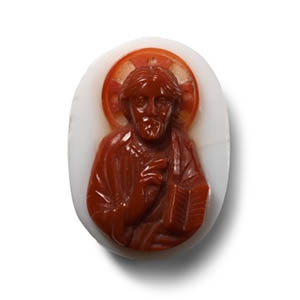
Byzantine Style Agate Cameo Depicting Christ Blessing
18th-19th century A.D.Estimate: £800 - 1,000 (+bp*)
Opening Bid: £400
Ellipsoid plaque with high-relief nimbate figure of Christ with open book. 5.2 grams, 26 mm
Acquired on the German art market, 1989-1995. with The Museum Gallery, 19 Bury Place, London, WC1, UK, 1998-2003. Property of a London based academic, 2003-present.
