
Loading, please wait...

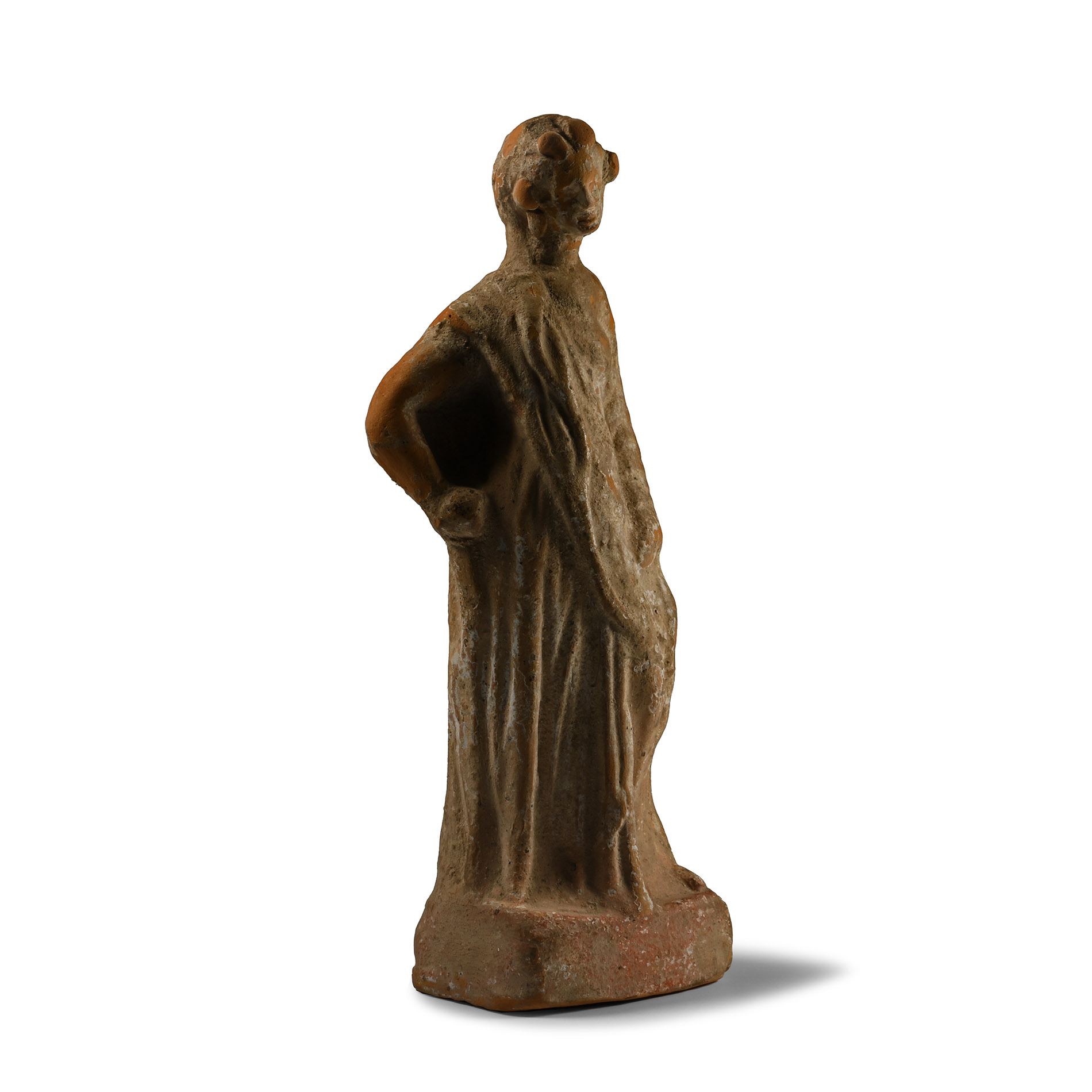
LOT 0614
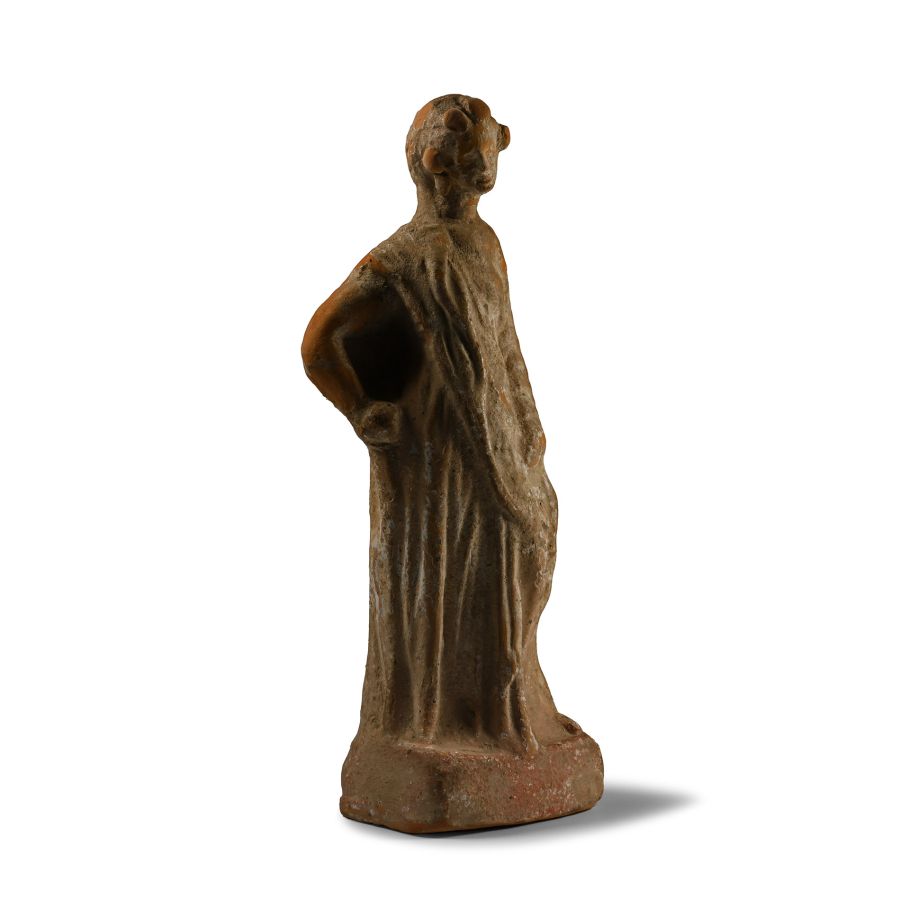
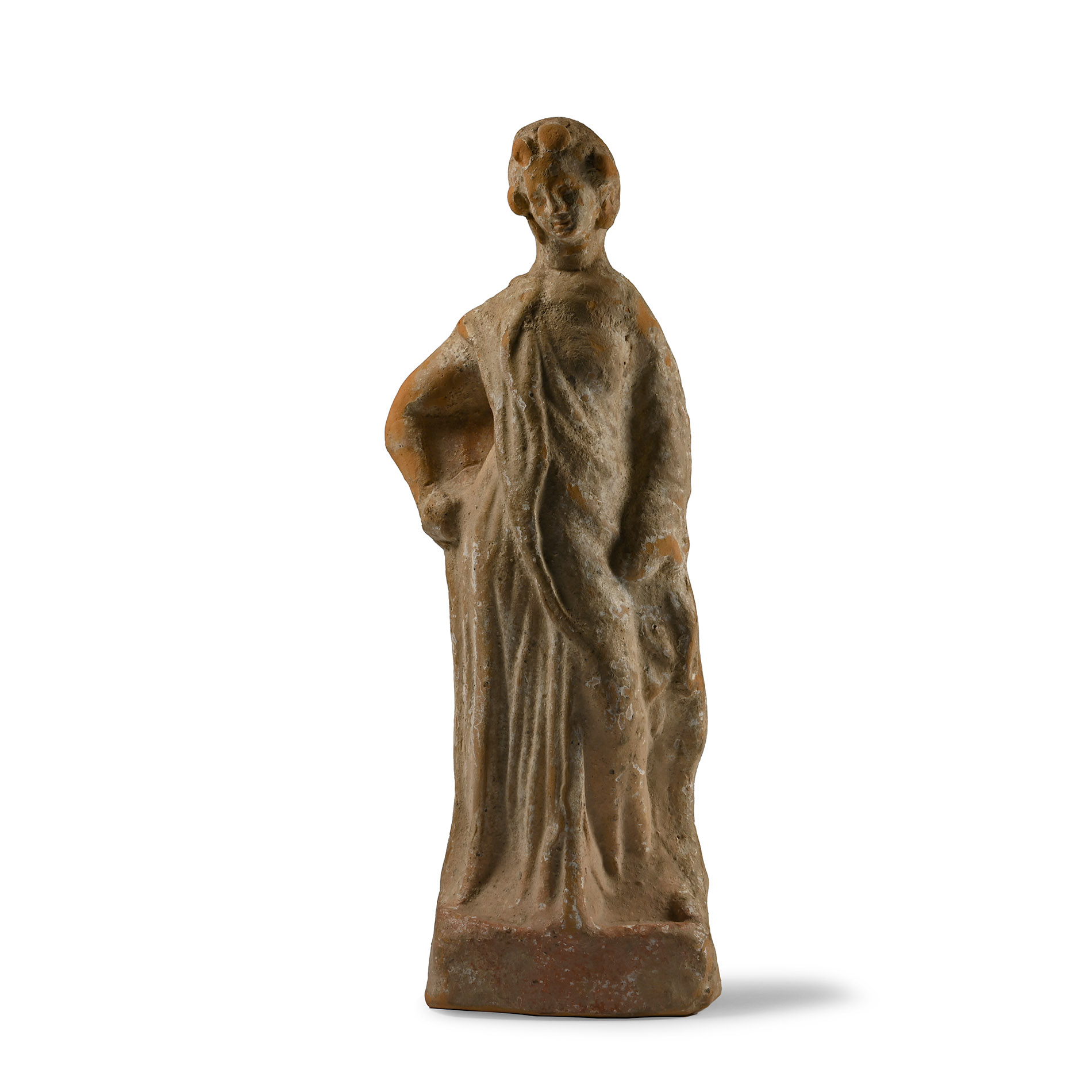
Hellenistic Terracotta Statuette of a Wreathed Young Woman
LATE 4TH-3RD CENTURY B.C.
6 7/8 in. (257 grams, 17.5 cm).
Standing on a rectangular base, hair divided in regular stripes with voluminous locks, head slightly bowed, the bare arm resting on her right hip; the left leg is visible under the pleated undergarment chiton and slanted himation.
ProvenanceEx Belgian art market, 2020.
This lot is accompanied by an illustrated lot declaration signed by the Head of the Antiquities Department, Dr Raffaele D’Amato.
This lot is accompanied by an illustrated lot declaration signed by the Head of the Antiquities Department, Dr Raffaele D'Amato.
Cf. Mavrogonatou, A., Terracotta figurines as grave offerings in Veroia: the funerary dimension of Aphrodite and Eros in female and child burials of the Hellenistic rock-cut chamber tombs, Thessaloniki, 2018, pl.29, p.30, for similar.
FootnotesThe statuette finds comparisons among examples that can be dated between the 4th century and the middle of the 3rd century B.C. It shows some traces of the original polychromy, characterised by strongly contrasting hues, keeping in with the local style.
CONDITIONTimeLine Auctions follows a vetting process to ensure the authenticity and legality of all items, reinforcing our commitment to integrity and responsible trading. Each antiquity, antique, and coin lot undergoes thorough examination by a vetting committee of at least ten external specialists, professional trade association members, scientists, and archaeologists: Our Vetting Process
AUCTIONS:
TimeLine is a leading auction house specialising in antiquities, ancient art, collectables, natural history, coins, medals, and books. Our auctions offer museums, collectors, historians, and enthusiasts the opportunity to acquire unique and historically significant pieces.
LOT 0614
Hellenistic Terracotta Statuette of a Wreathed Young Woman
Sold for (Inc. bp): £286
-
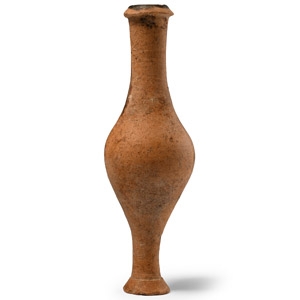
Hellenistic 'Spindle-Shaped' Unguentarium
3rd-2nd century B.C.Sold for (Inc. bp): £117
Ovoid body with slender tubular stem and neck, flat discoid base and everted rim; traces of black paint around the neck and rim. 37 grams, 10.6 cm
From the private family collection of Ersula Barter-Hemmerich, the longest serving member of staff working at the United Nations, her private collection formed in the 1950s and 1960s; thence by descent to her grandson. This lot is accompanied by an illustrated lot declaration signed by the Head of the Antiquities Department, Dr Raffaele D'Amato. -
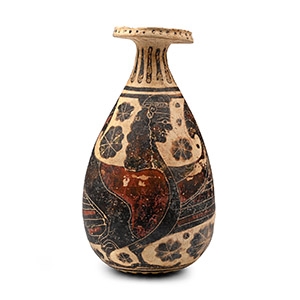
Greek Corinthian Aryballos with Winged Deity and Swan
7th-6th century B.C.Sold for (Inc. bp): £1,404
Piriform in shape with flattened bottom and rosette; the neck narrow with wide flat rim, pierced lug handle; the body with lively decoration featuring a central winged harpy with head in profile, body turned to the right and wings spread, rosettes in the field, all painted in a dark brown and purplish brown slip with sgraffito highlights; reverse with standing swan with sgraffito detailing. 180 grams, 14.7 cm
Acquired on the European art market in the early 2000s. with Galerie Rhéa, Zurich, Switzerland. This lot is accompanied by an illustrated lot declaration signed by the Head of the Antiquities Department, Dr Raffaele D'Amato. -
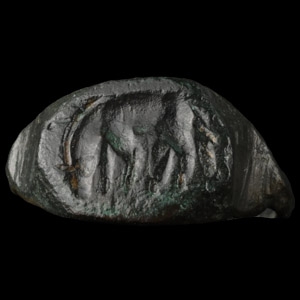
Greek Bronze Ring with Grazing Horse
4th-3rd century B.C.Sold for (Inc. bp): £182
Ellipsoid bezel with incuse image of a horse with head lowered. 4.23 grams, 21.71 mm overall, 18.78mm internal diameter (approximate size British O, USA 7, Europe 14.98, Japan 14)
Ex German art market, 2000s. Acquired from an EU collector living in London. From the collection of a Surrey, UK, gentleman. This lot is accompanied by an illustrated lot declaration signed by the Head of the Antiquities Department, Dr Raffaele D'Amato.
