
Loading, please wait...
_900x900.jpg "Hellenistic Terracotta Pyxis")
_200x200.jpg "Hellenistic Terracotta Pyxis")
.jpg "Hellenistic Terracotta Pyxis")
LOT 0090
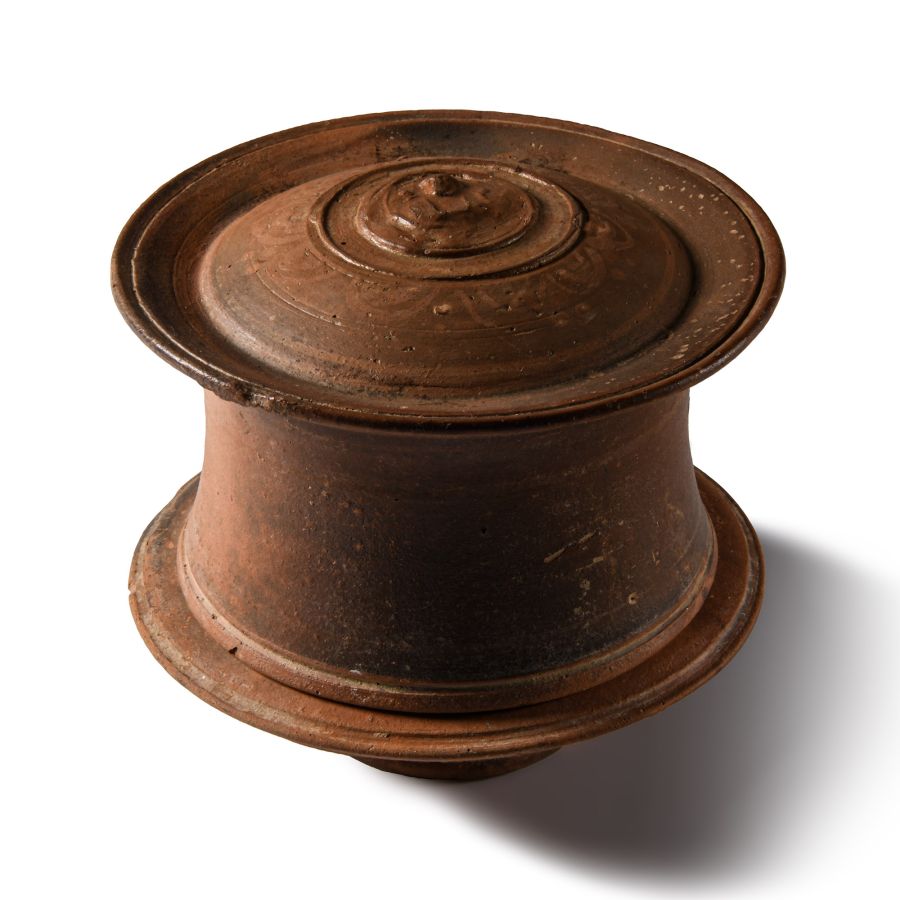
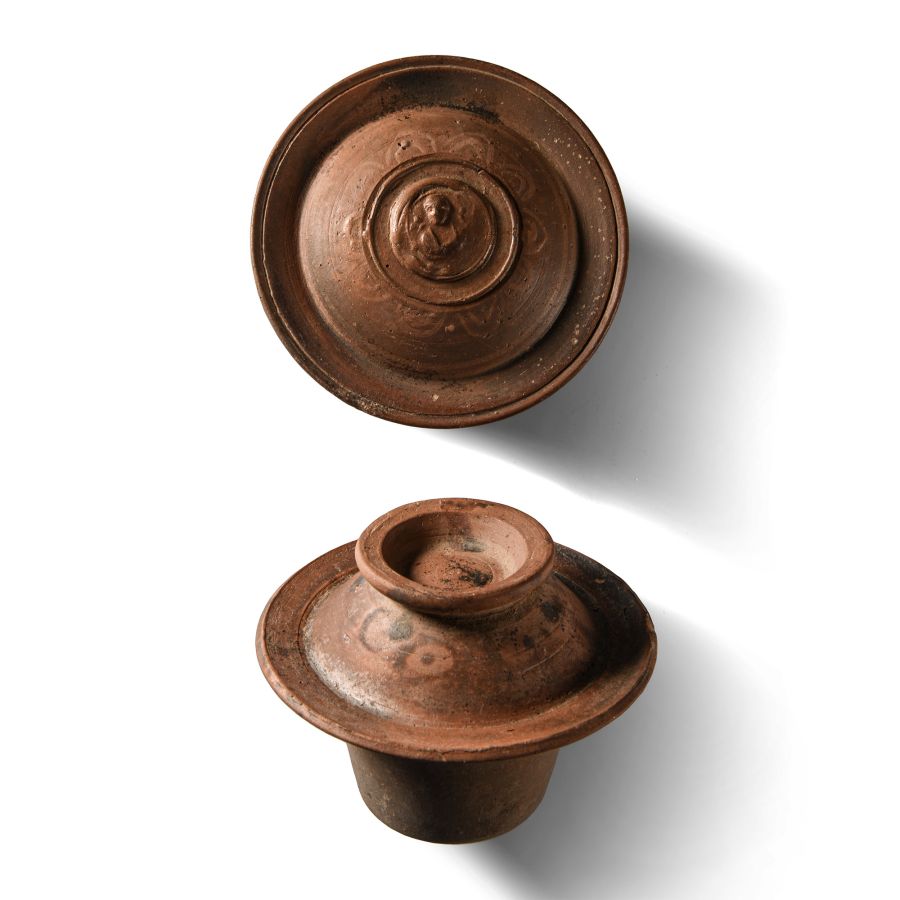
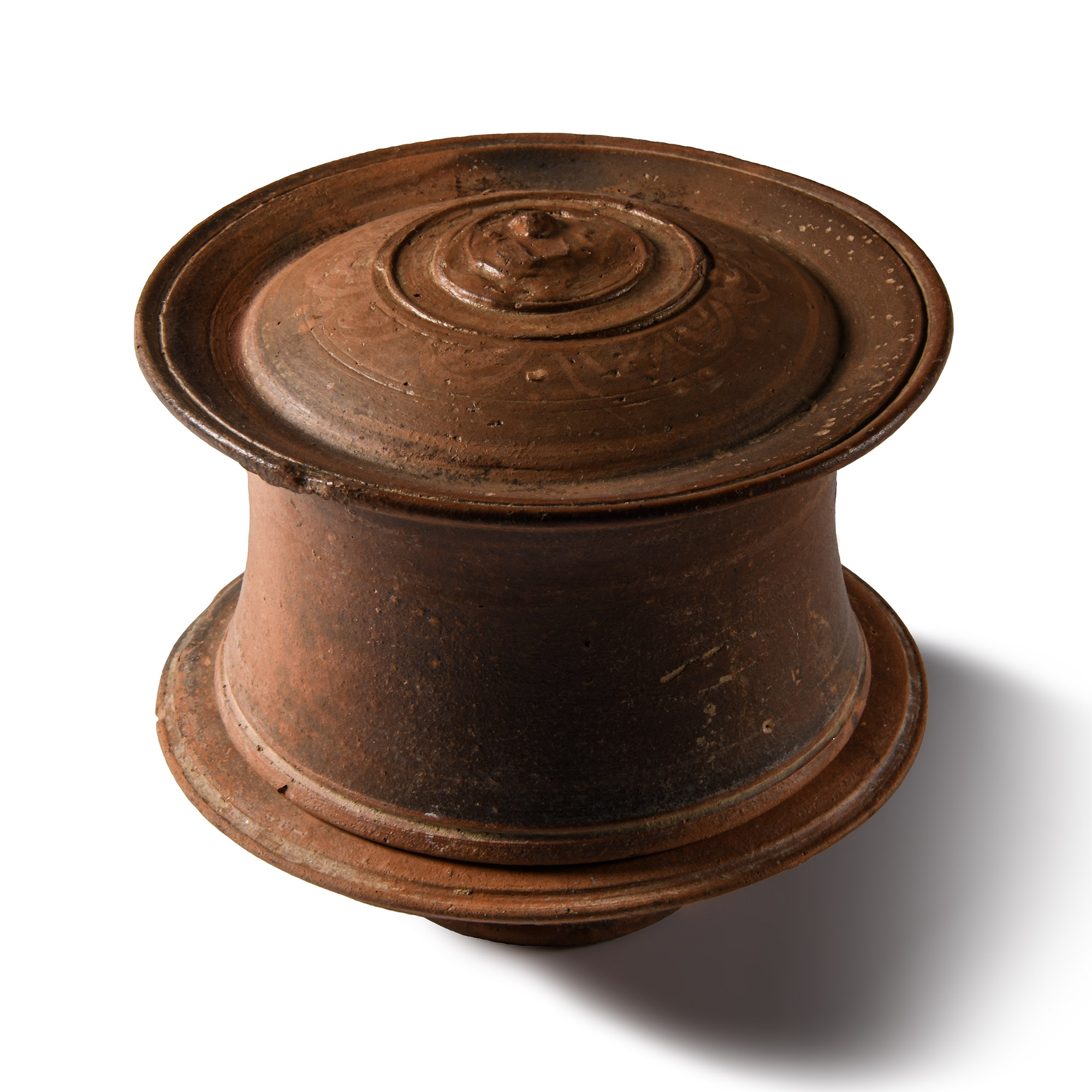
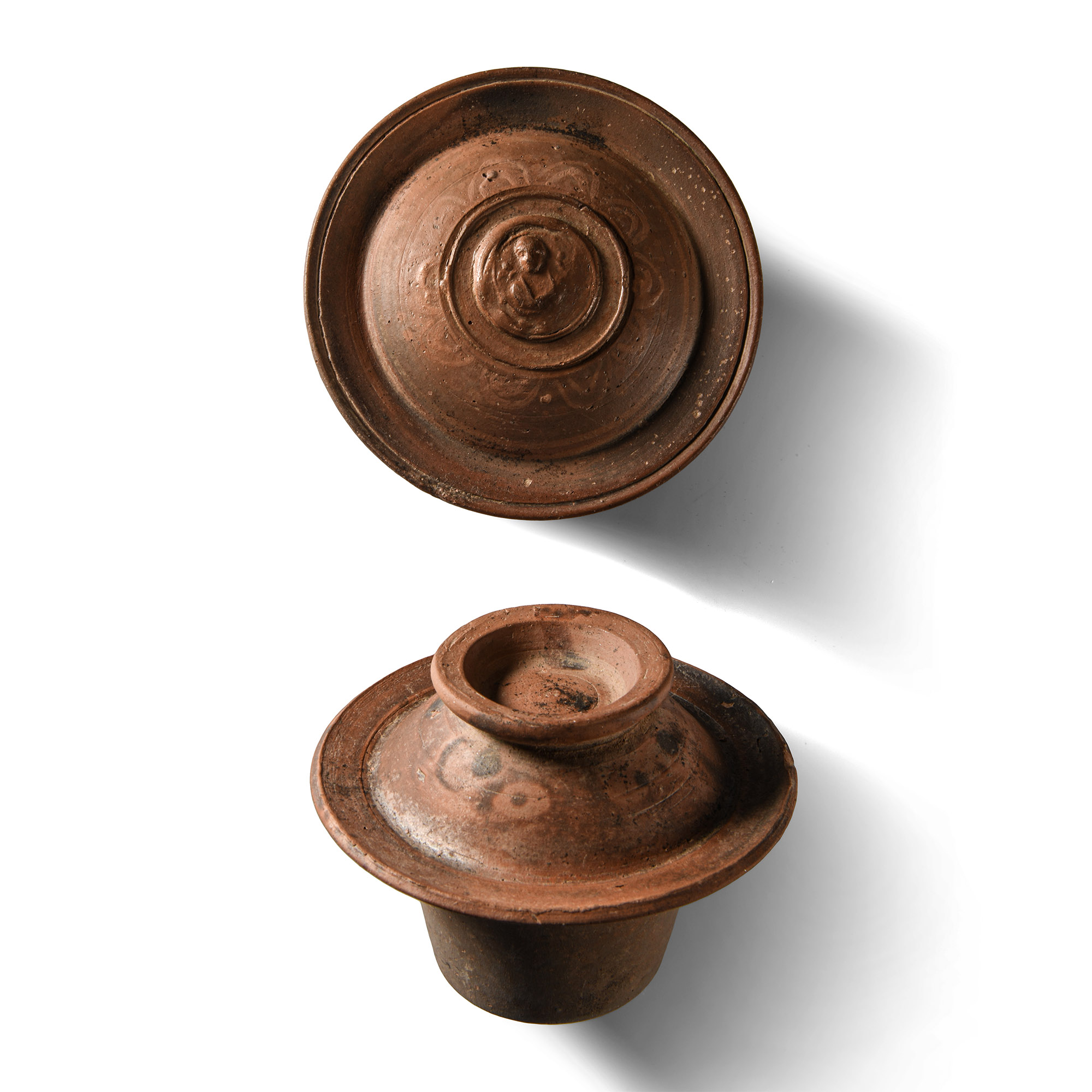
Hellenistic Terracotta Pyxis
3RD-2ND CENTURY B.C.
3 1/2 in. (189 grams, 90 mm wide).
With separate lid; small flared base, carinated profile with large flange rim, lid with broad flange, domed upper face with rosette detailing and central facing female bust.
ProvenanceEx Atenasov collection, Germany, before 1973.
LiteratureCf. a vessel of similar form but undecorated in the British Museum, London, under accession number 1866,0415.49.
CONDITIONTimeLine Auctions follows a vetting process to ensure the authenticity and legality of all items, reinforcing our commitment to integrity and responsible trading. Each antiquity, antique, and coin lot undergoes thorough examination by a vetting committee of at least ten external specialists, professional trade association members, scientists, and archaeologists: Our Vetting Process
AUCTIONS:
TimeLine is a leading auction house specialising in antiquities, ancient art, collectables, natural history, coins, medals, and books. Our auctions offer museums, collectors, historians, and enthusiasts the opportunity to acquire unique and historically significant pieces.
LOT 0090
Hellenistic Terracotta Pyxis
Estimate £700 - 900€810 - 1,040 (for guidance only)$950 - 1,220 (for guidance only)
-
Greek Terracotta Vessel Fragment Group
Circa 7th-3rd century B.C.Sold for (Inc. bp): £442
Comprising a variety decorated fragments including: four figural black-figure fragments; one with raised line decoration; one with raised bosses; a fragment with a gazelle facing back; one with painted motifs in red; and three other fragments with painted motifs. 264 grams total, 5.3-10.5 cm
Acquired early 20th century. Ex property of UK lady by descent. Property of a Nottinghamshire gentleman. -
Greek Corinthian Terracotta Oil Lamp
Circa 5th-3rd century B.C.Sold for (Inc. bp): £195
With short nozzle, open reservoir with central cone open beneath; orange and brown pigment. 113 grams, 10.7 cm wide
Acquired before 1990s/early 2000s. From the family collection of Jack Lyttle (1944-2023), Kilmacolm, Scotland; thence by descent to his granddaughter. Property of an East Sussex, UK, gentleman. -
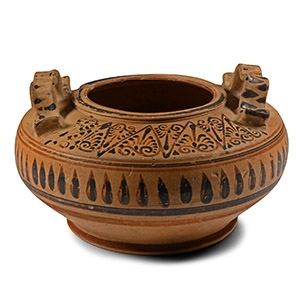
Greek Corinthian Decorated Pyxis
5th century B.C.Sold for (Inc. bp): £1,170
Squat profile, broad body with low sidewall, black and red coloured bands and teardrops; applied strap handles to shoulder amid painted palmettes and scrolls; raised rim. 514 grams, 19 cm wide
Acquired from Charles Ede, London, 1986. with Christie's London, 27 October 2004, lot 451. with Christie ́s London, 20 April 2005, lot 314. Accompanied by a copy of an Art Loss Register certificate number S00085809, dated 27 March 2014. Accompanied by copies of the relevant Christie's catalogue pages.
