
Loading, please wait...
LOT 0531
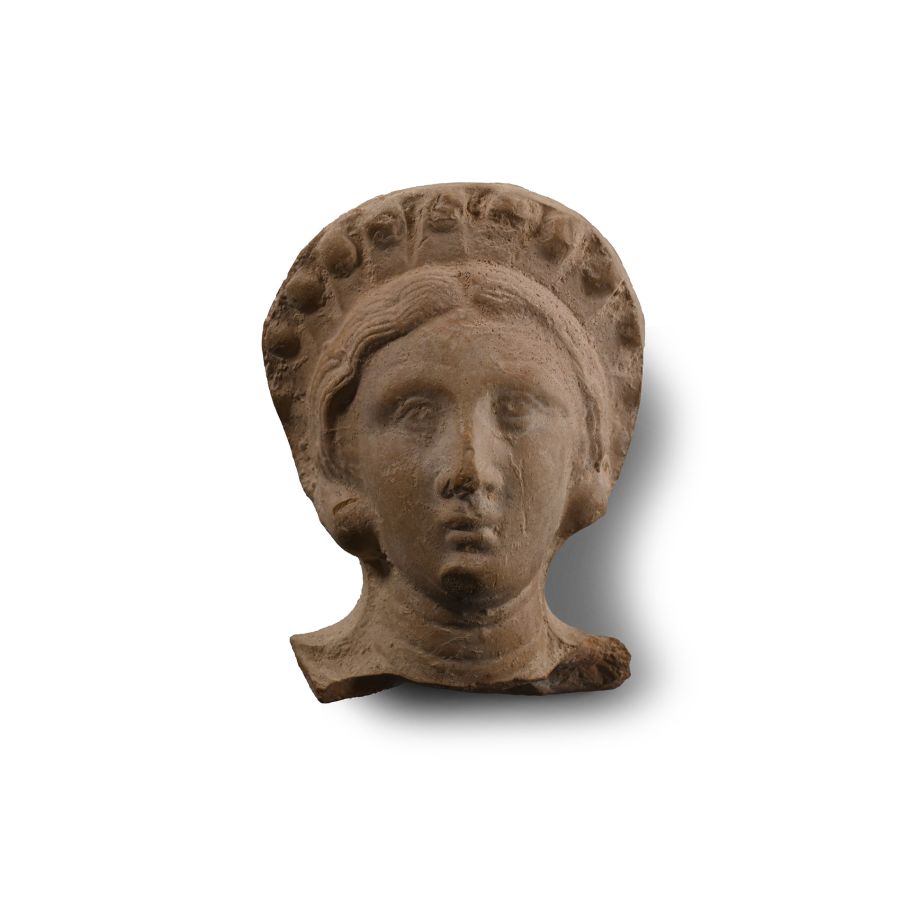
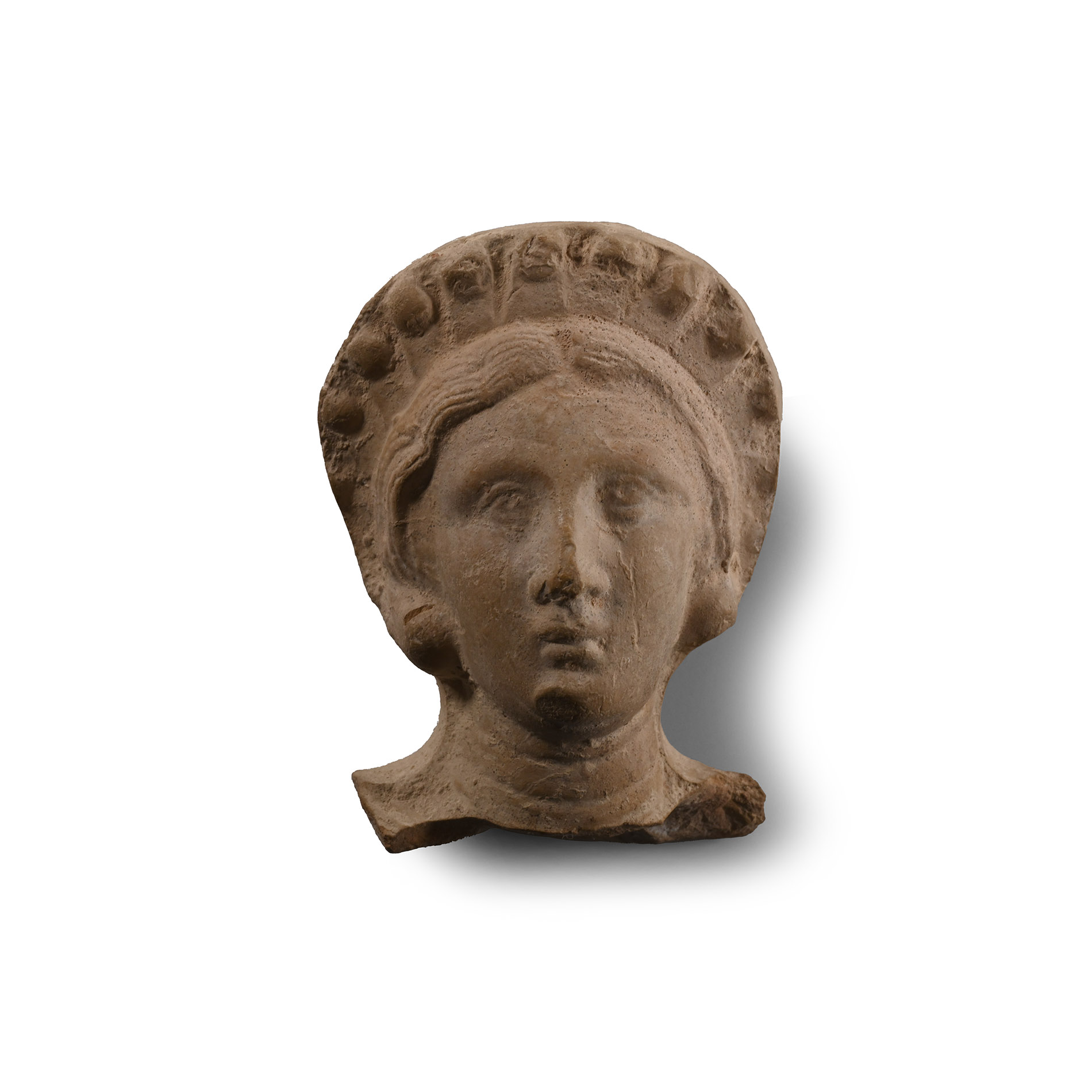
Hellenistic Terracotta Head of the Goddess Demeter
CIRCA 2ND-1ST CENTURY B.C.
3 in. (74 grams total, 78 mm high).
Hollow-formed and with rounded facial features; wavy hair with central partition, dressed with a tall diadem. [No Reserve]
ProvenanceUK private collection.
Acquired Spink, York, UK, 2009.
Property of a Nottinghamshire gentleman.
Cf. Capano, A., 'Il culto di Demetra nella Lucania antica,' in Basilicata Regione. Notizie, 2017, pp.128-151, fig.23, votive head from San Chirico Nuovo.
FootnotesThe head is probably from a cult statuette of Demeter. Statuettes of the goddess, seated or standing, or even busts, are well documented in the south of Italy, both among the Greek colonists and the local populations; many have been excavated from regional sanctuaries.
CONDITIONTimeLine Auctions follows a vetting process to ensure the authenticity and legality of all items, reinforcing our commitment to integrity and responsible trading. Each antiquity, antique, and coin lot undergoes thorough examination by a vetting committee of at least ten external specialists, professional trade association members, scientists, and archaeologists: Our Vetting Process
AUCTIONS:
TimeLine is a leading auction house specialising in antiquities, ancient art, collectables, natural history, coins, medals, and books. Our auctions offer museums, collectors, historians, and enthusiasts the opportunity to acquire unique and historically significant pieces.
-
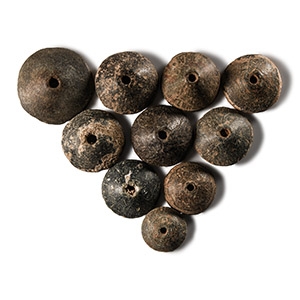
Greek Stone Spindle Whorl Collection
3rd-2nd century B.C.Sold for (Inc. bp): £111
Group of plano-convex schist spindle whorls, each with a central vertical hole. 106 grams total, 21-36 mm
Private collection formed in the 1990s. Acquired from a central London gallery. Property of an Essex gentleman. Accompanied by an old Coincraft certificate of authenticity. -
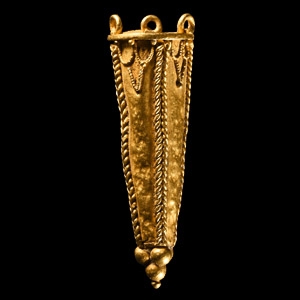
Greek Gold Vessel-Shaped Pendant
Circa 4th-3rd century B.C.Sold for (Inc. bp): £312
Conical sheet-gold dangle with applied rim and three suspension loops, filigree detailing beneath the rim, four vertical braided filigree bands to the sidewall, granule cluster finial. 2.25 grams, 26 mm
UK private collection formed before 2000. Ex North London, UK, gallery. -
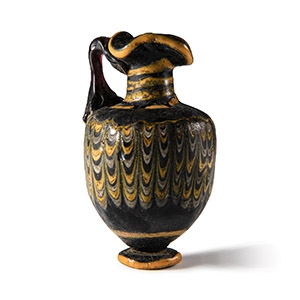
Greek Core-Formed Glass Juglet
Circa 4th-3rd century B.C.Sold for (Inc. bp): £1,170
Black glass with yellow dragged-trail detailing to the body, small disc foot; oinochoe-type pinched spout and applied strap handle to the rear; cracked and repaired. 67 grams, 74 mm high
Ex Korban Gallery, 1970s. Ex P. A., Hertfordshire, UK, specialist collection of Greek art, 1980-1990s.
