
Loading, please wait...
LOT 0549
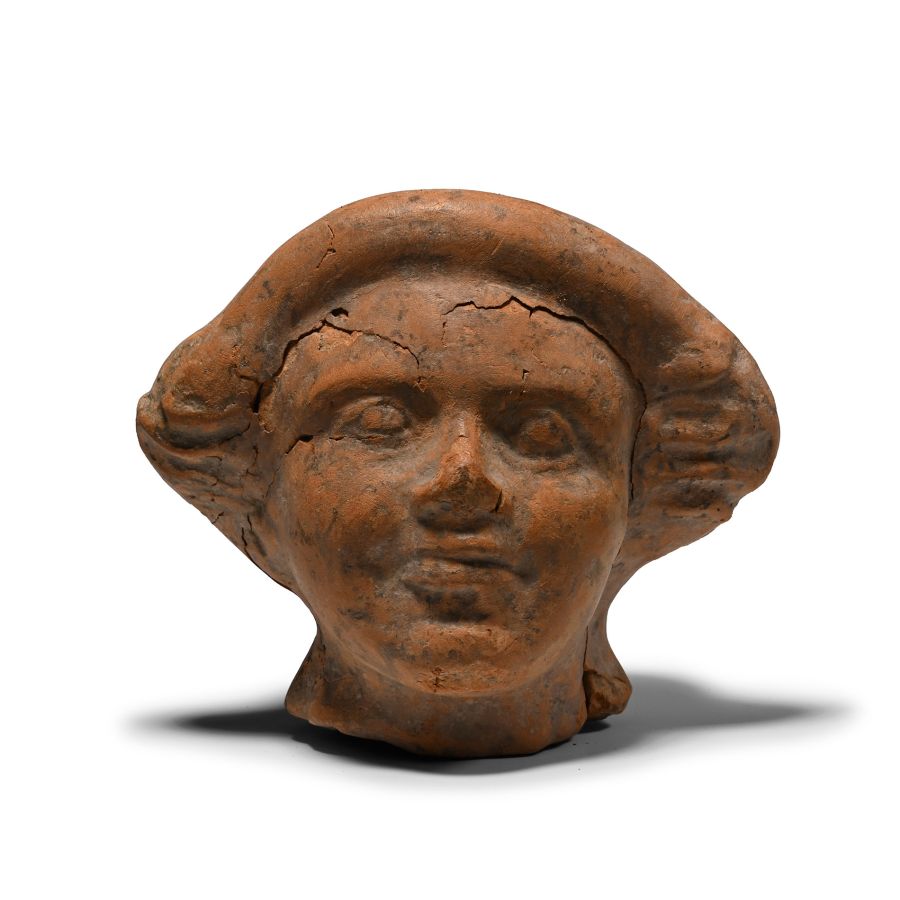
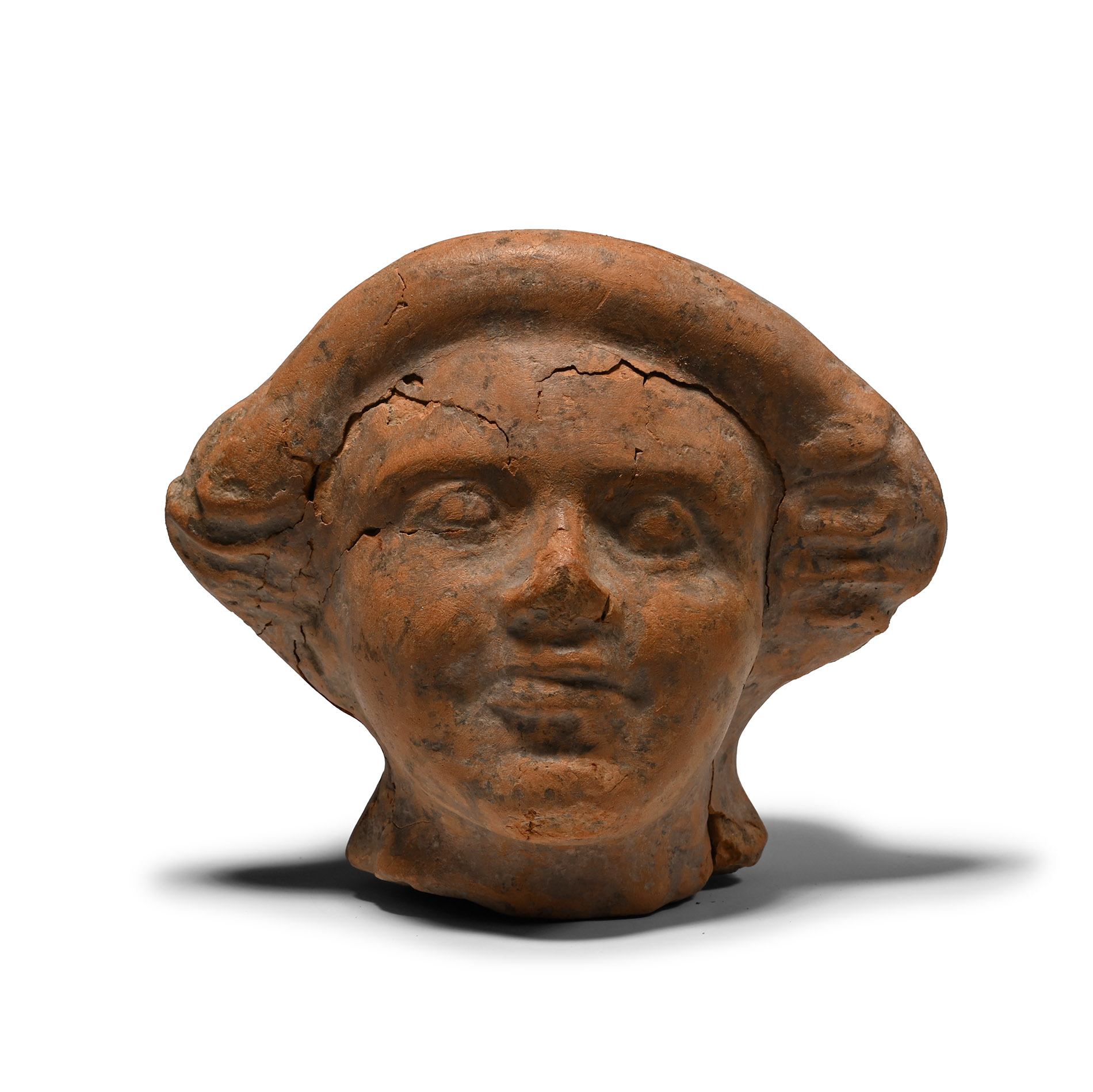
Hellenistic Terracotta Head of a Woman
3RD-1ST CENTURY B.C.
4 3/4 in. (499 grams, 12.3 cm wide).
Hollow-formed with flared neck, moulded face with shallow lentoid eyes, snub nose and wide mouth with enigmatic smile; band of hair framing the face.
ProvenanceAcquired in the mid 1980s-1990s.
Private collection, Switzerland, thence by descent.
Private collection, since the late 1990s.
This lot is accompanied by an illustrated lot declaration signed by the Head of the Antiquities Department, Dr Raffaele D’Amato.
Cf. similar in Metropolitan Museum of Art under accession no.23.160.95, for type.
CONDITIONTimeLine Auctions follows a vetting process to ensure the authenticity and legality of all items, reinforcing our commitment to integrity and responsible trading. Each antiquity, antique, and coin lot undergoes thorough examination by a vetting committee of at least ten external specialists, professional trade association members, scientists, and archaeologists: Our Vetting Process
AUCTIONS:
TimeLine is a leading auction house specialising in antiquities, ancient art, collectables, natural history, coins, medals, and books. Our auctions offer museums, collectors, historians, and enthusiasts the opportunity to acquire unique and historically significant pieces.
LOT 0549
Hellenistic Terracotta Head of a Woman
Estimate £700 - 900€810 - 1,040 (for guidance only)$950 - 1,220 (for guidance only)
-
.jpg)
Parthian Hammered Silver Drinking Vessel
2nd-1st century B.C.Estimate: £400 - 600 (+bp*)
Opening Bid: £150
Squat bowl with integral raised foot, incised line beneath the rim. 171 grams, 16 cm
London, UK gallery, 1971-early 2000s. This lot is accompanied by an illustrated lot declaration signed by the Head of the Antiquities Department, Dr Raffaele D’Amato. -
.jpg)
Greek Terracotta Female Antefix
Archaic, 6th-5th century B.C.Estimate: £2,500 - 3,500 (‡+bp*)
Opening Bid: £1,250
Mould-made figure of a female upper body with tall curved and conical headdress, hair dressed in braids falling to her shoulders and flanking her breasts, arms spread and right hand curled to grip a handle or sword-hilt; beneath, a tapering mounting peg for attachment to a roof. 411 grams, 26 cm
Acquired in the mid 1980s-1990s. Private collection, Switzerland, thence by descent. Private collection, since the late 1990s. Accompanied by an academic report by Dr Raffaele D'Amato. This lot has been checked against the Interpol Database of stolen works of art and is accompanied by search certificate number no.12207-222349. This lot has been cleared against the Art Loss Register database, and is accompanied by an illustrated lot declaration signed by the Head of the Antiquities Department, Dr Raffaele D’Amato. -
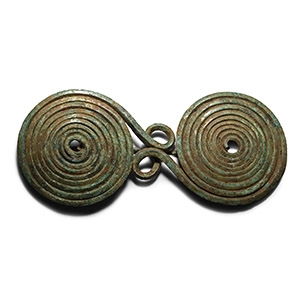
Large Greek Geometric Bronze Spiral Fibula
7th-6th century B.C.Estimate: £500 - 700 (‡+bp*)
Opening Bid: £250
Formed from a single filament rolled into two 'spectacle' discs; one of the spirals terminating in a long pin, the other in a hook serving as the catchplate; openwork figure-of-eight at the centre; pin present but detached. 159 grams, 16.5 cm
Acquired in the mid 1980s-1990s. Private collection, Switzerland, thence by descent. Private collection, since the late 1990s. This lot is accompanied by an illustrated lot declaration signed by the Head of the Antiquities Department, Dr Raffaele D’Amato.
