
Loading, please wait...
LOT 1559
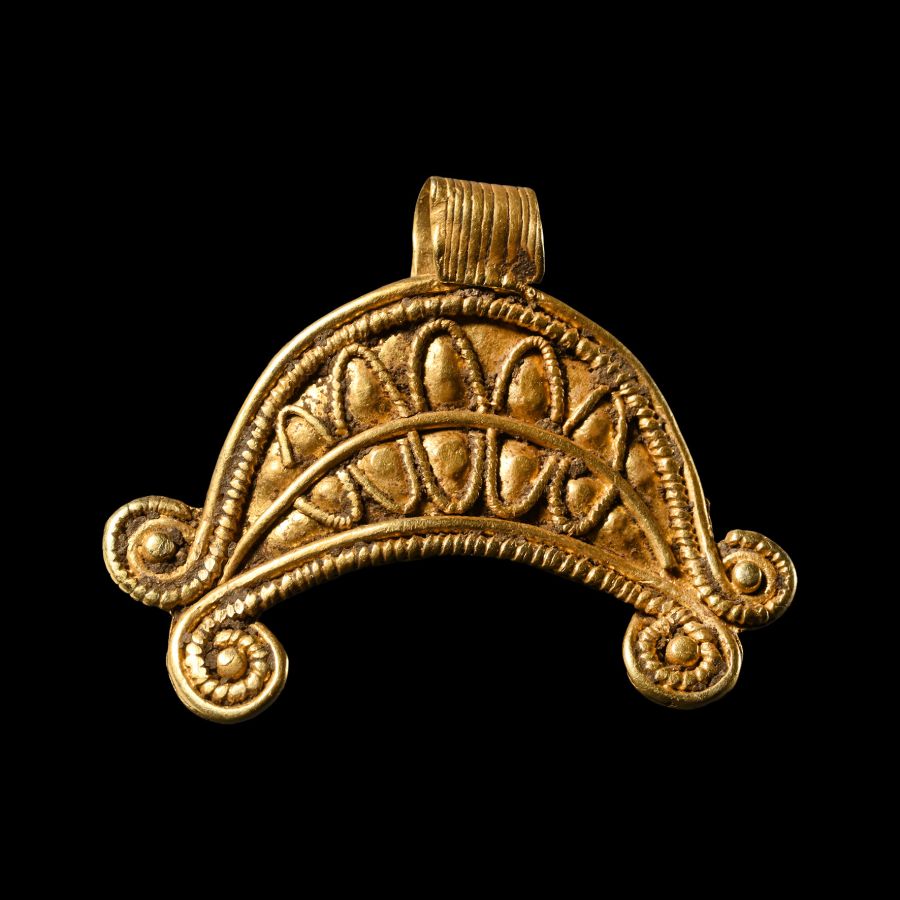
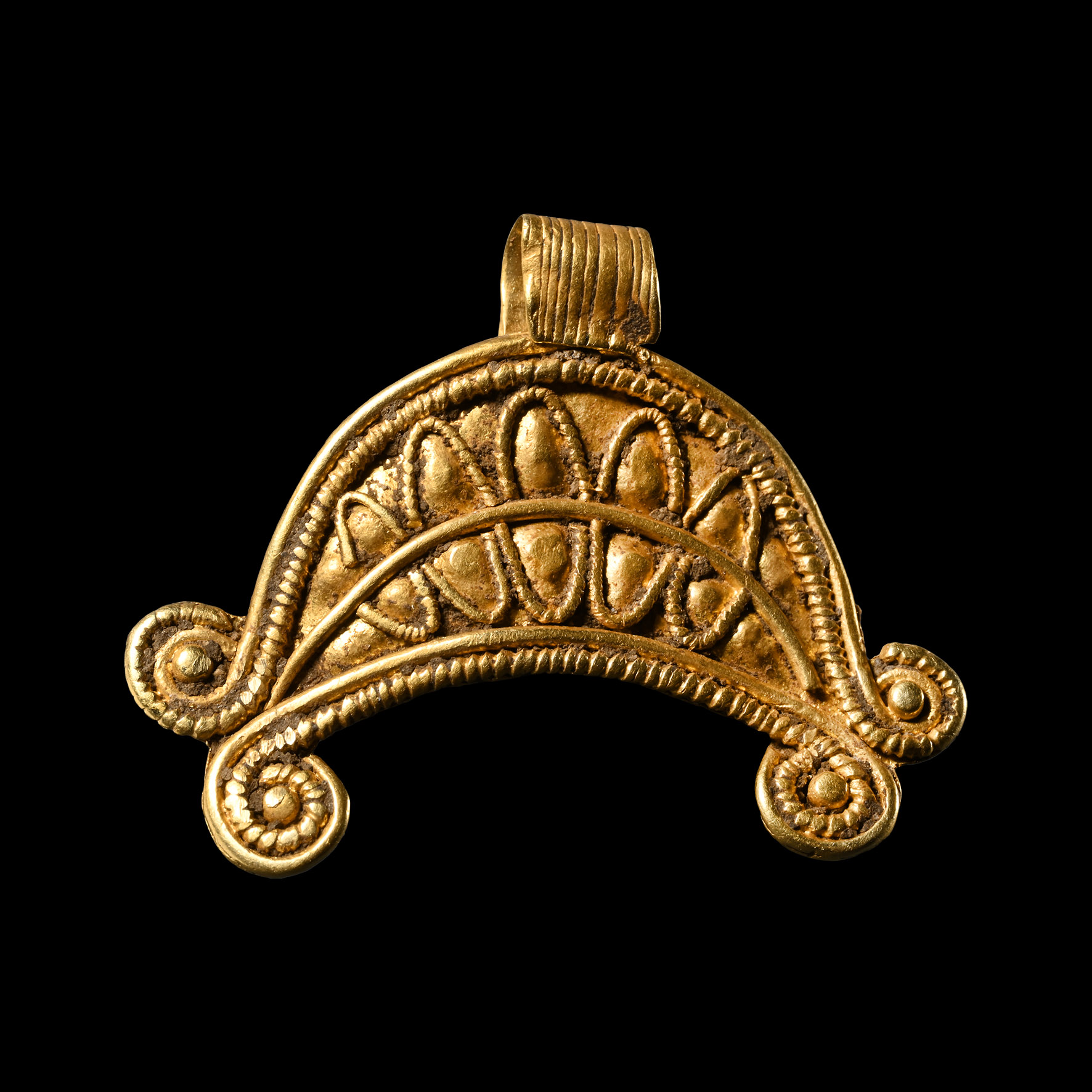
Hellenistic Style Gold Lunate Pendant
20TH CENTURY A.D. OR EARLIER
1 1/8 in. (3 grams, 29 mm).
With bifurcated terminals and filigree ornament; suspension loop to top edge. [No Reserve]
ProvenanceFrom the collection of a North American gentleman, formed in the 1990s.
CONDITIONTimeLine Auctions follows a vetting process to ensure the authenticity and legality of all items, reinforcing our commitment to integrity and responsible trading. Each antiquity, antique, and coin lot undergoes thorough examination by a vetting committee of at least ten external specialists, professional trade association members, scientists, and archaeologists: Our Vetting Process
AUCTIONS:
TimeLine is a leading auction house specialising in antiquities, ancient art, collectables, natural history, coins, medals, and books. Our auctions offer museums, collectors, historians, and enthusiasts the opportunity to acquire unique and historically significant pieces.
-
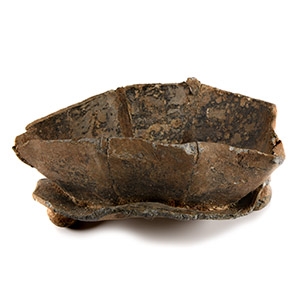
Post Medieval Octagonal Lead Tobacco Jar
Mid 17th-18th century A.D.Sold for (Inc. bp): £13
With deep body resting on a wide base with spherical feet (two absent). 465 grams, 11.8 cm wide
Found Somerset, UK. Accompanied by a letter from Bristol Museum dated 26th July 1990 identifying the object. -
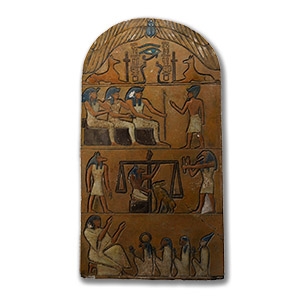
Large Egyptian Revival Painted Stone Plaque
20th century A.D.Sold for (Inc. bp): £72
A substantial decorative designer tongue-shaped stele with low-relief tiered frieze: upper register: three seated figures, one with a sceptre, facing a standing kilted figure addressing them; middle register: the gods Thoth with jackal-head and Nekhbet with vulture-head weighing souls on scales; lower register: four seated gods with accompanying symbols facing a kneeling robed figure with hands raised; curved top with opposed jackals, Osiris's wedjat eye and scarab with spread wings, hieroglyphs in the field; after the antique. 22.8 kg, 65 cm
From a French collection, Paris. Ex Parisian gallery, France; latterly with a London, UK, gallery. -
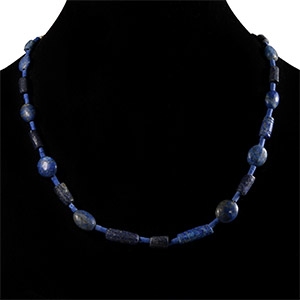
Bactrian Style Lapis Lazuli Bead Necklace String
20th century A.D.Sold for (Inc. bp): £33
Restrung group of disc beads with interstitial tabular and tubular types. 25.9 grams, 44 cm long
Acquired 1980-2015. Ex Abelita family collection.
