
Loading, please wait...
LOT 0595
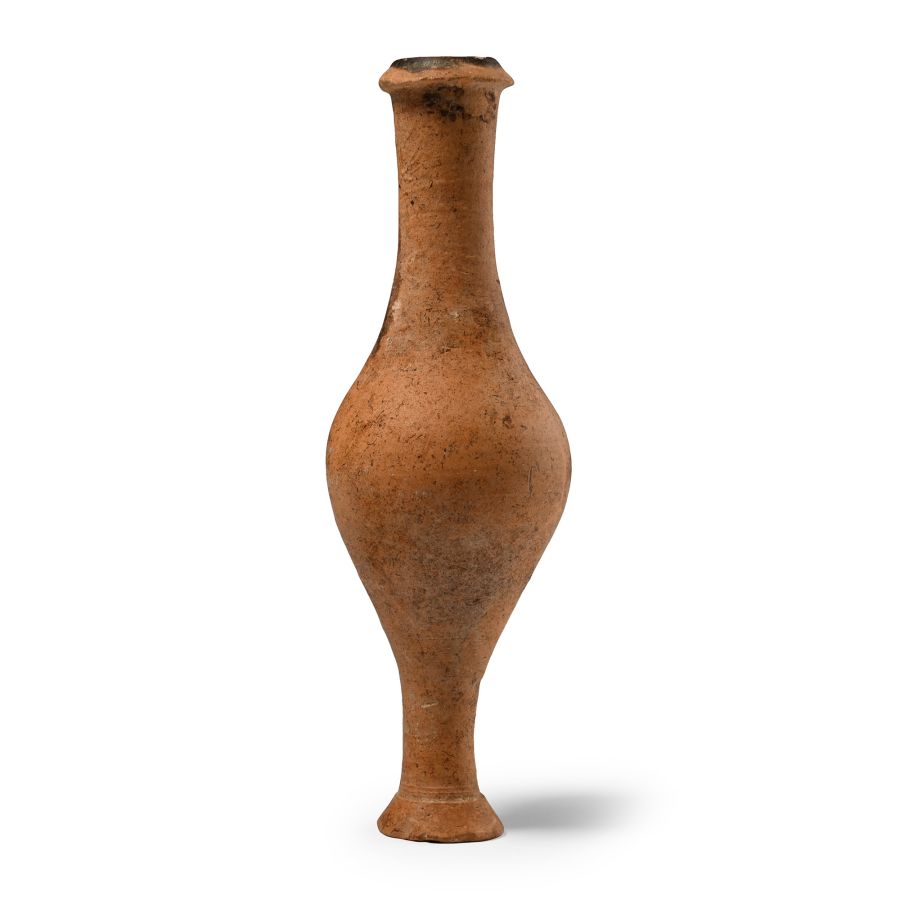
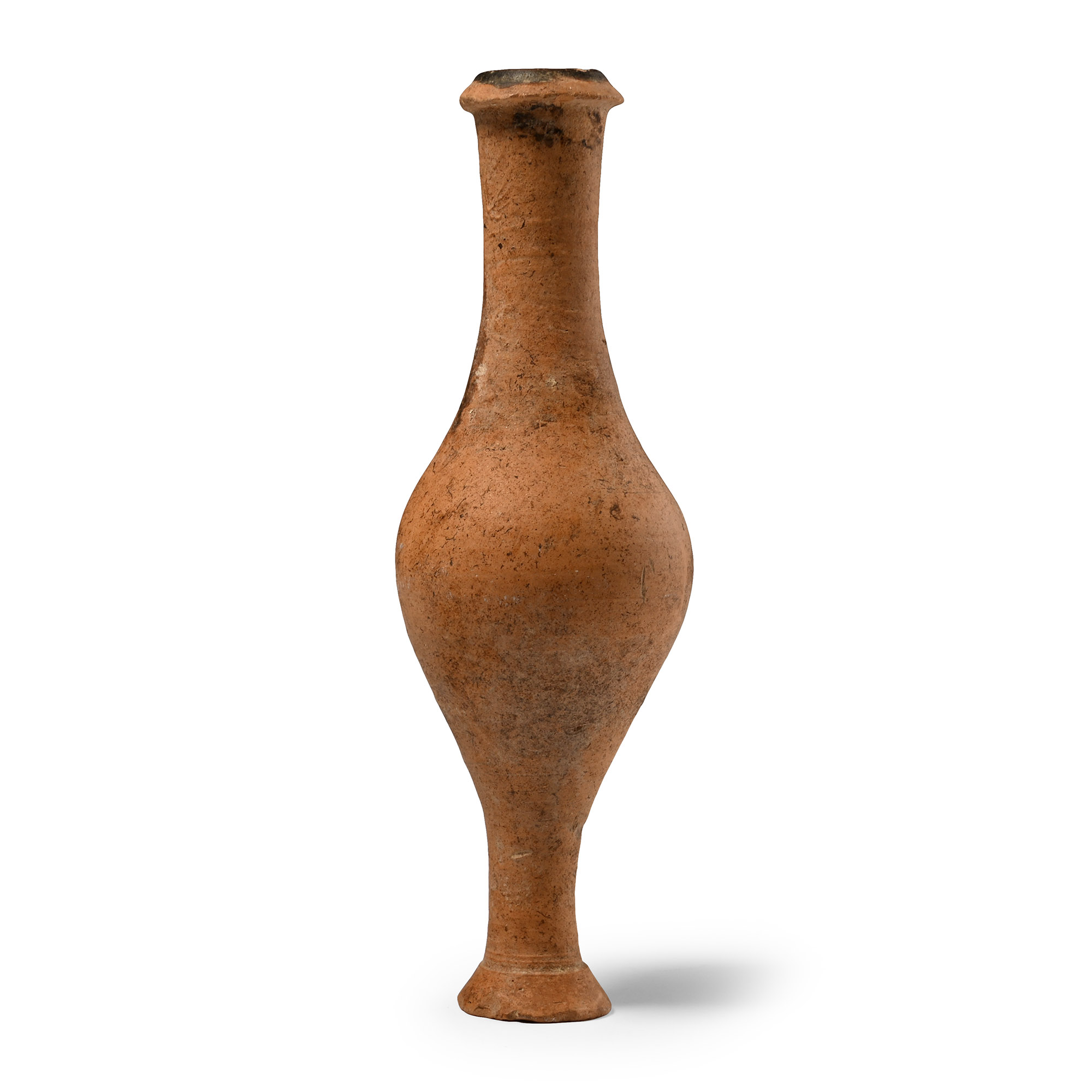
Hellenistic 'Spindle-Shaped' Unguentarium
3RD-2ND CENTURY B.C.
4 1/8 in. (37 grams, 10.6 cm).
Ovoid body with slender tubular stem and neck, flat discoid base and everted rim; traces of black paint around the neck and rim. [No Reserve]
ProvenanceFrom the private family collection of Ersula Barter-Hemmerich, the longest serving member of staff working at the United Nations, her private collection formed in the 1950s and 1960s; thence by descent to her grandson.
This lot is accompanied by an illustrated lot declaration signed by the Head of the Antiquities Department, Dr Raffaele D'Amato.
TimeLine Auctions follows a vetting process to ensure the authenticity and legality of all items, reinforcing our commitment to integrity and responsible trading. Each antiquity, antique, and coin lot undergoes thorough examination by a vetting committee of at least ten external specialists, professional trade association members, scientists, and archaeologists: Our Vetting Process
AUCTIONS:
TimeLine is a leading auction house specialising in antiquities, ancient art, collectables, natural history, coins, medals, and books. Our auctions offer museums, collectors, historians, and enthusiasts the opportunity to acquire unique and historically significant pieces.
-
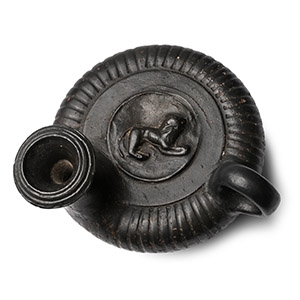
Greek Black-Glazed Guttos with Lion
South Italic, circa 4th century B.C.Sold for (Inc. bp): £286
High-angled spout and loop handle to the shoulder, the body decorated with vertical ribs around the perimeter, central image of a crouching lion in profile. 210 grams, 11.3 cm
From the private collection of a Canadian gentleman living in Essex, UK, formed since the 1920s-circa 1990. Property of an Essex lady until the late 1990s; thence by descent. From the private collection of an Essex gentleman since the late 1990s. This lot is accompanied by an illustrated lot declaration signed by the Head of the Antiquities Department, Dr Raffaele D'Amato. -
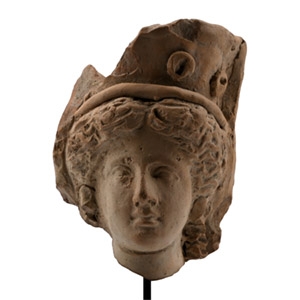
Greek Terracotta Head of a Goddess
5th-3rd century B.C.Sold for (Inc. bp): £910
Hollow-formed female head with flared headdress, applied collar and annulets; mounted on a custom-made stand. 228 grams total, 18.8 cm including stand
Acquired on the European art market in the early 2000s. with Galerie Rhéa, Zurich, Switzerland. This lot is accompanied by an illustrated lot declaration signed by the Head of the Antiquities Department, Dr Raffaele D'Amato. -
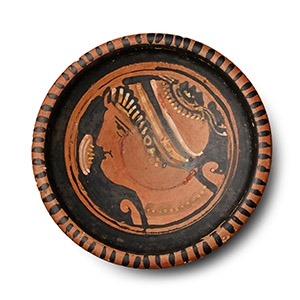
Greek Apulian Red-Figure Plate with Lady of Fashion
South Italic, circa 4th century B.C.Sold for (Inc. bp): £390
Discoid with raised rim, carinated profile and low foot; rim with radiating black lentoid strokes, tondo with reserved ring enclosing a profile female bust with white detailing to the necklace, stephane and sakkos. 139 grams, 12.9 cm
From the private collection of a Canadian gentleman living in Essex, UK, formed since the 1920s-circa 1990. Property of an Essex lady until the late 1990s; thence by descent. From the private collection of an Essex gentleman since the late 1990s. This lot is accompanied by an illustrated lot declaration signed by the Head of the Antiquities Department, Dr Raffaele D'Amato.
