
Loading, please wait...
LOT 0624
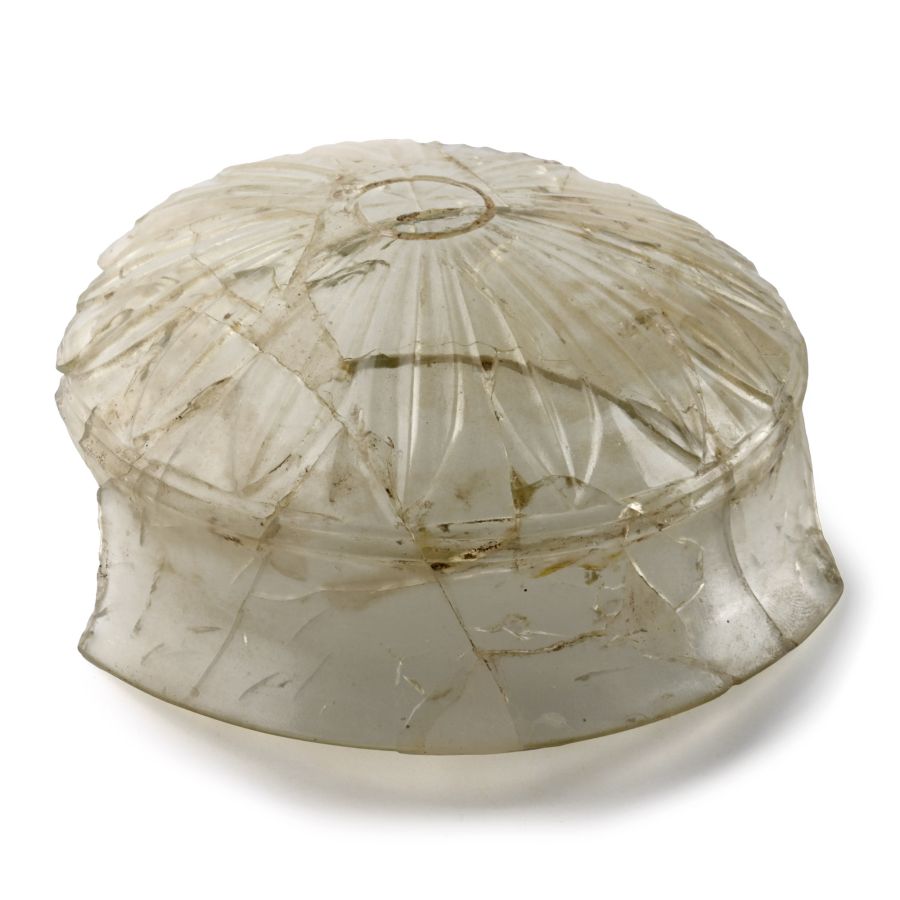
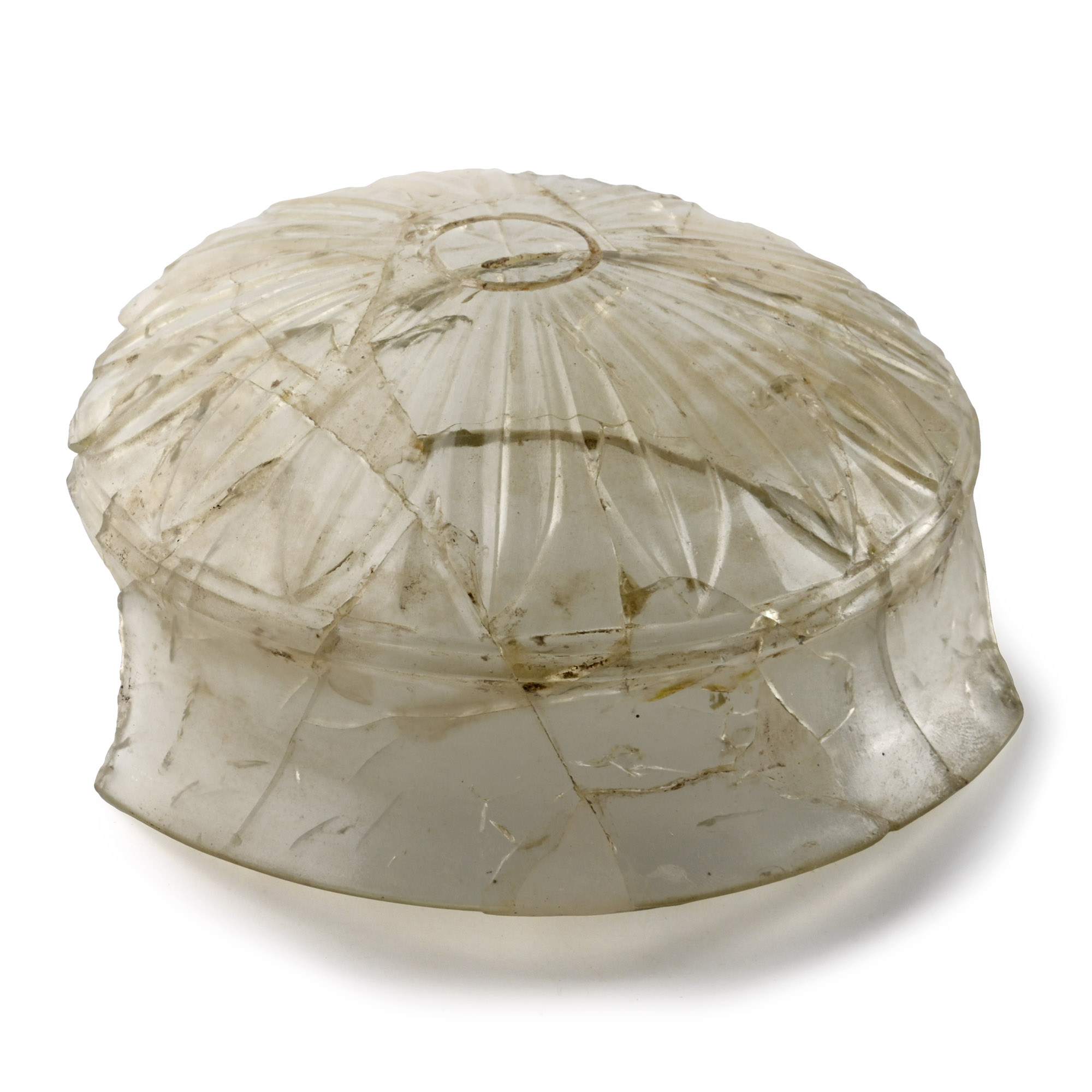
Hellenistic Shallow Glass Dish
3RD CENTURY B.C.
5 in. (114 grams, 12.7 cm).
Broad dish with carinated profile and curved flange rim; lotiform decoration to underside with central starburst tondo.
ProvenancePrivate collection of Mr S.A., Düsseldorf, formed prior to 1967.
Private collection, UK.
This lot has been checked against the Interpol Database of stolen works of art and is accompanied by search certificate number no.12813-241336.
This lot has been cleared against the Art Loss Register database, and is accompanied by an illustrated lot declaration signed by the Head of the Antiquities Department, Dr Raffaele D'Amato.
Cf. for identical glass vessel Davidson Weinberg, G., ‘Hellenistic Glass Vessel from the Athenian Agora’ in Hesperia, 1961, pp.379-392, pl.93a (Archaeological Museum of Napoli).
CONDITIONTimeLine Auctions follows a vetting process to ensure the authenticity and legality of all items, reinforcing our commitment to integrity and responsible trading. Each antiquity, antique, and coin lot undergoes thorough examination by a vetting committee of at least ten external specialists, professional trade association members, scientists, and archaeologists: Our Vetting Process
AUCTIONS:
TimeLine is a leading auction house specialising in antiquities, ancient art, collectables, natural history, coins, medals, and books. Our auctions offer museums, collectors, historians, and enthusiasts the opportunity to acquire unique and historically significant pieces.
LOT 0624
Hellenistic Shallow Glass Dish
Estimate £3,000 - 4,000€3,480 - 4,640 (for guidance only)$4,050 - 5,400 (for guidance only)
-
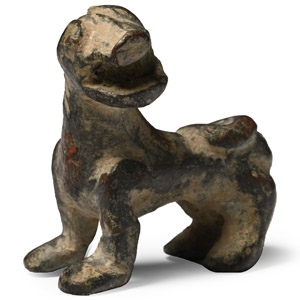
Parthian Bronze Lion Statuette
2nd-3rd century A.D.Sold for (Inc. bp): £111
Modelled standing on squat legs, long tail draped along the back, head turned to the left with open jaws, stylised mane detailing behind the neck. 40 grams, 32 mm
Ex German art market, 2000s. Acquired from an EU collector living in London. From the collection of a Surrey, UK, gentleman. This lot is accompanied by an illustrated lot declaration signed by the Head of the Antiquities Department, Dr Raffaele D'Amato. -
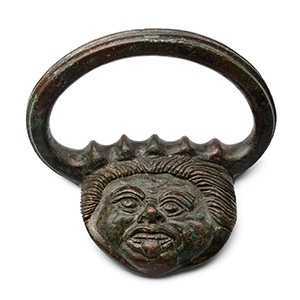
Greek Bronze Vessel Handle with Medusa
4th-3rd century B.C.Sold for (Inc. bp): £572
Comprising an ellipsoid domed plaque with grotesque gorgoneion in high-relief, ribbed loop handle. 257 grams, 94 mm
Acquired on the European art market in the early 2000s. with Galerie Rhéa, Zurich, Switzerland. This lot is accompanied by an illustrated lot declaration signed by the Head of the Antiquities Department, Dr Raffaele D'Amato. -
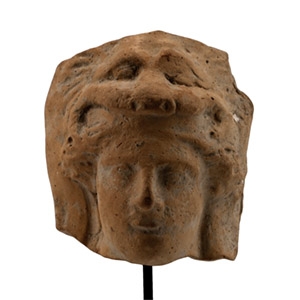
Greek Terracotta Head of a Goddess
5th-3rd century B.C.Sold for (Inc. bp): £338
Hollow to the reverse, with high-relief female mask wearing a lion-head headdress; mounted on a custom-made stand. 154 grams total, 16 cm including stand
Acquired on the European art market in the early 2000s. with Galerie Rhéa, Zurich, Switzerland. This lot is accompanied by an illustrated lot declaration signed by the Head of the Antiquities Department, Dr Raffaele D'Amato.
