
Loading, please wait...
LOT 0029
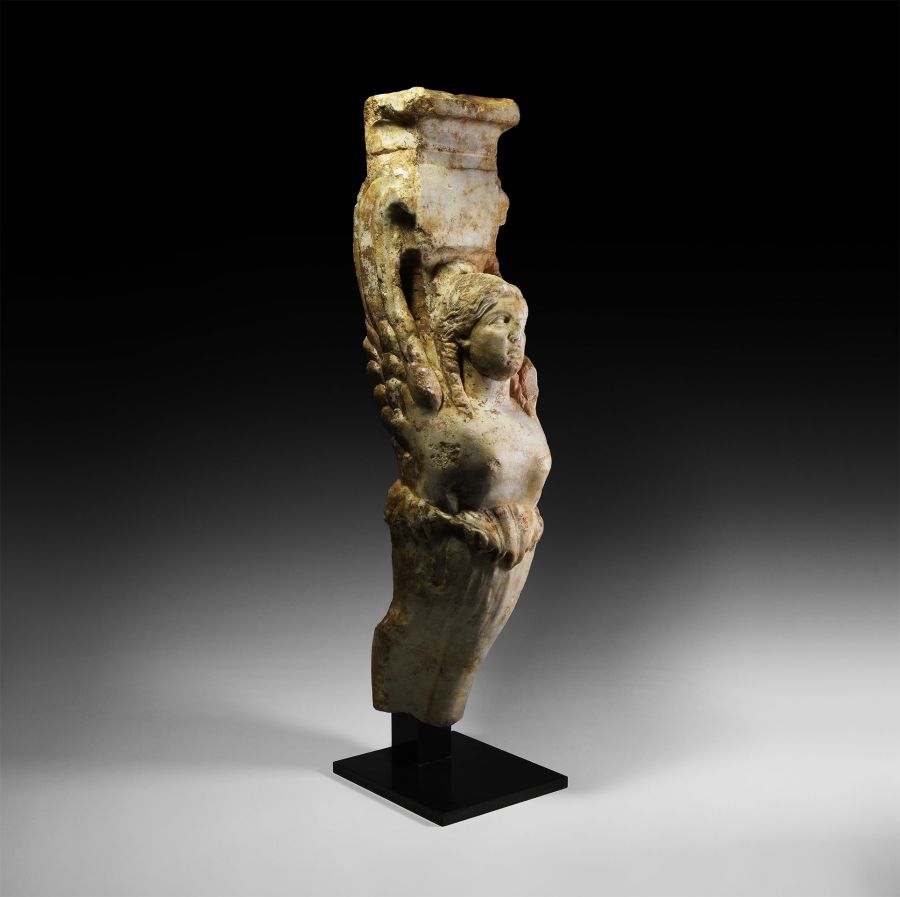
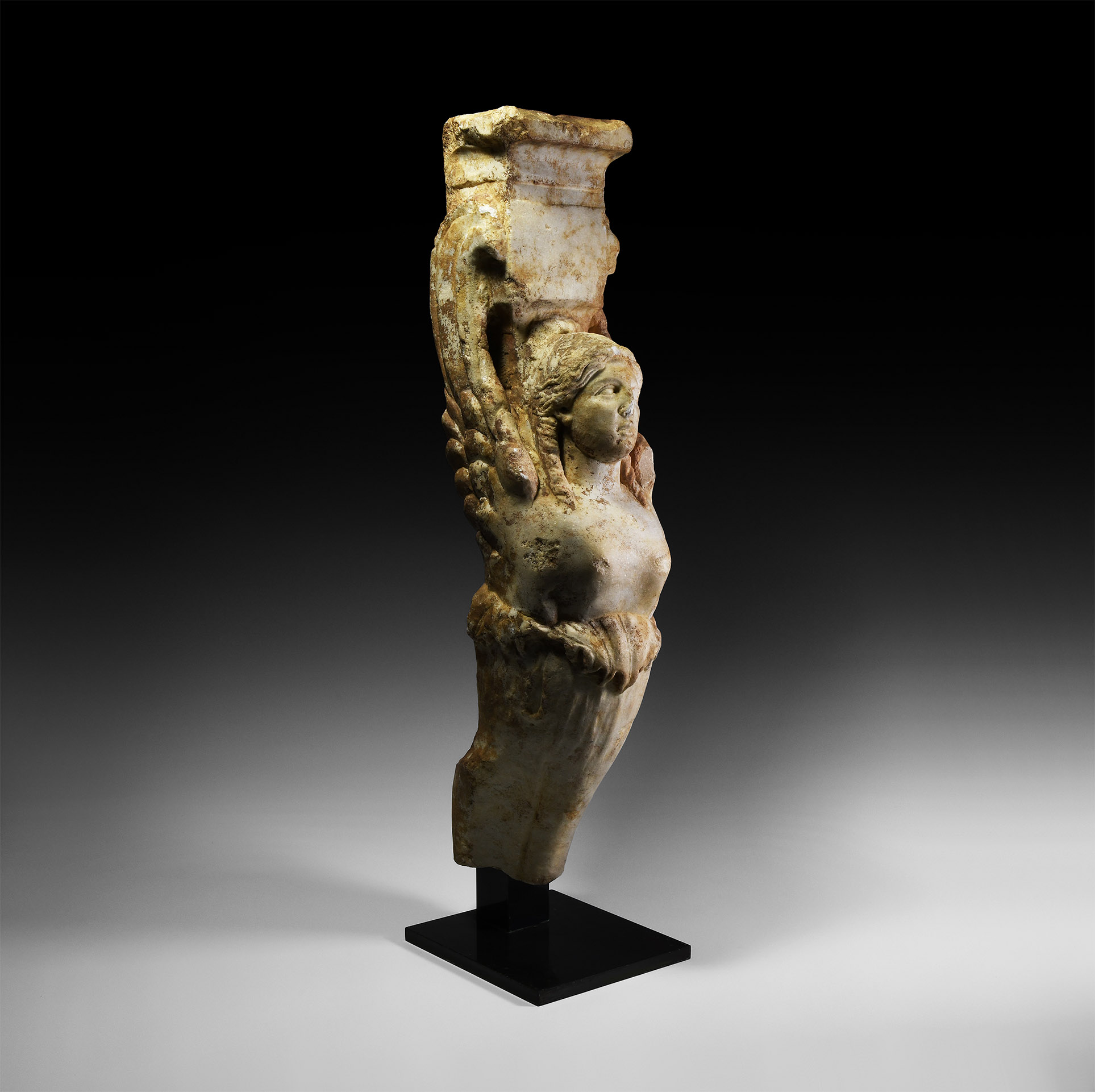
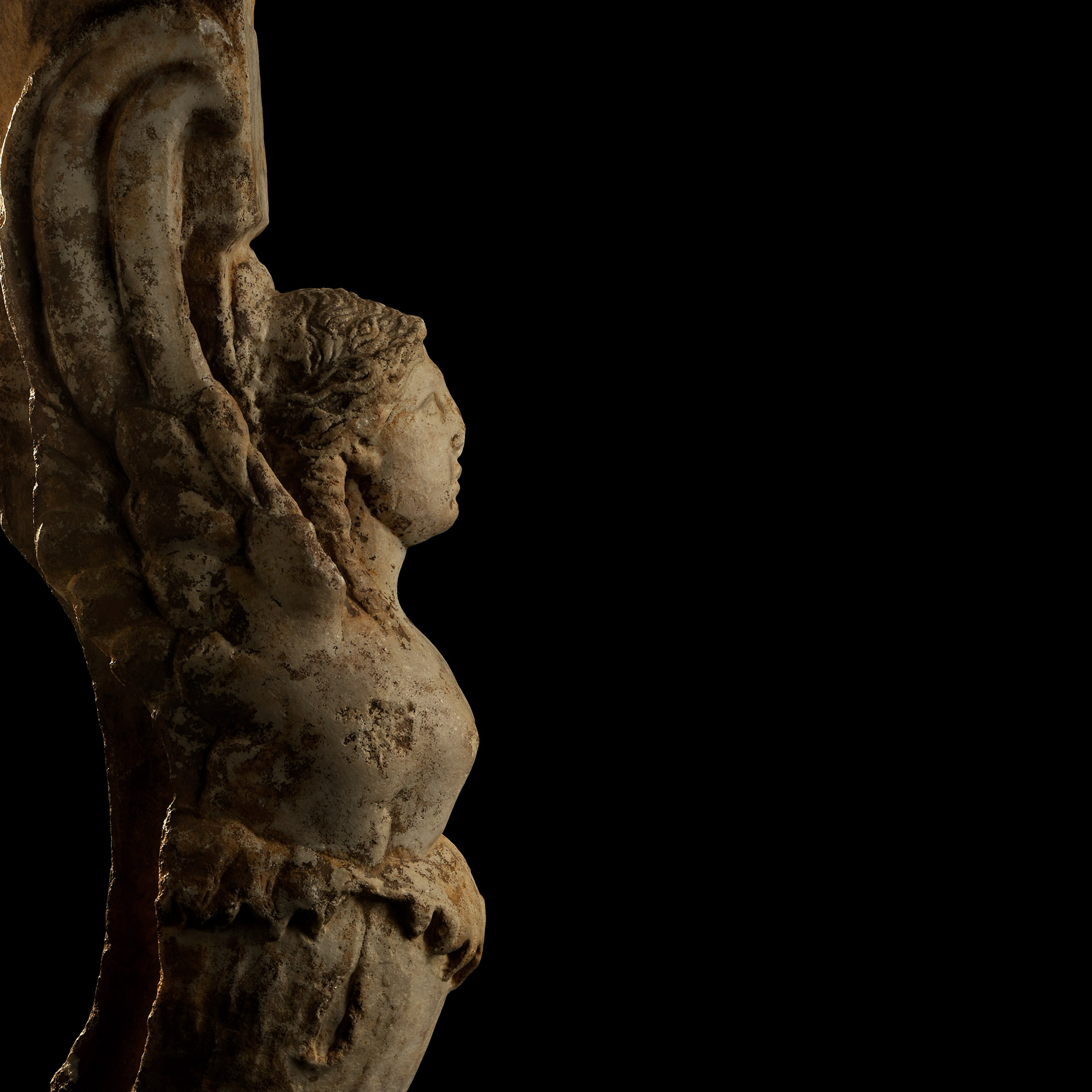
Hellenistic Marble Sphinx Trapezophoros
1ST CENTURY BC
30 1/4" (39 kg, 76cm).
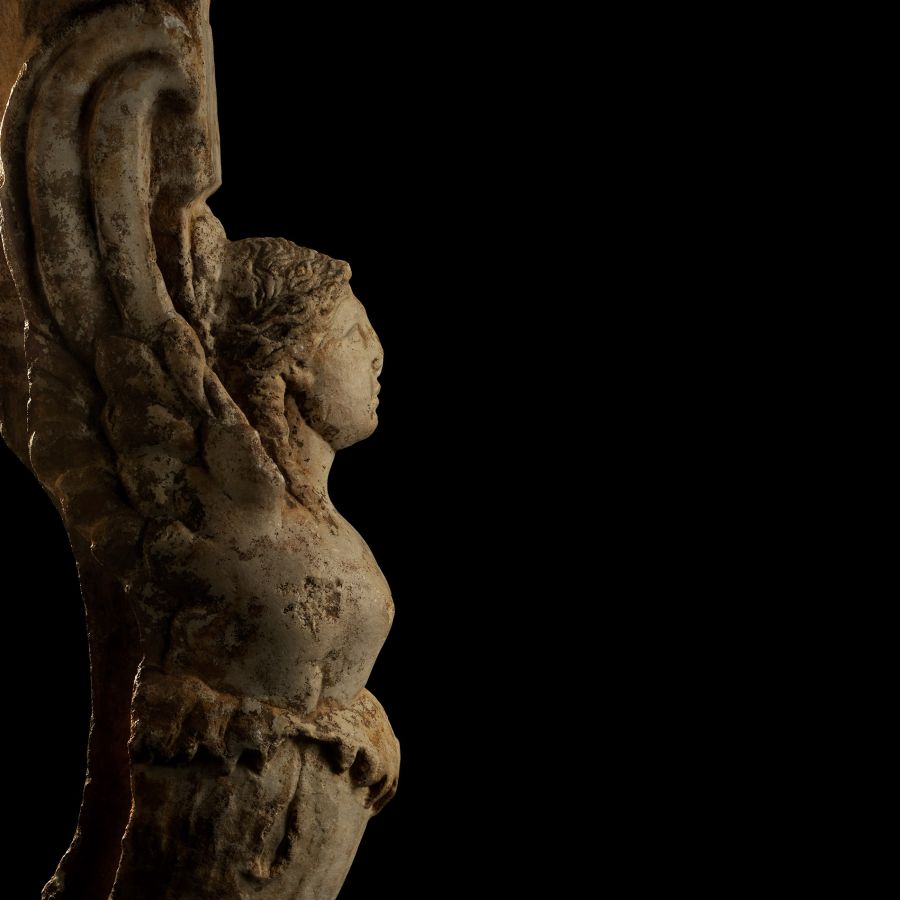
A white marble table support formed as a standing sphinx with erect body, prominent chest pushed gracefully forward, the female head with delicate chin and curly hair, elegantly dressed and falling on the shoulders in thick locks, the raised wings beautifully arranged with grooved plumage, ending with three large curving feathers at the top; the waist with hanging elements separating the human body from the lower section that originally would have been in the form of a lion's leg; rectangular supporting pillar above the head with profiled mouldings, traces of pigment to the hair, waist and wings.
ProvenanceProperty of a Kensington lady; ex Mansour Gallery, Davies Street, London, 2013; acquired from Boisgirard and Associes, Arts d'Orient Archéologie, Paris, 16 December 2008, lot 32; formerly in an old Swiss collection; accompanied by an archaeological expertise by Dr. Raffaele D’Amato and a geological scholarly report no.TL5369 by Dr Ronald Bonewitz; this lot has been checked against the Interpol Database of stolen works of art and is accompanied by AIAD certificate number no.10576-173390.
LiteratureA very similar table support, decorated with a winged figure and carrying a conch, is held in the Israeli Museum, accession number 78.19.178; see the Israeli Museum, accession number 82.21.860, for a sphinx support in which the whole body of the sphinx is represented; see a similar table support in the National Archaeological Museum of Napoli, from the second peristyle of the House of the Faun in Pompeii (inv.6869); for discussion of the location of the Dionysos Trapezophoros, found in Corinth, see Robertson Brown, A., The city of Corinth and Urbanism in Late Antique Greece, Berkeley, 2008.
FootnotesRound and rectangular stone tables became widespread in the Roman Empire from the 1st century BC. The upper part of their supports were often formed as human or animal heads and torsos, with an animal’s foot below. Sphinxes and other winged female creatures were very often used in the sculptures of the Graeco-Roman world as trapezophoroi (i.e support (phoros) of the table (trapeza)). Sphinx-shaped supports were very common in early Imperial times, decorating the tables of estates of rich landlords, as revealed by excavations at Pompeii and Herculaneum. They derived from a type of support dating from the 5th century BCE, which may have been used for cult statues or thrones. Other marble trapezophoroi were realised with images of griffins or wild animals, although the griffin was a rarer trapezophoros, panthers, lions and winged creatures being more common. Busts of young men were sometimes used for this purpose, like the Dionysus Trapezophoros found in Corinth (Robertson Brown, 2008, p.120). The term trapezophoros probably derives from the function of the priestess of Athena, who was carrying a table for holy services in front of the statue of the goddess in Athens.
CONDITIONTimeLine Auctions follows a vetting process to ensure the authenticity and legality of all items, reinforcing our commitment to integrity and responsible trading. Each antiquity, antique, and coin lot undergoes thorough examination by a vetting committee of at least ten external specialists, professional trade association members, scientists, and archaeologists: Our Vetting Process
AUCTIONS:
TimeLine is a leading auction house specialising in antiquities, ancient art, collectables, natural history, coins, medals, and books. Our auctions offer museums, collectors, historians, and enthusiasts the opportunity to acquire unique and historically significant pieces.

6th-4th century BC
Lot No. 0607
Sold for (Inc. premium): £343

6th-5th century BC
Lot No. 0588
Sold for (Inc. premium): £89

6th-5th century BC
Lot No. 0577
Sold for (Inc. premium): £165
