
Loading, please wait...
LOT 0645
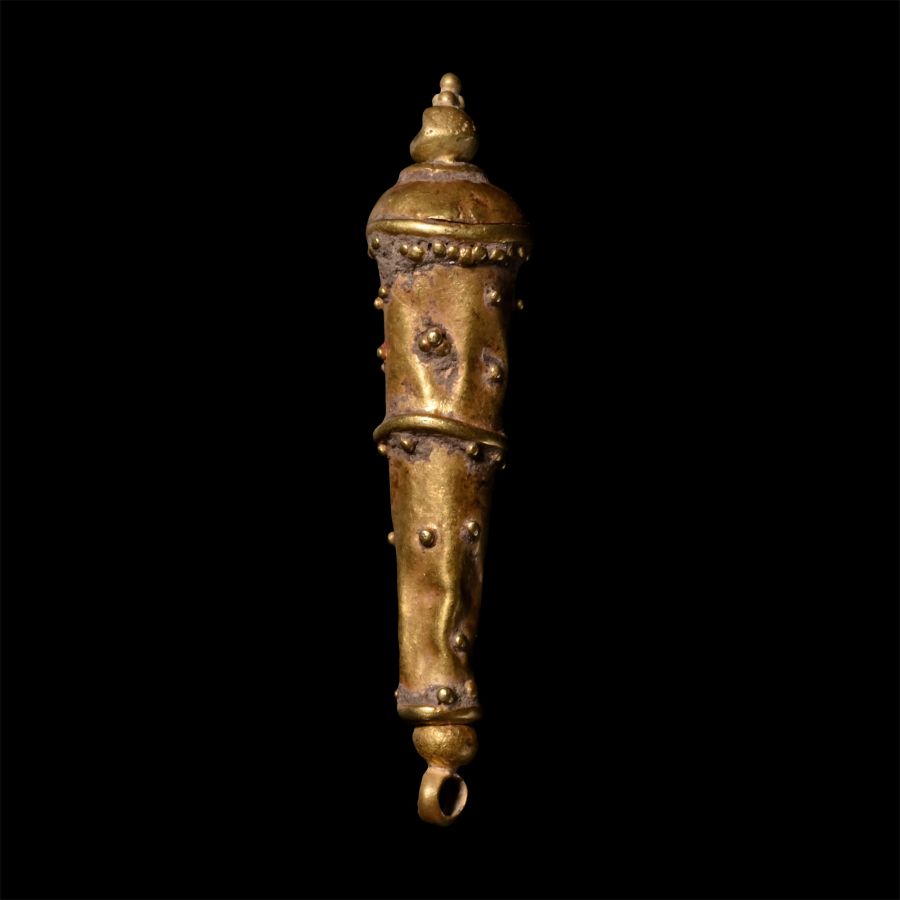
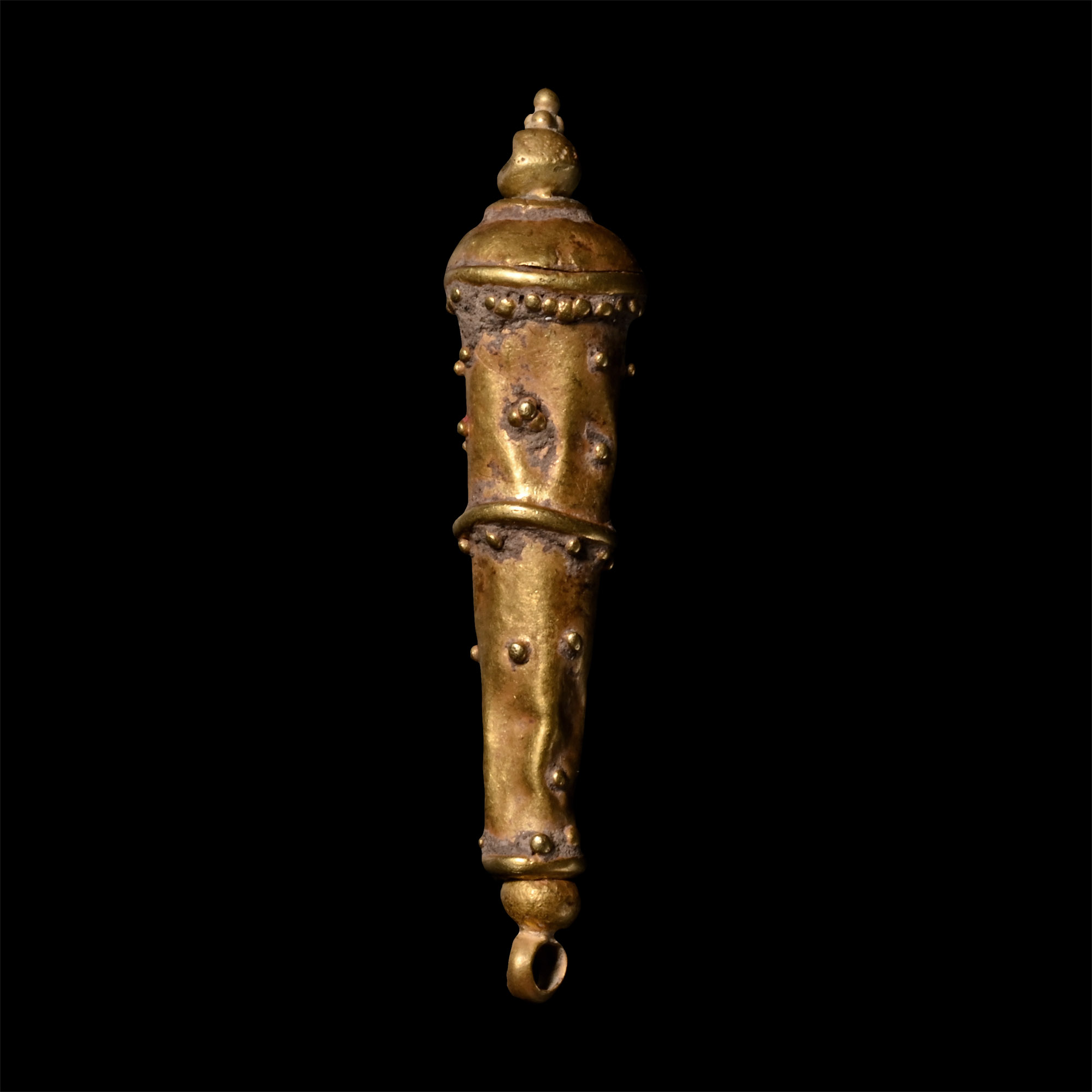
Hellenistic Gold Herakles Club Pendant
2ND-1ST CENTURY B.C.
1 1/4 in. (2.01 grams, 32 mm).
Formed as a tapering club with applied granule decoration, applied sphere with granulation at the top of the club, suspension loop at the handle end.
ProvenanceFrom the collection of a late Japanese collector, 1970s.
This lot is accompanied by an illustrated lot declaration signed by the Head of the Antiquities Department, Dr Raffaele D'Amato.
TimeLine Auctions follows a vetting process to ensure the authenticity and legality of all items, reinforcing our commitment to integrity and responsible trading. Each antiquity, antique, and coin lot undergoes thorough examination by a vetting committee of at least ten external specialists, professional trade association members, scientists, and archaeologists: Our Vetting Process
AUCTIONS:
TimeLine is a leading auction house specialising in antiquities, ancient art, collectables, natural history, coins, medals, and books. Our auctions offer museums, collectors, historians, and enthusiasts the opportunity to acquire unique and historically significant pieces.
-
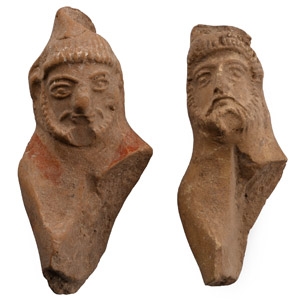
Parthian Terracotta Head Group
3rd century B.C.-2nd century A.D.Sold for (Inc. bp): £124
Each with beard, lentoid eyes and ribbed cap. 49.5 grams total, 65 mm
Fine condition.
From a private Belgian collection; previously part of a private collection formed in Germany in the 1990s. From the private collection of John Meredith, acquired since the 1990s; thence by descent. This lot is accompanied by an illustrated lot declaration signed by the Head of the Antiquities Department, Dr Raffaele D'Amato. -
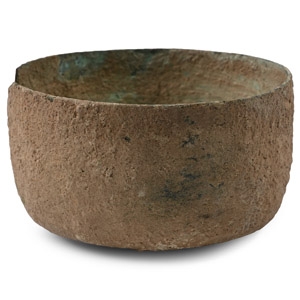
Graeco-Roman Bronze Cup
2nd century B.C.-1st century A.D.Sold for (Inc. bp): £221
Drum-shaped body with a slightly convex base. 143 grams, 93 mm
Ex London, UK, collections, 1990s-2000s. This lot is accompanied by an illustrated lot declaration signed by the Head of the Antiquities Department, Dr Raffaele D'Amato.
The small cup could belong to the typology of drinking vessels called mastos or cymbè. This denomination seems to have been derived from the inhabitants of the island of Paphos, with reference to the simple spherical vessels. Pollux mentions these vessels together with other cups, the phiale and the kumbion. -
.jpg)
Hellenistic Marble Figure of Aphrodite
2nd-1st century B.C.Estimate: £6,000 - 8,000 (‡+bp*)
Opening Bid: £3,000
Carved in the round figure of the goddess standing nude with one hand on her elbow and the other on her pudendum, her hair gathered into a chignon with lateral bunches on the crown and with voids to allow for the suspension of small gold earrings; putto at her left knee; light hand partly absent; remounted on a socle base. 1.2 kg, 32.7 cm
Acquired in the 1992. Private collection, Switzerland, thence by descent. Private collection, since the late 1990s. This lot has been checked against the Interpol Database of stolen works of art and is accompanied by a search certificate number no.12860-241669. This lot has been cleared against the Art Loss Register database, and is accompanied by an illustrated lot declaration signed by the Head of the Antiquities Department, Dr Raffaele D'Amato.
