
Loading, please wait...
LOT 0105
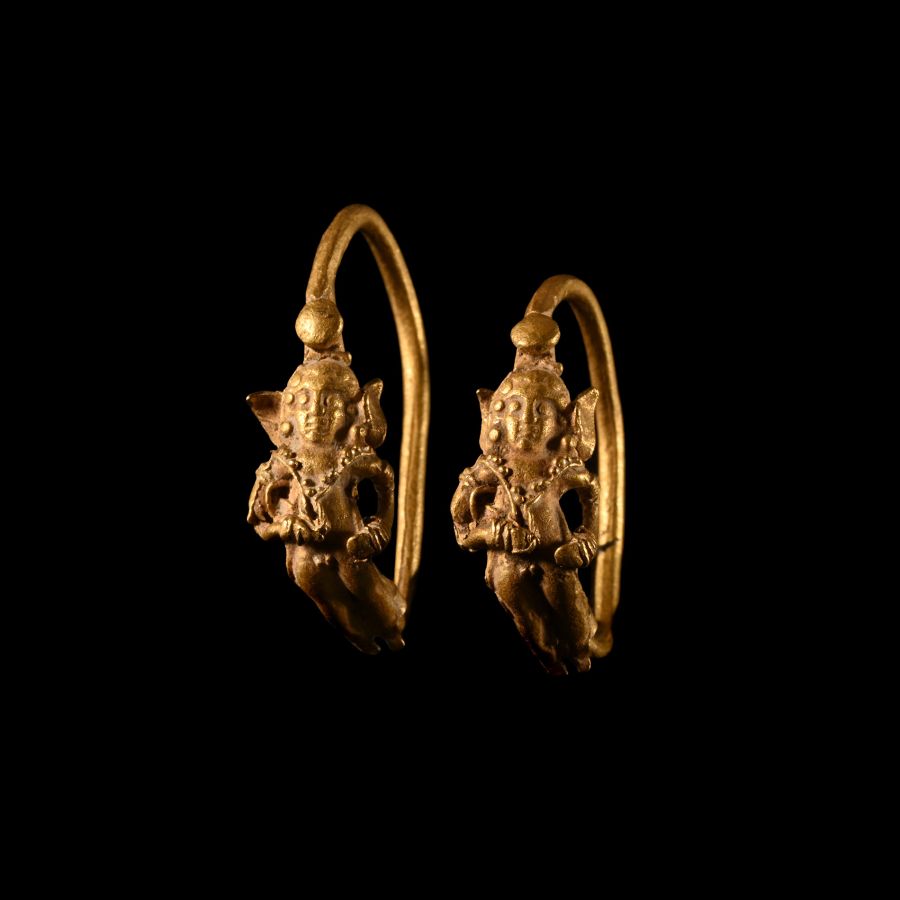
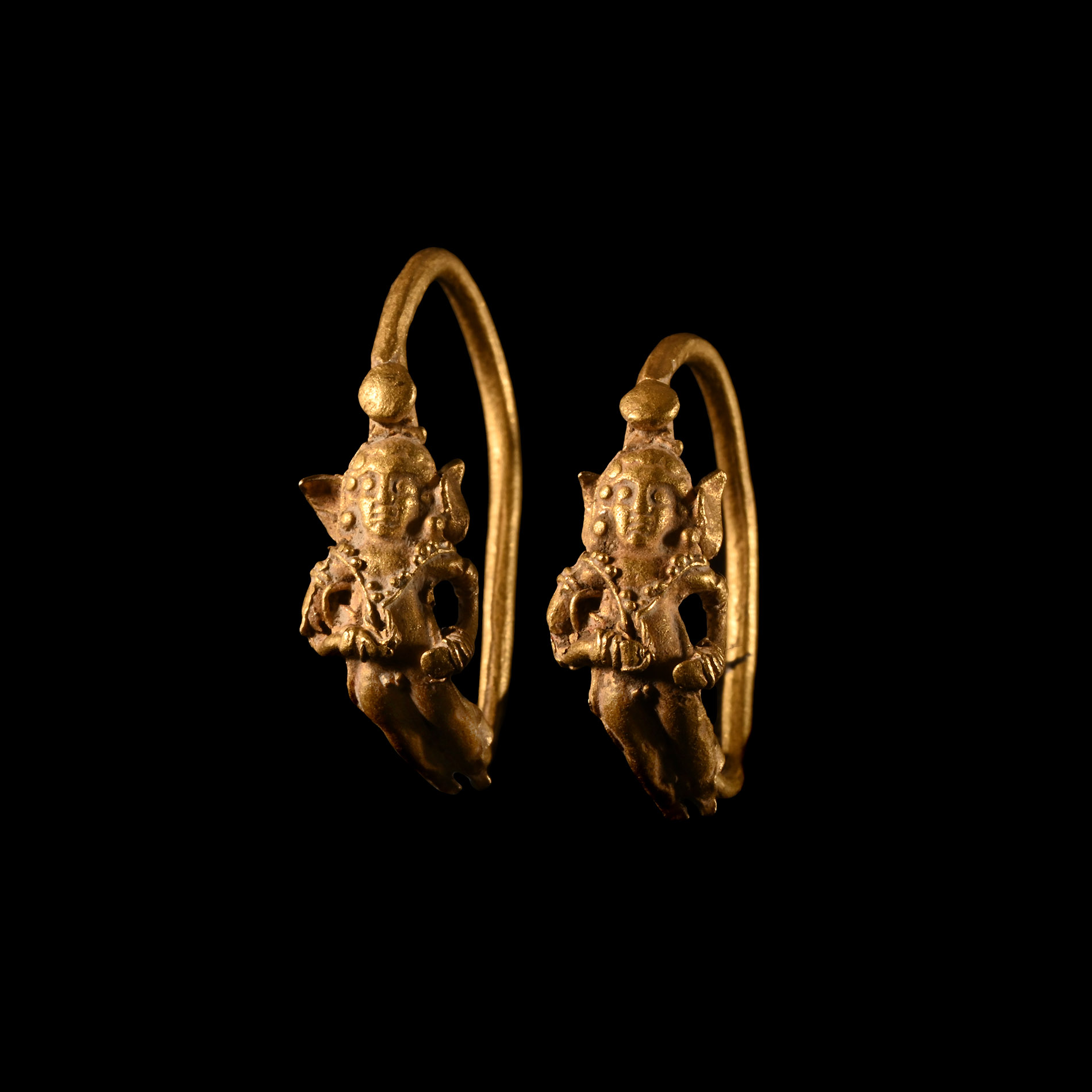
Hellenistic Gold Eros Earrings
CIRCA 2ND-1ST CENTURY B.C.
3/4 - 7/8 in. (3.24 grams total, 18-21 mm).
Each formed as a round-section hoop with applied facing winged figure of Eros modelled in the half-round, the figure with granulation to the pubic area, wearing arm-rings and bracelets in his arms and a granulated necklace.
ProvenanceFrom a late Japanese specialist collector, 1970-2000s.
LiteratureCf. Higgins, R.A., Greek and Roman Jewellery, London, 1961, plate 47, for type; Marshall, F. H., British Museum Catalogue of the Jewellery Greek, Etruscan and Roman, British Museum, 1969, no.1900, for type.
CONDITIONTimeLine Auctions follows a vetting process to ensure the authenticity and legality of all items, reinforcing our commitment to integrity and responsible trading. Each antiquity, antique, and coin lot undergoes thorough examination by a vetting committee of at least ten external specialists, professional trade association members, scientists, and archaeologists: Our Vetting Process
AUCTIONS:
TimeLine is a leading auction house specialising in antiquities, ancient art, collectables, natural history, coins, medals, and books. Our auctions offer museums, collectors, historians, and enthusiasts the opportunity to acquire unique and historically significant pieces.
-
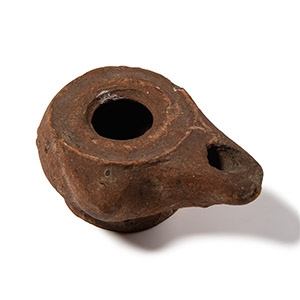
Greek Attic Terracotta Lamp
Circa 6th-5th century B.C.Sold for (Inc. bp): £111
Squat terracotta bowl with large discus and broad nozzle, lateral lug handle. 55 grams, 69 mm
Ex P. A., Hertfordshire, UK, specialist collection of Greek art, 1980-1990s. c -
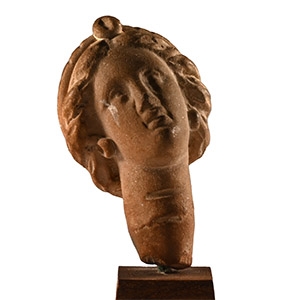
Greek Terracotta Head of a Goddess
4th-3rd century B.C.Sold for (Inc. bp): £390
With a delicately modelled face and full lips, hooped earrings visible from beneath her hair; the hair with central parting and pulled to a chignon at the nape of the neck; wearing a diadem with central embellishment; mounted on a custom-made display stand. 41.3 grams total, 75 mm high including stand
Ex French Sorbonne archaeology professor (deceased); 1960s -2000s.
These figurines were most probably manufactured in Hellenistic cities by craftsmen who used either light yellow or dark brown clay. After the firing, the surface of the clay became reddish, while the core became grey-brown. The majority of the figurines were made from untreated clay with many impurities, such as coarse grain. Due to the quality of the clay the surface of the figurines was often rugged, despite the retouch, but were painted with vivid colours. -
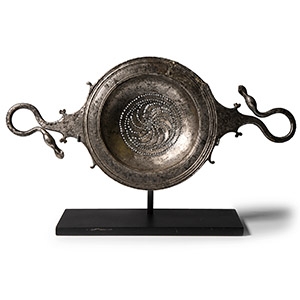
Greek Silver Wine Strainer
4th-3rd century B.C.Sold for (Inc. bp): £16,900
Composed of a shallow bowl and broad flange rim, two integral scalloped handles with scrolled flourishes, tapering to a loop handle with swan head terminals each with incised eye and beak detailing; perforated whirl within roundel to interior base; accompanied by a custom-made display stand. 160 grams, 22.2 cm wide (526 grams total including stand)
Ex private South German collection, 1980s. with Christie's, New York, 8 June 2012, lot 86. Accompanied by an academic report by Dr Raffaele D’Amato. Accompanied by copies of the relevant Christie's pages. This lot has been checked against the Interpol Database of stolen works of art and is accompanied by search certificate number no.11578-198980.
Elaborate silver strainers, such as this present example, were used at symposia and festive occasions for the purpose of preventing the dregs of wine from entering the wine cup. This and other related silver utensils became popular in the later 4th and 3rd century B.C. These highly decorated wine strainers were fitted with dual handles forming loops in the shape of twisting animals, here a swan. Usually they took the form of a shallow dish complete with four rings of perforations in the centre in order to drain the wine. Strainers of this type were used to separate out sediments which could be found in the thick Greek wine. Examples similar to this one have been found in royal tombs in northern Greece, as well as the tomb of a monarch in Sudan.
