
Loading, please wait...
LOT 0104
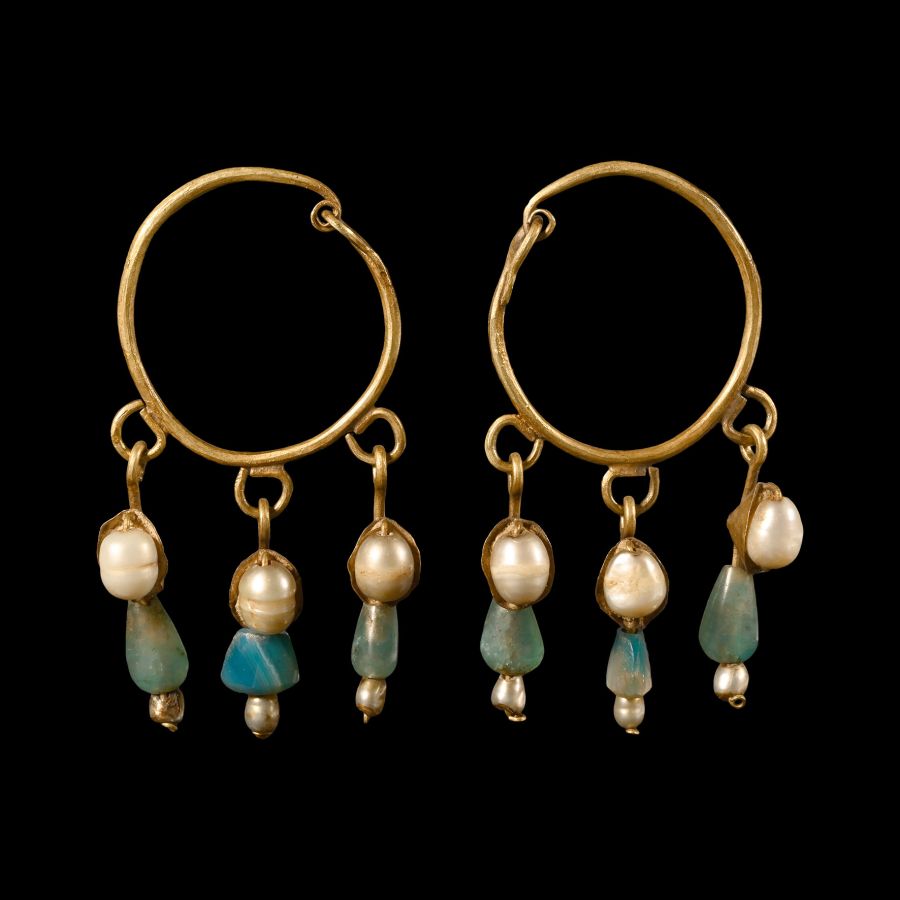
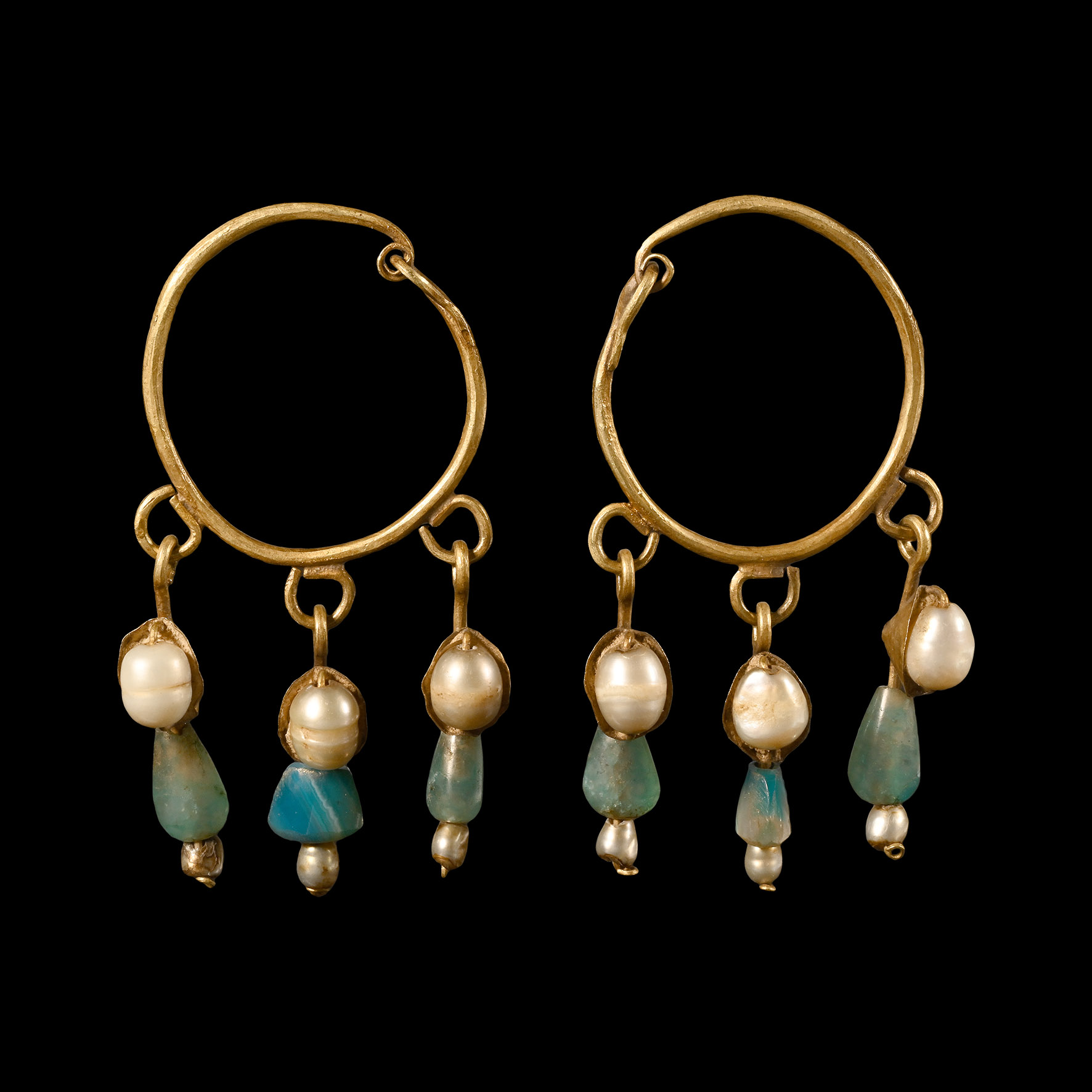
Hellenistic Gold Earrings with Beads and Pearls
CIRCA 2ND-1ST CENTURY B.C.
2 - 2 1/8 in. (12.27 grams total, 52-54 mm).
Matched pair of gold hoop earrings with hook-and-eye closure; three applied loops to the lower edge each with a pearl in a cup setting, turquoise-coloured translucent gemstone beneath; restored. [2]
ProvenanceFrom a collection of a London lady, acquired annually during 1990s-2000s.
LiteratureCf. Marshall, F.H., Catalogue of the Jewellery, Greek, Etruscan and Roman, in the Department of Antiquities, British Museum, London, 1911, pl.LV, item 2682, for a later version of the same type.
FootnotesThe turquoise-coloured stones were artificially stained in antiquity.
CONDITIONTimeLine Auctions follows a vetting process to ensure the authenticity and legality of all items, reinforcing our commitment to integrity and responsible trading. Each antiquity, antique, and coin lot undergoes thorough examination by a vetting committee of at least ten external specialists, professional trade association members, scientists, and archaeologists: Our Vetting Process
AUCTIONS:
TimeLine is a leading auction house specialising in antiquities, ancient art, collectables, natural history, coins, medals, and books. Our auctions offer museums, collectors, historians, and enthusiasts the opportunity to acquire unique and historically significant pieces.
LOT 0104
Hellenistic Gold Earrings with Beads and Pearls
Estimate £1,200 - 1,700€1,390 - 1,970 (for guidance only)$1,620 - 2,300 (for guidance only)
-
Greek Bronze Situla
5th-4th century B.C.Sold for (Inc. bp): £520
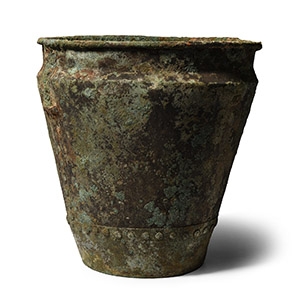
Tall vessel with dished underside, elegant carination at the shoulder, rolled rim; lateral vertical seams each covered by an applied rivetted strip, with remains of handle below the shoulder. 1.56 kg, 26 cm high
Ex Axel Guttmann Collection of Ancient Arms and Armour, Germany [1944-2001], AG 490. This lot has been checked against the Interpol Database of stolen works of art and is accompanied by search certificate no.11953-210857. -
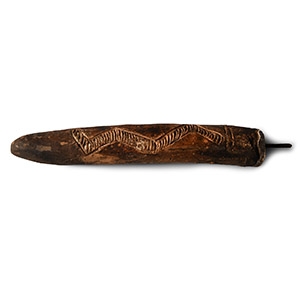
Cypriot Terracotta Votive Horn
2100-1850 B.C.Sold for (Inc. bp): £221
Tapering round-section votive with reserved zigzag bands of dense linear hatching; modern mounting pin. 71 grams, 13.5 cm
From the celebrated personal collection of art formed by the famous anthropologist, artist, and television presenter Desmond Morris. with Christie’s, South Kensington, 14 May 2002, lot 19 (part). -
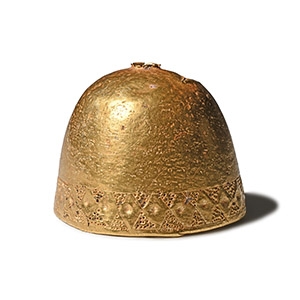
Scythian Decorated Gold Bell
1st millennium B.C.Sold for (Inc. bp): £780
Domed with a rolled rim and vent at the apex; decorative band above the rim with reserved lozenges on a pounced field each with an impressed dimple to the centre; cracked to one side. 19.47 grams, 48 mm
Cracked
Acquired early 1990s. Ex private American collection; thence by descent. Private Swiss collection since 1998.
