
Loading, please wait...
LOT 0551
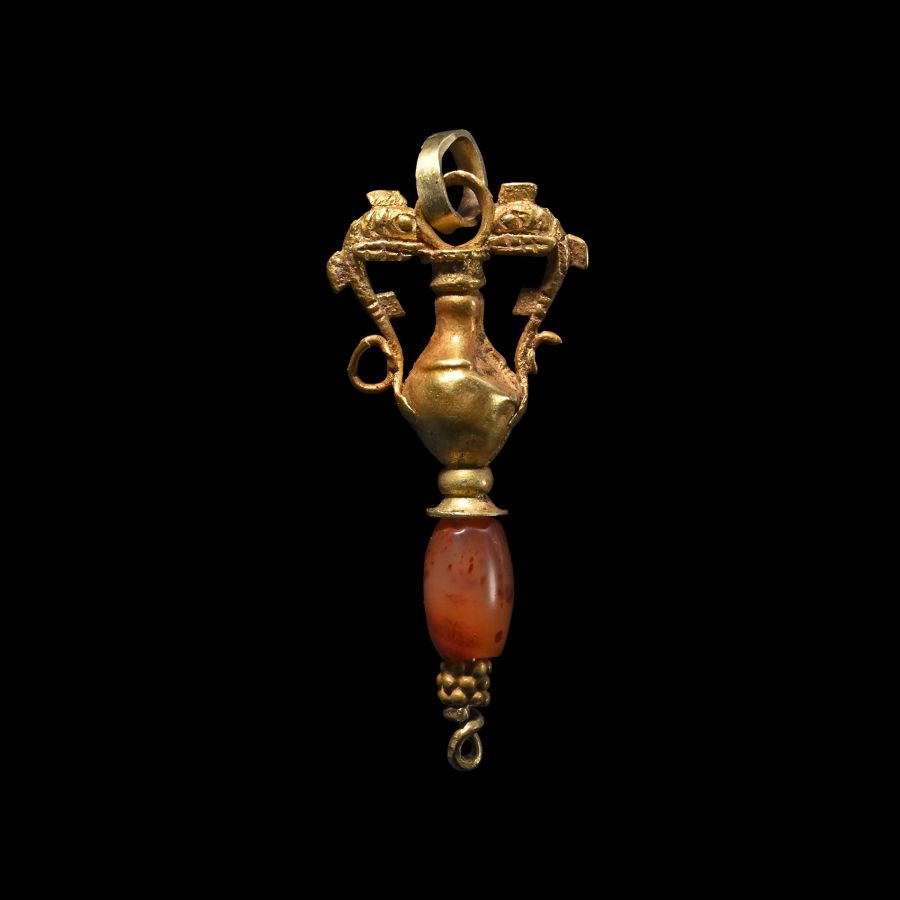
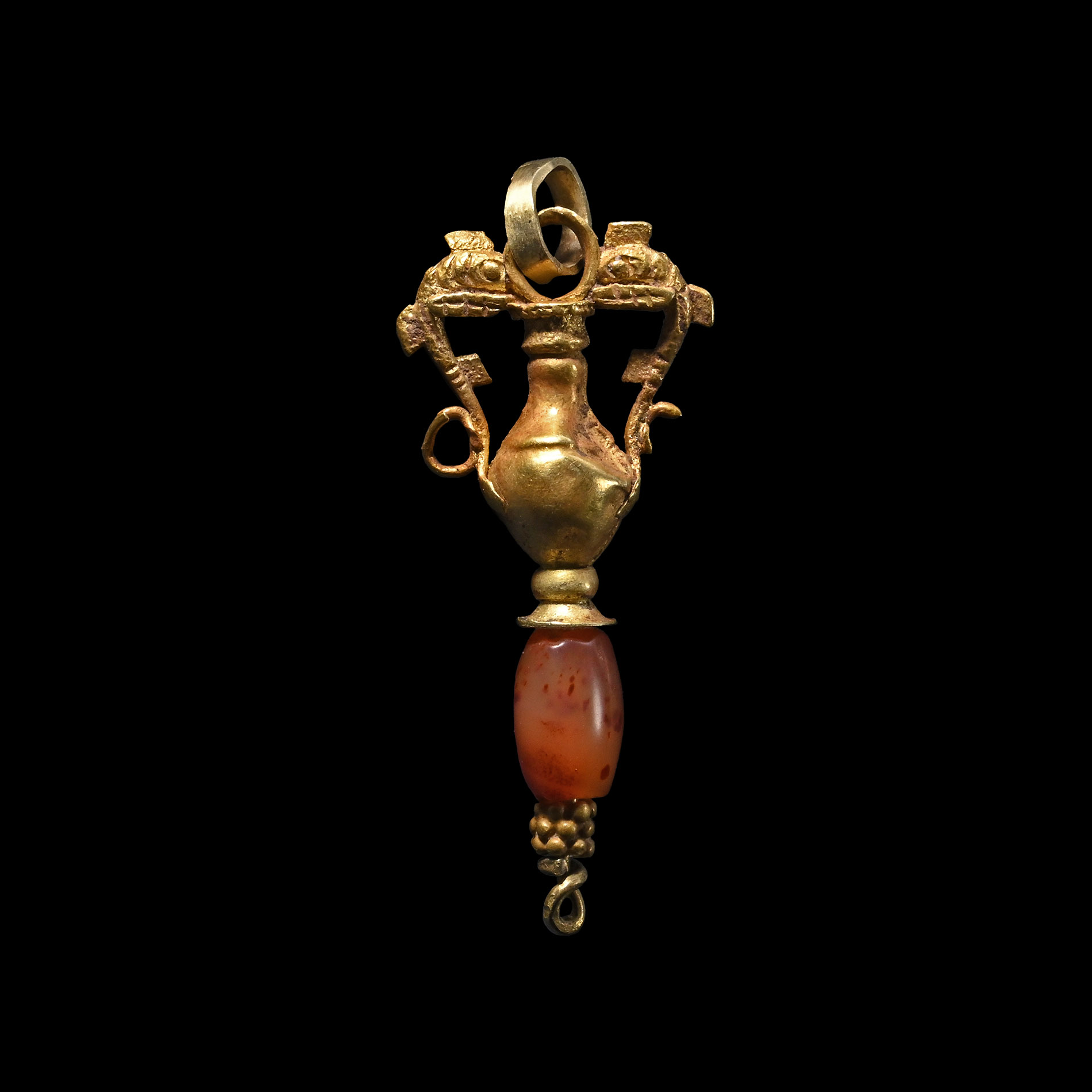
Hellenistic Gold Dolphin Amphora Pendant
2ND-1ST CENTURY B.C.
1 1/4 in. (2.2 grams, 32 mm).
Formed as an amphora with dolphin handles, oval carnelian bead below with granulated collar; loop and suspension ring above.
ProvenanceEx property of a late Japanese collector, 1970s-2000s.
CONDITIONTimeLine Auctions follows a vetting process to ensure the authenticity and legality of all items, reinforcing our commitment to integrity and responsible trading. Each antiquity, antique, and coin lot undergoes thorough examination by a vetting committee of at least ten external specialists, professional trade association members, scientists, and archaeologists: Our Vetting Process
AUCTIONS:
TimeLine is a leading auction house specialising in antiquities, ancient art, collectables, natural history, coins, medals, and books. Our auctions offer museums, collectors, historians, and enthusiasts the opportunity to acquire unique and historically significant pieces.
-
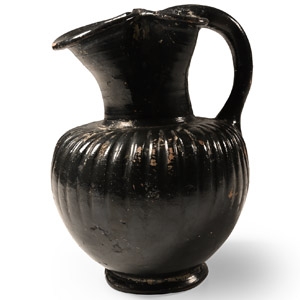
Greek Campania Black Glazed Ware Oinochoe
4th-3rd century B.C.Sold for (Inc. bp): £247
Tapering body and broad rounded shoulder decorated with incised vertical ribs, trefoil mouth, integral handle, everted foot with tapered edge. 215 grams, 12.6 cm
From a family collection mostly formed in the 1940s-1950s, thence by descent.
Such oinochoe vessels were produced in southern Italy from the 4th century B.C., most probably in the Greek colony of Campania. These vessels were characterised by a bulbous body with an elegant design, and by a black metallic glaze of a very fine quality, conferring a marvellous, smooth exterior surface. -
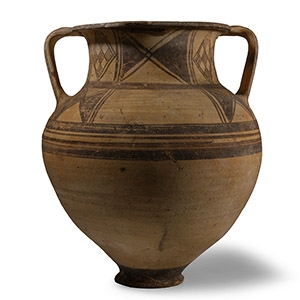
Very Large Cypriot Bichrome Amphora with Double Strap Handles
Archaic Period, circa 750 B.C.Sold for (Inc. bp): £1,300
With narrow trumpet-shaped foot, broad shoulder and ribbed lateral handles; painted circumferential bands to the inner neck, rim and body, hatched panels and labrys symbols to the shoulder. 7.3 kg, 45.5 cm high
From a collection acquired on the UK art market from various auction houses and collections mostly before 2000. From an important Cambridgeshire estate; thence by descent. Accompanied by an academic report by Dr Raffaele D'Amato. This lot has been checked against the Interpol Database of stolen works of art and is accompanied by search certificate number no.12313-218932. -
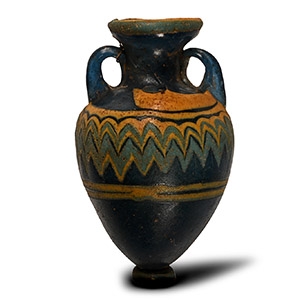
Greek Core-Formed Glass Aryballos
6th-5th century B.C.Sold for (Inc. bp): £910
Of squat piriform profile with applied ring to the foot and rim of the mouth, applied strap handles to the shoulder; the equator with horizontal hoops and dragged marvered trail decoration. 19.06 grams, 55 mm
Francesc Cambó i Batlle (1876-1947) a prominent Spanish politician, art patron and philanthropist. Gifted to his friend, the archaeologist, Josep Gilbert i Buch. Acquired from Gilbert's family by the present owner's grandfather in the early 1980s. Private collection of a European noble.
Francesco Cambó i Batlle was a notable figure in early 20th-century Spain, best known for his role in politics as a leader of the Catalan nationalist movement and as a patron of the arts. He was a key benefactor of the Museo del Prado and left a significant legacy through his art collections. His deep connection to the cultural and artistic life of Spain makes items from his collection particularly valuable and historically significant.
