
Loading, please wait...
_900x900.jpg "Hellenistic Garnet Gemstone with Hercules Club and Lionskin")
_200x200.jpg "Hellenistic Garnet Gemstone with Hercules Club and Lionskin")
.jpg "Hellenistic Garnet Gemstone with Hercules Club and Lionskin")
LOT 0092
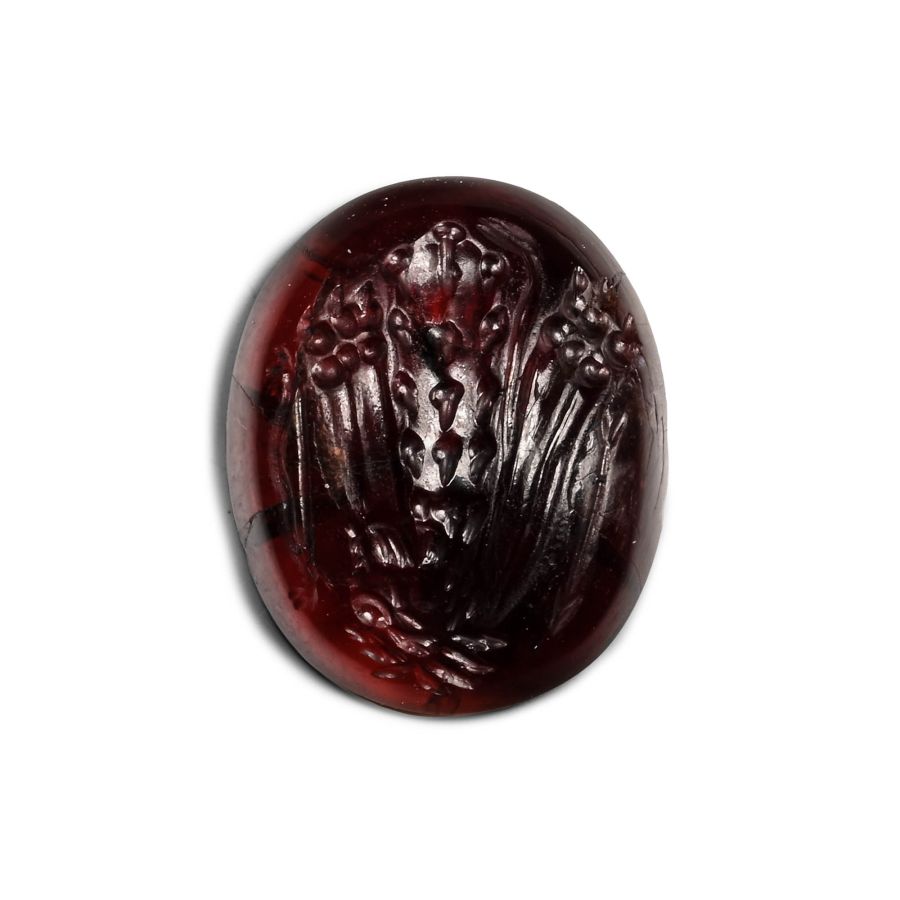
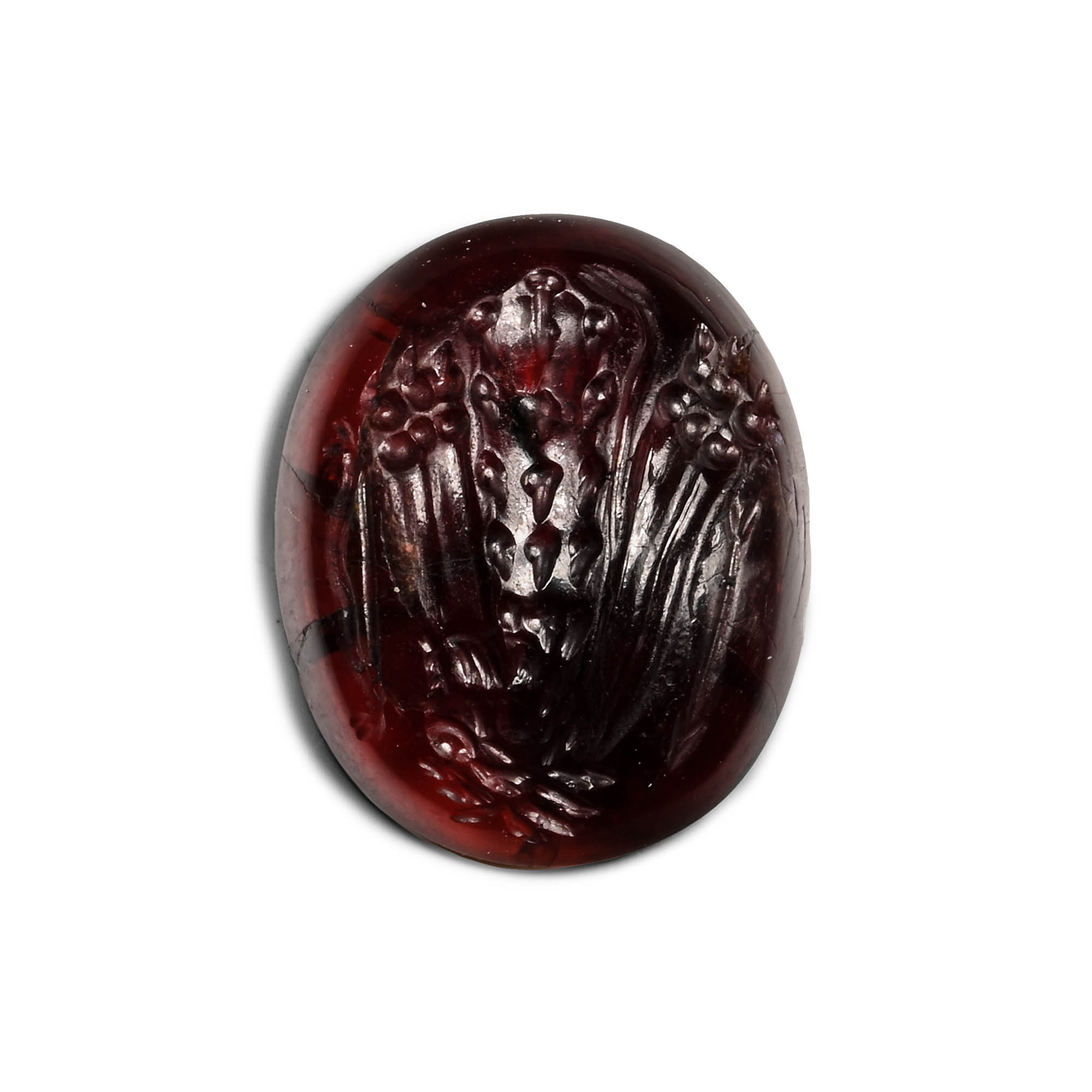
Hellenistic Garnet Gemstone with Hercules Club and Lionskin
2ND CENTURY B.C.
5/8 in. (1.8 grams, 17 mm).
Plano-convex with incuse image of spiked club and lionskin mantle.
ProvenanceAcquired in the 1970s.
Ex London, UK, collection.
This lot has been checked against the Interpol Database of stolen works of art and is accompanied by a search certificate number no.12386-226380.
Cf. Ruseva-Slokoska, L. Roman Jewellery, Sofia, 1991, item 191 for similar gemstone used as an insert.
CONDITIONTimeLine Auctions follows a vetting process to ensure the authenticity and legality of all items, reinforcing our commitment to integrity and responsible trading. Each antiquity, antique, and coin lot undergoes thorough examination by a vetting committee of at least ten external specialists, professional trade association members, scientists, and archaeologists: Our Vetting Process
AUCTIONS:
TimeLine is a leading auction house specialising in antiquities, ancient art, collectables, natural history, coins, medals, and books. Our auctions offer museums, collectors, historians, and enthusiasts the opportunity to acquire unique and historically significant pieces.
LOT 0092
Hellenistic Garnet Gemstone with Hercules Club and Lionskin
Estimate £2,000 - 3,000€2,320 - 3,480 (for guidance only)$2,700 - 4,050 (for guidance only)
-
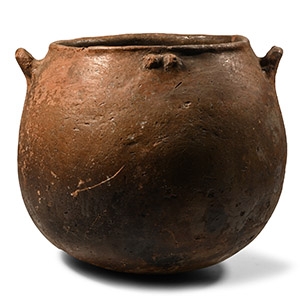
Very Large Cypriot Red Burnished Ware Cooking Pot
Early Bronze Age I-III, circa 2300-2000 B.C.Sold for (Inc. bp): £416
Globular in profile with thick everted rim to the broad mouth, two ledge handles below the rim and two pairs of bosses. 6.15 kg, 31 cm wide
From a collection acquired on the UK art market from various auction houses and collections mostly before 2000. From an important Cambridgeshire estate; thence by descent. -
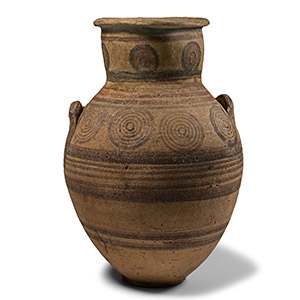
Cypriot Bichrome Ware Pottery Amphora
Iron Age, Cypro-Geometric III, circa 850-750 B.C.Sold for (Inc. bp): £338
With narrow base, oblate profile, two lateral loop handles to the shoulder, broad neck and flared rim to the mouth; painted bands of circumferential geometric ornament, concentric circles to the shoulder and neck. 1.27 kg, 27 cm
From a collection acquired on the UK art market from various auction houses and collections mostly before 2000. From an important Cambridgeshire estate; thence by descent. -
.jpg)
Greek and Other Pottery Fragment Group
Circa 1st millennium B.C.Sold for (Inc. bp): £65
Including flange-rimmed bowl, piecrust-based bowl, amphora and other types. 2.9 kg total, 3.5-25.5 cm
From a collection acquired on the UK art market from various auction houses and collections mostly before 2000. From an important Cambridgeshire estate; thence by descent.
