
Loading, please wait...
LOT 0100
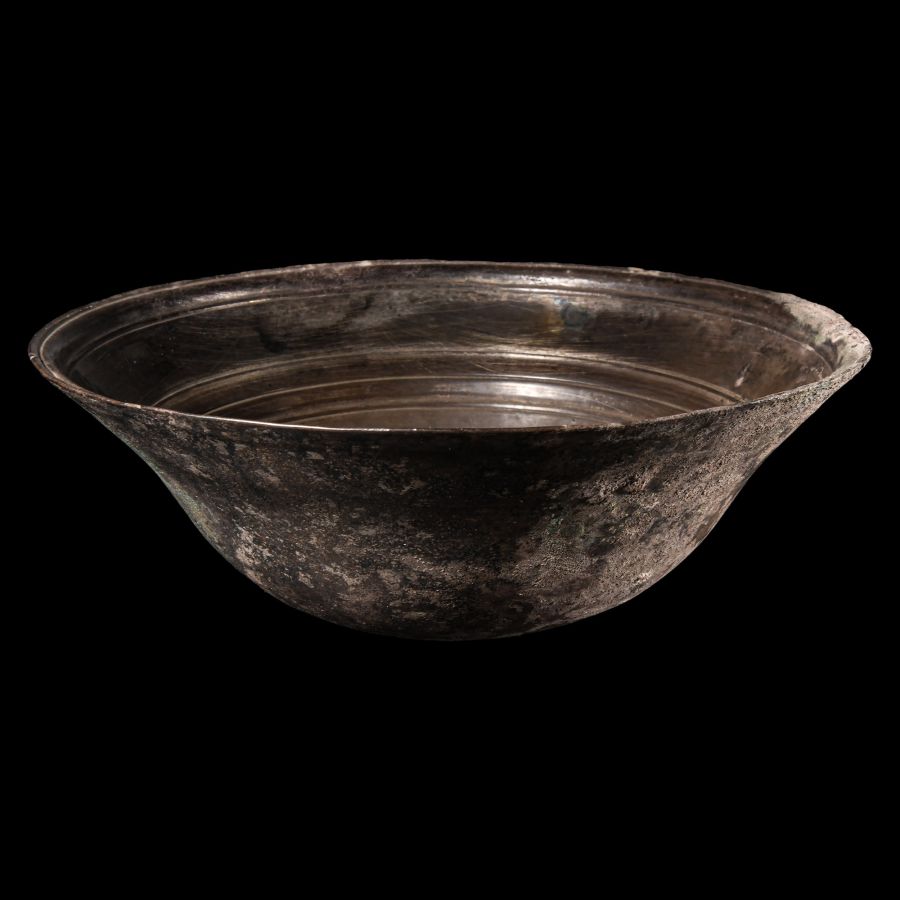
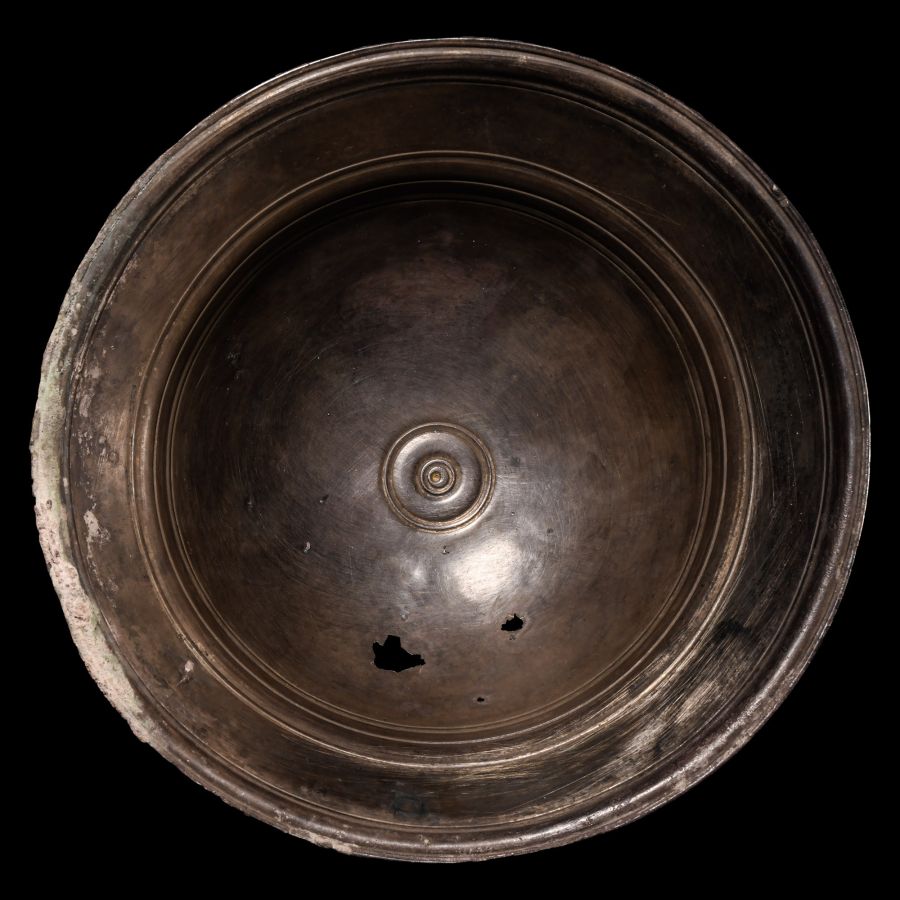
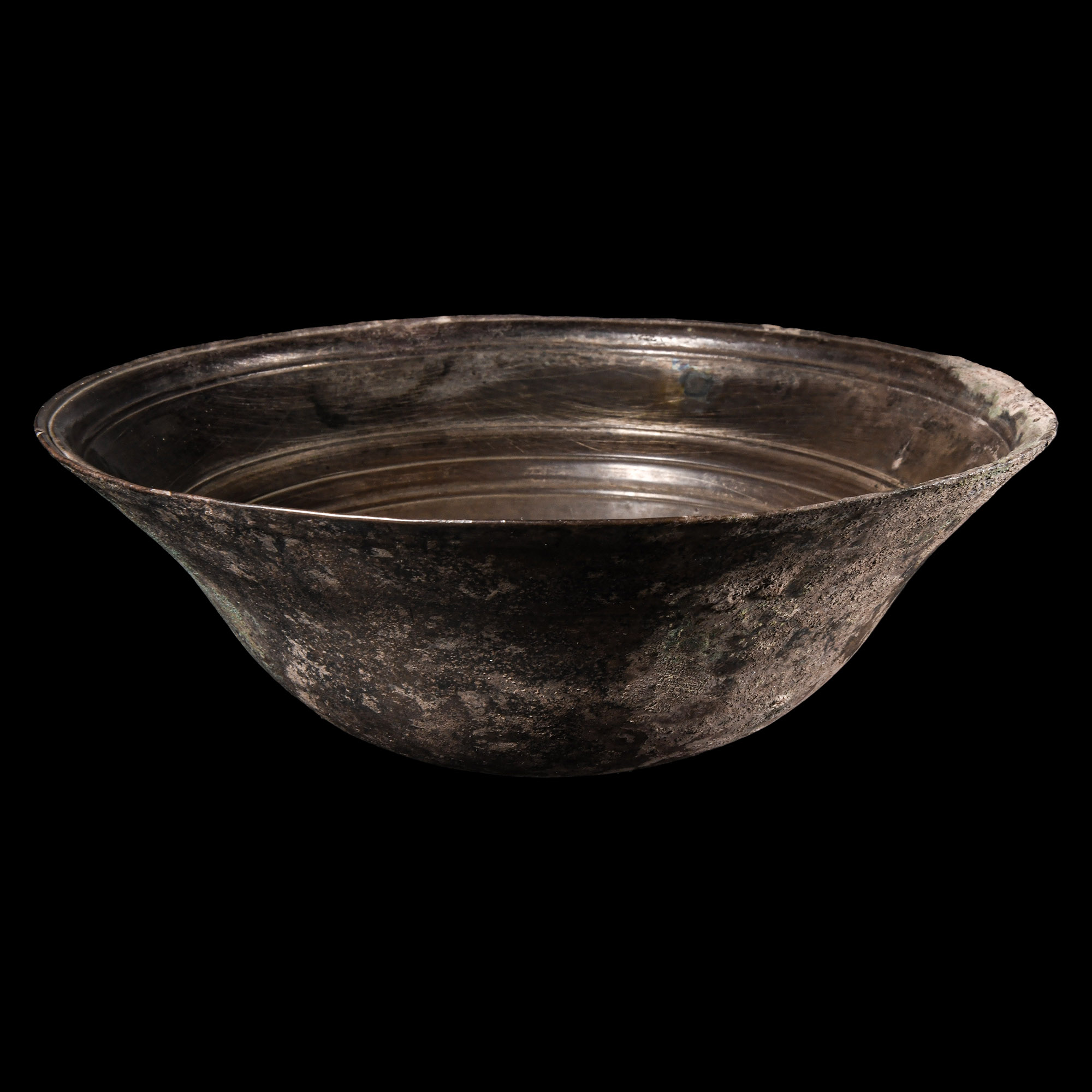
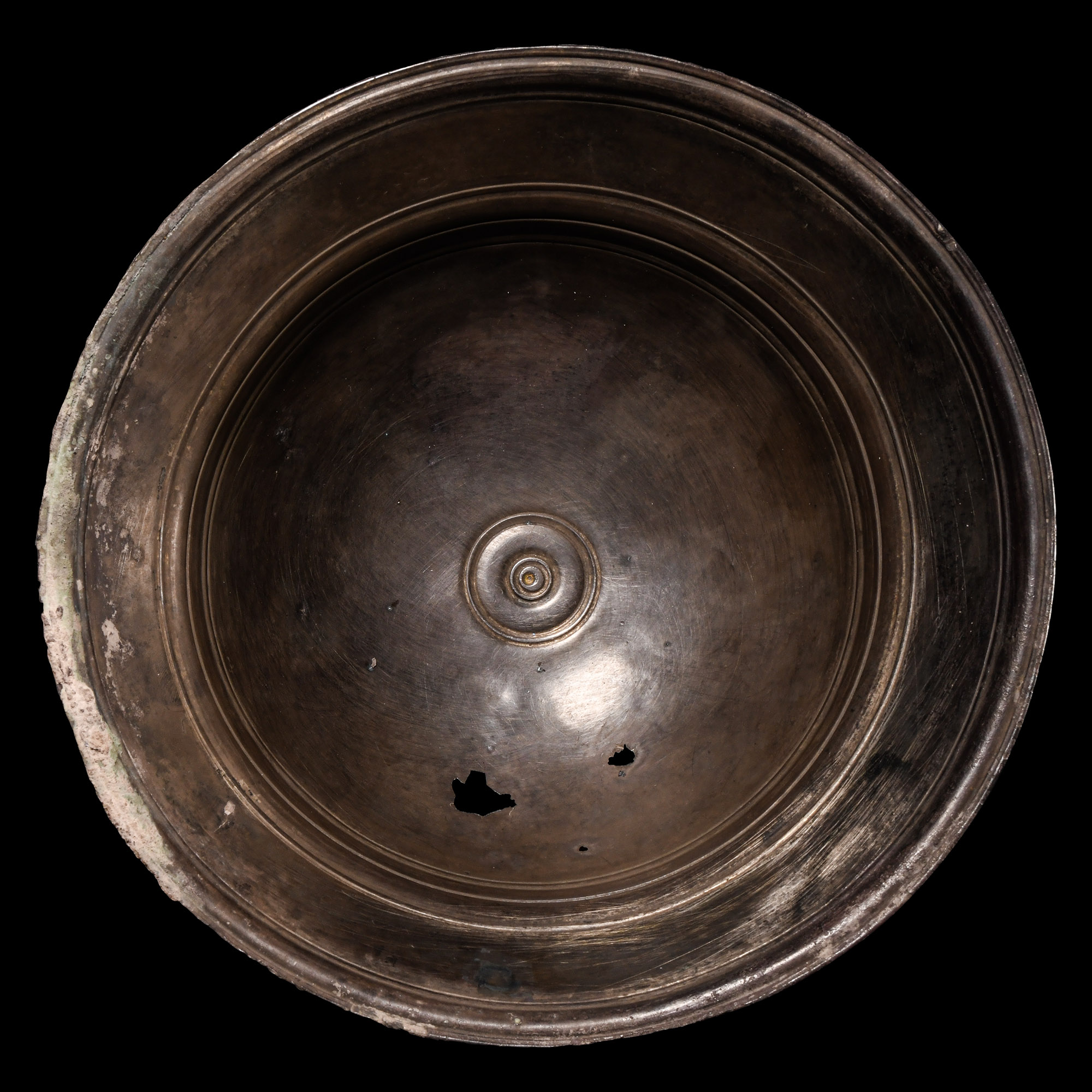
Hellenistic Decorated Silver Bowl
3RD CENTURY B.C.-1ST CENTURY A.D.
7 7/8 in. (437 grams, 20 cm wide).
With carinated profile, rolled rim, raised circumferential bands to the inner face and centre.
ProvenancePrivate Swiss collection, acquired 1999.
Ex Surena collection, London, UK.
Private European collection.
This lot has been checked against the Interpol Database of stolen works of art and is accompanied by search certificate no.11617-199030.
Cf. bowl of similar type in the British Museum, London, under accession number 134304.
CONDITIONTimeLine Auctions follows a vetting process to ensure the authenticity and legality of all items, reinforcing our commitment to integrity and responsible trading. Each antiquity, antique, and coin lot undergoes thorough examination by a vetting committee of at least ten external specialists, professional trade association members, scientists, and archaeologists: Our Vetting Process
AUCTIONS:
TimeLine is a leading auction house specialising in antiquities, ancient art, collectables, natural history, coins, medals, and books. Our auctions offer museums, collectors, historians, and enthusiasts the opportunity to acquire unique and historically significant pieces.
LOT 0100
Hellenistic Decorated Silver Bowl
Estimate £3,000 - 4,000€3,480 - 4,640 (for guidance only)$4,050 - 5,400 (for guidance only)
-
Greek Terracotta Protome Mask
Late 6th-early 5th century B.C.Sold for (Inc. bp): £182
Modelled as a female head with rounded oval face, slightly bulging eyes and pronounced chin, indistinct smiling mouth with thin lips, outline of ears; low straight polos with fastening hole. 133 grams, 10.5 cm
Acquired 1970s-1996. Property of a North American collector. London collection, 2016.
The figure belongs to a common type known from mainland Greece and the islands. The head clearly shows the so-called 'Archaic smile' visible on the dedicatory protomes of the same typology. They were terracotta votive offerings attached with a nail to the shrine of a goddess for ex-voto or to receive the grace of the represented goddess (Demeter?). -
Cypriot Redware Cup with Wishbone Handle
1450-1200 B.C.Sold for (Inc. bp): £111
Cup or bowl of spherical shape, unpainted, fitted with a wishbone handle. 96 grams, 14 cm
Ex P.A., Hertfordshire, UK, specialist collection of Greek art, 1980-1990s.
The presence of Achaeans in Cyprus, in late Cypriot II, also significantly influenced the life of the island from a ceramic production point of view. The social changes and new habits that developed among the elites of the main urban centres of the island included elaborate funerary displays, a means through which the emerging elite could express its identity and differentiate itself from other social groups. The ceramic forms were often cups intended for elaborate libation rituals, symposia, or ceremonies equivalent to Near Eastern marzeah, during which drinking services including kraters for mixing wine, cups and jugs were used. Alongside the more elaborate Achaean pottery, local Cypriot pottery (white-slip and base-ring) was still in use. -
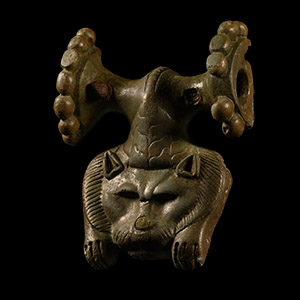
Greek Bronze Handle with Lion-Skin Head
Circa 5th-4th century B.C.Sold for (Inc. bp): £715
Formed as the skinned head and forepaws of a lion, together with two lateral handles with fastening holes surmounted by a pearled edge. 159 grams, 80 mm
Acquired on the UK art market 2000s.
The handle appears to be a device once attached to a wine vessel or pan-like vessels. The vessel handles were usually formed as divinities or animals linked with gods (ie. lions for Herakles). The lion's skin is hanging down as in representations of Herakles resting and drinking after his labours.
