
Loading, please wait...
LOT 0517
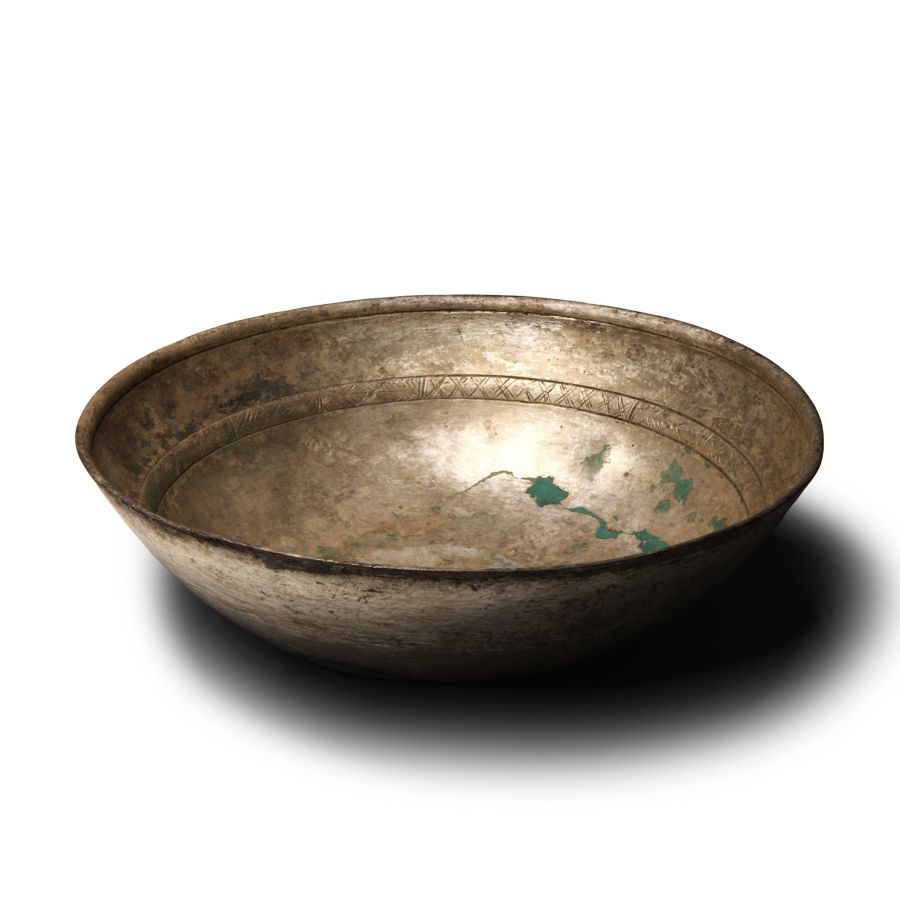
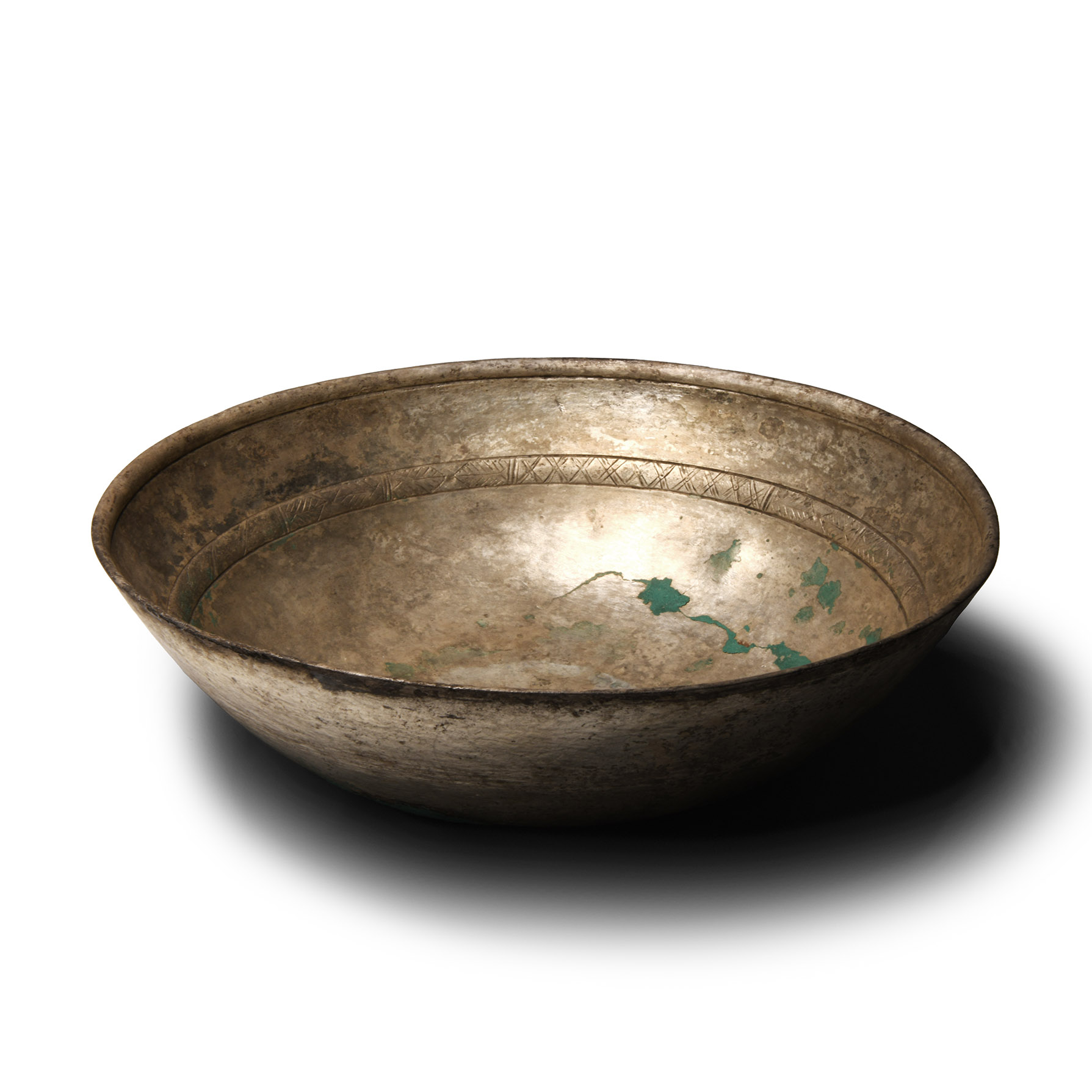
Hellenistic Decorated Silver Bowl
CIRCA 3RD-2ND CENTURY B.C.
7 1/4 in. (222 grams, 18.5 cm wide).
With everted flaring rim, the exterior plain, the interior with ridged band at the shoulder composed of alternating X-motifs, stylised opposing plants, and dots interspersed with transverse bands.
ProvenanceFrom a late Japanese specialist collector, 1970-2000s.
LiteratureCf. Maierovskii III Burial-mound no. 4/2002, Burial no. 3B, Moscow, State Historical Museum, inv. no. 112873, list Б 2078/77, in Treister, M., 'Parthian and Early Sasanian “Imports” in the Burials of the Nomads of Eastern Europe (2nd Century BCE-3rd Century CE)' in Choref, M.M., Materials in Archaeology and History of Ancient and Medieval Crimea, Moscow, 2018, pp.118-210, fig.4, 1-3, for similar bowl.
FootnotesSimilar segment-shaped silver bowls with partial gilding, decorated on the inside with friezes in the form of garlands or wickerwork, have been found in many nomad mounds in the Caucasus region. Treister attributes them to Parthian workshops. Such cups could also be undecorated or decorated only with a frieze of Ionian cymatium along the edge.
CONDITIONTimeLine Auctions follows a vetting process to ensure the authenticity and legality of all items, reinforcing our commitment to integrity and responsible trading. Each antiquity, antique, and coin lot undergoes thorough examination by a vetting committee of at least ten external specialists, professional trade association members, scientists, and archaeologists: Our Vetting Process
AUCTIONS:
TimeLine is a leading auction house specialising in antiquities, ancient art, collectables, natural history, coins, medals, and books. Our auctions offer museums, collectors, historians, and enthusiasts the opportunity to acquire unique and historically significant pieces.
-
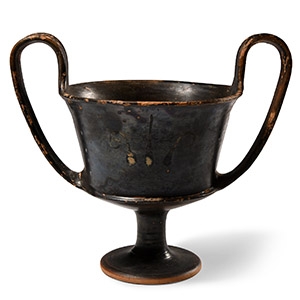
Greek Blackware Kantharos
5th-4th century B.C.Estimate: £500 - 700 (+bp*)
Opening Bid: £250
With broad disc foot, drum-shaped bowl with carinated lower edge, flared rim, two ribbed strap handles rising above the rim; below on each face vine tendrils in a splayed array. 381 grams, 20.5 cm wide
From a West Coast collection, Devon, UK, 1980s. -
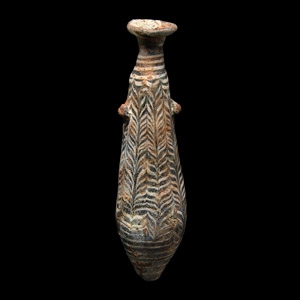
Greek Core-Formed Glass Alabastron
3rd-1st century B.C.Estimate: £1,500 - 2,000 (+bp*)
Opening Bid: £750
With fusiform body, slender neck and broad flange rim, applied ledge handles, decorated with white marvered feathering and spiralling trails. 79 grams, 15 cm high
Fine condition.
Paris collection, 1990s. From an important Paris gallery, France. Ex private Parisian collection.
A perfume bottle. -
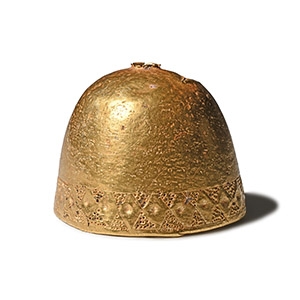
Scythian Decorated Gold Bell
1st millennium B.C.Sold for (Inc. bp): £780
Domed with a rolled rim and vent at the apex; decorative band above the rim with reserved lozenges on a pounced field each with an impressed dimple to the centre; cracked to one side. 19.47 grams, 48 mm
Cracked
Acquired early 1990s. Ex private American collection; thence by descent. Private Swiss collection since 1998.
