
Loading, please wait...
LOT 0115
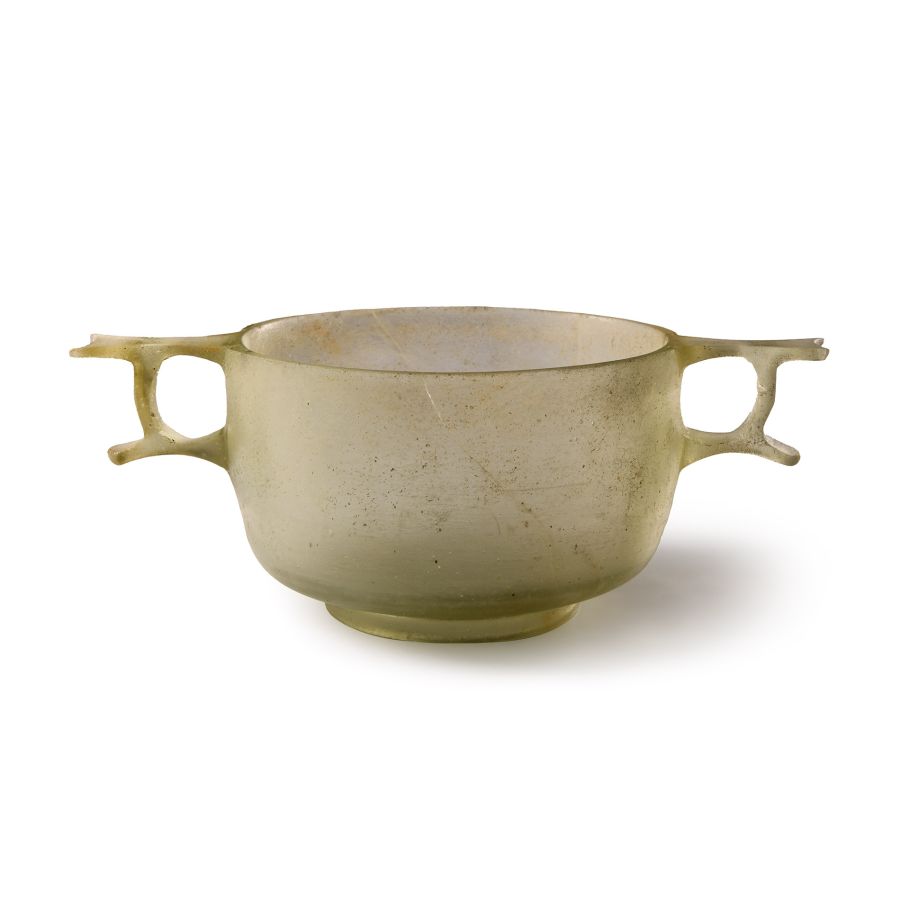
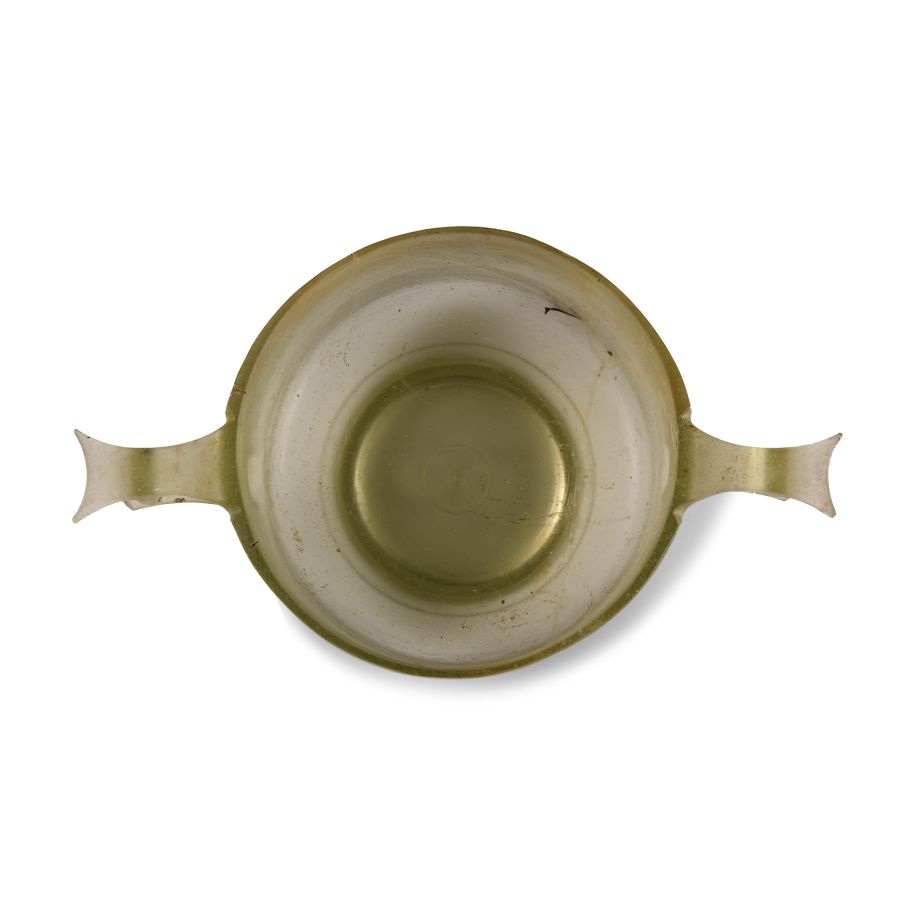
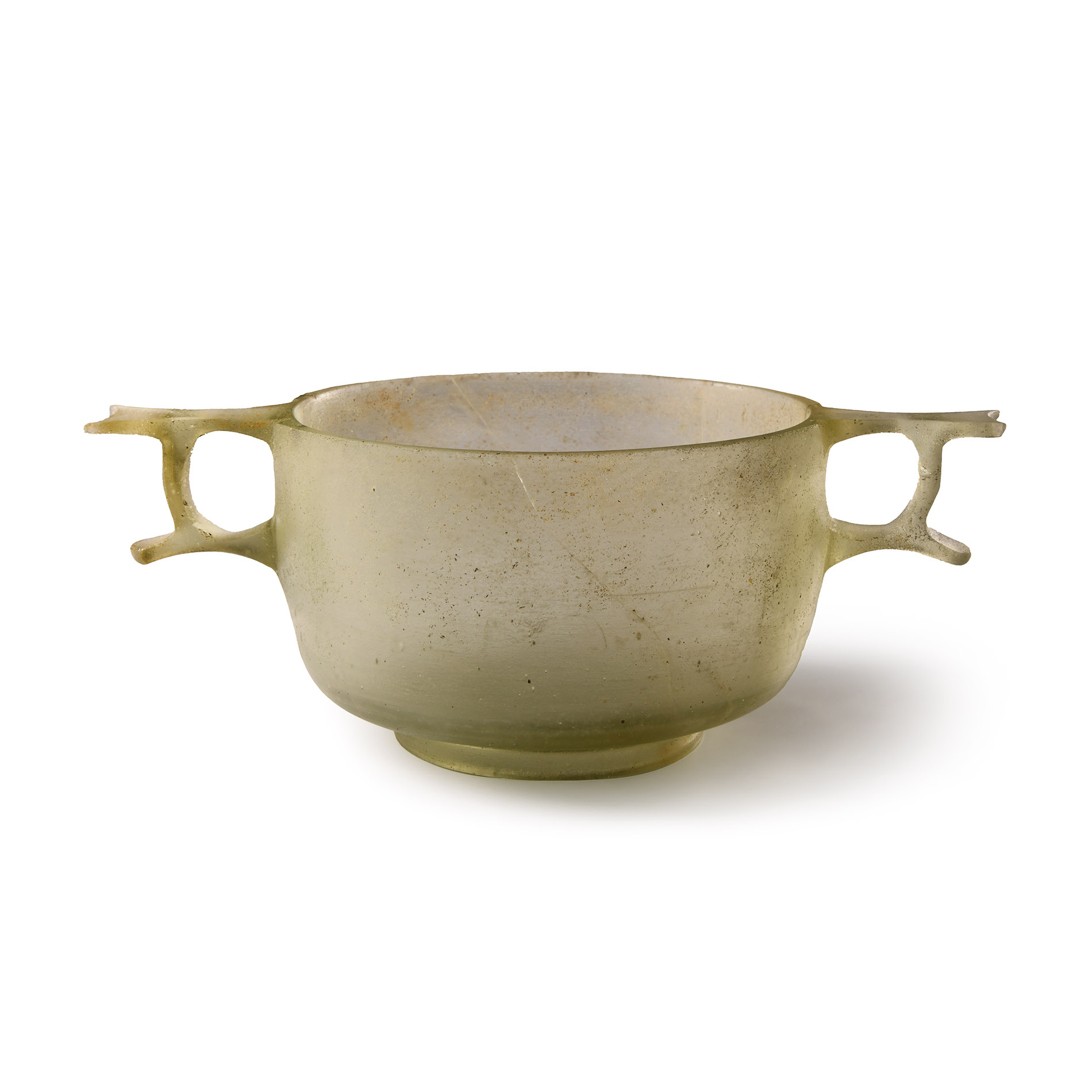
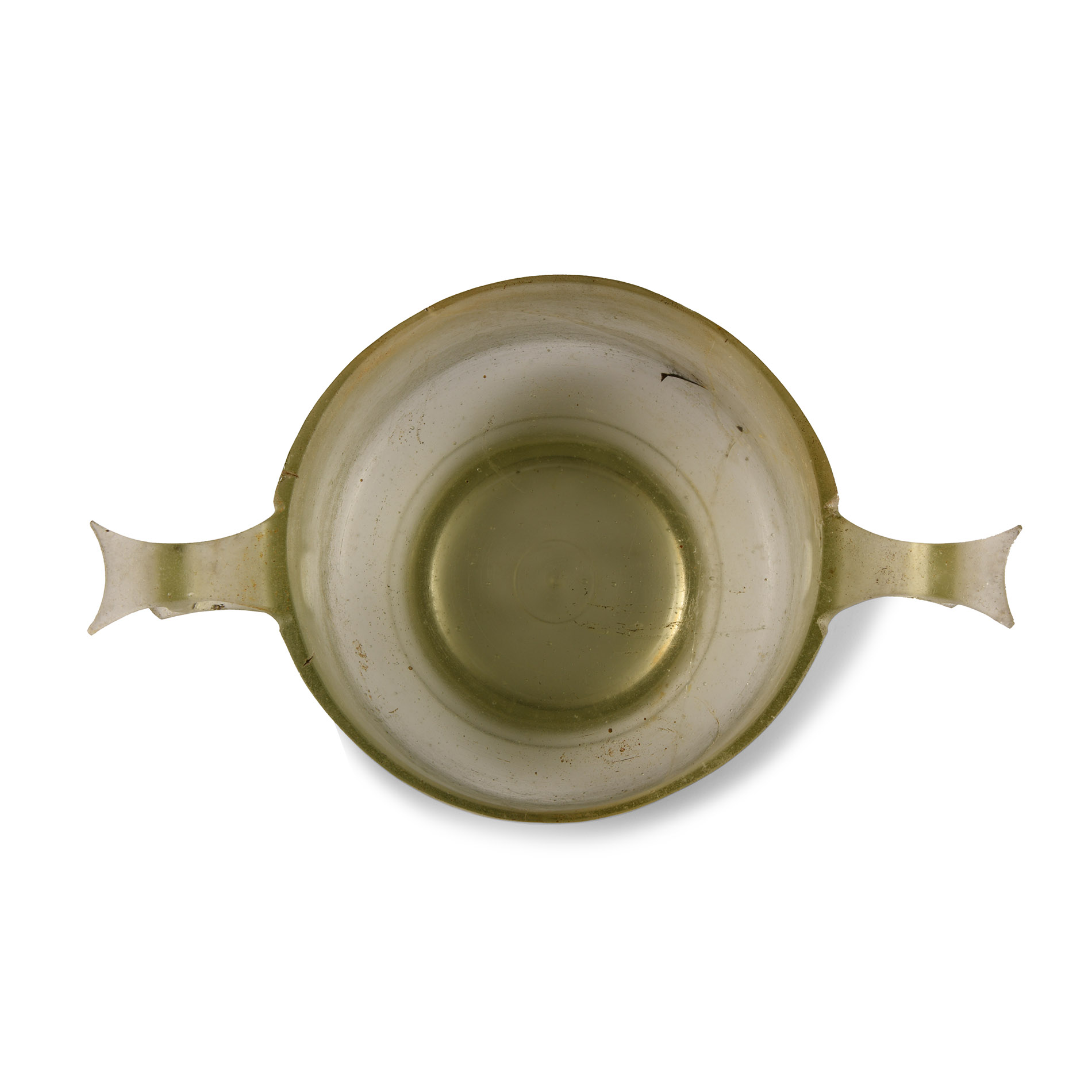
Hellenistic Cut-Glass Skyphos
1ST CENTURY B.C.-1ST CENTURY A.D.
7 1/8 in. (247 grams, 18 cm wide).
Drum-shaped frosted glass vessel on a low basal ring, lateral loop handles each with and angled spur below and fish-tail plaque above;
ProvenanceAcquired in the 1980s.
with Christopher Sheppard, London, UK.
Acquired from the above in 2007.
This lot has been checked against the Interpol Database of stolen works of art and is accompanied by search certificate no.11954-210906.
Cf. similar item in the Metropolitan Museum of Art under accession no.17.194.94.
CONDITIONTimeLine Auctions follows a vetting process to ensure the authenticity and legality of all items, reinforcing our commitment to integrity and responsible trading. Each antiquity, antique, and coin lot undergoes thorough examination by a vetting committee of at least ten external specialists, professional trade association members, scientists, and archaeologists: Our Vetting Process
AUCTIONS:
TimeLine is a leading auction house specialising in antiquities, ancient art, collectables, natural history, coins, medals, and books. Our auctions offer museums, collectors, historians, and enthusiasts the opportunity to acquire unique and historically significant pieces.
-
Greek Red Figure Dish with Lady of Fashion
South Italian, circa 380-350 B.C.Sold for (Inc. bp): £611
With pedestal foot, decorated with radiating strokes to the rim, band of leaf ornament surrounding the central profile of a lady of fashion facing left, her hair dressed in a ribboned sakkos with stephane; earrings and necklace in white and ochre. 187 grams, 16.5 cm wide
Acquired by the vendor's father in the 1950s or before; thence by descent 2003. -
Hellenistic Bronze Ring with Lion Attacking a Warrior
Circa 3rd-1st century B.C.Sold for (Inc. bp): £39
With narrow flat-bottomed hoop, ellipsoid bezel with incuse combat scene of a standing human figure with a shield seizing a rearing lion. 9.17 grams, 24.52 mm overall, 19.78 mm internal diameter (approximate size British Q 1/2, USA 8 1/4, Europe 18.12, Japan 17)
Ex old English collection. London art market, pre 2000. Property of a London, UK, gentleman. -
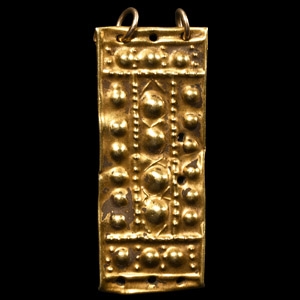
Proto-Etruscan Gold Repousse Mount with Bosses
11th-10th century B.C.Sold for (Inc. bp): £520
Comprising three horizontal rows of embossed dots, divided by pearled framework, three fastening holes on both sides, two later added gold loops to enable the piece to be worn as a pendant. 4.89 grams, 54 mm
Acquired 1980-2015. Ex Abelita family collection.
The embossed decoration finds parallels with embossed bronzes from Coste del Marano, where the model of a small boat is decorated in repoussé with the same bosses divided by similar dotted lines.
