
Loading, please wait...
LOT 0091
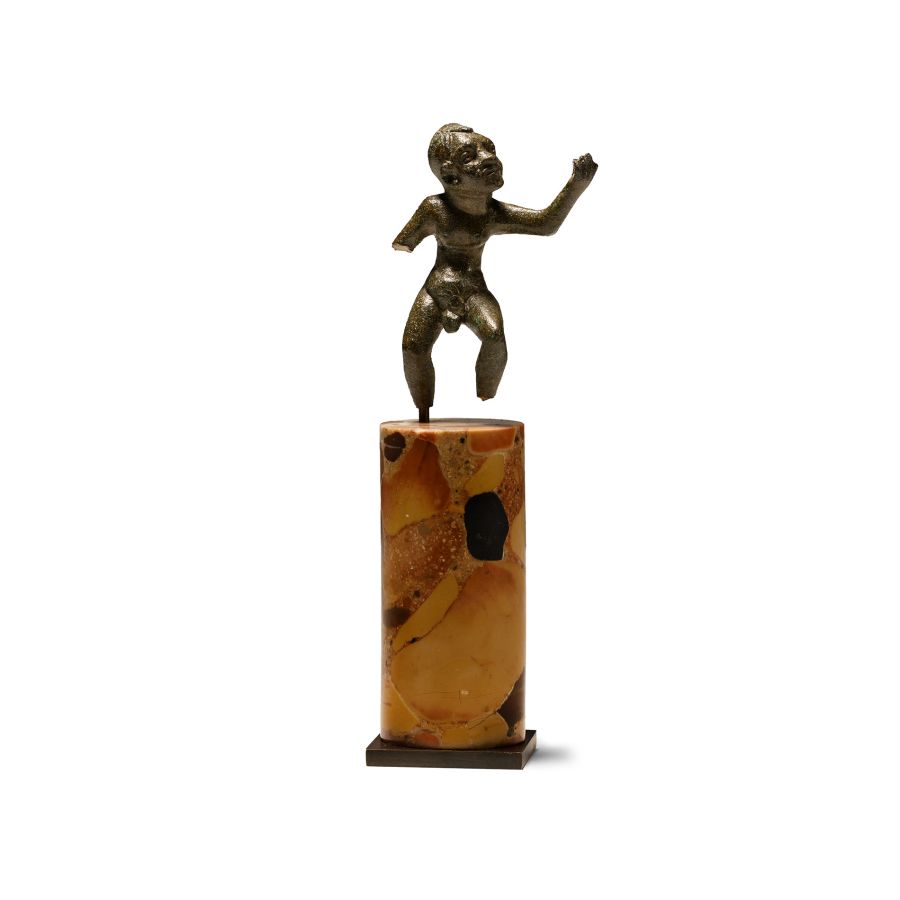
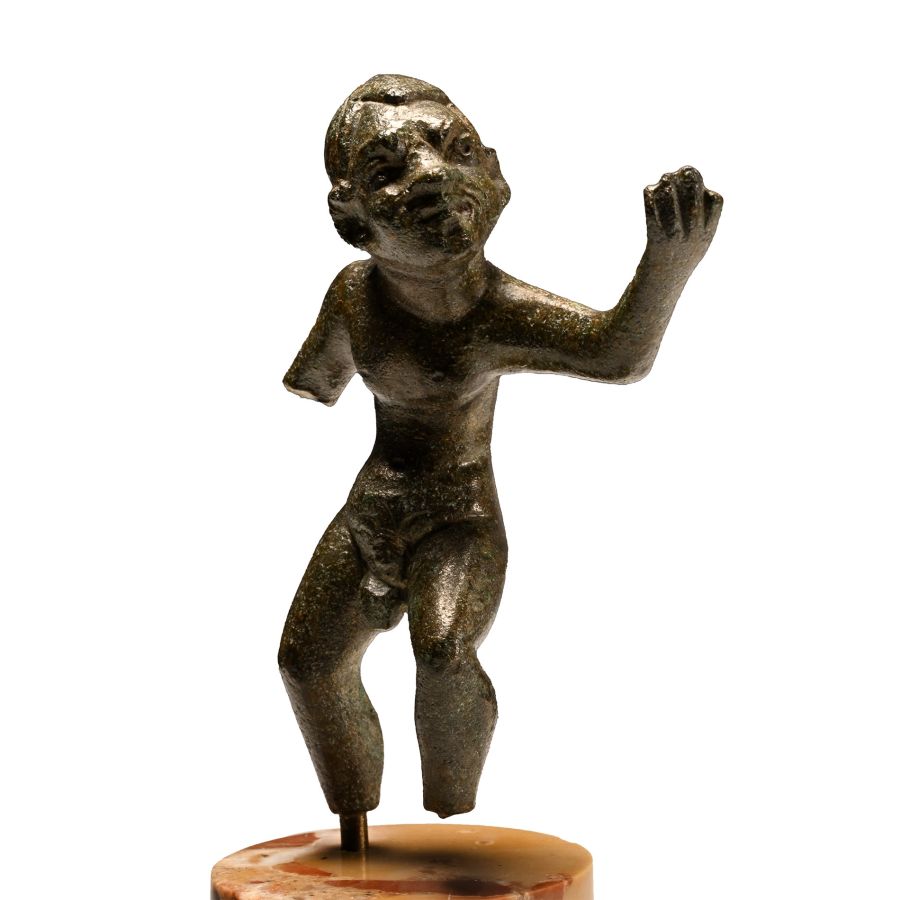
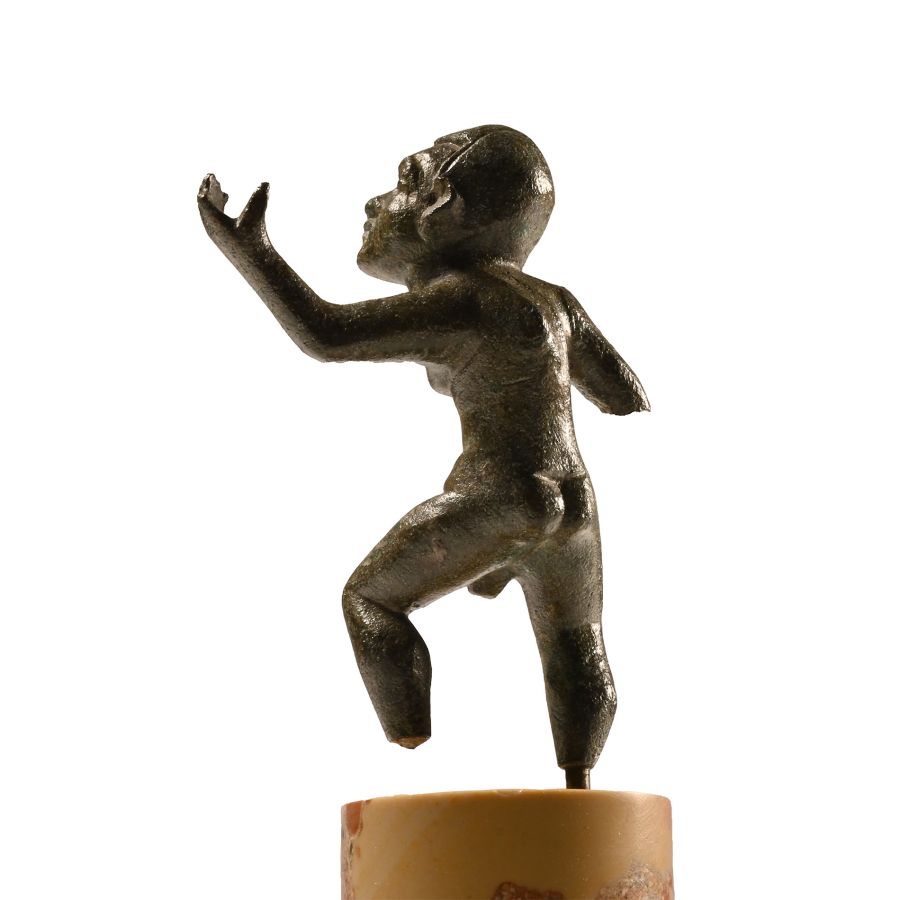
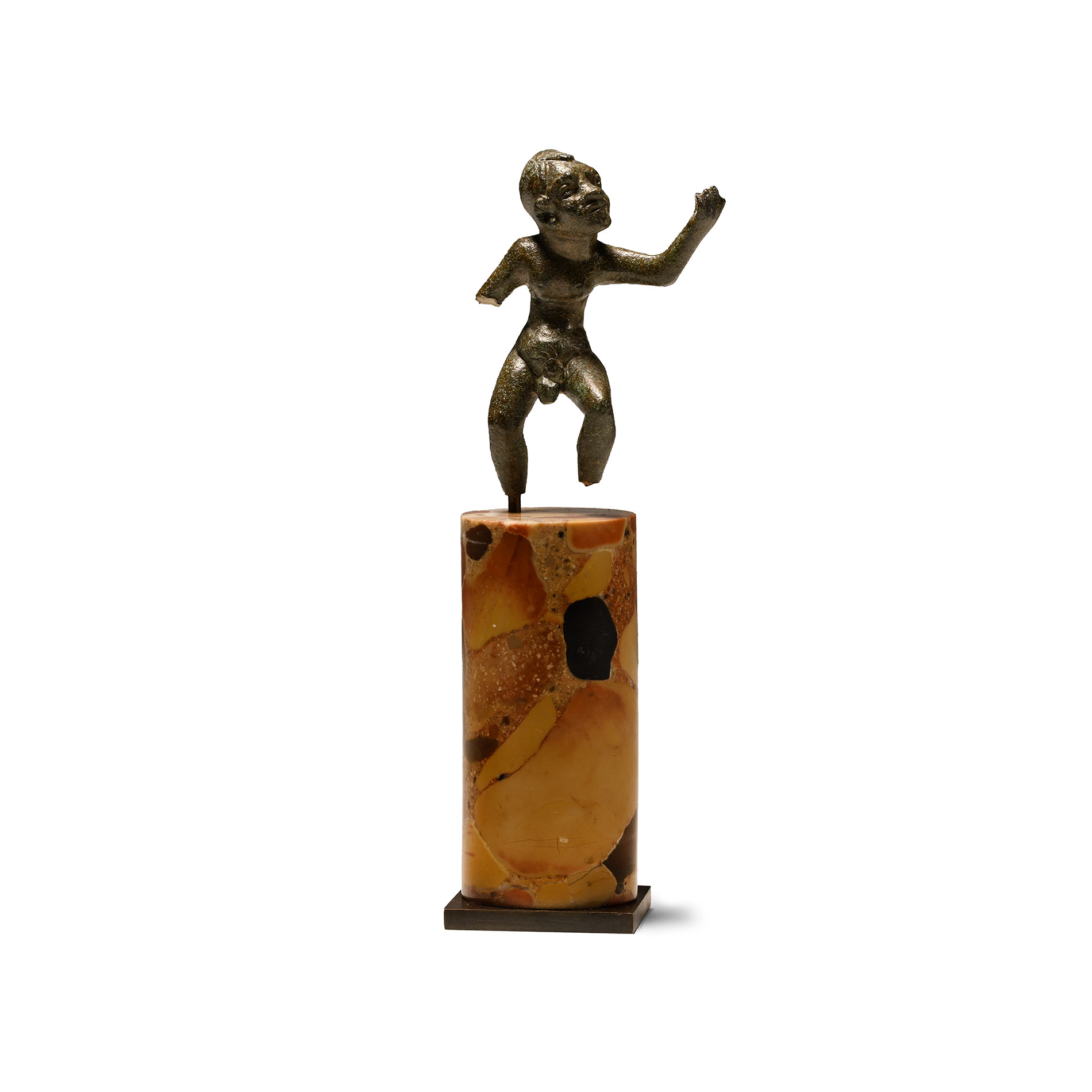
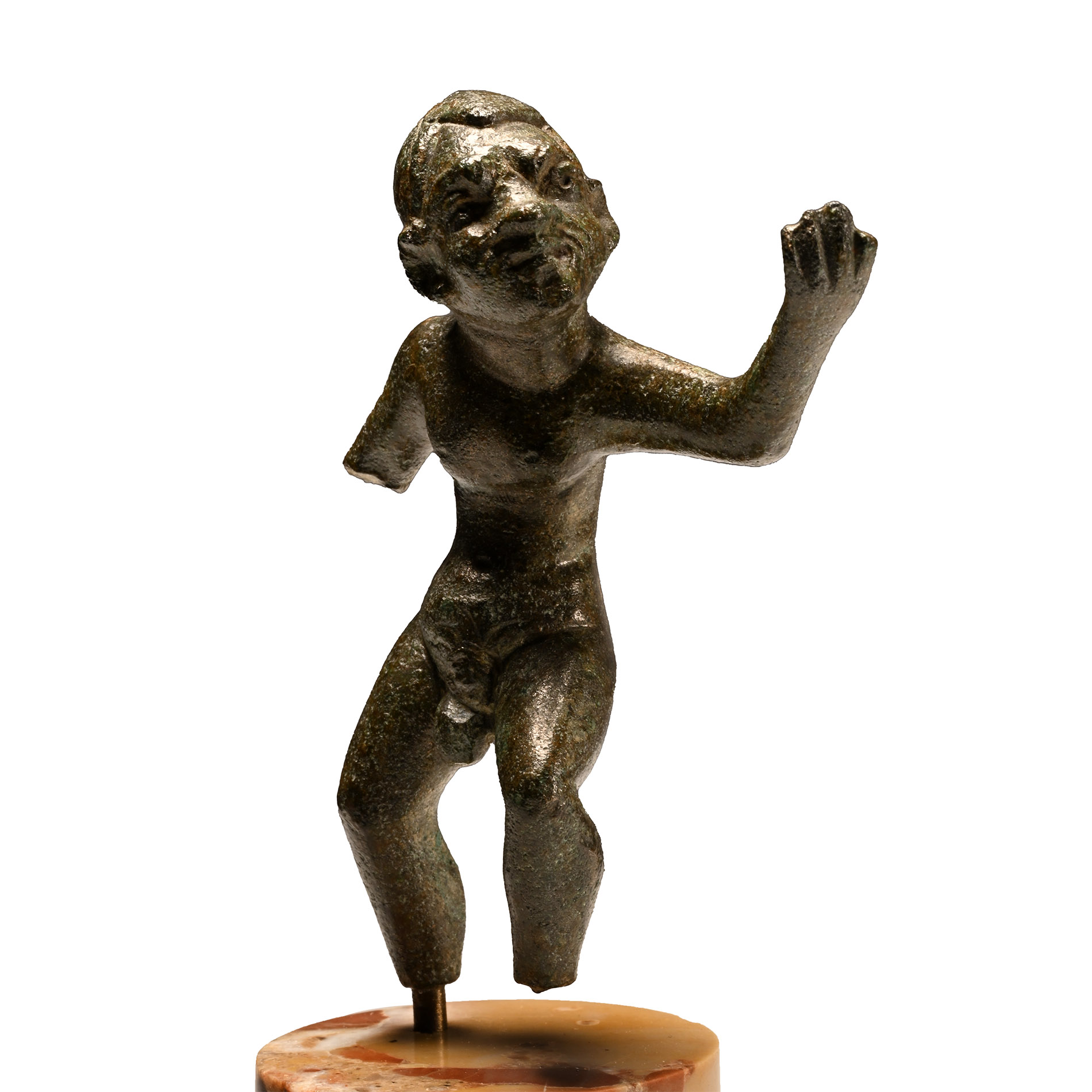
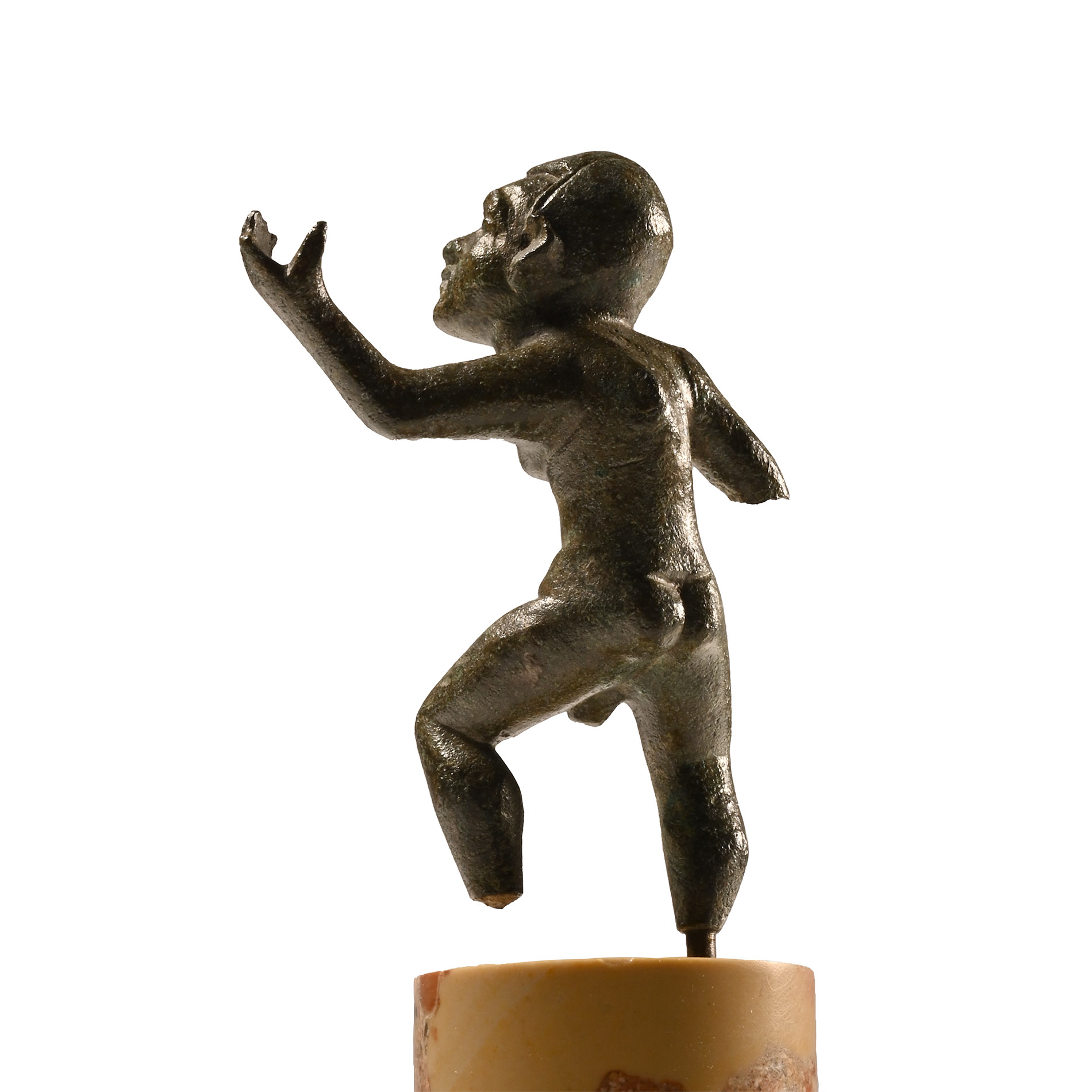
Hellenistic Bronze Statuette of an Alexandrian Dancing Dwarf
1ST CENTURY B.C.-1ST CENTURY A.D.
5 3/4 in. (299 grams,14.5 cm including stand).
In an active pose with both legs bent and left arm raised dramatically, head tilted to the left; exaggerated facial features, short trimmed hair, slim body with developed pectoral muscles and pronounced kyphosis; mounted on a columnar stand.
ProvenanceBelgian private art collection of M.A., Brussels, Belgium, 1995.
with Gorny and Mosch, 14 December 2011, lot 82.
This lot has been checked against the Interpol Database of stolen works of art and is accompanied by search certificate number no.11886-206399.
See Metropolitan Museum of Art, New York, accession number 12.229.6, for a similar figure.
CONDITIONTimeLine Auctions follows a vetting process to ensure the authenticity and legality of all items, reinforcing our commitment to integrity and responsible trading. Each antiquity, antique, and coin lot undergoes thorough examination by a vetting committee of at least ten external specialists, professional trade association members, scientists, and archaeologists: Our Vetting Process
AUCTIONS:
TimeLine is a leading auction house specialising in antiquities, ancient art, collectables, natural history, coins, medals, and books. Our auctions offer museums, collectors, historians, and enthusiasts the opportunity to acquire unique and historically significant pieces.
LOT 0091
Hellenistic Bronze Statuette of an Alexandrian Dancing Dwarf
Estimate £3,000 - 4,000€3,480 - 4,640 (for guidance only)$4,050 - 5,400 (for guidance only)
-
Greek Silver-Gilt Mask of Silenus
3rd-2nd century B.C.Sold for (Inc. bp): £2,470
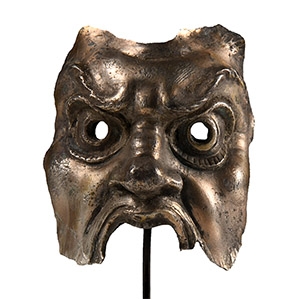
Naturalistically modelled in repoussé as the mature and frowning face of the god Silenus; accompanied by a custom-made display stand. 9.4 grams, 37 mm (160 grams total, 98 mm high including stand)
Ex old English collection. London art market, 1980s. This lot has been checked against the Interpol Database of stolen works of art and is accompanied by search certificate number no.11849-207741.
In Greek mythology, Silenus was a god of the forest, associated with musical creativity, ecstatic dance and drunkenness. He was also a prophet and a bearer of dire wisdom. When the god Dionysus was born from the thigh of Zeus, Hermes took the infant to live with Silenus, where he was raised together with local nymphs in a cave on mount Nysa. Silenus was frequently present in the train of Dionysus, fought with the latter against the giants, and accompanied him on his adventures. -

Cypriot Bichrome Ware Horse Model
Circa 850–750 B.C.Sold for (Inc. bp): £910
Modelled in the round, detailed in black and crimson. 183 grams, 13 cm high
Lt. Col. H.A. Hill, R.A.M.C. while stationed in Cyprus as S.M.O in the 1920s, thence by descent. -
Greek Attic Black-Figure Lekythos with Fighting Hoplites
6th century B.C.Sold for (Inc. bp): £3,380
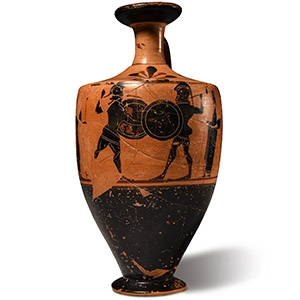
The piriform body tapering towards the splayed foot, D-section strap handle and calyx-shaped mouth with flat rim; the body painted with a scene of two duelling hoplites, dressed in full armour comprising shields, greaves and helmets, dressed in short chitons and assisted by their arbiters holding staffs and dressed in long himation; the shoulder with palmette decoration and facing figures of a man and a woman with long garments around the shoulder; restored. 381 grams, 23 cm high
Old Swiss collection. Acquired in Europe before 2011. Private collection, Europe. Accompanied by an academic report by Dr Raffaele D’Amato. This lot has been checked against the Interpol Database of stolen works of art and is accompanied by search certificate number no.11815-206482.
To the Greeks, lekythoi were containers for dispensing oil. The characteristics shape of this vessel was that of a long body, narrow neck, one handle and a cup-shaped mouth. The shape was fit for the function of the lekythos: the narrow neck prevented the unnecessary loss of oil by enabling small amounts to be distributed evenly and the mouth to collect the excess. The represented scene is probably taken from the Iliad and could represent the combat between Ajax and Hector, assisted by arbiters.
