
Loading, please wait...
LOT 0511
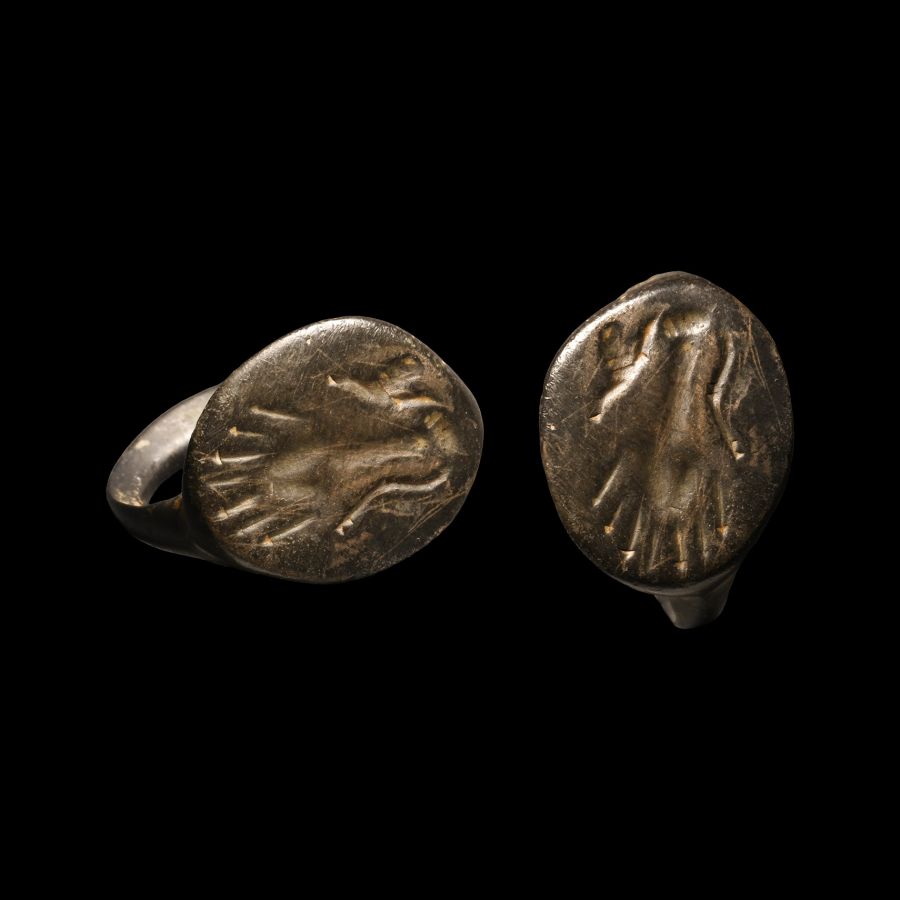
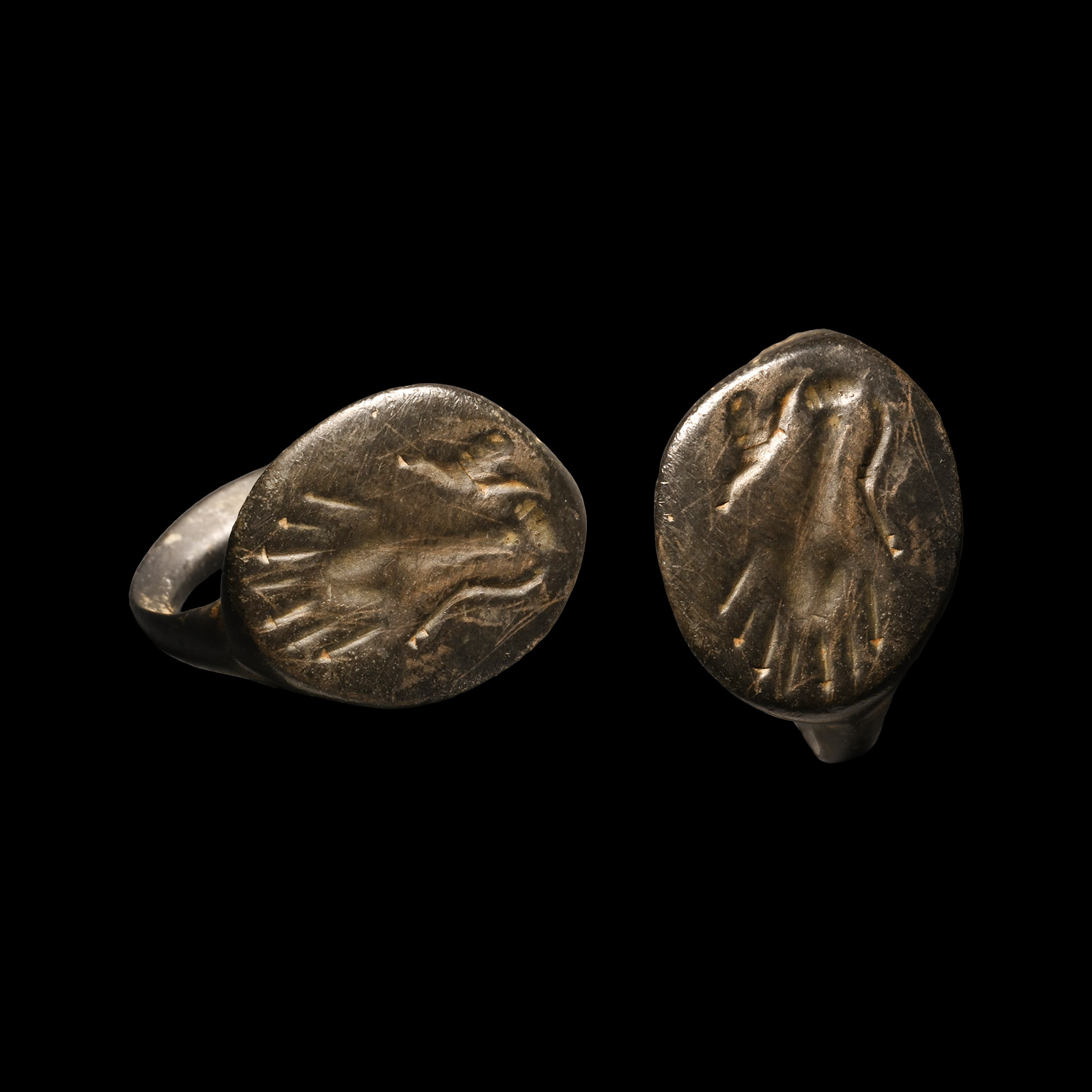
Hellenistic Bronze Ring with Mythical Bird
CIRCA 2ND-1ST CENTURY B.C.
7/8 in. (6.85 grams, 23.38 mm overall, 18.38 mm internal diameter (approximate size British R, USA 8 1/2, Europe 18 3/4, Japan 18)).
With ellipsoid bezel, low-relief stylised image of a bird with tail splayed. [No Reserve]
ProvenanceEx old English collection.
London art market, pre 2000.
Property of a London, UK, gentleman.
TimeLine Auctions follows a vetting process to ensure the authenticity and legality of all items, reinforcing our commitment to integrity and responsible trading. Each antiquity, antique, and coin lot undergoes thorough examination by a vetting committee of at least ten external specialists, professional trade association members, scientists, and archaeologists: Our Vetting Process
AUCTIONS:
TimeLine is a leading auction house specialising in antiquities, ancient art, collectables, natural history, coins, medals, and books. Our auctions offer museums, collectors, historians, and enthusiasts the opportunity to acquire unique and historically significant pieces.
-
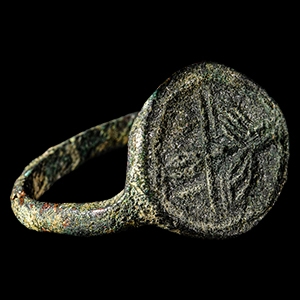
Greek Bronze Signet Ring
Circa 4th-2nd century B.C.Sold for (Inc. bp): £52
With a D-section hoop, large rounded bezel with a geometric motif. 2.89 grams, 23.01 mm overall, 19.79 mm internal diameter (approximate size British O, USA 7, Europe 14.98, Japan 14)
Property of a UK gentleman, acquired 20 November 1981. Property of an East Sussex, UK, gentleman. Accompanied by an old handwritten identification ticket. -
.jpg)
Cypriot Terracotta Figurine
6th-5th century B.C.Sold for (Inc. bp): £780
Modelled in the half-round, the figure wearing a conical hood with open front, detailed facial features and ribbed beard, left arm bent, right arm drawn across the body in the folds of a mantle, vertical border to the left chest; mounted on a custom-made stand. 48 grams, 83 mm (69 grams total, 10.9 cm high including stand)
Ex Julien Gréau (1810–1895) who was an omnivorous French collector with a predilection for antiquities. Collection of Louis-Gabriel Bellon (1819-1899), Saint-Nicolas-lez-Arras and Rouen, thence by descent. with Millon & Associes Auctions, Paris, 6th December 2021, lot 41 [Part]. Accompanied by a copy of Collection J. Gréau, Terres Cuites Grecques, by H. Hoffmann, 1891, where this piece is published. -
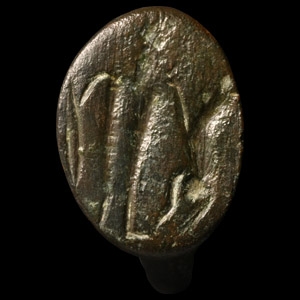
Hellenistic Bronze Ring with Lion Attacking a Warrior
Circa 3rd-1st century B.C.Sold for (Inc. bp): £39
With narrow flat-bottomed hoop, ellipsoid bezel with incuse combat scene of a standing human figure with a shield seizing a rearing lion. 9.17 grams, 24.52 mm overall, 19.78 mm internal diameter (approximate size British Q 1/2, USA 8 1/4, Europe 18.12, Japan 17)
Ex old English collection. London art market, pre 2000. Property of a London, UK, gentleman.
