
Loading, please wait...
LOT 0524
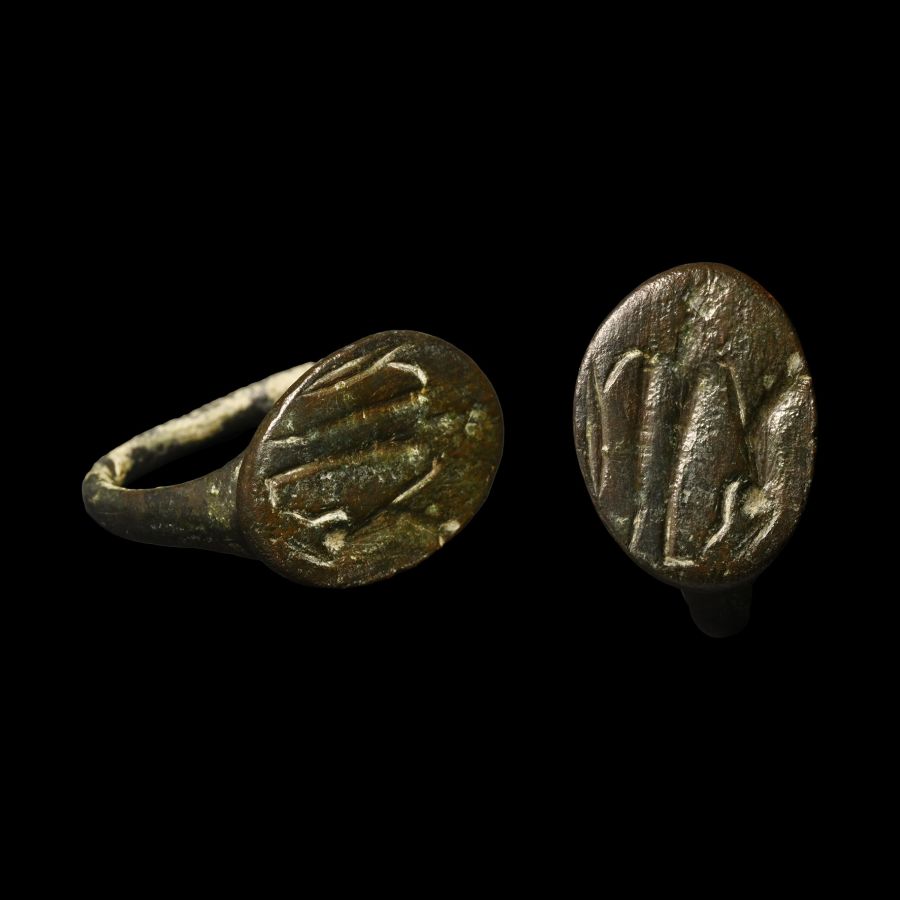
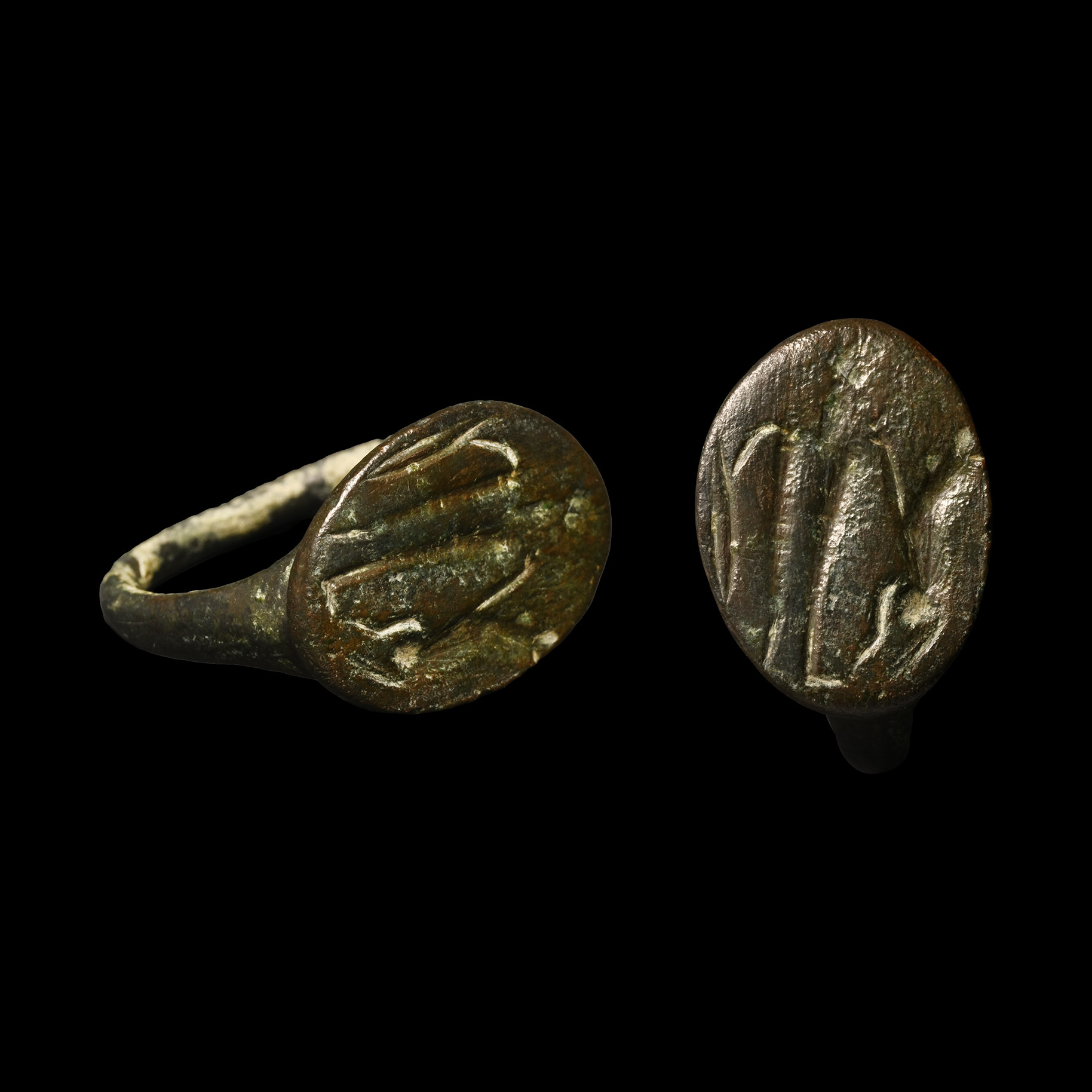
Hellenistic Bronze Ring with Lion Attacking a Warrior
CIRCA 3RD-1ST CENTURY B.C.
1 in. (9.17 grams, 24.52 mm overall, 19.78 mm internal diameter (approximate size British Q 1/2, USA 8 1/4, Europe 18.12, Japan 17)).
With narrow flat-bottomed hoop, ellipsoid bezel with incuse combat scene of a standing human figure with a shield seizing a rearing lion. [No Reserve]
ProvenanceEx old English collection.
London art market, pre 2000.
Property of a London, UK, gentleman.
Cf. Chadour, A.B., Rings. The Alice and Louis Koch Collection, volume I, Leeds, 1994, item 71.
CONDITIONTimeLine Auctions follows a vetting process to ensure the authenticity and legality of all items, reinforcing our commitment to integrity and responsible trading. Each antiquity, antique, and coin lot undergoes thorough examination by a vetting committee of at least ten external specialists, professional trade association members, scientists, and archaeologists: Our Vetting Process
AUCTIONS:
TimeLine is a leading auction house specialising in antiquities, ancient art, collectables, natural history, coins, medals, and books. Our auctions offer museums, collectors, historians, and enthusiasts the opportunity to acquire unique and historically significant pieces.
-
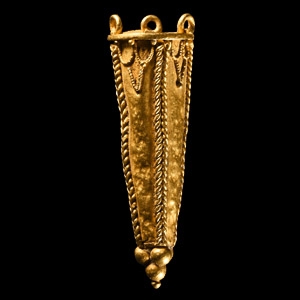
Greek Gold Vessel-Shaped Pendant
Circa 4th-3rd century B.C.Sold for (Inc. bp): £312
Conical sheet-gold dangle with applied rim and three suspension loops, filigree detailing beneath the rim, four vertical braided filigree bands to the sidewall, granule cluster finial. 2.25 grams, 26 mm
UK private collection formed before 2000. Ex North London, UK, gallery. -
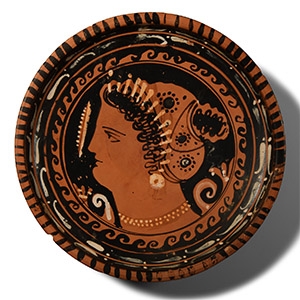
Greek Red Figure Dish with Lady of Fashion
South Italian, circa 380-350 B.C.Sold for (Inc. bp): £611
With pedestal foot, decorated with radiating strokes to the rim, band of leaf ornament surrounding the central profile of a lady of fashion facing left, her hair dressed in a ribboned sakkos with stephane; earrings and necklace in white and ochre. 187 grams, 16.5 cm wide
Acquired by the vendor's father in the 1950s or before; thence by descent 2003. -
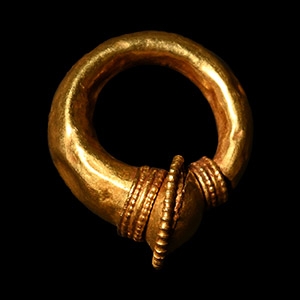
Etruscan Gold Trumpet-Shaped Earring
Circa 350 B.C.Sold for (Inc. bp): £143
Hollow-formed sheet-gold earring with applied trumpet-shaped finial, filigree collars and beaded wire fillet to the rim. 1.34 grams, 20 mm
Ex Parisian dealers including Jean-Phillipe Mariaud de Serres; subsequently dispersed with other pieces at auction. French private collection of a French lady, acquired in the 1980s. Accompanied by a copy of an illustrated three page collector's cataloguing document.
