
Loading, please wait...
LOT 0520
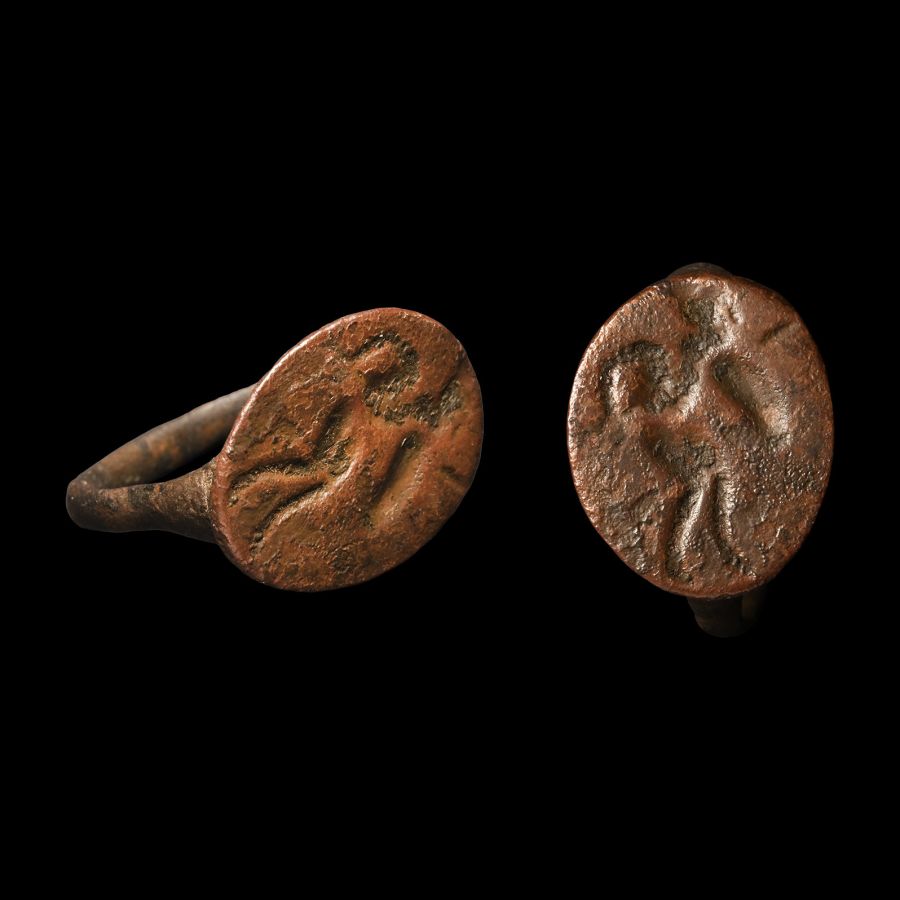
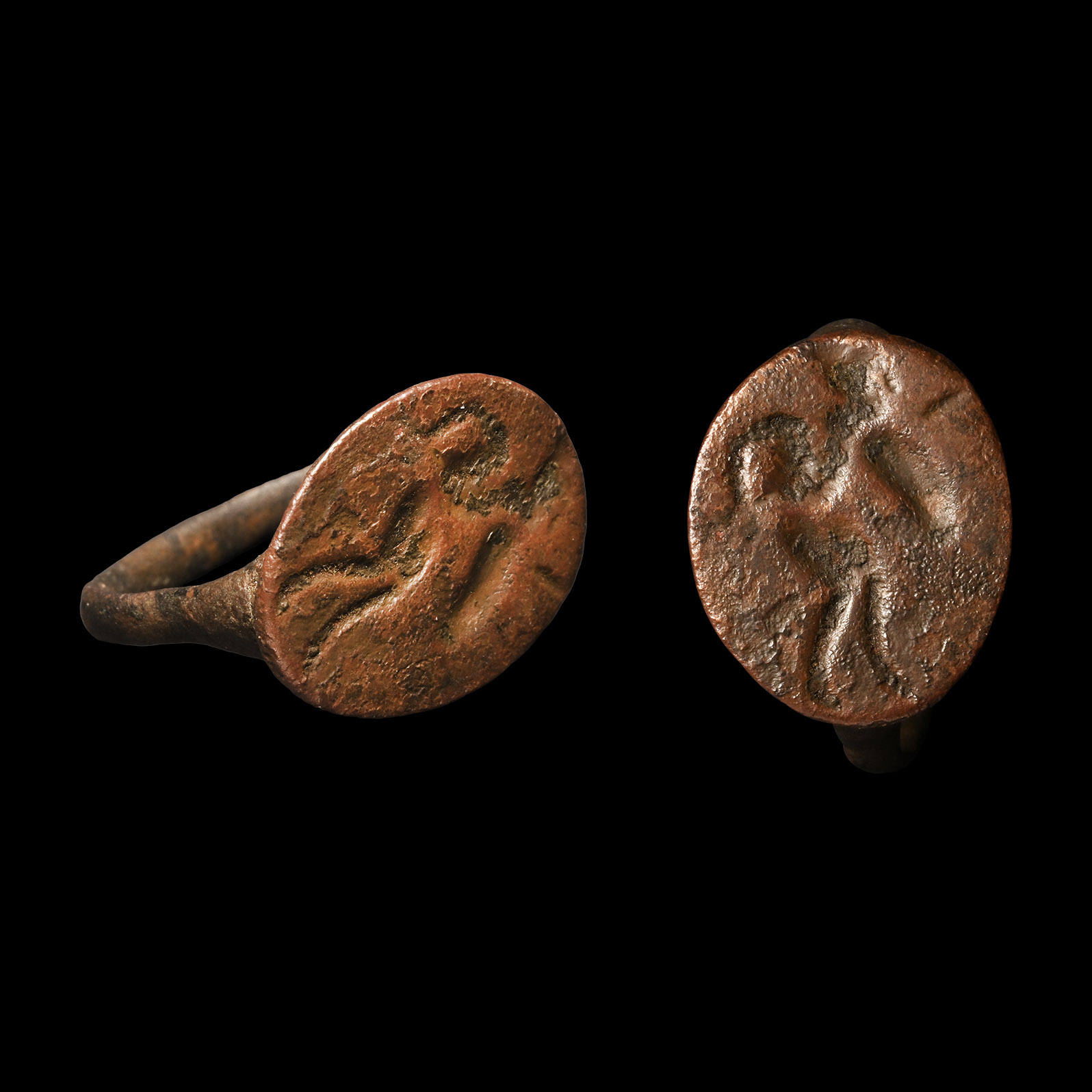
Hellenistic Bronze Ring with Hoplite
CIRCA 2ND-1ST CENTURY B.C.
7/8 in. (6.93 grams, 22.90 mm overall, 20.17 mm internal diameter (approximate size British Q, USA 8, Europe 17.46, Japan 16)).
Ellipsoid bezel with low-relief image of a warrior with pilos helmet, shield and xiphos short-sword. [No Reserve]
ProvenanceEx old English collection.
London art market, pre 2000.
Property of a London, UK, gentleman.
TimeLine Auctions follows a vetting process to ensure the authenticity and legality of all items, reinforcing our commitment to integrity and responsible trading. Each antiquity, antique, and coin lot undergoes thorough examination by a vetting committee of at least ten external specialists, professional trade association members, scientists, and archaeologists: Our Vetting Process
AUCTIONS:
TimeLine is a leading auction house specialising in antiquities, ancient art, collectables, natural history, coins, medals, and books. Our auctions offer museums, collectors, historians, and enthusiasts the opportunity to acquire unique and historically significant pieces.
-
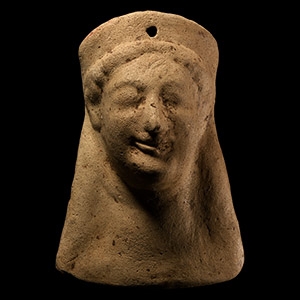
Greek Terracotta Protome Mask
Late 6th-early 5th century B.C.Sold for (Inc. bp): £156
Modelled as a female head with rounded oval face, slightly bulging eyes and pronounced chin, indistinct smiling mouth with thin lips, outline of ears; low straight polos with fastening hole. 142 grams, 13 cm
Acquired 1970s-1996. Property of a North American collector. London collection, 2016.
The figure belongs to a common type known from mainland Greece and the islands. The head clearly shows the so-called 'Archaic smile' visible on the dedicatory protomes of the same typology. They were terracotta votive offerings attached with a nail to the shrine of a goddess for ex-voto or to receive the grace of the represented goddess (Demeter?). -
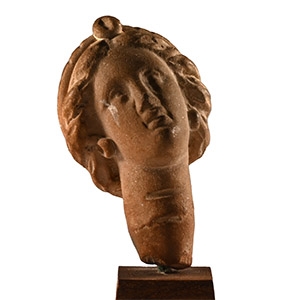
Greek Terracotta Head of a Goddess
4th-3rd century B.C.Sold for (Inc. bp): £390
With a delicately modelled face and full lips, hooped earrings visible from beneath her hair; the hair with central parting and pulled to a chignon at the nape of the neck; wearing a diadem with central embellishment; mounted on a custom-made display stand. 41.3 grams total, 75 mm high including stand
Ex French Sorbonne archaeology professor (deceased); 1960s -2000s.
These figurines were most probably manufactured in Hellenistic cities by craftsmen who used either light yellow or dark brown clay. After the firing, the surface of the clay became reddish, while the core became grey-brown. The majority of the figurines were made from untreated clay with many impurities, such as coarse grain. Due to the quality of the clay the surface of the figurines was often rugged, despite the retouch, but were painted with vivid colours. -
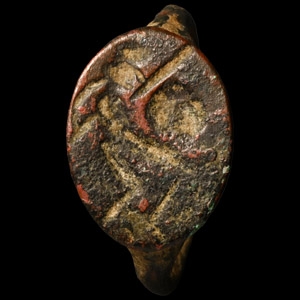
Hellenistic Bronze Ring with Warrior
Circa 2nd-1st century B.C.Sold for (Inc. bp): £91
With a round-section hoop and oval-shaped bezel, intaglio image of an advancing warrior holding a shield and a sword. 9.02 grams, 26.15 mm overall, 20.91 mm internal diameter (approximate size British T 1/2, USA 9 3/4, Europe 21.89, Japan 21)
Ex old English collection. London art market, pre 2000. Property of a London, UK, gentleman.
