
Loading, please wait...
LOT 0542
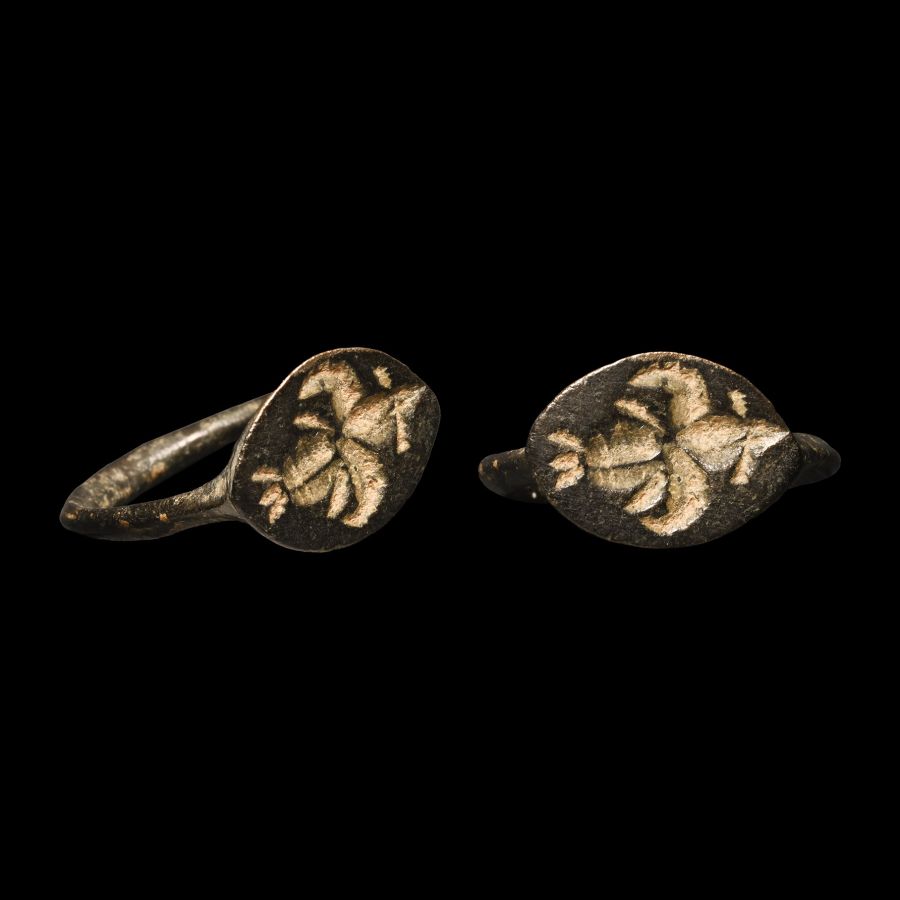
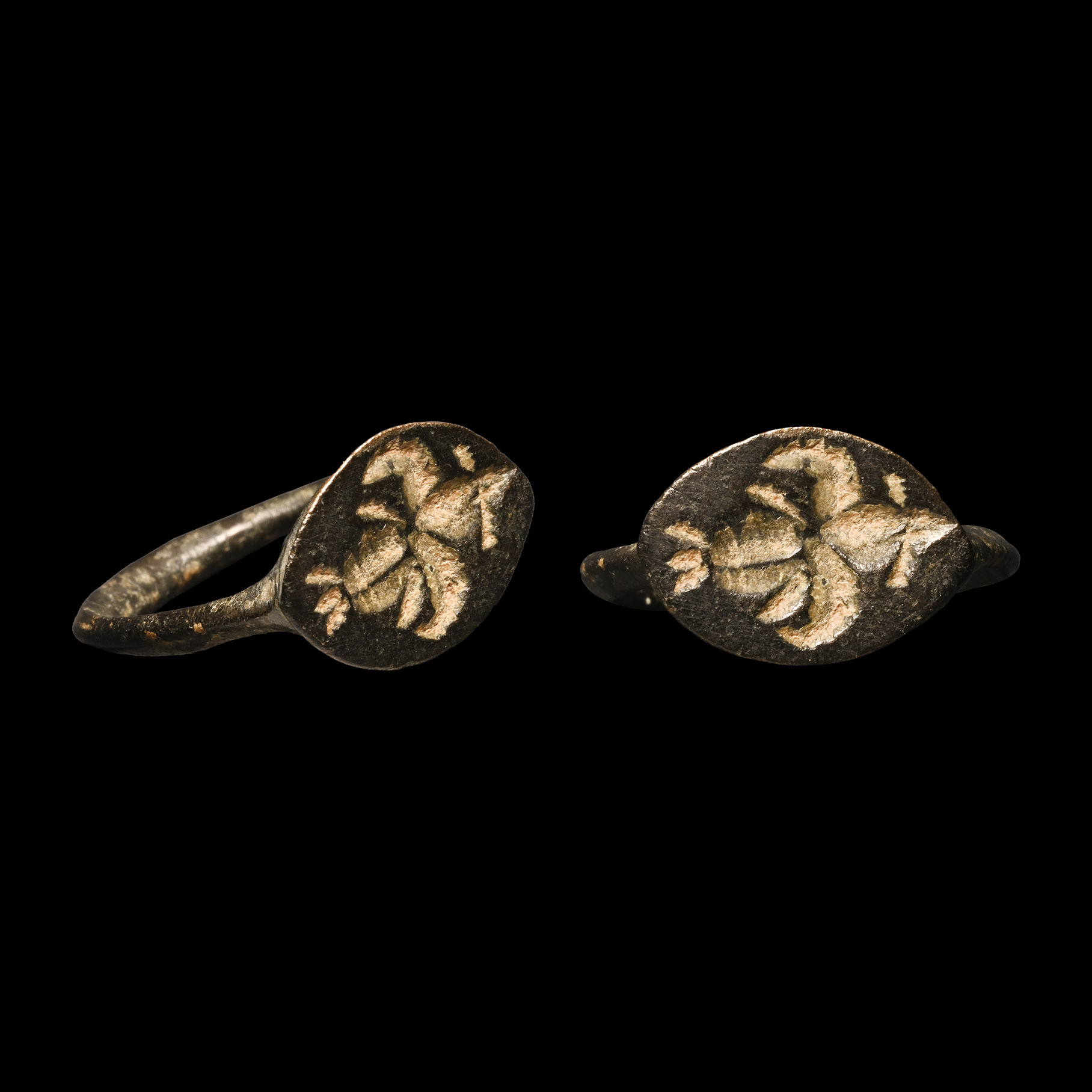
Hellenistic Bronze Ring with Flying Bird
CIRCA 4TH-2ND CENTURY B.C.
1 in. (4.71 grams, 24.38 mm overall, 18.80 mm internal diameter (approximate size British R 1/2, USA 8 3/4, Europe 19.38, Japan 18)).
With carinated hoop, scaphoid bezel, intaglio bird in flight. [No Reserve]
ProvenanceEx old English collection.
London art market, pre 2000.
Property of a London, UK, gentleman.
Cf. Chadour, A.B., Rings. The Alice and Louis Koch Collection, volume I, Leeds, 1994, item 71, for type.
CONDITIONTimeLine Auctions follows a vetting process to ensure the authenticity and legality of all items, reinforcing our commitment to integrity and responsible trading. Each antiquity, antique, and coin lot undergoes thorough examination by a vetting committee of at least ten external specialists, professional trade association members, scientists, and archaeologists: Our Vetting Process
AUCTIONS:
TimeLine is a leading auction house specialising in antiquities, ancient art, collectables, natural history, coins, medals, and books. Our auctions offer museums, collectors, historians, and enthusiasts the opportunity to acquire unique and historically significant pieces.
-
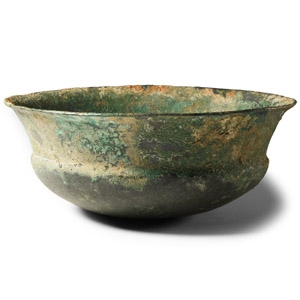
Greek Bronze Tiered Cup
Circa 4th-3rd century B.C.Estimate: £150 - 200 (+bp*)
Opening Bid: £75
Comprising a shallow carinated body with flared rim. 171 grams, 14.2 cm wide
Acquired on the UK art market in the 1980s. From an East Anglian private collection. -

Gold Necklace with Agate Pendant
1st century B.C.-2nd century A.D.Estimate: £15,000 - 20,000 (+bp*)
Opening Bid: £7,500
A Graeco-Roman or Phoenician chain of loop-in-loop links and thick suspension ring, gold dome with bands of applied granules capping an egg-shaped banded agate drop. 26.19 grams, 48 cm long
Acquired in the late 1980s-early 1990s. Important North West London collection. Accompanied by an academic report by Dr Raffaele D’Amato. This lot has been checked against the Interpol Database of stolen works of art and is accompanied by search certificate no.11935-210477.
Agate was appreciated in the Greek and Roman world for its magical virtues. A recently found agate gemstone from Imperial-era Anapa, which differs from the other similar agate stones in its spherical shape and large size, was inscribed with a text referring to traditional Greek expulsion rituals against evil and diseases, ending with a list of human head parts similar to the one found in the Hippocratic medical handbook. The gemstone was probably worn not only as an amulet, but also as a miniature handbook with instructions for making amulets. According to Pliny the Elder (NH, XXXVII, 47) a certain type of agate was protected against spiders and scorpions. -
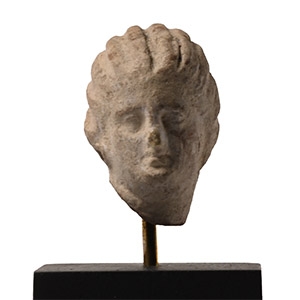
Greek Tanagra Terracotta Head of Aphrodite
Circa 4th-2nd century B.C.Sold for (Inc. bp): £195
With hair divided in vertical arrangements, bound on the back by a fillet, delicate rendering of mouth, nose and eyes; mounted on a custom-made display stand. 38 grams total, 64 mm including stand
Ex P. A., Hertfordshire, UK, specialist collection of Greek art, 1980-1990s.
It seems that half-draped women in sculpture, whatever the pose, are quite rare before the late Hellenistic period; however, they appear as early as the 4th century B.C., on a small scale and in terracotta. North Macedonian terracotta figurines of Aphrodite or mortal girls replicate sculptural trends of the 2nd century B.C. In particular, the the classical sculptural tradition was revived during the latter half of the second century B.C., as evidenced by the figurines.
