
Loading, please wait...
LOT 0521
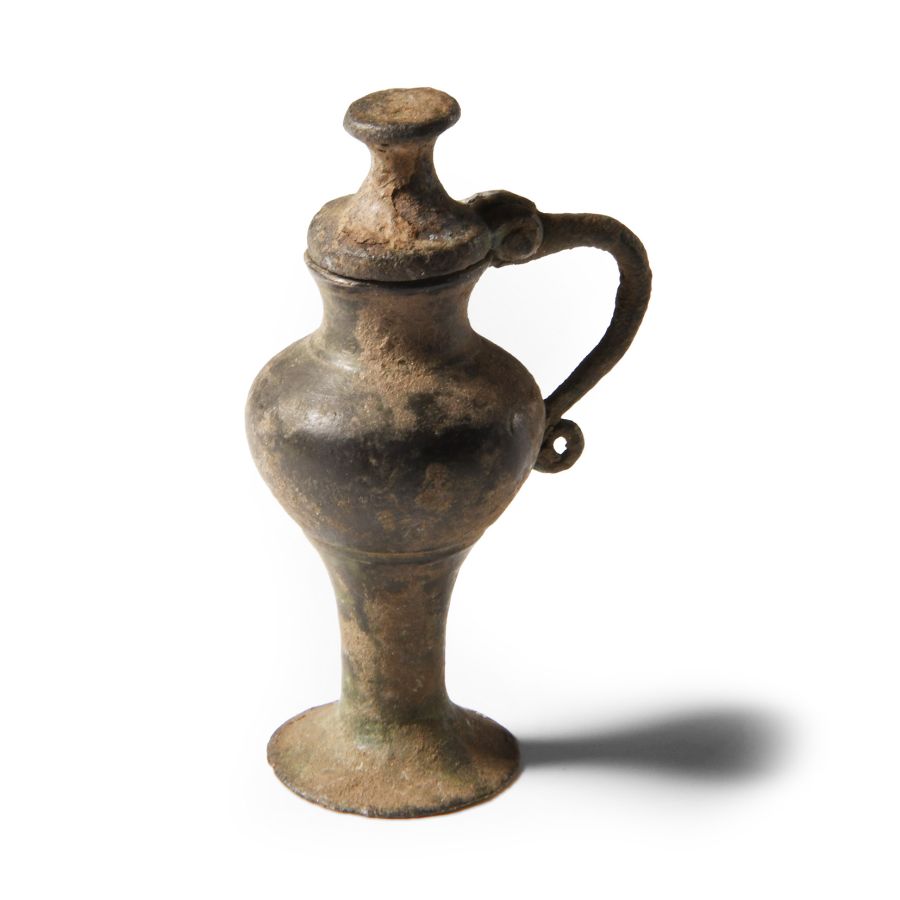
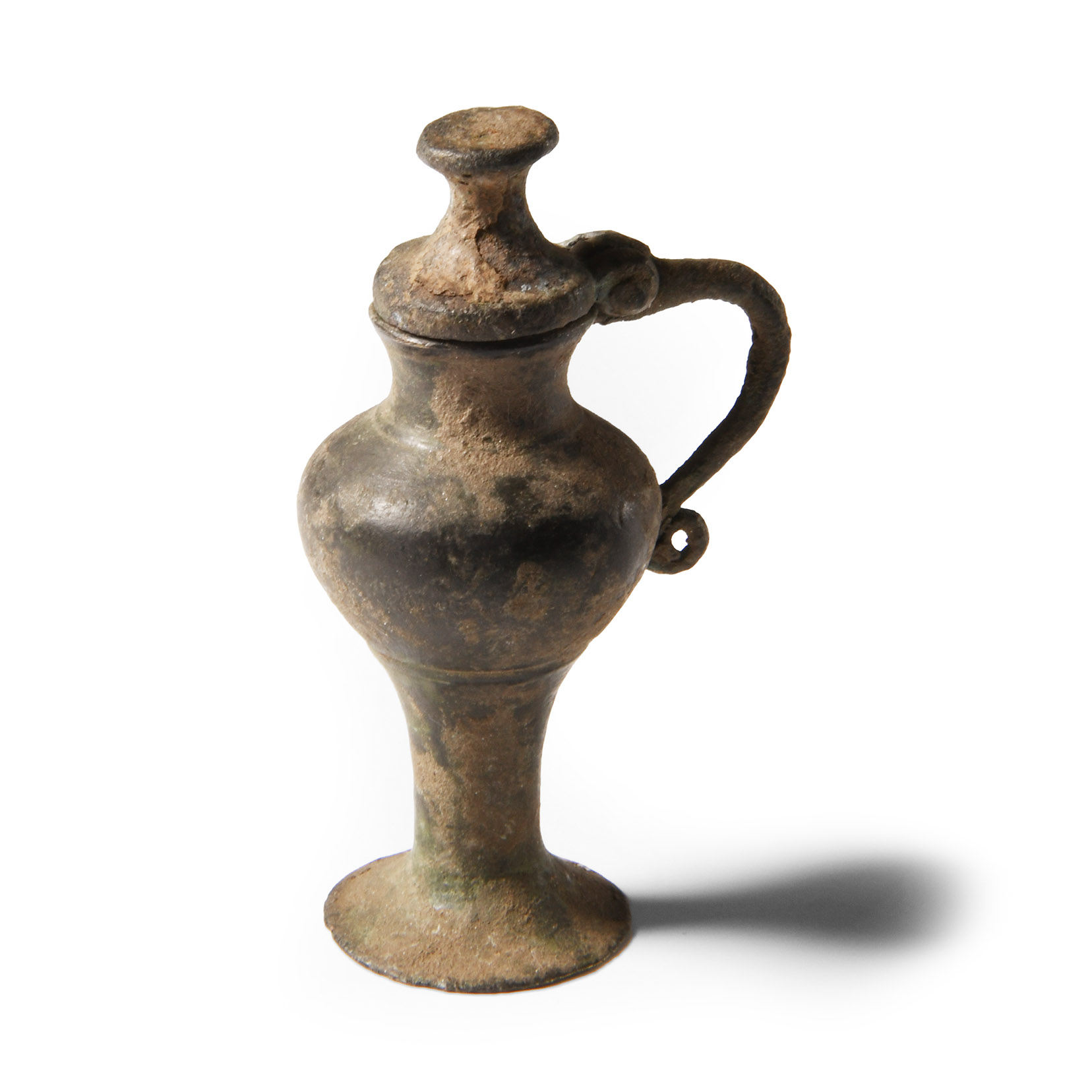
Hellenistic Bronze Lidded Cosmetic Vessel
CIRCA 1ST CENTURY B.C.
2 1/2 in. (54.4 grams, 66 mm).
Elegantly proportioned miniature ewer with trumpet-shaped base, swept loop handle with recurved finial, hinged lid.
ProvenanceAcquired on the German art market before 2000.
From an EU collection before 2020.
TimeLine Auctions follows a vetting process to ensure the authenticity and legality of all items, reinforcing our commitment to integrity and responsible trading. Each antiquity, antique, and coin lot undergoes thorough examination by a vetting committee of at least ten external specialists, professional trade association members, scientists, and archaeologists: Our Vetting Process
AUCTIONS:
TimeLine is a leading auction house specialising in antiquities, ancient art, collectables, natural history, coins, medals, and books. Our auctions offer museums, collectors, historians, and enthusiasts the opportunity to acquire unique and historically significant pieces.
-
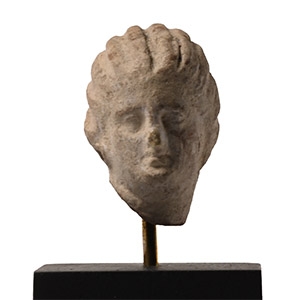
Greek Tanagra Terracotta Head of Aphrodite
Circa 4th-2nd century B.C.Sold for (Inc. bp): £195
With hair divided in vertical arrangements, bound on the back by a fillet, delicate rendering of mouth, nose and eyes; mounted on a custom-made display stand. 38 grams total, 64 mm including stand
Ex P. A., Hertfordshire, UK, specialist collection of Greek art, 1980-1990s.
It seems that half-draped women in sculpture, whatever the pose, are quite rare before the late Hellenistic period; however, they appear as early as the 4th century B.C., on a small scale and in terracotta. North Macedonian terracotta figurines of Aphrodite or mortal girls replicate sculptural trends of the 2nd century B.C. In particular, the the classical sculptural tradition was revived during the latter half of the second century B.C., as evidenced by the figurines. -
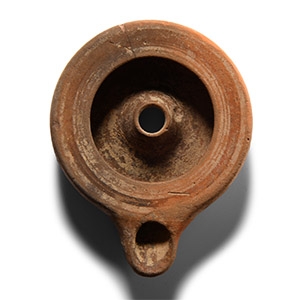
Greek Corinthian Terracotta Oil Lamp
Circa 5th-3rd century B.C.Sold for (Inc. bp): £195
With short nozzle, open reservoir with central cone open beneath; orange and brown pigment. 113 grams, 10.7 cm wide
Acquired before 1990s/early 2000s. From the family collection of Jack Lyttle (1944-2023), Kilmacolm, Scotland; thence by descent to his granddaughter. Property of an East Sussex, UK, gentleman. -
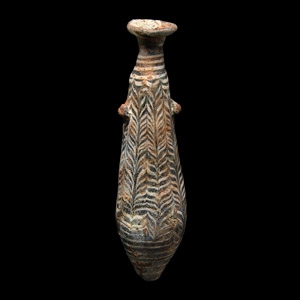
Greek Core-Formed Glass Alabastron
3rd-1st century B.C.Estimate: £1,500 - 2,000 (+bp*)
Opening Bid: £750
With fusiform body, slender neck and broad flange rim, applied ledge handles, decorated with white marvered feathering and spiralling trails. 79 grams, 15 cm high
Fine condition.
Paris collection, 1990s. From an important Paris gallery, France. Ex private Parisian collection.
A perfume bottle.
