
Loading, please wait...
LOT 0066
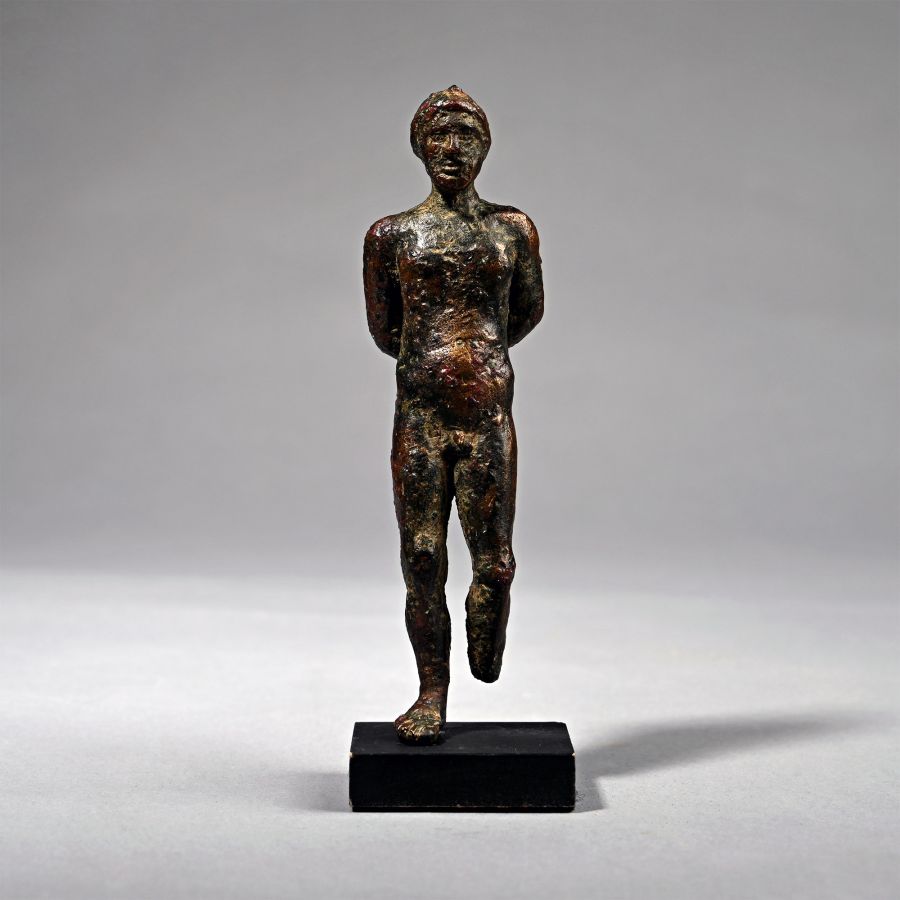
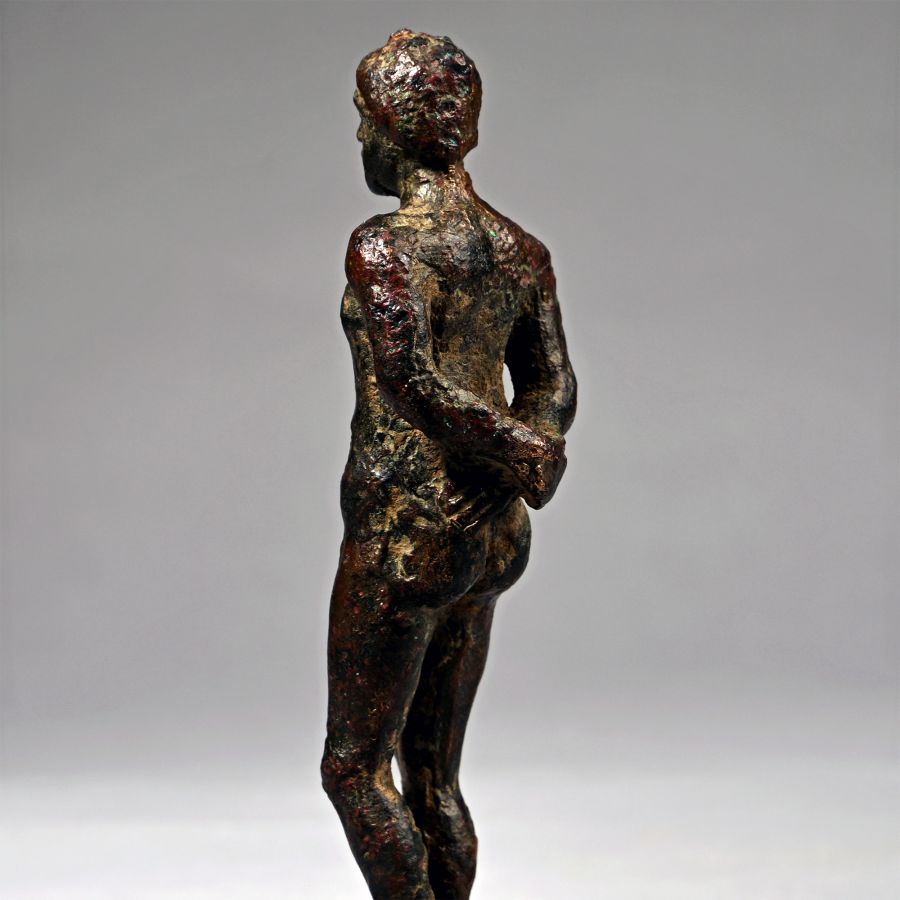
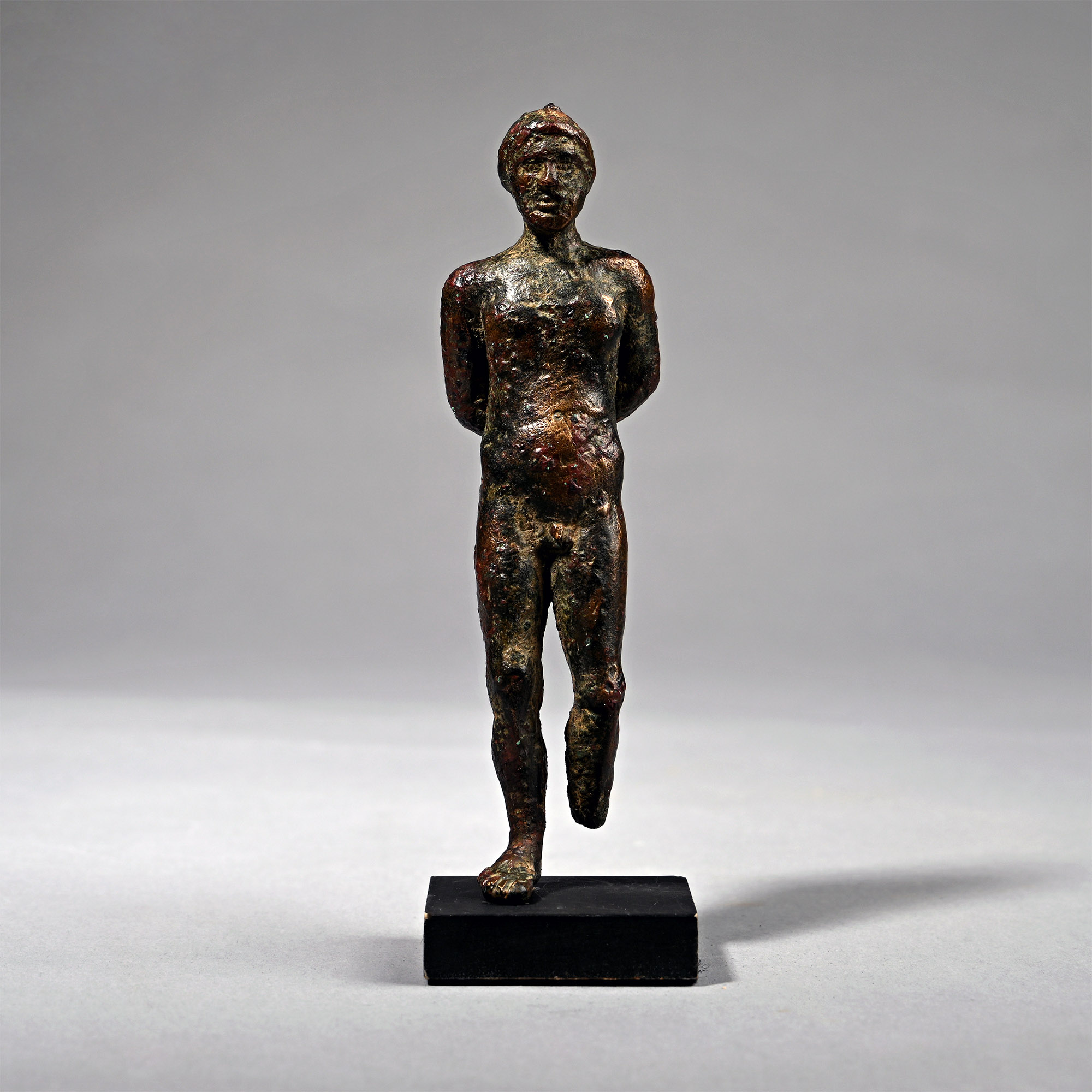
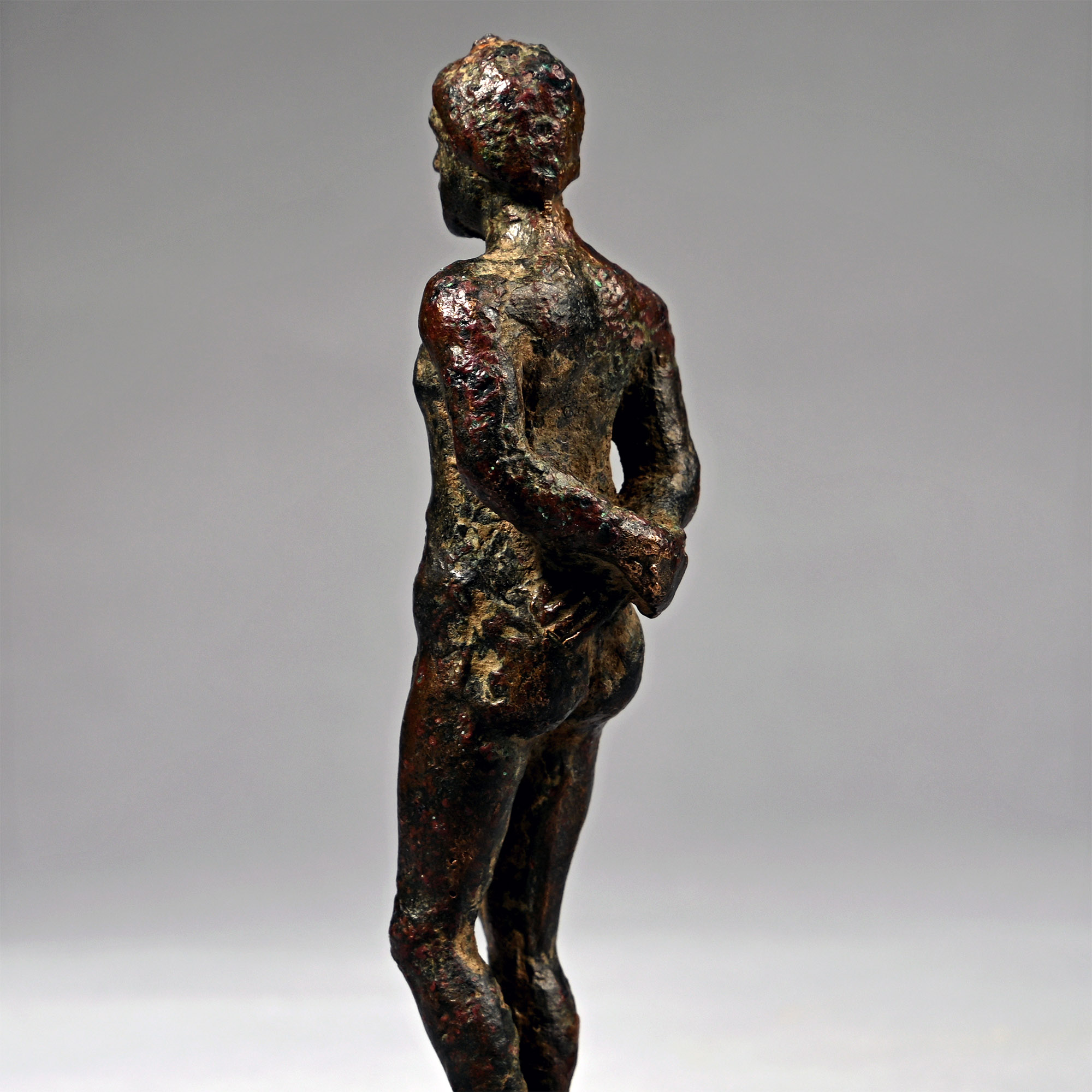
Hellenistic Bronze Figure of a Bound Captive
2ND CENTURY B.C.
6 5/8 in. (491 grams, 17 cm including stand).
Modelled in the round nude male standing with hands bound behind his back; with short cropped hair and slender figure; left foot absent; mounted on a custom-made stand.
ProvenanceEx S.K. collection.
Acquired on the German art market, July 1995.
Accompanied by an academic report by Dr Raffaele D'Amato.
This lot has been checked against the Interpol Database of stolen works of art and is accompanied by a search certificate number no.12518-232076.
This lot has been cleared against the Art Loss Register database, and is accompanied by an illustrated lot declaration signed by the Head of the Antiquities Department, Dr Raffaele D'Amato.
Cf. Bienkoski, P., Les Celtes dans les arts mineurs Gréco-Romains, avec des recherches iconographiques sur quelques autres peoples barbares, Cracovie, 1928, figs.11, 87.
CONDITIONTimeLine Auctions follows a vetting process to ensure the authenticity and legality of all items, reinforcing our commitment to integrity and responsible trading. Each antiquity, antique, and coin lot undergoes thorough examination by a vetting committee of at least ten external specialists, professional trade association members, scientists, and archaeologists: Our Vetting Process
AUCTIONS:
TimeLine is a leading auction house specialising in antiquities, ancient art, collectables, natural history, coins, medals, and books. Our auctions offer museums, collectors, historians, and enthusiasts the opportunity to acquire unique and historically significant pieces.
LOT 0066
Hellenistic Bronze Figure of a Bound Captive
Estimate £3,500 - 4,500€4,060 - 5,220 (for guidance only)$4,730 - 6,080 (for guidance only)
-
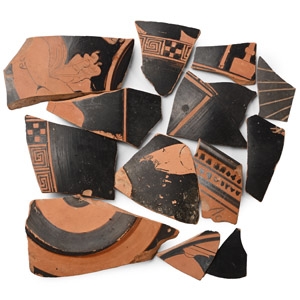
Greek Red-Figure Ware Pottery Collection
5th-4th century B.C.Sold for (Inc. bp): £650
Comprising fragments of vessels, most with decorative motifs, including one with a boar's head and another with lower part of the body of Ephebus. 64 grams total, 24-71 mm
From a deceased estate, UK. Acquired on the UK art market. This lot is accompanied by an illustrated lot declaration signed by the Head of the Antiquities Department, Dr Raffaele D'Amato.
Although Athens remains a prime source for red figure, the export trade, notable to Italy, shows a very wide distribution of this pottery far beyond the Greek world. -
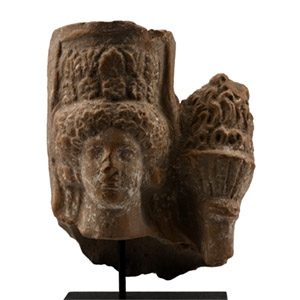
Greek Terracotta Head of a Goddess
5th-3rd century B.C.Sold for (Inc. bp): £624
Hollow-formed with moulded detail to the obverse, plain reverse; female head with earrings, bouffant hairstyle and modius, flanked by a torch with flared rim and flame; mounted on a custom-made stand. 334 grams total, 17.5 cm including stand
Acquired on the European art market in the early 2000s. with Galerie Rhéa, Zurich, Switzerland. This lot is accompanied by an illustrated lot declaration signed by the Head of the Antiquities Department, Dr Raffaele D'Amato. -
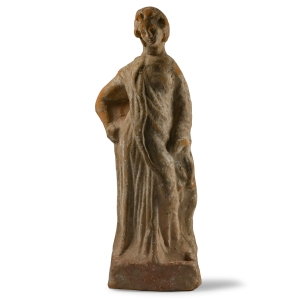
Hellenistic Terracotta Statuette of a Wreathed Young Woman
Late 4th-3rd century B.C.Sold for (Inc. bp): £286
Standing on a rectangular base, hair divided in regular stripes with voluminous locks, head slightly bowed, the bare arm resting on her right hip; the left leg is visible under the pleated undergarment chiton and slanted himation. 257 grams, 17.5 cm
Traces of white engobe and polychromy in the folds of the robe and on the base. The added chignon lost, otherwise intact.
Ex Belgian art market, 2020. This lot is accompanied by an illustrated lot declaration signed by the Head of the Antiquities Department, Dr Raffaele D’Amato. This lot is accompanied by an illustrated lot declaration signed by the Head of the Antiquities Department, Dr Raffaele D'Amato.
The statuette finds comparisons among examples that can be dated between the 4th century and the middle of the 3rd century B.C. It shows some traces of the original polychromy, characterised by strongly contrasting hues, keeping in with the local style.
