
Loading, please wait...

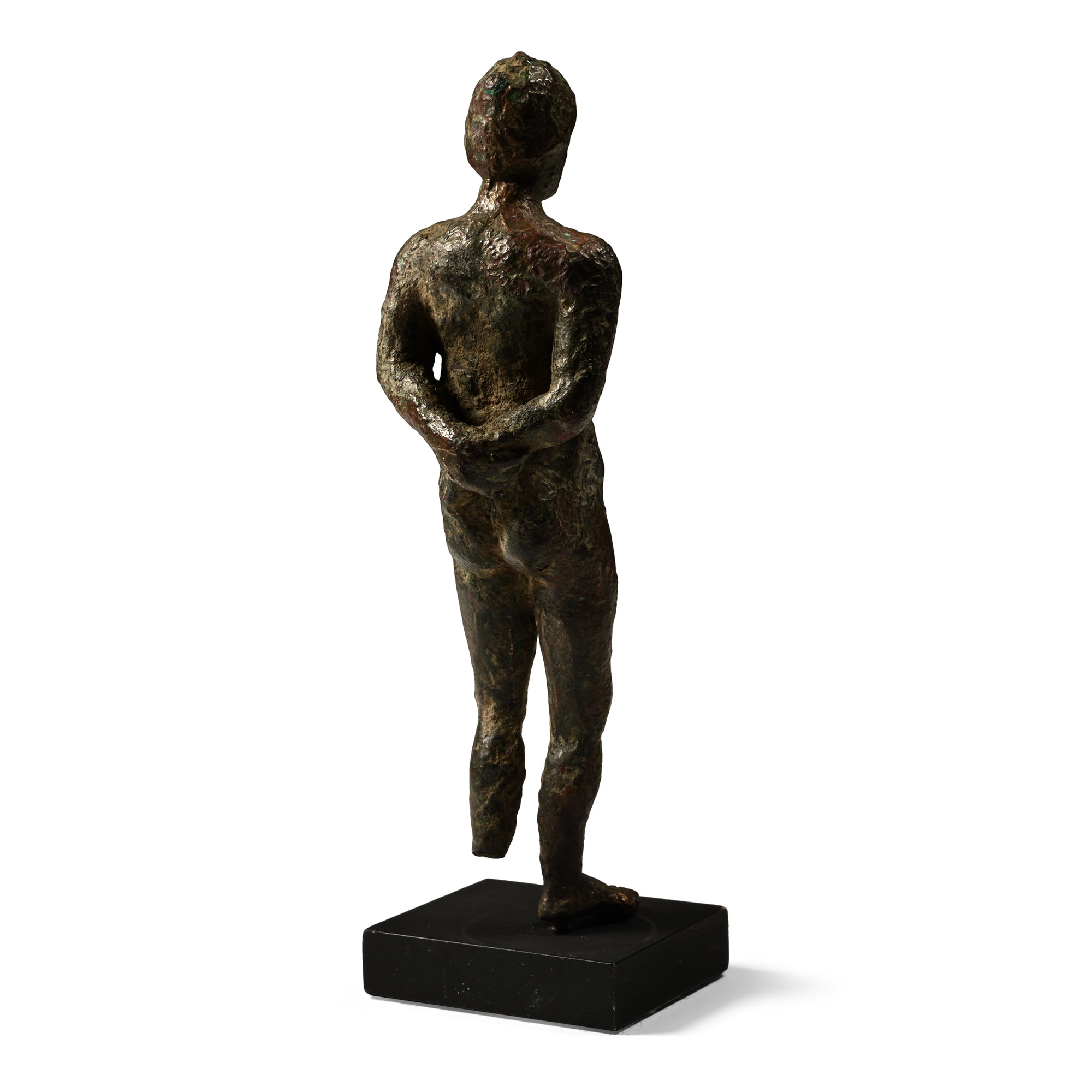
LOT 0061
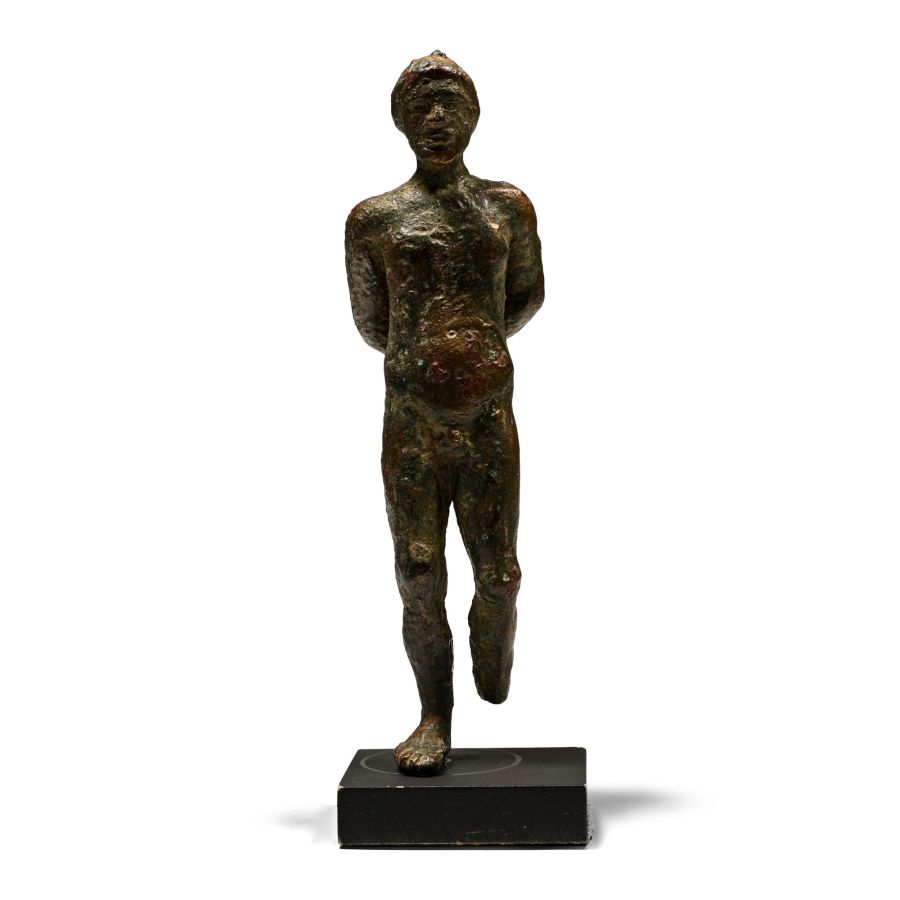
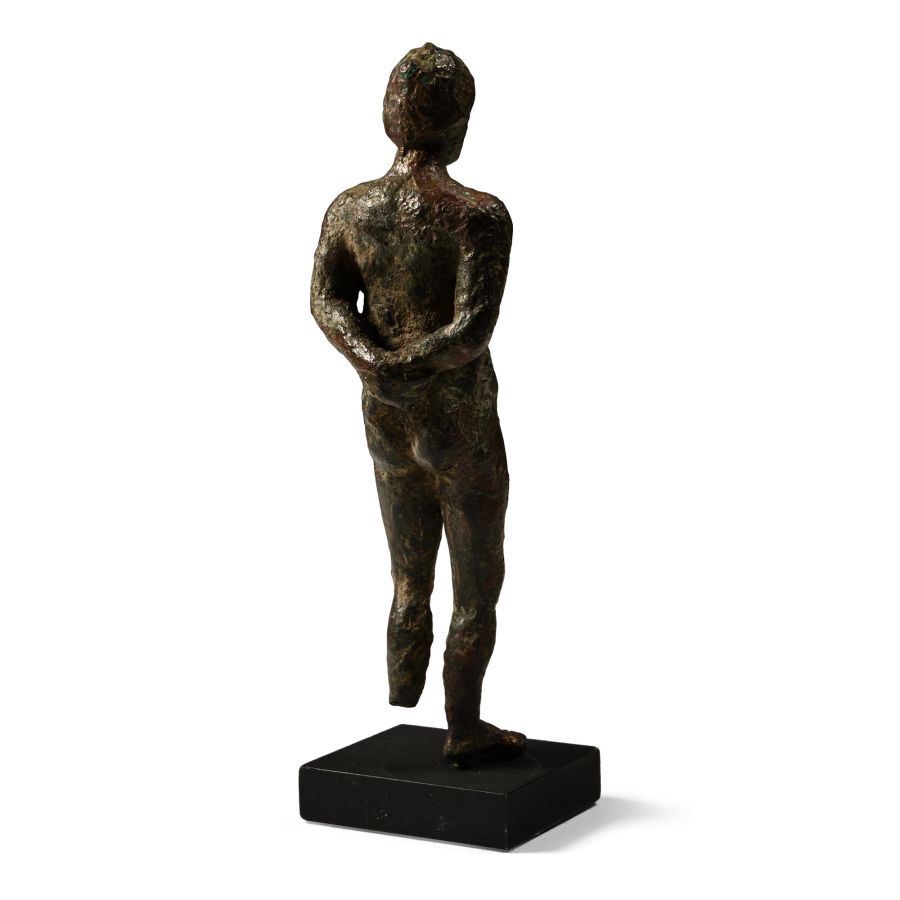
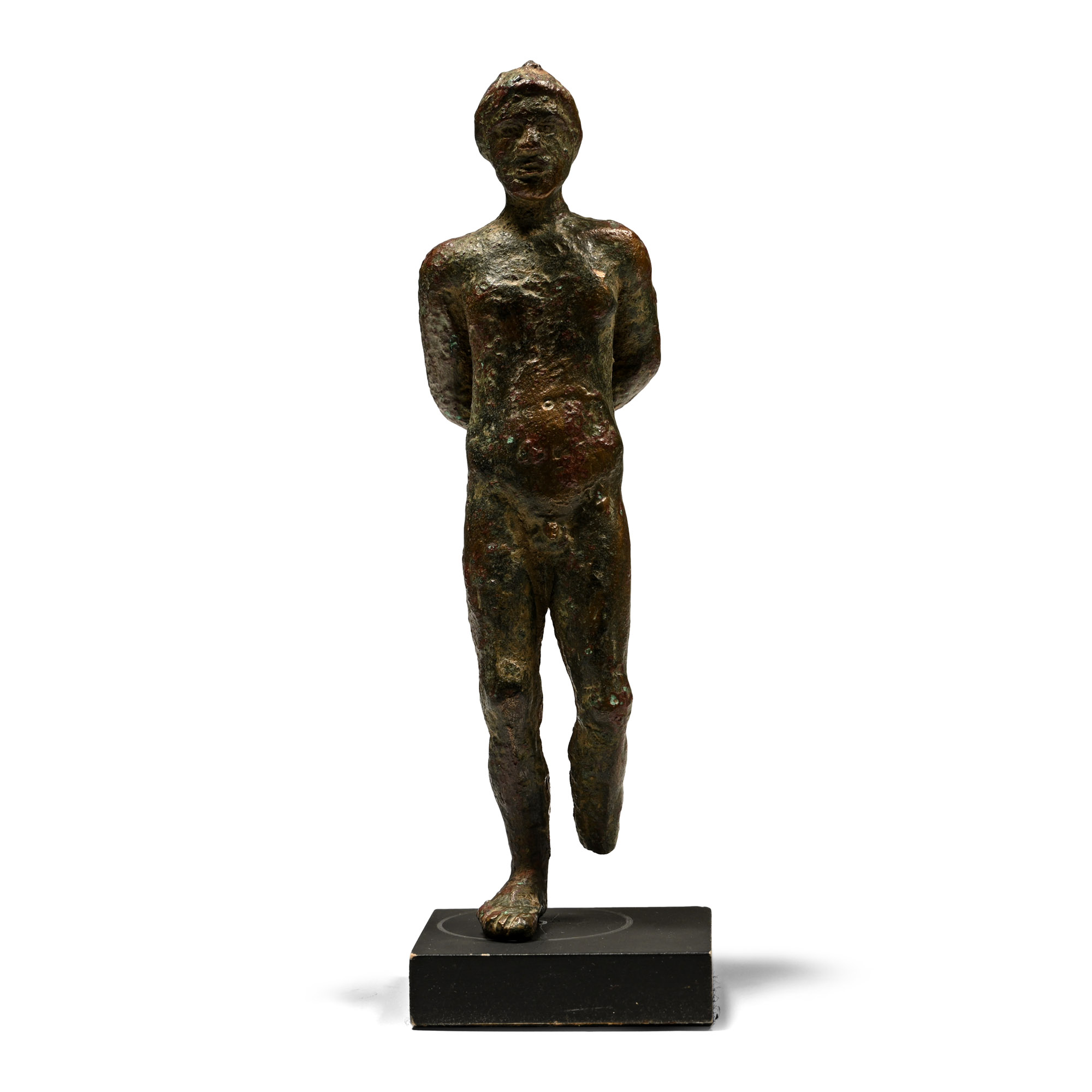
Hellenistic Bronze Figure of a Bound Captive
2ND CENTURY B.C.
6 5/8 in. (491 grams, 17 cm including stand).
Modelled in the round nude male standing with hands bound behind his back; with short cropped hair and slender figure; left foot absent; mounted on a custom-made stand.
ProvenanceEx S.K. collection.
Acquired on the German art market, July 1995.
Accompanied by an academic report by Dr Raffaele D'Amato.
This lot has been checked against the Interpol Database of stolen works of art and is accompanied by a search certificate number no.12518-232076.
This lot has been cleared against the Art Loss Register database, and is accompanied by an illustrated lot declaration signed by the Head of the Antiquities Department, Dr Raffaele D’Amato.
Cf. Bienkoski, P., Les Celtes dans les arts mineurs Gréco-Romains, avec des recherches iconographiques sur quelques autres peoples barbares, Cracovie, 1928, figs.11, 87.
CONDITIONTimeLine Auctions follows a vetting process to ensure the authenticity and legality of all items, reinforcing our commitment to integrity and responsible trading. Each antiquity, antique, and coin lot undergoes thorough examination by a vetting committee of at least ten external specialists, professional trade association members, scientists, and archaeologists: Our Vetting Process
AUCTIONS:
TimeLine is a leading auction house specialising in antiquities, ancient art, collectables, natural history, coins, medals, and books. Our auctions offer museums, collectors, historians, and enthusiasts the opportunity to acquire unique and historically significant pieces.
LOT 0061
Hellenistic Bronze Figure of a Bound Captive
Estimate £4,000 - 6,000€4,640 - 6,960 (for guidance only)$5,400 - 8,100 (for guidance only)
-
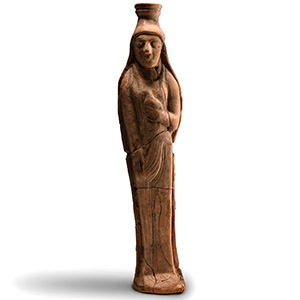
Archaic Greek Figural Terracotta Alabastron
6th century B.C.Estimate: £700 - 900 (‡+bp*)
Opening Bid: £350
The free-standing perfume vase modelled as a standing and draped female figure, the neck and mouth of the vessel possibly formed as a modius worn on her head, holding what is possibly a dove to her chest; moulded and painted detailing to her face and garments; heavily repaired. 269 grams, 22 cm high
Acquired in Europe before 2001. This lot is accompanied by an illustrated lot declaration signed by the Head of the Antiquities Department, Dr Raffaele D’Amato. -
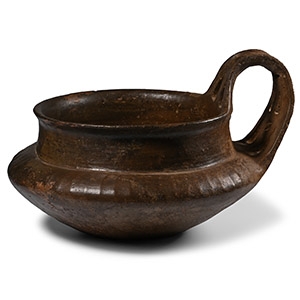
Large Villanovan Terracotta Impasto Kyathos
Early 7th century B.C.Sold for (Inc. bp): £715
With burnished deep brown surfaces, the body tapering to a flat foot, the shoulders decorated with vertical ribbing, short neck with flared mouth; wide openwork handle perforated with small triangles and rectangles, hatched bands along the edges of the handle and the perforations. 1.1 kg, 24 cm
Acquired from Mr Eugene Berman circa 1960. From the private collection of Mr Ulfert Wilke. In the collection of Dr Howard Sirak, Columbus, Ohio, USA; acquired from the above in 1969. Ancient Resource Auctions, California, USA, May 2020. Property of a South Australian private collector, with collection reference 20.02. Accompanied by a detailed collector's catalogue page including description and photograph. This lot is accompanied by an illustrated lot declaration signed by the Head of the Antiquities Department, Dr Raffaele D’Amato.
The de Puma catalogue cites this piece as no. 5.5 from the Sirak Collection (original sticker is on base; note De Puma’s appraisal does not provide a concordance with Wilke). The catalogue was for the exhibition at the University of Iowa Museum of Art from 17 March to 30 April 1971. Richard De Puma appraised Sirak’s collection of ancient pottery on 18 September 1979; Inv. 20.02 was noted as appraisal item 15 and valued at USD 650. Old collection sticker '188' on base; overlain is sticker from Sirak collection, 'LR 3V'. Sticker 147B refers to the lot number for the first time it was offered at auction by Ancient Resource Auctions in 2015. -
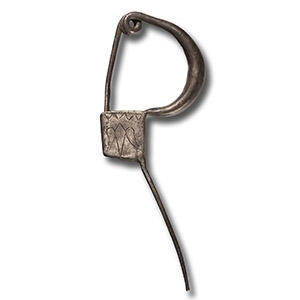
Greek Silver Fibula
5th-4th century B.C.Sold for (Inc. bp): £85
Comprising a thick round-section bow tapering to each end; the forward end developing to a two-coiled spring and pin, the rear to a rectangular catchplate with flanges to the upper and lower edges, a long spike finial; the catch with incised geometric ornament. 10.7 grams, 83 mm
with H.A.C., Basel, prior 1999. This lot is accompanied by an illustrated lot declaration signed by the Head of the Antiquities Department, Dr Raffaele D’Amato.
