
LOT 3813
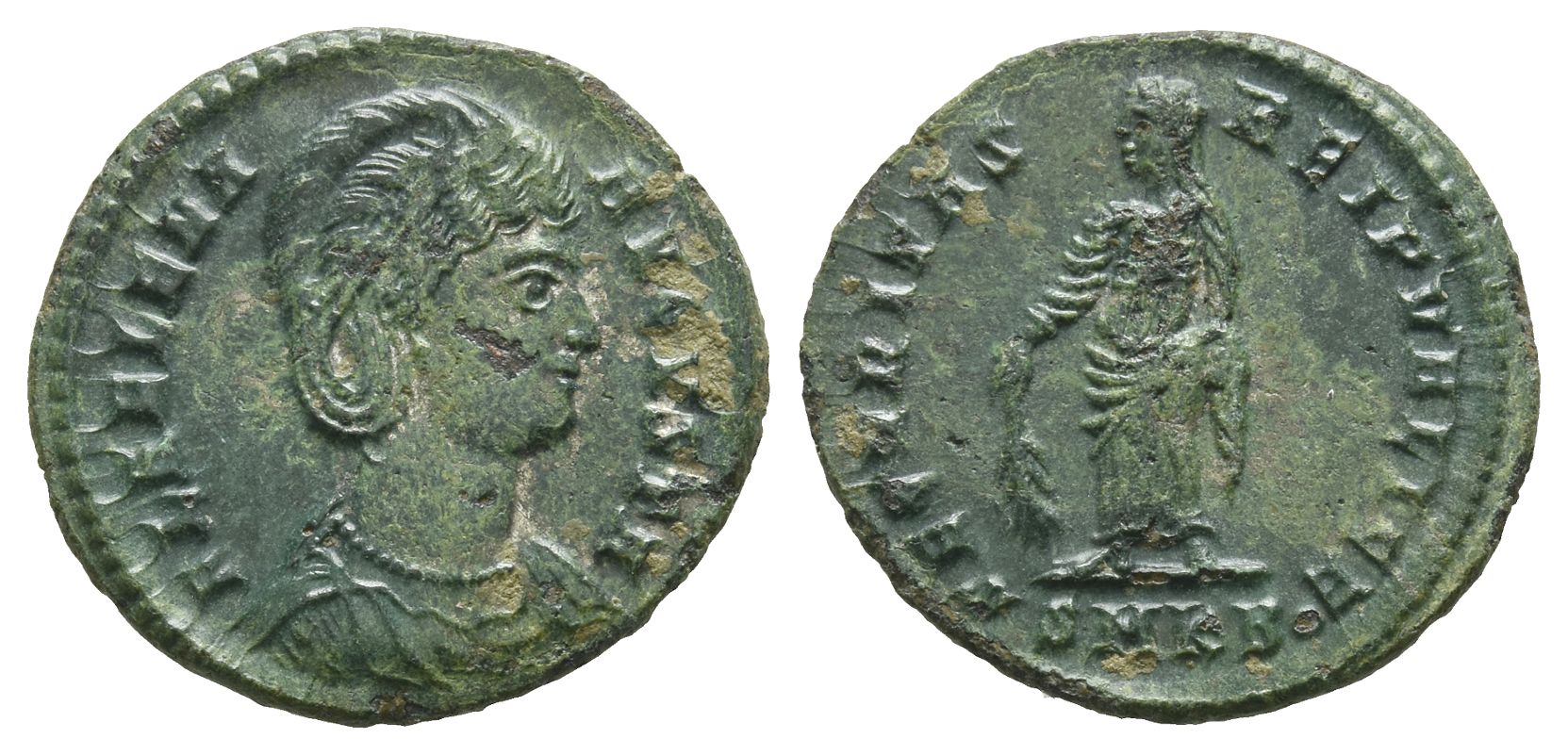
Helena, Augusta BI Nummus. AD 324-325. Cyzicus mint. 2nd officina.
FL HELENA AVGVSTA, diademed and mantled bust to right, wearing necklace / SECVRITAS REIPVBLICE, Securitas standing facing, head to left, lowering branch and raising robe with right hand; SMKB in exergue. RIC VII 28. Near Extremely Fine. Attractive olive-green patina.(2.60gr, 20mm, 12h.).
ProvenanceAcquired on the European coin market.
Property of a Kent, UK, gentleman.
TimeLine Auctions follows a vetting process to ensure the authenticity and legality of all items, reinforcing our commitment to integrity and responsible trading. Each antiquity, antique, and coin lot undergoes thorough examination by a vetting committee of at least ten external specialists, professional trade association members, scientists, and archaeologists: Our Vetting Process
AUCTIONS:
TimeLine is a leading auction house specialising in antiquities, ancient art, collectables, natural history, coins, medals, and books. Our auctions offer museums, collectors, historians, and enthusiasts the opportunity to acquire unique and historically significant pieces.
-
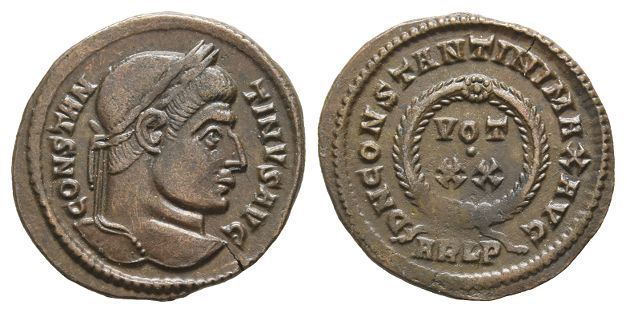
Constantine I BI Nummus. AD 322. Arelate mint. 1st officina.
Sold for (Inc. bp): £33
CONSTANTINVS AVG, laureate head to right / D N CONSTANTINI MAX AVG, VOT XX in two lines within laurel wreath; ARLP below. RIC VII 246. 2.86gr, 20mm, 7h.
Good Very Fine.
From an early 20th century collection. Acquired on the UK art market, early 2000s. Property of a London, UK, antiquarian. -
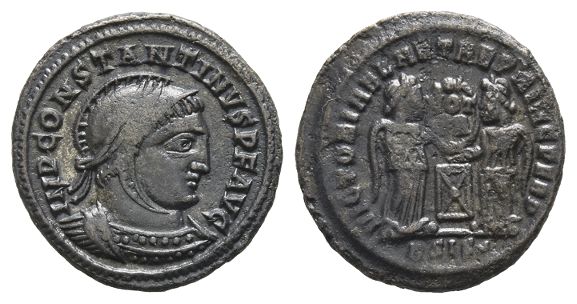
Constantine I BI Nummus. AD 318. Siscia mint. 2nd officina.
Sold for (Inc. bp): £26
IMP CONSTANTINVS AVG, helmeted, laureate and cuirassed bust to right / VICTORIAE LAETAE PRINC PERP, two Victories standing facing one another, together holding shield inscribed VOT PR on altar; BSIS(star) in exergue. RIC VII 47. 3.12gr, 19mm, 1h.
Near Very Fine.
From an early 20th century collection. Acquired on the UK art market, early 2000s. Property of a London, UK, antiquarian. -
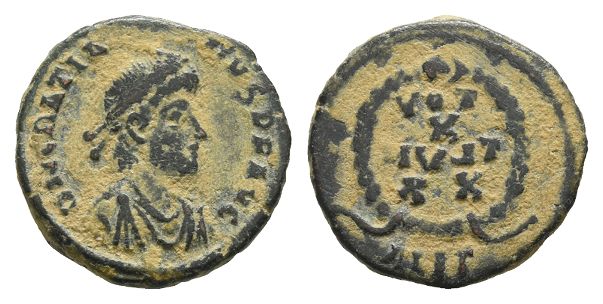
Gratian AE Nummus. AD 367-375. Alexandria mint.
Sold for (Inc. bp): £20
D N GRATIANVS P F AVG, pearl-diademed, draped and cuirassed bust to right / VOT X MVLT XX within wreath; ALEΓ(?) below. Cf. RIC IX 13a. 1.49gr, 14mm, 11h.
Near Very Fine.
From the collection of a gentleman, acquired on the London art market in the 1990s.
