
Loading, please wait...
_900x900.jpg "Heavy Roman Silvered Bronze Bowl")
_200x200.jpg "Heavy Roman Silvered Bronze Bowl")
.jpg "Heavy Roman Silvered Bronze Bowl")
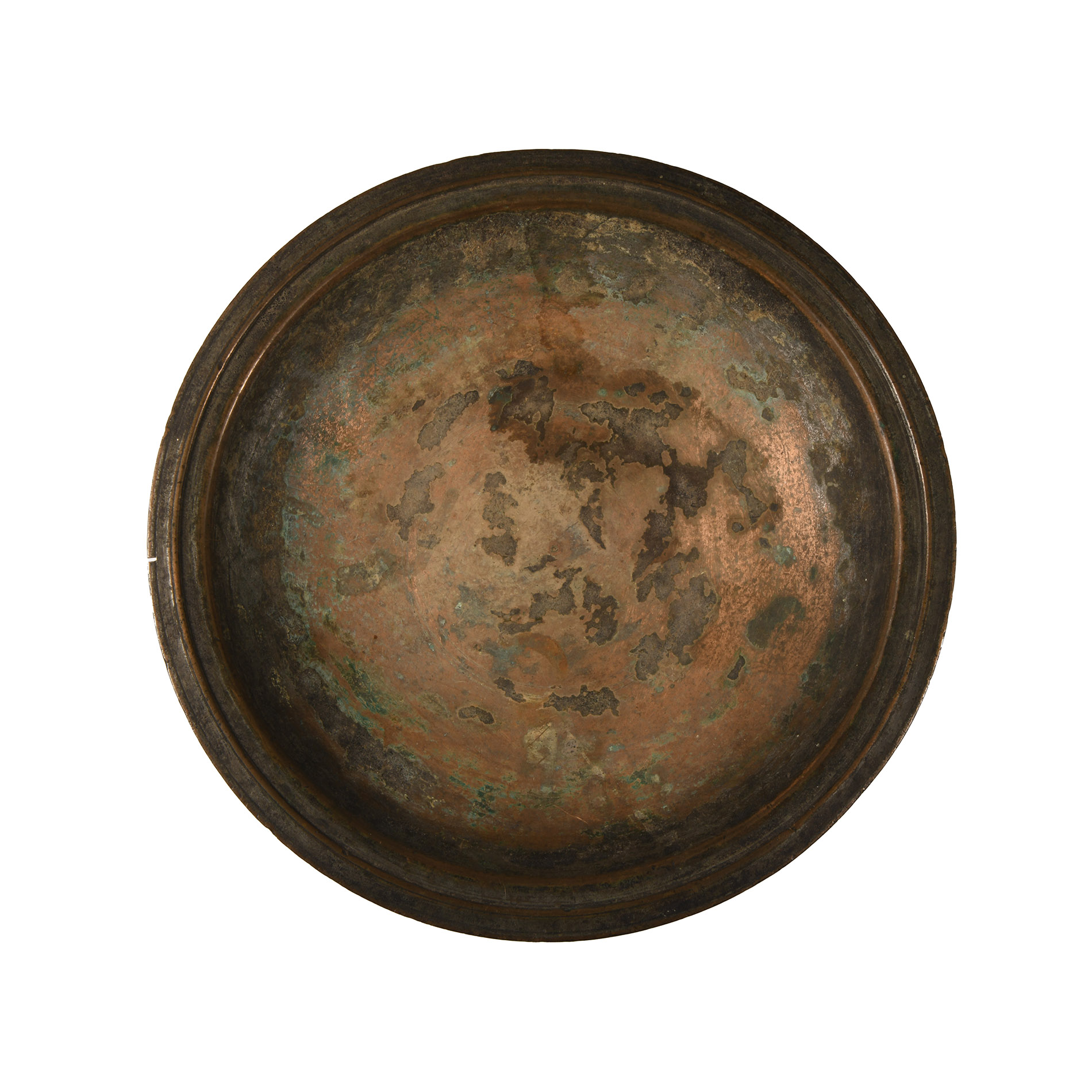
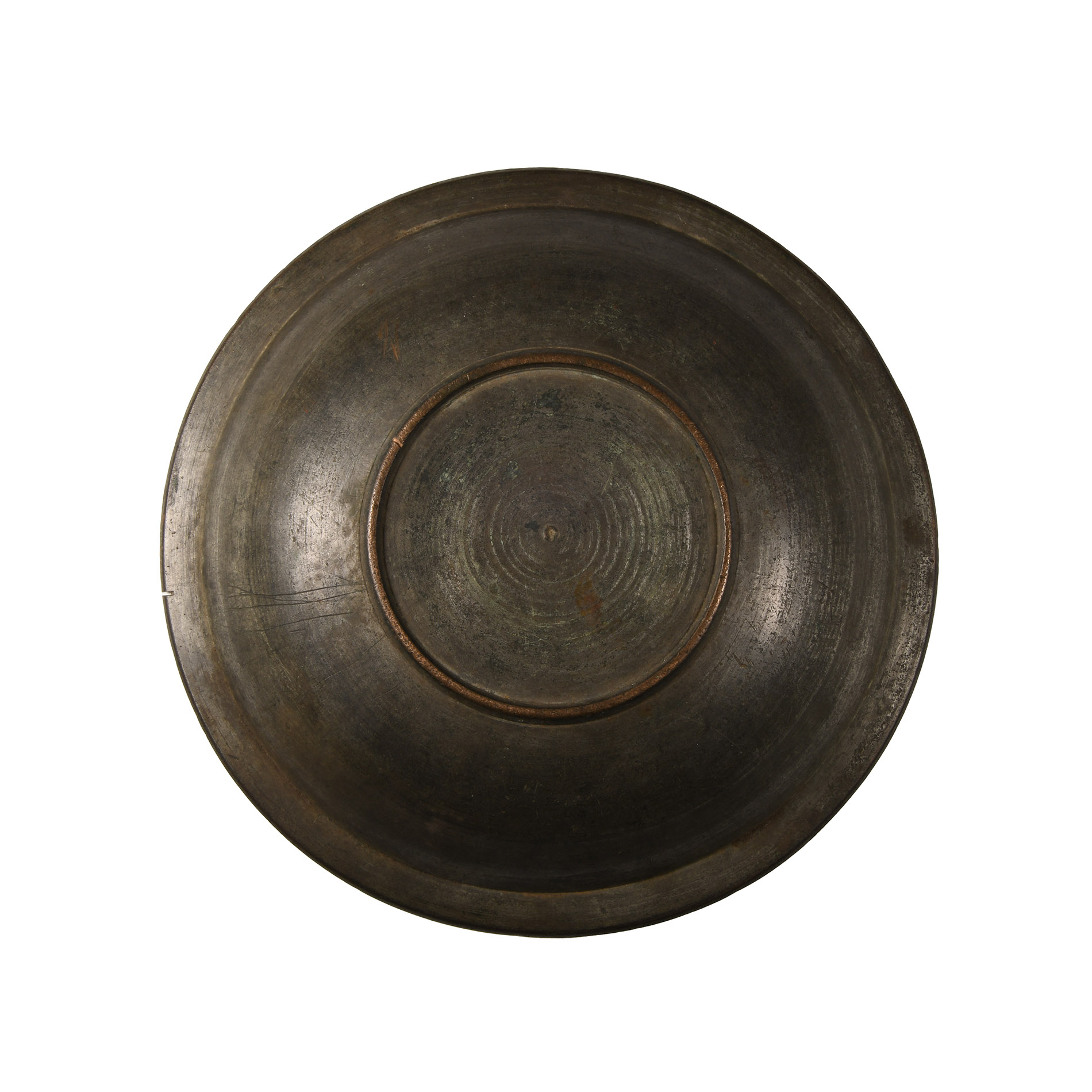
LOT 0652
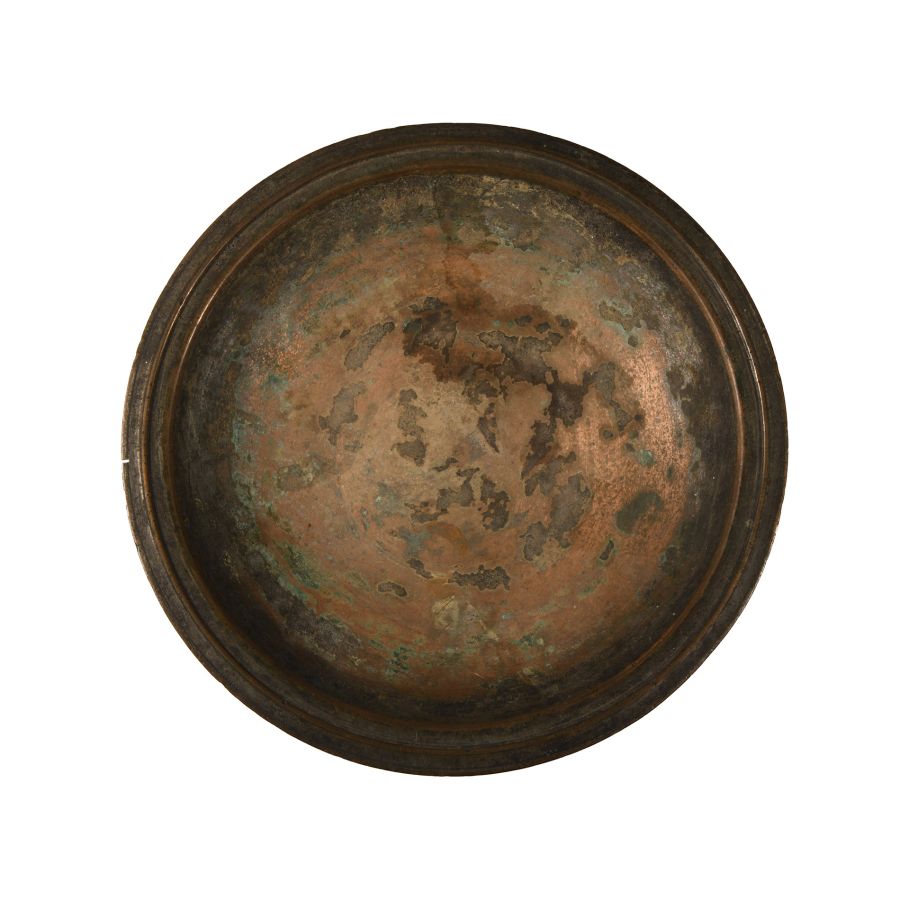
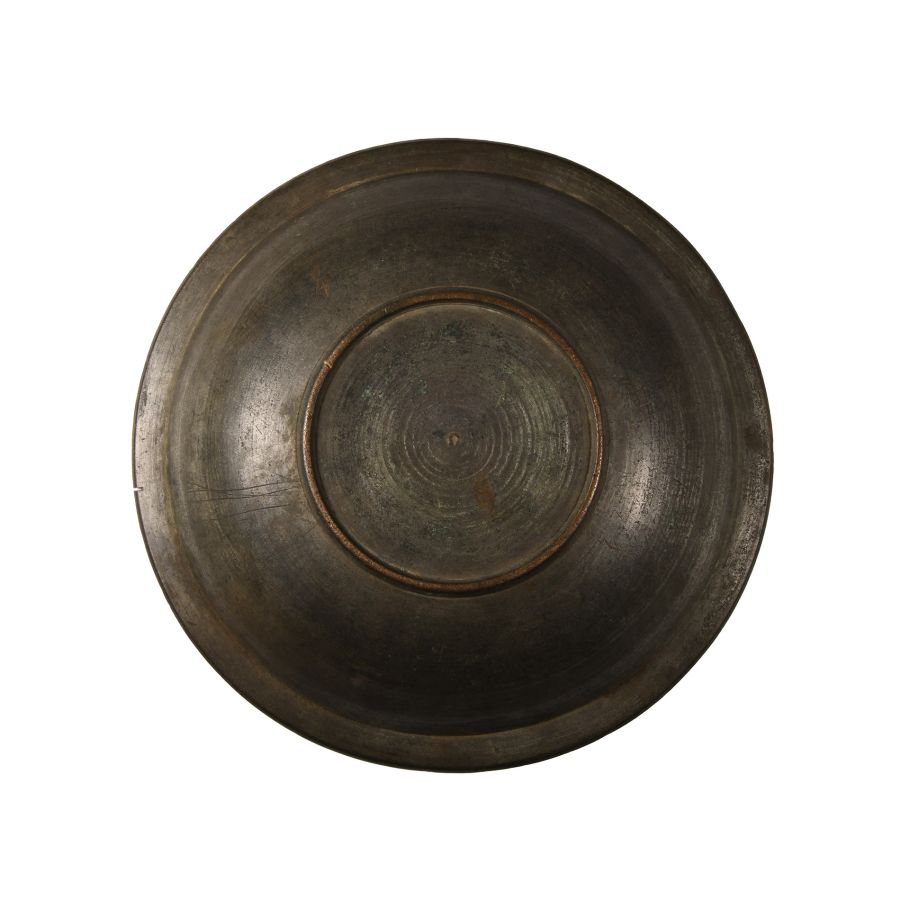
Heavy Roman Silvered Bronze Bowl
4TH-5TH CENTURY A.D.
9 in. (860 grams, 22.8 cm wide).
With wide flat bottom decorated inside with incised concentric circles, the internal concave surface retaining some of the silver coating; the central umbilicus still visible. [No Reserve]
ProvenanceFrom the family collection of a Surrey gentleman since before 1960.
LiteratureCf. Tassinari, S., La Vaisselle de Bronze, Romaine et Provinciale, au Musée des Antiquités Nationales, XXIXe supplément de Gallia, Paris, 1975, item 88, for a type with same dimensions (22cm diameter).
FootnotesThis vessel (lanx) was part of Roman and provincial bronze instrumentum domesticum, i.e. culinary or domestic utility ware. Such cooking vessels are rare in such condition: some are found in central and northern Gaul, Italy, in Pannonia, Germany and in Britain. Specimens of precious metal, richly decorated and chiselled, sometimes adorned with reliefs, are mentioned by ancient authors such as Cicero (Ad Att., VI,1,13) and Ovid (Pont.III,5,20).
CONDITIONTimeLine Auctions follows a vetting process to ensure the authenticity and legality of all items, reinforcing our commitment to integrity and responsible trading. Each antiquity, antique, and coin lot undergoes thorough examination by a vetting committee of at least ten external specialists, professional trade association members, scientists, and archaeologists: Our Vetting Process
AUCTIONS:
TimeLine is a leading auction house specialising in antiquities, ancient art, collectables, natural history, coins, medals, and books. Our auctions offer museums, collectors, historians, and enthusiasts the opportunity to acquire unique and historically significant pieces.
-
Roman Blue-Green Glass Unguentarium
3rd-4th century A.D.Sold for (Inc. bp): £117
Piriform-bodied with an extended tubular neck with rim absent; iridescent surfaces; antique handwritten collector's label around the neck; repaired. 41.4 grams, 11.7 cm high
Acquired 1970s onwards. Private collection of Michael O'Hara, Cambridgeshire, UK. Ex private collection of Benjamin Hyde-Smith, Hertfordshire, UK. -
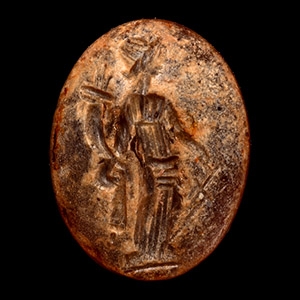
Roman Carnelian Gemstone with Fortuna
1st-2nd century A.D.Estimate: £700 - 900 (+bp*)
Opening Bid: £389
The oval intaglio depicting the goddess standing, facing right, dressed in peplos, holding a steering-oar and cornucopia. 1.33 grams, 16 mm
Acquired in the late 1980s-early 1990s. Important North West London collection.
Fortuna was the Roman equivalent of the Greek Tyche, and was the goddess of fate, chance and luck. The cornucopia symbolises the abundance of good luck that people hoped for in worshipping her and the rudder symbolises her steering the destiny of people. In the city of Rome, she had a temple in the Forum Boarium. The goddess had many aspects such as Fortuna Augusta, the luck of the emperor and the Imperial family, Fortuna Publica, the luck of the people, and Fortuna Obsequens, indulgent fortune, amongst many others. -
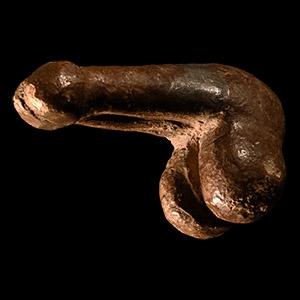
Roman Bronze Phallic Mount
1st-4th century A.D.Sold for (Inc. bp): £91
Of ithyphahllic form with semi-naturalistic features; mounting recess to base. 20.1 grams, 28 mm
Acquired on the UK art market. Property of a Ruislip, UK, gentleman, by inheritance.
